
Selecting the right office chair for a home office in Singapore requires balancing long-term physical health with the specific constraints of local living spaces and climate. The TT Airflex has emerged as a prominent choice in the local market, particularly for those seeking a highly breathable mesh configuration. However, deciding whether it is the absolute best option for your specific setup requires comparing its design philosophy, adjustment mechanisms, and materials against a diverse landscape of local and international alternatives.
Evaluating these chairs systematically ensures that your investment supports your posture throughout long working hours. By analyzing key ergonomic dimensions, material performance under local climate conditions, and spatial compatibility, you can identify the seating solution that aligns precisely with your daily routine and workspace layout.
Quick Answer: Evaluating TT Airflex for Your Home Office
There is no single “best” office chair that suits every individual universally. The ideal seating solution depends on your unique body measurements, desk height, and whether you work in an air-conditioned environment. The TT Airflex is highly suitable for users who prioritize cooling airflow, firm back support, and a responsive mesh seat that prevents heat retention during long sessions.
Products mentioned in this guide

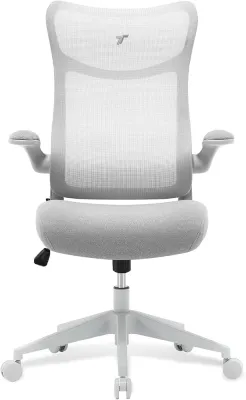
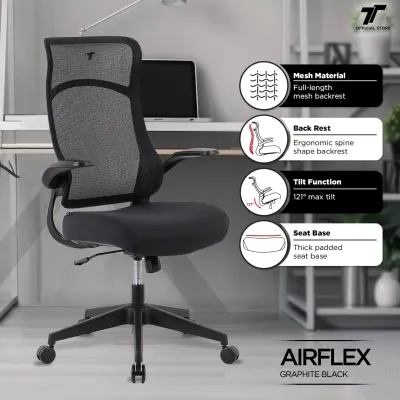
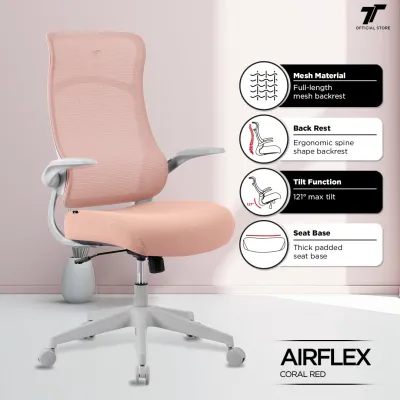
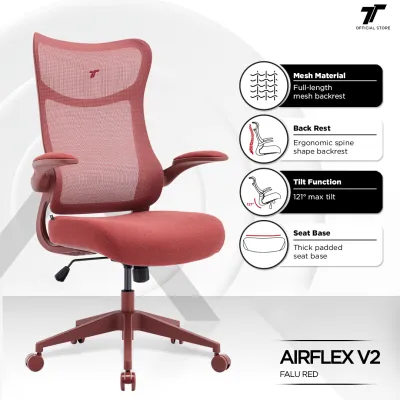
Prices are valid at publication and may change. Please refer to the product page for the latest price.
If your work habits require highly customized pelvic tilt adjustments, plush seat cushioning, or a wide range of seat-depth modifications, alternative brands—ranging from premium international manufacturers to specialized local retailers—may offer a more precise fit. To make an informed decision, you must evaluate key criteria such as the range of mechanical adjustments, physical footprint, material durability, and warranty terms.
Ultimately, the choice comes down to matching the chair’s physical capabilities with your daily work habits. A home office chair is an investment in your physical well-being, and understanding how different brands address support and comfort will help you avoid common pain points associated with prolonged sitting.
Understanding the Contenders: TT Airflex vs. Market Alternatives
The Singaporean home office market features several distinct categories of seating. The TT Airflex occupies a competitive mid-range space, designed to offer modern ergonomic features at a price point that appeals to professionals working from home. It competes directly with a variety of brands that can be organized into three main tiers.

Premium international ergonomic brands represent the top tier of the market. These manufacturers focus on extensive research and development, offering chairs with highly complex, synchronized movement mechanisms and long-term structural warranties that often extend up to twelve years. While these chairs provide exceptional, individualized support, they require a significant financial investment, often starting above S$1,000.
Local specialized retailers form the second tier. These companies design or curate chairs specifically for the regional market, balancing cost with essential ergonomic features. They often provide localized customer service, physical showrooms in central or industrial areas of Singapore, and quicker delivery timelines, making them highly accessible options for local homeowners.
Budget-friendly ergonomic options make up the third tier. Typically priced under S$300 on local online marketplaces, these chairs offer basic height and tilt adjustments. While they serve well for occasional use, they often lack the advanced material tension and multi-dimensional adjustability required for full-time, eight-hour workdays. Comparing across these tiers requires looking at the value-to-feature ratio and your specific daily usage patterns rather than simply matching specifications.
Core Comparison Dimensions for Home Offices in Singapore
Ergonomic Adjustability and Posture Support
The fundamental purpose of an ergonomic chair is to maintain the natural curvature of your spine while reducing muscular strain. Lumbar support is the cornerstone of this effort. When evaluating the TT Airflex against other brands, look closely at how the lumbar support is adjusted. Some chairs utilize a passive, flexible frame that responds to your body weight, while others feature manual height and depth knobs. If the lumbar support cannot be aligned with your specific lumbar lordosis (the inward curve of your lower spine), it can create pressure points and lead to discomfort over long sessions.
Seat height and depth adjustments are equally critical. Your chair must allow your feet to rest flat on the floor with your knees bent at approximately a 90-degree angle, preventing pressure on the back of your thighs. A seat slide mechanism, which adjusts the depth of the seat pan, is highly beneficial for taller or shorter users. Ensure you check the manufacturer’s specification sheet for these exact ranges, as a chair that is too deep will prevent your back from reaching the lumbar support, while a seat that is too shallow will not support your thighs adequately.
Armrest adjustability directly impacts upper body tension. Standard chairs may offer 2D armrests (adjusting only in height and depth), whereas more advanced models feature 3D or 4D armrests that slide inward, outward, and pivot. This allows you to support your forearms comfortably while typing, reducing the load on your shoulders and neck. Always verify the mechanical controls of these armrests; some lock into place, while others slide freely, which may or may not suit your working style.
Finally, consider the tilt tension and recline lock mechanisms. A high-quality synchro-tilt mechanism allows the backrest to recline at a faster rate than the seat pan, keeping your feet flat on the floor and maintaining a supportive angle. Check whether the chair allows you to lock the recline at multiple angles or if it relies on a free-floating tension system. True ergonomic support is not a generic label; it is the physical alignment achieved when a chair’s adjustment ranges match your unique body proportions and desk height.
Material Breathability and Climate Suitability
Singapore’s tropical climate plays a decisive role in material selection, especially if your home office is not continuously air-conditioned. Full-mesh office chairs, such as the TT Airflex, excel in heat dissipation. The open weave of high-quality mesh allows air to circulate freely around your back and thighs, preventing the accumulation of body heat and sweat during long working hours. This makes mesh an exceptionally practical choice for local homes.
In contrast, fabric-upholstered and high-density foam seats offer a different type of comfort. Foam provides a plush, highly cushioned feel that distributes body weight evenly across the seat pan, which some users prefer over the firm, suspended sensation of mesh. However, foam and fabric tend to retain thermal energy and moisture. Over time, high humidity can also make certain fabrics more difficult to maintain. Leatherette or polyurethane (PU) leather options are easy to wipe clean but can feel sticky and warm in non-air-conditioned rooms, and lower-grade PU leather is prone to peeling in humid environments.
When comparing mesh chairs, do not assume all mesh is identical. Inspect the mesh tension and the frame’s construction. High-quality elastomeric mesh retains its elasticity and supportive tension over years of use, whereas low-grade mesh can sag, causing your pelvis to bottom out against the underlying frame. Always refer to the manufacturer’s care labels and cleaning instructions. Mesh surfaces generally require gentle vacuuming with a brush attachment and prompt spot-cleaning with mild detergent to prevent dust accumulation within the weave.
Spatial Footprint and Assembly Requirements
Many home offices in Singapore are integrated into compact bedrooms, study corners, or HDB household shelters where floor space is at a premium. Before purchasing any chair, it is essential to measure your available space, the clearance of your desk, and your home’s entryways. An office chair with an exceptionally wide five-star base or protruding armrests may not slide fully under your desk, forcing you to sit further away from your workspace and straining your arms.
The base diameter and caster design are critical for both stability and floor protection. Most ergonomic chairs feature a base diameter ranging from 60cm to 70cm. Ensure this footprint fits comfortably within your designated work area without obstructing pathways or other furniture. Furthermore, verify the caster material. Hard nylon casters are designed for carpeted floors and can scratch or scuff local flooring materials like vinyl, laminate, or polished parquet. For hard surfaces, look for soft polyurethane (PU) or rubber-coated casters that roll smoothly and quietly without damaging the floor finish.
Assembly is another practical factor to consider. Many local brands offer pre-assembled delivery, either included in the price or as an add-on service, which eliminates the risk of incorrect setup. If you choose to assemble the chair yourself, perform systematic checks during the process. Ensure all bolts are aligned and tightened securely, verify that the gas lift cylinder is seated completely within the base and the seat mechanism, and test the overall stability on a flat surface. Always follow the manufacturer’s official assembly manual. If any structural components appear damaged or if the assembly instructions conflict with your physical parts, stop and contact the manufacturer’s support team immediately.
Feature and Specification Evaluation Matrix
To help you compare the TT Airflex with other common options in the Singapore market, the following matrix outlines the typical specifications you should verify before purchasing. Use this table as a template when reviewing official product listings or visiting physical showrooms.
| Specification Dimension | TT Airflex (Typical Profile) | Premium Alternatives | Budget Alternatives | Verification Notes |
|---|---|---|---|---|
| Seat Width & Depth | Standard mid-range width; fixed or sliding seat pan options | Wide range with highly adjustable seat-depth sliders | Fixed seat pan; limited depth customization | Measure your thigh length to ensure the seat edge does not press behind your knees. |
| Lumbar Support Type | Dynamic or adjustable lumbar frame | Integrated, multi-zone adaptive lumbar tracking | Static lumbar band or basic height-only adjustment | Test the firmness in-store to ensure it does not pinch or push too aggressively. |
| Armrest Adjustability | Typically 3D or 4D adjustable | Precision 4D with locking mechanisms | 1D (height only) or fixed armrests | Check if the armrests can lower sufficiently to clear your desk drawer frame. |
| Base & Caster Material | Reinforced nylon or aluminum base; standard PU casters | Heavy-duty polished aluminum; premium soft-roll casters | Standard nylon base; hard plastic casters | Verify if the casters are certified safe for sensitive parquet or vinyl flooring. |
| Stated Weight Capacity | Typically 120kg to 150kg | Up to 150kg or higher with certified gas lifts | Often limited to 100kg or unspecified | Check for official BIFMA or TÜV certifications on the gas lift cylinder. |
| Structural Warranty | Typically 2 to 5 years local warranty | 10 to 12 years international warranty | 1 year or no warranty on moving parts | Confirm what parts are covered (e.g., mesh sagging vs. gas lift failure). |
When using this matrix, remember that physical testing is always the most reliable way to verify these dimensions. If you are unable to visit a showroom, carefully cross-reference the manufacturer’s dimensional drawings with your current chair and desk measurements.
Decision Framework: Matching the Chair to Your Work Setup
To make your final decision, apply the following conditional guidelines to your specific home office scenario and physical needs:
- Choose a mesh-heavy design like TT Airflex if: You work in a warm or non-air-conditioned room, prioritize maximum breathability, and prefer a firm, responsive seating surface that encourages active posture.
- Choose a premium alternative brand if: You require highly specialized ergonomic features (such as independent thoracic support or a seat-depth slider), plan to use the chair for more than eight hours daily, and have the budget to invest in a long-term manufacturer warranty.
- Choose a budget alternative if: Your home office use is limited to a few hours a week, you do not require advanced lumbar customization, and a basic height-adjustable chair with standard tilt fits your budget.
- Verify first if: You experience chronic back pain, have a pre-existing spinal condition, or fall outside average height and weight ranges. In these scenarios, consulting a healthcare professional or physically testing the chair in a showroom is mandatory to ensure the chair's physical dimensions and support mechanisms align safely with your body.
Frequently Asked Questions (FAQ)
How do I know if an office chair will fit under my desk?
Measure the vertical distance from the floor to the lowest point of your desk’s underside, including any drawers or support beams. Compare this with the chair’s maximum armrest height (when raised) and minimum armrest height (when lowered). If the armrests cannot clear the desk frame, ensure they can be folded back or adjusted sufficiently downward to allow the chair to slide in completely when not in use.
Is a heavier office chair always more durable?
Not necessarily. While a heavier chair often indicates the use of robust materials like a polished aluminum base or thick steel frame components, overall durability is determined by the engineering quality of the moving parts. The grade of the gas lift cylinder (ideally Class 3 or Class 4), the wear resistance of the mesh or fabric, and the precision of the reclining joints are far more critical. Always verify the manufacturer’s stated weight capacity and the specific terms of the structural warranty rather than relying solely on physical weight.

Community discussion
Share your experience or ask a question. Comments are reviewed before publication.