
Selecting a triple bunk bed for your children requires a rigorous focus on structural safety, spatial compatibility, and physical barriers. Because these beds stack three sleeping surfaces vertically or arrange them in space-saving configurations, they introduce unique safety considerations compared to standard single beds. To ensure a secure sleeping environment, you must verify specific physical dimensions, structural connections, and manufacturer certifications before making a purchase. Focusing on these verifiable features allows you to select a configuration that keeps your children safe while maximizing your home’s floor space.
Assessing Room Dimensions and Bed Configuration
Before evaluating the physical bed, you must measure your children’s bedroom to ensure it can safely accommodate a triple-tier structure. Start by measuring the floor-to-ceiling height. In Singapore, standard residential ceiling heights, particularly in HDB flats, typically range from 2.6 to 2.8 meters. A triple bunk bed requires sufficient vertical clearance so that the child on the top tier can sit up comfortably without risk of head injury against the ceiling or light fixtures. You must subtract the height of the bed frame and the thickness of the top mattress from your total ceiling height to calculate the remaining headroom.
Next, evaluate the footprint of the bed within the room. This includes not only the static dimensions of the frame but also the active clearance zones. You must account for the space required to safely climb the ladder, the walkway clearance around the bed, and the pull-out distance if the bottom tier features a trundle bed. Ensure that the bed does not block windows, air conditioning units, or wardrobe doors, and that it remains a safe distance from ceiling fans.
Products mentioned in this guide
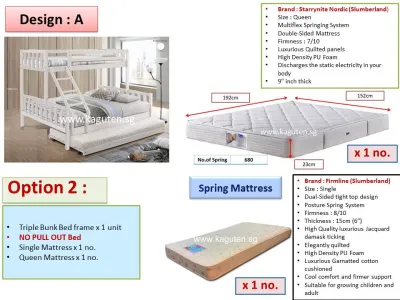
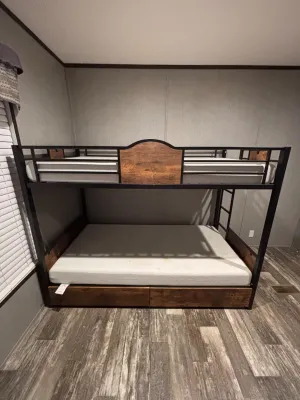
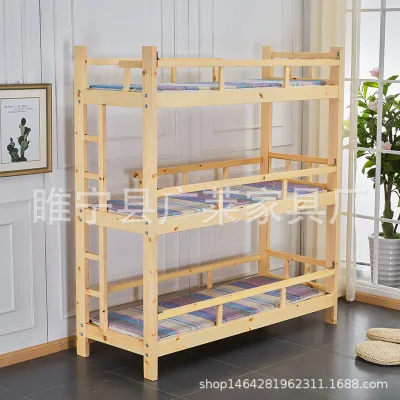
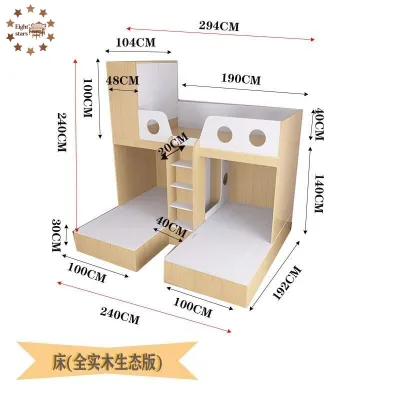
Prices are valid at publication and may change. Please refer to the product page for the latest price.
Finally, consider the logistics of delivery and installation. Measure the dimensions of your doorways, hallways, stairwells, and lift access points. Many triple bunk beds are delivered in large, heavy flat packs that must fit through these tight spaces. Verifying these dimensions beforehand prevents delivery failures and ensures that the components can be safely transported to the designated bedroom for assembly.
Guardrail Height, Gap, and Ladder Stability Checks
Physical barriers are the primary defense against falls from elevated bunks. When inspecting a triple bunk bed, pay close attention to the guardrails on the middle and top tiers. The guardrails must extend continuously around all sides of the bed, leaving an opening only for the ladder access point. You must verify the height of these guardrails relative to the mattress you plan to use. Safety guidelines generally require that the top of the guardrail sits at least 127 millimeters (or approximately 5 inches) above the top surface of the mattress. If you use a mattress that is too thick, you effectively reduce the protective height of the guardrail, increasing the risk of a fall.

The spacing between the guardrail slats and the frame is another critical safety checkpoint. Gaps that are too wide can lead to limb or head entrapment. Inspect the distance between individual slats, as well as the gap between the bottom rail and the mattress foundation. These openings should be small enough to prevent a child’s head or torso from slipping through, typically measuring less than 90 millimeters. Ensure the mattress fits snugly within the bed frame; any significant gap between the mattress edge and the guardrail can create a dangerous entrapment hazard.
The ladder serves as the sole access point to the upper tiers and must be exceptionally stable. Evaluate whether the bed features an angled ladder or a straight vertical ladder. Angled ladders generally offer an easier climb, but they occupy more floor space. Check the width and depth of the ladder rungs; wider, flat rungs provide better foot support than narrow, rounded steps. Most importantly, inspect the attachment mechanism. The ladder must be securely bolted or hooked to the main frame with locking brackets to prevent it from shifting or detaching while a child is climbing.
Structural Integrity, Weight Limits, and Anti-Tip Features
A triple bunk bed must withstand the dynamic forces of active children. Begin by locating the manufacturer’s official weight capacity ratings. These ratings should specify the maximum load for each individual tier as well as the cumulative weight limit for the entire structure. Never assume a bed can support multiple children without verifying these limits in the product specifications. Keep in mind that these limits must accommodate the weight of the mattress, bedding, and the child.
The quality of the joints and hardware determines the long-term stability of the frame. Inspect the connection points where the horizontal rails meet the vertical posts. High-quality beds utilize heavy-duty metal-to-metal barrel nut and bolt connections rather than simple wood screws, which can loosen and strip over time. Look for robust cross-supports beneath each mattress foundation. Solid wood slats or welded metal mesh grids provide the necessary support to prevent mattress sagging and structural failure. Gently shake the display model or check user manuals to ensure the frame does not wobble or sway under lateral pressure.
Given the height of a triple bunk bed, tipping is a serious hazard that you must address. High-profile furniture can become unstable if children attempt to climb the outer frame. Verify whether the manufacturer includes an anti-tip kit or wall-anchoring brackets with the bed. In Singapore, where bedroom walls are typically made of concrete or solid brick, you will need appropriate masonry wall plugs and screws to secure these brackets firmly. Anchoring the bed to the wall eliminates the risk of tipping and significantly enhances the overall rigidity of the structure.
Navigating Safety Labels and Manufacturer Instructions
To cut through marketing claims, you must look for objective proof of safety compliance. Reliable manufacturers subject their products to independent testing against recognized international standards. Look for physical safety labels permanently attached to the bed frame. These labels often reference standards such as EN 747 (the European standard for bunk beds and high beds) or ASTM F1427 (the American standard). Compliance with these standards indicates that the bed has undergone rigorous testing for strength, durability, and entrapment hazards.
These safety labels also contain crucial age and weight restrictions that you must respect. Standard safety guidelines dictate that children under the age of six should never sleep on the top bunk, and this rule is even more critical for the elevated tiers of a triple bunk bed. The middle bunk also requires careful age consideration depending on its height. Ensure you read and understand these age recommendations before assigning beds to your children.
Before purchasing, request access to the assembly manual or download it from the manufacturer’s website. Reviewing the manual allows you to assess the complexity of the installation process. Check for specific tool requirements, hardware torque settings, and instructions regarding mandatory warning stickers. A clear, detailed manual that emphasizes safety steps is a strong indicator of a well-engineered product. If the instructions are vague or omit safety warnings, it may be best to consider alternative options.
Installation Requirements and Ongoing Maintenance
Safe assembly is just as important as choosing the right bed. When installing the triple bunk bed, you must follow the manufacturer’s assembly sequence exactly. Do not skip any steps, omit washers, or substitute hardware with pieces from a local hardware store. Ensure all bolts are tightened to the specified torque, but avoid over-tightening, which can split wooden components or strip metal threads. If you are not confident in your assembly skills, consider hiring professional installation services provided by the retailer.
Once the bed is assembled, your safety checks do not end. Singapore’s humid climate can cause wooden frames to expand and contract, which may gradually loosen hardware over time. Establish a routine maintenance schedule to inspect the bed every few months. Check all joint connections, ladder attachments, and wall anchors to ensure they remain tight and secure. If you notice any wobbling, squeaking, or loose bolts, address them immediately.
Finally, establish clear household rules for bed usage and discuss them with your children. Emphasize that the triple bunk bed is strictly for sleeping and quiet activities, not for rough play. Prohibit jumping on any of the tiers, as this exerts extreme dynamic forces that can exceed the bed’s weight capacity. Instruct children never to hang items such as belts, ropes, or bags from the guardrails or ladder, as these pose severe strangulation hazards.
Frequently Asked Questions (FAQ)
What is the minimum ceiling height required for a triple bunk bed?
To determine the minimum ceiling height, you must calculate the combined height of the bed frame, the top mattress, and the necessary headroom. As a general rule, the child sleeping on the top tier needs at least 60 to 75 centimeters of clearance between the top of their mattress and the ceiling to sit up comfortably without bumping their head. For a typical triple bunk bed standing around 2 meters tall, a minimum ceiling height of 2.7 to 2.8 meters is highly recommended. Always check the manufacturer’s specifications, as some low-profile or L-shaped triple configurations may have lower vertical requirements.
Can a triple bunk bed be separated into individual beds later?
Whether a triple bunk bed can be separated depends entirely on its design and engineering. Many modular triple bunk beds are designed to split into three independent single beds or a standard bunk bed and a separate single bed as your children grow. You must verify this capability in the product manual before purchasing. Never attempt to dismantle and reconfigure a non-modular bunk bed into individual beds unless the manufacturer explicitly provides instructions and approved conversion kits, as doing so can compromise structural integrity and void the product warranty.

Community discussion
Share your experience or ask a question. Comments are reviewed before publication.