
Finding the right tatami table for your Singapore home requires balancing traditional design with the practical realities of high-humidity tropical living and compact apartment layouts. Whether you are setting up a cozy tea corner in a resale flat, creating a minimalist Japanese-style study, or looking for a multi-functional coffee table for a new Build-To-Order (BTO) HDB living room, the brand category you choose will dictate the table’s longevity, aesthetic appeal, and daily usability.
To make an informed decision, you must evaluate your primary household needs against three distinct brand categories available in the local market:
- Specialty Japanese and Asian Furniture Importers: Choose this category if your priority is authentic craftsmanship, traditional joinery, and natural, lightweight timbers like paulownia or hinoki. These tables are best suited for dedicated low-seating zones where aesthetic precision and cultural authenticity are paramount. Expect a premium price point (typically S$500 and above) and potential lead times for imported stock.
- Local Custom Woodworkers and Boutiques: Choose this category if you have non-standard spatial constraints in your HDB flat or require a table made from highly stable, tropical-resistant hardwoods like teak or mahogany. Custom makers allow you to specify exact dimensions, leg clearances, and finishes that match your existing built-in cabinetry. Budget for a higher investment (often S$600 to S$1,200+) and a design consultation period.
- Mass-Market and Online Furniture Retailers: Choose this category if you need an affordable, immediate, or highly flexible solution, such as a foldable table for a multi-purpose guest room or rental property. These tables are highly budget-friendly (frequently under S$200) and often feature multi-functional designs, though they typically rely on engineered wood and modern hardware rather than solid timber and traditional joinery.
Because “best quality” is highly subjective, your decision must ultimately rest on verifiable specifications. Because individual manufacturing batches vary, you must verify the manufacturer’s explicit specifications for humidity resistance, weight capacity, and joinery stability before completing your purchase.
Products mentioned in this guide
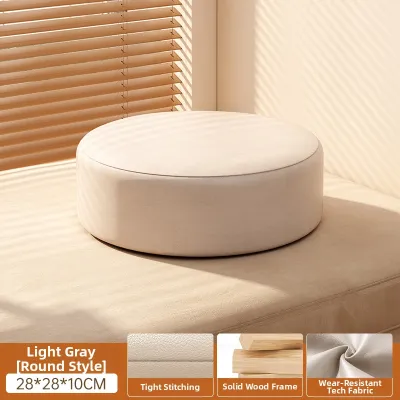
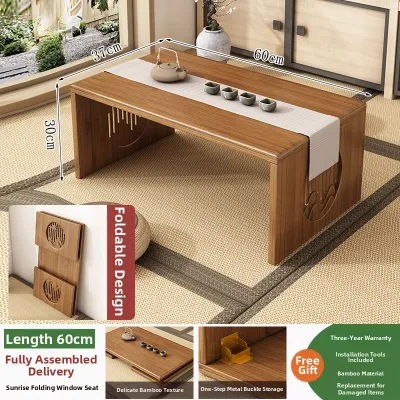
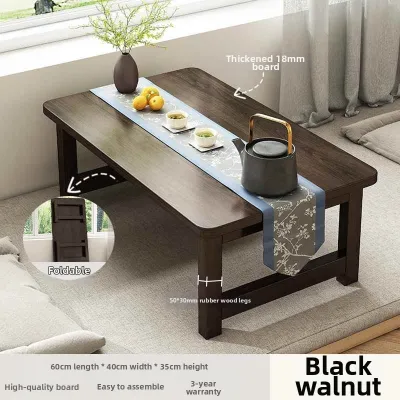
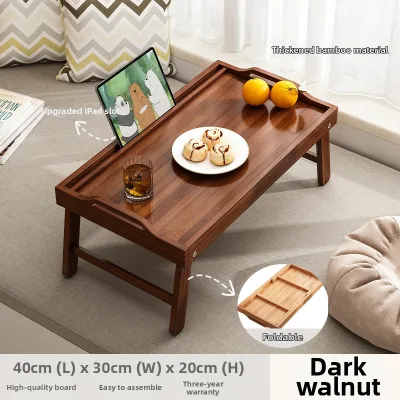
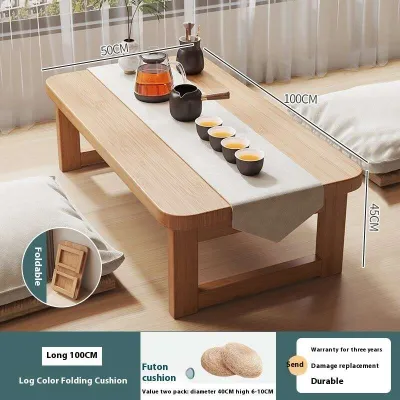
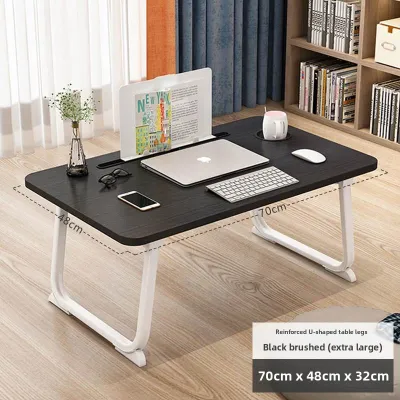
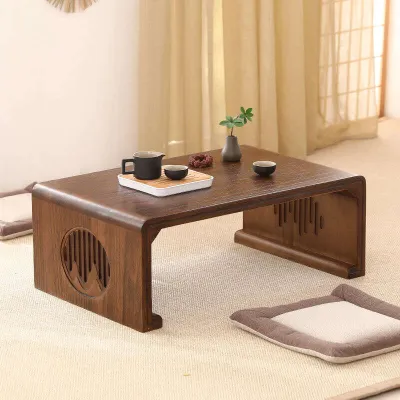
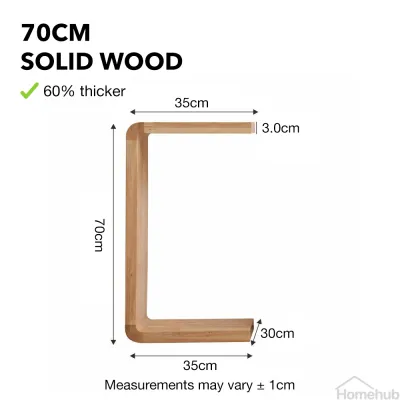
Prices are valid at publication and may change. Please refer to the product page for the latest price.
Key Dimensions for Comparing Tatami Table Quality and Value
Evaluating a tatami table goes far beyond its surface appearance. To find a piece that offers true value for money, you must look closely at how the table is constructed, what materials are used to withstand Singapore’s climate, and how its dimensions interact with your living space.
Craftsmanship and Joinery Techniques
The structural integrity of a low-profile table is determined by how its legs, apron, and tabletop are connected. Traditional tatami tables utilize complex wood joinery, such as mortise-and-tenon joints, which allow the wood to expand and contract naturally without relying on metal fasteners. This type of craftsmanship distributes lateral forces evenly across the frame, preventing the table from swaying or loosening when slid across tatami mats or rugs.
In contrast, mass-market flat-pack options generally rely on modern hardware, including cam-lock assemblies, dowels, and steel screws. While these mechanical fasteners make shipping and home assembly straightforward, they can gradually loosen over time under daily lateral stress. When evaluating a brand, always inspect the underside of the table or ask the seller for detailed diagrams of the connection methods. Look for reinforced corner blocks and heavy-duty brackets if the table uses mechanical fasteners, as these are critical for preventing long-term wobbling.
Material Durability and Humidity Resistance
Singapore’s tropical climate presents a unique challenge for wooden furniture. With average relative humidity levels frequently exceeding 80%, poorly treated wood is highly susceptible to warping, cracking, and mold growth.
- Solid Hardwoods: Premium timbers like white oak, walnut, and teak are naturally dense and highly durable. However, to survive in Singapore, they must be properly kiln-dried and acclimatized by the manufacturer. Unsealed or poorly seasoned solid wood will warp as it absorbs and releases moisture from the air.
- Engineered Wood: Medium-Density Fibreboard (MDF) and plywood are common in mid-range and budget tables. While engineered wood does not warp in the same manner as solid timber, it is highly vulnerable to moisture absorption if the protective laminate or veneer is compromised. Look for moisture-resistant ratings (such as MR-grade or Green LDF) and ensure all edges are fully sealed with high-quality edge-banding.
- Bamboo: An eco-friendly and highly stable alternative, bamboo resists warping well but requires proper anti-fungal carbonization treatments during manufacturing to prevent mold in humid environments.
Remember that a material name alone does not guarantee performance. You must check the brand’s care and maintenance labels to confirm what protective coatings (such as polyurethane, water-resistant lacquer, or natural oils) have been applied to safeguard the material.
Space Efficiency and HDB Compatibility
With the average size of new HDB flats being highly optimized, floor space is at a premium. A tatami table must fit seamlessly into your room layout without obstructing foot traffic or making the space feel cramped. Low-profile furniture naturally creates the illusion of higher ceilings and a more open atmosphere, but the physical footprint must still be carefully planned.
Measure your intended floor area and compare it against the brand’s exact outer dimensions. Beyond the tabletop size, pay close attention to the leg clearance. If you plan to sit comfortably on floor cushions (zabuton), which are typically 5 cm to 10 cm thick, the table’s apron-to-floor clearance must accommodate your legs. Look for brands that offer specialized space-saving features, such as foldable legs that allow the table to be tucked away when not in use, or adjustable-height legs that transition the piece from a low tea table to a standard coffee table height.
Comparing Tatami Table Brand Categories in Singapore
To help you navigate the local retail landscape, we have broken down the three primary brand categories available in Singapore, highlighting what to expect in terms of craftsmanship, lead times, and quality control.

Specialty Japanese and Asian Furniture Importers
Specialty importers bring authentic regional aesthetics directly to Singaporean consumers. These brands curate collections from established workshops in Japan, Taiwan, or mainland China, focusing on traditional low-profile living concepts.
- The Appeal: These tables are characterized by minimalist lines, lightweight yet strong timber selections (such as paulownia, which is naturally resistant to insects and rot), and flawless natural finishes. The wood grain is often treated to highlight its organic texture, making these tables centerpiece-worthy design elements.
- The Trade-offs: Authenticity comes at a premium. Prices are high, and because many of these items are imported in limited batches, you may face wait times ranging from 4 to 12 weeks if your preferred model is out of stock.
- Verification Step: Before purchasing an imported solid wood table, ask the retailer if the timber has been treated or acclimatized specifically for tropical climates. Rapid exposure to Singapore’s high humidity after leaving a drier, temperate climate can cause untreated wood to expand rapidly, leading to hairline cracks or warped joints.
Local Custom Woodworkers and Boutiques
For homeowners who want a tailored solution, Singapore’s vibrant custom woodworking scene offers bespoke low tables crafted to your exact specifications.
- The Appeal: Working with a local boutique allows you to select the exact slab of timber—often highly stable regional hardwoods like Indonesian teak or suar wood—and customize the dimensions down to the millimeter. This is highly advantageous if you need to fit the table into a specific alcove, match the height of a custom platform bed, or ensure the wood tone perfectly complements your flooring.
- The Trade-offs: Custom pieces require active collaboration, design consultations, and a higher budget. Craftsmanship quality can also vary between independent workshops, making it essential to do your homework.
- Verification Step: Thoroughly review the maker's portfolio of past low-profile furniture. Ask explicit questions about their joinery methods (e.g., do they use mortise-and-tenon joints or pocket screws?), the source and moisture content of their timber, and the specific warranty they provide against wood splitting, joint separation, or warping within the first year of delivery.
Mass-Market and Online Furniture Retailers
If you are furnishing a temporary space, working with a tight budget, or simply want a highly functional piece without a long wait, mass-market retailers and online marketplaces offer an abundance of choices.
- The Appeal: These tables are highly accessible, often delivered within days, and priced to fit any budget. Many models feature innovative, multi-functional designs, such as built-in drawer storage, lift-top mechanisms that raise the tabletop to desk height, or legs that fold completely flat for storage under a sofa.
- The Trade-offs: Mass-market tables frequently utilize lower-grade MDF or particle board wrapped in thin paper or PVC veneers. Over time, exposure to humidity, spilled liquids, or heavy loads can cause the veneer to peel at the edges, the joints to wobble, and the hardware to strip.
- Verification Step: Always check the manufacturer’s stated static weight limits before buying. Read user reviews on the e-commerce platform carefully, filtering for comments regarding assembly difficulty, structural wobbling, and the quality of the included screws and brackets. Additionally, confirm the platform's return policy in case the item arrives with chipped edges or misaligned pre-drilled holes.
How to Verify Craftsmanship and Durability Before Buying
Whether you are shopping in a physical showroom in Ubi or Tan Boon Liat, or browsing online catalogs, you should use this practical checklist to verify the table’s quality before making a financial commitment.
Visual and Physical Checks
If you are able to inspect the table in person, do not rely solely on how the tabletop looks. Perform these three hands-on checks:
- Inspect the Underside: Bend down and look underneath the tabletop. This is where manufacturers often cut corners. Check if the underside is fully sealed with lacquer or paint, just like the top surface. Raw, exposed wood or unlaminated particle board underneath will absorb moisture from the air far more rapidly than the sealed top, leading to uneven expansion and warping.
- The Wobble Test: Place both hands on opposite corners of the tabletop and apply gentle, alternating downward and lateral pressure. A high-quality table will feel solid and grounded, with zero sway. Any creaking, shifting, or swaying indicates weak joints, loose hardware, or unevenly cut legs.
- Examine the Joints and Edges: Run your fingers along the joints where the legs meet the apron. There should be no visible gaps, glue squeeze-out, or rough wood fibers. For veneered tables, check the edge-banding closely; it should be perfectly flush with the panels, with no signs of bubbling, peeling, or sharp, exposed edges.
Specification Verification
When buying online or ordering a custom piece, demand clear technical specifications from the seller:
- Weight Capacity: Confirm the maximum load capacity. A decorative tea table may only support 15 kg, whereas a robust dining or work tatami table should comfortably support 40 kg to 50 kg of static weight to handle heavy teapots, laptops, books, or the occasional lean from a user.
- Assembly Requirements: Verify if the table arrives fully assembled, flat-packed with basic tools, or requires professional installation. Complex multi-functional tables with gas-lift hinges are best assembled by professionals to ensure the mechanisms operate smoothly and safely.
Care and Maintenance
To ensure your tatami table lasts for years in Singapore’s tropical climate, clarify the care instructions before finalizing your purchase:
- Cleaning Agents: Verify what cleaning solutions are safe to use. Natural solid wood tables finished with wax or oil should only be wiped with a dry or slightly damp microfiber cloth; harsh chemical sprays can strip the protective finish.
- Heat Resistance: Ask if the surface coating is heat-resistant. Placing a hot teapot or mug directly onto a sensitive lacquer or wax finish can leave permanent white rings. If the table lacks a high-performance heat-resistant polyurethane coating, always plan to use heat-resistant trivets or coasters.
- Humidity Control: Check if the manufacturer recommends periodic re-oiling or waxing to help seal the wood pores against moisture absorption.
Safety Boundary: If a retailer or online seller cannot provide clear specifications regarding load limits, material treatments, or assembly hardware, or if a showroom display model exhibits noticeable wobbling or joint gaps, stop and consider alternative options. Investing in a poorly constructed low table can result in structural failure, damaged flooring, or safety hazards during daily use.
Frequently Asked Questions (FAQ)
How do I prevent a wooden tatami table from warping in Singapore's humidity?
To prevent warping, keep your wooden tatami table away from direct sunlight and out of the direct path of air-conditioning vents. Rapid fluctuations in temperature and humidity cause wood fibers to expand and contract unevenly, leading to cracks. Maintain a stable indoor environment, use coasters for cold drinks to prevent condensation from pooling, and wipe up any spills immediately. If the room is consistently damp, running a dehumidifier can help preserve the wood’s structural integrity. Always follow the manufacturer’s specific instructions regarding periodic application of protective wood oils or waxes.
Are foldable tatami tables stable enough for daily dining?
Stability depends entirely on the quality of the hinge mechanism and the leg design. High-quality foldable tatami tables feature heavy-duty steel locking brackets that snap securely into place, providing excellent stability for daily dining. However, budget-friendly options with lightweight spring-loaded hinges or thin legs are prone to wobbling under lateral pressure. Always check the manufacturer’s stated weight capacity and, if shopping in person, test the locking mechanism to ensure there is no play or movement in the hinges when locked.
What is the standard height for a tatami table used with floor cushions?
The standard height for a tatami table designed for floor seating typically ranges between 30 cm and 40 cm from the floor to the tabletop. When planning your setup, you must factor in the thickness of your floor cushions (zabuton), which usually range from 5 cm to 10 cm. To ensure comfortable seating, aim for a minimum leg clearance of 20 cm to 25 cm between the top of the cushion and the underside of the table apron, allowing you to stretch or cross your legs comfortably during extended use.
Community discussion
Share your experience or ask a question. Comments are reviewed before publication.