
Selecting the right furniture for a modern Singaporean home requires a careful balance between spatial efficiency and daily utility. A multi-functional storage bench cabinet serves as an excellent solution for space-constrained HDB flats and condominiums, seamlessly combining robust seating with concealed storage. Whether positioned in a narrow entryway, at the foot of a bed, or along a dining table, these versatile pieces help eliminate clutter while keeping your living spaces highly functional.
To find the ideal storage bench cabinet, you must look beyond aesthetics and evaluate structural integrity, material suitability for a tropical climate, and precise physical dimensions. This guide details the essential factors to consider, compares the most practical designs available in Singapore, and outlines the safety and delivery checks necessary for a seamless purchase.
How to Evaluate Storage Bench Cabinets for Compact Spaces
Before purchasing any storage bench cabinet, measuring your available floor space is the most critical step. Unlike standard cabinets, a storage bench requires clearance not just for its physical footprint, but also for its active use as seating. You must ensure there is sufficient room for household members to sit comfortably, bend down to access items, and walk past without obstruction. In high-traffic zones like entryways or hallways, maintain a clear walkway of at least 90 to 120 centimeters in front of the bench to prevent bottlenecks.
Products mentioned in this guide
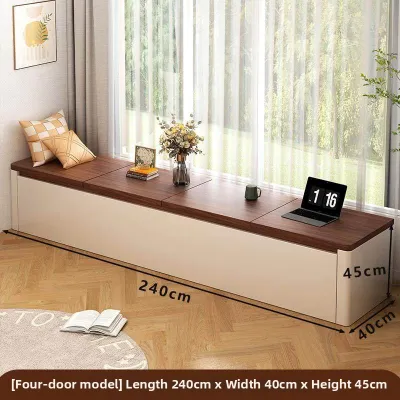
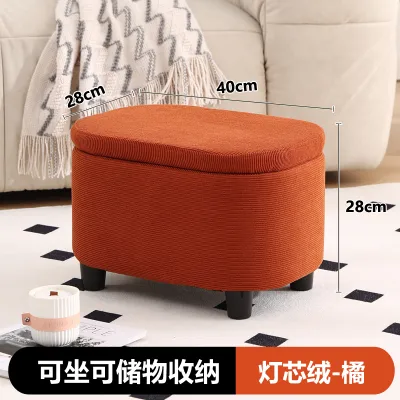
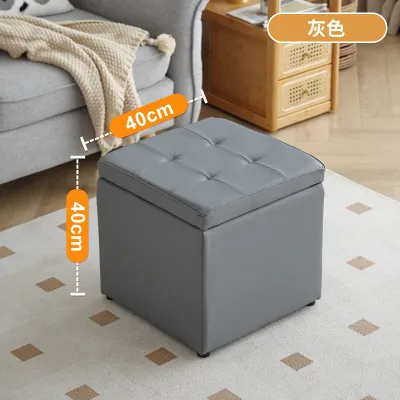
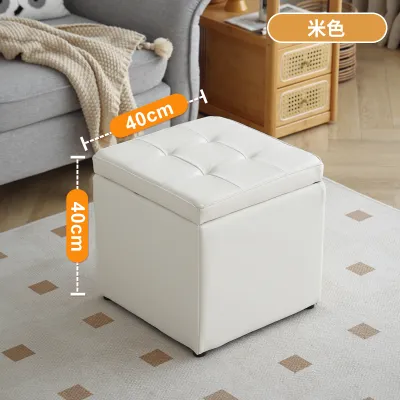
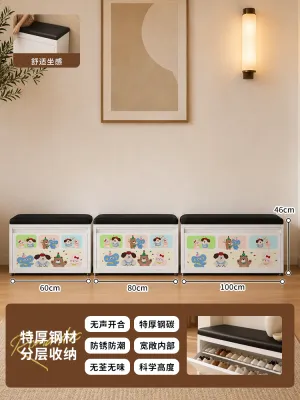
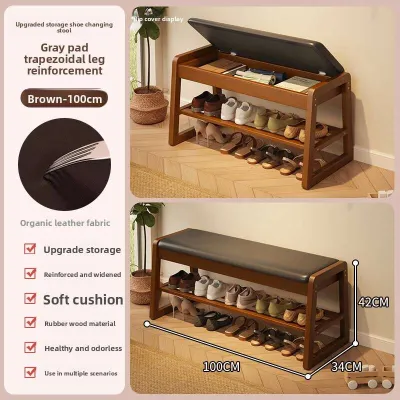
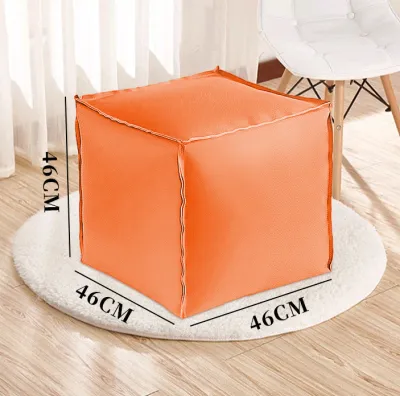
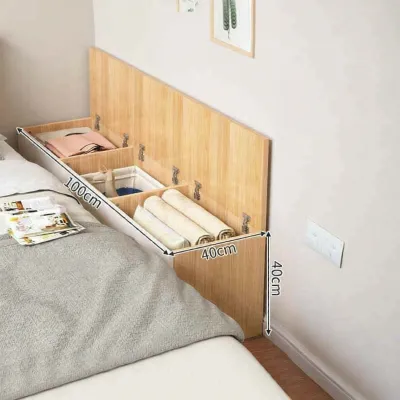
Prices are valid at publication and may change. Please refer to the product page for the latest price.
Equally important is accounting for the clearance required by the cabinet’s doors, drawers, or lids. Drawers that pull outward or doors that swing open can easily block narrow corridors or collide with nearby room doors. If you are placing a bench near an entrance, plot the swing path of your main door and any digital lock handle extensions to ensure they do not strike the bench. For tight foyers, sliding doors or tilt-out shoe compartments are highly recommended because they do not project far into the room when opened.
To maximize the utility of your storage bench cabinet, you should prioritize its primary storage function over secondary uses. If your main goal is to organize daily footwear, look for open-front shelves or quick-access tilt drawers that allow shoes to air out. Conversely, if you plan to store seasonal items like winter wear, bedding, or occasional-use household tools, a deep, fully enclosed chest with a lift-up lid or deep pull-out drawers is far more appropriate. Clearly defining this purpose prevents you from purchasing a unit with compartments that are too shallow or difficult to access regularly.
Because these cabinets double as seating, verifying their structural weight capacity is a safety priority. A standard single-seater bench should comfortably support at least 100 kilograms, while a multi-person bench placed in a living or dining room should have a weight rating of 200 kilograms or more. Benches constructed with reinforced frames, solid wood supports, or heavy-duty metal legs offer the best stability. Avoid units made of thin, unreinforced particleboard if the bench will experience heavy daily use by multiple family members.
Finally, Singapore’s high humidity and warm climate demand careful material selection. Benches placed near entryways, open windows, or balconies are regularly exposed to ambient moisture and occasional rain splashes. Untreated engineered woods like standard medium-density fibreboard (MDF) can absorb moisture over time, leading to swelling, warping, and structural failure. To prevent this, look for materials with moisture-resistant finishes, solid wood species like teak or oak, powder-coated steel frames, or high-pressure laminates (HPL) that resist moisture and are easy to wipe clean.
Top Multi-Functional Storage Bench Designs for Singapore Homes
Different areas of your home present unique spatial challenges and storage requirements. Selecting a design tailored to the specific room ensures that the bench cabinet enhances both the aesthetics and the flow of your living space. Below is an overview of the primary multi-functional storage bench designs suitable for local homes.

| Design Type | Best Use Case | Primary Storage Mechanism | Space Requirements |
|---|---|---|---|
| Flip-Down Shoe Bench | Entryways and narrow foyers | Tilt-out drawers with adjustable dividers | Shallow depth (25–35 cm); requires minimal forward clearance |
| Upholstered End-of-Bed Bench | Master bedrooms and walk-in wardrobes | Lift-up lid or deep pull-out drawers | Medium to deep (40–50 cm); requires clearance at foot of bed |
| Modular Cube Bench | Living rooms, study nooks, and play areas | Open cubbies with removable bins or baskets | Flexible footprint; customizable depth (35–40 cm) |
| Dining Banquette Bench | Compact dining zones and kitchen alcoves | Lift-up seat panels with safety gas struts | Deep seating (45–55 cm); must match standard dining table heights |
Entryway Shoe Storage Benches with Flip-Down Drawers
An entryway shoe storage bench cabinet is highly effective for keeping narrow HDB corridors and condo foyers organized. The defining feature of this design is the tilt-out or flip-down drawer mechanism, which holds shoes vertically or at an angle. This clever orientation allows the cabinet to remain exceptionally shallow—often between 25 and 35 centimeters deep—while still accommodating multiple pairs of adult footwear. By minimizing the outward projection, these benches keep the main entrance clear and safe for daily foot traffic.
However, this compact design involves a clear trade-off between storage depth and seating comfort. Because the priority is keeping the unit slim, the top seating surface is often narrow, and any included cushion is typically thin. While perfectly adequate for sitting down briefly to tie your shoes, it is not intended for long-term lounging. Additionally, the internal dividers in flip-down drawers are usually designed for standard sneakers, flats, or sandals. Bulky items like high-top boots, high heels, or large men’s shoes (above EU size 44) may not fit comfortably unless the internal shelves are adjustable or removable.
Upholstered End-of-Bed Benches with Concealed Compartments
Positioned at the foot of the bed, an upholstered storage bench cabinet adds a touch of luxury to the master bedroom while offering valuable hidden storage. This design is particularly useful in modern apartments where wardrobe space is limited. The interior compartment is typically accessed via a lift-up top or deep, fabric-faced pull-out drawers, providing an ideal spot to store extra pillows, heavy blankets, bed linens, or seasonal travel clothing that would otherwise crowd your main closet.
When choosing an upholstered bench, fabric selection is critical for maintaining a fresh and hygienic bedroom environment in a humid climate. Heavy, non-breathable fabrics like low-grade velvet or cheap synthetic faux leather can trap moisture, leading to musty odors or material cracking. Instead, look for breathable linen blends, durable woven polyester treated with stain-resistant coatings, or genuine top-grain leather that can be easily conditioned. Benches featuring removable, machine-washable covers are highly practical for busy households. Additionally, ensure you have at least 60 to 80 centimeters of clear floor space at the foot of your bed so you can fully extend drawers or stand comfortably while lifting the top lid.
Modular Cube Storage Benches for Flexible Living Areas
For living rooms, children’s play areas, or home offices, modular cube storage benches offer unmatched adaptability. These units feature a grid of open cubbies that can be left open for books and display items, or filled with interchangeable bins made of fabric, woven rattan, plastic, or wood. This flexibility allows you to easily reconfigure the storage layout as your household’s needs evolve, transitioning from a toy organizer in a child’s early years to a media console or study bench later on.
Because modular benches are lightweight and highly customizable, verifying their structural stability is essential before using them as primary seating. Always check the manufacturer’s instructions regarding weight limits and stacking limits. If you plan to stack modular units vertically or place them against lightweight partition walls, utilize the included wall-anchoring hardware to prevent tipping hazards, especially in homes with active toddlers or pets. Adding a custom, non-slip seat cushion to the top of a low modular unit instantly transforms it into a cozy reading nook or a makeshift sofa for guests.
Dining Banquette Benches with Lift-Up Seats
Integrating a dining banquette bench with built-in storage is an excellent way to save space in compact dining zones. By replacing individual dining chairs with a single long bench, you can position the dining table closer to a wall or window, reclaiming valuable floor space in the center of the room. The space beneath the seat panel is fully enclosed, providing a massive storage reservoir for bulky kitchen appliances, dining linens, placemats, or board games that are only used occasionally.
Ergonomics and safety are the primary considerations for this design. The top of the bench cushion must align properly with your dining table, which typically requires a seat height of 45 to 48 centimeters from the floor. If the bench is too low or too high, dining comfort will be severely compromised. Furthermore, because a dining bench is often long and heavy, lifting the seat panel can require significant physical effort. To ensure safety and ease of use, select models equipped with high-quality gas struts or soft-close safety hinges that hold the seat open automatically and prevent it from slamming down on fingers.
Essential Specifications and Safety Checks Before Purchase
To ensure your storage bench cabinet is durable, safe, and fits perfectly into your home, you must verify several physical specifications before making a purchase. Never rely solely on visual estimates from product photos, as camera angles can make furniture appear larger or more compact than it actually is.
- Verify Exact Physical Dimensions: Use a metal measuring tape to measure the designated space in your home. Be sure to account for baseboards, skirting boards, door frames, and electrical outlets. A skirting board that projects 1.5 centimeters from the wall will prevent a flat-backed bench from sitting completely flush, which can slightly increase the overall depth and affect walkway clearance.
- Confirm Weight Ratings: Check both the maximum seating capacity (the weight the top surface can support) and the internal storage load limit. A high-quality bench should clearly state these limits. Ensure the internal bottom panel of the cabinet is reinforced, particularly if you plan to store heavy items like books, weights, or toolboxes, to prevent the panel from sagging or detaching over time.
- Inspect Hardware Quality: The longevity of any multi-functional cabinet depends heavily on its moving parts. Examine the quality of the hinges, drawer runners, and gas struts. Look for hardware made of stainless steel or powder-coated metal. Soft-close mechanisms and pinch-point guards are essential safety features, especially in households with young children, as they prevent heavy lids and drawers from closing abruptly.
- Review Material Care and Assembly Guidelines: Read the manufacturer's care instructions to ensure the materials align with your lifestyle. For example, some natural wood finishes require periodic oiling, while certain fabrics require professional cleaning. Additionally, check if the bench is delivered fully assembled or flat-packed. Flat-packed furniture requires careful assembly; ensure you have the necessary tools and that the structural joints are reinforced with dowels or locking cams for maximum stability.
Sourcing and Delivering Furniture in Singapore
When sourcing a storage bench cabinet in Singapore, you have the choice between visiting physical furniture showrooms and browsing online marketplaces. Physical showrooms—often located in industrial hubs like Ubi, Toh Guan, Sungei Kadut, or Tai Seng—allow you to physically test the furniture. You can sit on the bench to assess cushion density, feel the texture of the upholstery, and test the smoothness of the drawer slides and hinges. Online retailers and specialized e-commerce platforms, on the other hand, often provide a wider variety of designs, customizable dimensions, and highly competitive pricing, though you must rely on detailed customer reviews and specifications to gauge quality.
Before finalizing your purchase, carefully review the retailer’s delivery terms, lead times, and assembly services. If you are ordering a customized bench or an imported piece, lead times can range from four to eight weeks, whereas local ready-stock items can often be delivered within a few days. Bulky furniture delivery fees in Singapore typically range from S$30 to S$80, though many retailers offer free delivery and professional on-site assembly if your total purchase exceeds a specific threshold (often S$150 to S$300). Always clarify the return and exchange policies for bulky items, as returning an unsuitable bench can incur steep restocking or transport fees.
Finally, logistical planning is crucial for high-rise living. You must measure the dimensions of your HDB or condominium elevator, including the doorway height, internal cabin depth, and diagonal clearance, to ensure the packaged bench can fit inside. If the delivery team must carry a heavy, pre-assembled bench up the stairs because it cannot fit into the lift or because of narrow corridor turns, most logistics providers charge a staircase delivery fee, typically ranging from S$10 to S$20 per floor. Measuring these tight spots beforehand prevents unexpected delivery failures and additional charges.
Frequently Asked Questions (FAQ)
How do I prevent mold inside a storage bench in Singapore's humid climate?
To prevent mold and musty odors inside an enclosed storage bench cabinet, you must actively manage moisture levels. Place high-capacity moisture absorbers, silica gel packets, or disposable dehumidifier tubs inside the storage compartments, and replace them regularly once they fill with water. Ensure that all items, especially shoes and freshly washed linens, are completely dry before placing them inside the cabinet.
Additionally, practice regular ventilation by leaving the cabinet doors, drawers, or lids open for a few hours every week, ideally while running an air conditioner or a room dehumidifier. Choosing a bench cabinet with built-in ventilation slots, louvers, or an open-back design also promotes natural airflow, significantly reducing the risk of mold growth.
What is the standard height for a storage bench used for seating?
The standard ergonomic height for a storage bench used for seating is between 40 and 50 centimeters from the floor to the top of the seat. This height range allows most adults to sit comfortably with their feet flat on the floor and their knees bent at a natural 90-degree angle, making it ideal for putting on shoes or lounging.
When measuring, remember to factor in the thickness and compression of any seat cushion. A thick, soft foam cushion may compress by 2 to 5 centimeters when sat upon, so a bench with a 45-centimeter uncompressed height might feel slightly lower in use. If you plan to use the storage bench at a standard 75-centimeter-high dining table, aim for a firm seat height of 45 to 48 centimeters to ensure proper posture and alignment while dining.
Community discussion
Share your experience or ask a question. Comments are reviewed before publication.