
Finding the right layout for a Singapore kitchen often requires balancing tight spatial constraints with the need for functional prep areas. A kitchen island movable setup offers the ideal middle ground, providing the versatility of an extra workstation, dining surface, and storage unit without the permanence or high cost of built-in carpentry. Whether you are navigating a compact HDB flat, a newly renovated BTO, or a modern condominium, selecting the right mobile island depends on understanding your specific cooking habits, spatial limits, and material durability.
By opting for a mobile solution, you gain the freedom to reconfigure your culinary space at a moment’s notice. This guide breaks down the essential spatial guidelines, material considerations for Singapore’s tropical climate, and the best structural designs to help you choose the perfect mobile island for your home.
Why Choose a Kitchen Island Movable Solution for Your Singapore Home?
Singaporean residential layouts, particularly modern BTO flats and compact condominiums, often feature galley or L-shaped kitchens where floor space is highly optimized. Installing a permanent, built-in kitchen island in these layouts can permanently restrict traffic paths, making the kitchen feel cramped and difficult to navigate. A mobile kitchen island solves this issue by offering on-demand surface area that can be repositioned as your daily needs change.
Products mentioned in this guide
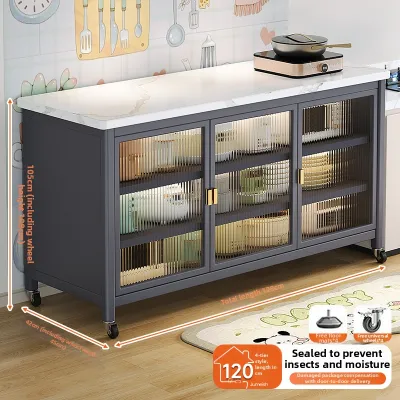
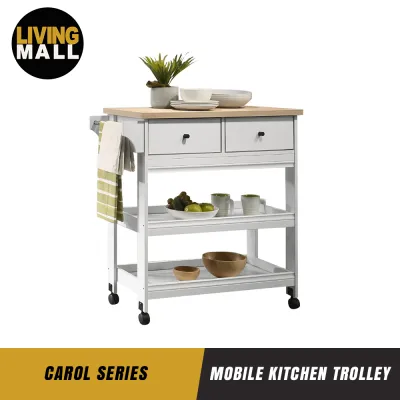
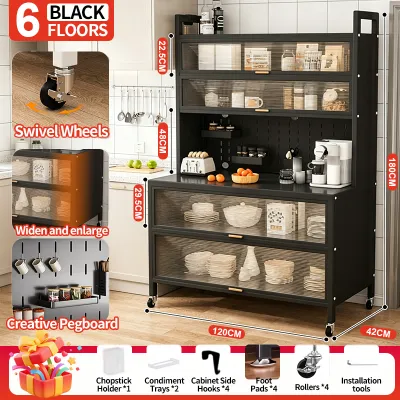
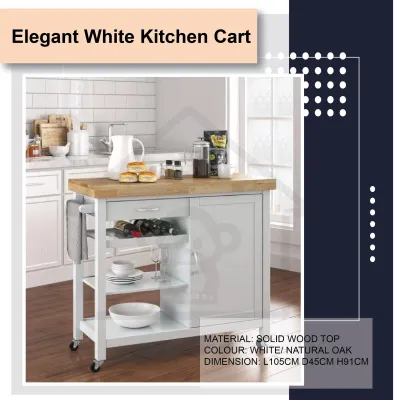
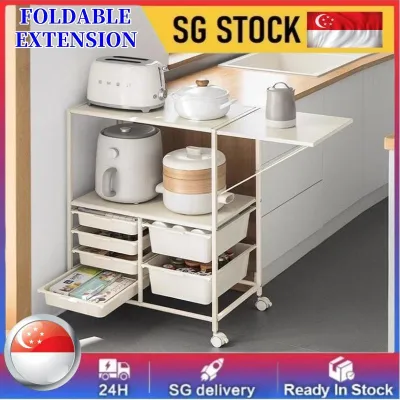
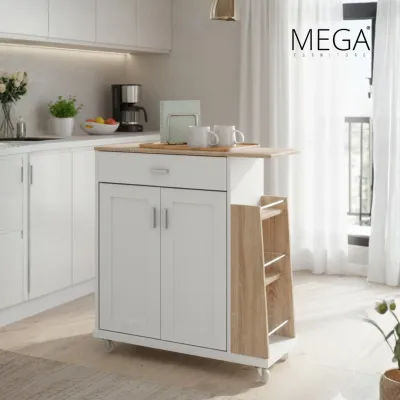
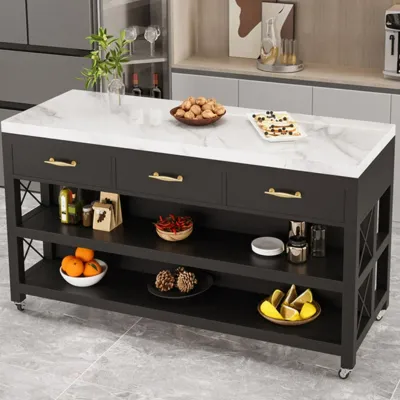
Prices are valid at publication and may change. Please refer to the product page for the latest price.
Flexibility is the primary advantage of a mobile unit. During heavy meal preparation or baking sessions, you can wheel the island to the center of the room to serve as a spacious prep station. When it is time to clean up or when you need clear access to low cabinets and appliances, the island can be effortlessly rolled against an empty wall or tucked into a corner.
Beyond daily cooking, these versatile units easily adapt to social scenarios. During festive gatherings, family hotpot sessions, or weekend dinners, a mobile island can transition into a serving buffet, a drinks station, or an extension of your dining table. This multi-functional capability maximizes the utility of every square meter in your home.
From a financial perspective, a mobile island is highly cost-effective compared to custom built-in carpentry. Commissioning permanent cabinetry involves significant design, material, and labor costs, and those fixtures cannot be moved if you decide to remodel or relocate. A mobile island represents a lower initial investment, requires no invasive installation, and can be packed up and transported to your next home.
Essential Space Planning and Clearance Guidelines
To ensure your mobile island enhances your kitchen rather than creating an obstacle course, precise measurements are essential. Before purchasing or building a unit, you must evaluate the available floor space and account for the physical movement of both people and appliance doors.

Walkway Clearances To maintain a safe and comfortable kitchen environment, aim for a minimum walkway clearance of 900mm to 1000mm between the edges of your mobile island and any permanent fixtures, such as countertops, walls, or cabinets. This clearance ensures that a single cook can work efficiently while allowing family members to pass by without collision. If your kitchen regularly accommodates two or more cooks, increasing this clearance to 1100mm or 1200mm will significantly improve comfort and safety.
Appliance Door Swings One of the most common space-planning mistakes is forgetting to account for the clearance required by fully open appliances. Measure the depth of your refrigerator doors, built-in oven doors, dishwasher trays, and service yard doors when they are completely open. Your mobile island must be positioned far enough away to allow these doors to swing open fully, with enough remaining space for you to stand safely in front of or beside the appliance.
Mapping the Footprint Before finalizing your purchase, use blue painter’s masking tape to outline the exact dimensions of your prospective island on your kitchen floor. Leave this tape outline in place for several days as you go about your daily routines. Physically walking around the outlined area will help you visualize the island’s impact on your kitchen’s traffic flow and ensure it does not block your primary work triangle—the path between your sink, stove, and refrigerator.
Best Movable Kitchen Island Types for Different Needs
Mobile kitchen islands come in various structural designs, each tailored to specific cooking styles, storage requirements, and aesthetic preferences. Understanding the strengths and limitations of each type will guide you toward the right choice for your household.
Butcher Block and Solid Wood Carts
Solid wood and butcher block carts bring natural warmth and a classic Scandinavian or farmhouse aesthetic to modern Singaporean kitchens. These units are highly favored by home bakers and cooks who want a dedicated, sturdy surface for food preparation, such as kneading dough, rolling pastry, or chopping vegetables.
Wood is a organic material that requires active maintenance to withstand Singapore’s high relative humidity, which regularly exceeds 80%. Unsealed or poorly maintained wood can absorb ambient moisture or liquid from food prep, leading to warping, cracking, and mold growth. To prevent this, look for wood tops that are pre-sealed with a water-resistant, food-safe finish, or commit to treating raw wood regularly with food-grade mineral oil.
When evaluating a wooden cart, inspect the construction of the base and the joints. High-quality carts utilize mortise-and-tenon or heavy-duty dowel joints rather than simple screws and glue. This robust joinery ensures the cart remains stable and does not wobble when you apply downward pressure during food preparation.
Stainless Steel and Commercial-Style Prep Tables
For home chefs who prioritize utility, hygiene, and heavy-duty cooking, stainless steel prep tables offer unmatched performance. These tables are highly heat-resistant, allowing you to place hot pots, pans, or baking sheets directly on the surface without the risk of scorching or warping.
Stainless steel is a non-porous material, making it exceptionally hygienic and easy to sanitize. It does not absorb food odors, stains, or bacteria, and it can be wiped down quickly with standard kitchen cleaners. The primary trade-off is aesthetic; its industrial appearance can feel cold or clinical in a cozy residential setting. Additionally, stainless steel surfaces will inevitably develop fine scratches, fingerprints, and water spots over time with regular use.
When shopping for a stainless steel table, choose Grade 304 stainless steel over Grade 430, as Grade 304 offers superior rust resistance in humid environments. Look for tables that feature reinforced undershelves to prevent bowing under the weight of heavy kitchen appliances, and check for sound-deadening pads installed beneath the tabletop to minimize metallic noise during food prep.
Modular Cabinet Islands with Locking Casters
If your primary kitchen challenge is a lack of storage, a modular cabinet island with enclosed storage is the most practical choice. These units feature a combination of drawers, shelves, and cabinet doors, allowing you to conceal bulky pots, pans, small appliances, and dry pantry items from view.
Because these cabinet units can become exceptionally heavy when fully loaded, proper weight distribution is critical for safety. Always store your heaviest items, such as cast-iron cookware, stand mixers, or stacks of dinnerware, in the lowest shelves or drawers. Keeping the heaviest items near the base lowers the unit’s center of gravity, preventing it from tipping over when you roll it across the floor.
To ensure smooth operation, look for high-quality hardware such as soft-close drawer runners and hinges, which prevent cabinet doors from slamming and items from shifting violently inside when the island is moved. Many local homeowners choose to have a carpenter build a custom modular cabinet on wheels, allowing them to match the island’s laminate and countertop materials perfectly to their existing kitchen cabinetry.
Evaluating Materials and Hardware for Local Conditions
Selecting the right materials for your mobile island is crucial for ensuring longevity in Singapore’s hot, humid climate. High humidity and daily kitchen wear can quickly degrade low-quality materials, leading to structural damage and cosmetic issues.
Base Materials and Moisture Resistance Many ready-made furniture pieces are constructed from engineered woods, such as medium-density fiberboard (MDF) or particleboard. While budget-friendly, standard engineered wood is highly vulnerable to moisture. If water seeps through unsealed edges or joints, the fibers will swell, warp, and eventually crumble.
To ensure durability, look for manufacturer specifications indicating moisture-resistant materials, such as High-Moisture Resistant (HMR) board or marine-grade plywood. Ensure all exposed edges are sealed with high-quality, professionally applied PVC or ABS edge-banding to block moisture ingress. For ultimate durability, solid hardwood, stainless steel, or metal frames are the safest choices for the island’s base.
Casters and Mobility Hardware The performance and safety of a mobile island rely entirely on the quality of its wheels. Look for heavy-duty casters that are explicitly rated to support the combined weight of the island frame and your stored kitchen items.
For residential indoor flooring, select non-marking wheels made of polyurethane (PU) or soft rubber. Hard nylon or plastic wheels can easily scratch, gouge, or wear down common Singaporean flooring materials, such as vinyl, laminate, parquet, or polished marble. Additionally, ensure the casters feature dual-locking mechanisms. A dual-lock caster locks both the rotation of the wheel and the swivel joint of the mount, ensuring the island remains completely stationary and safe when you are chopping ingredients or applying lateral force.
Sourcing and Customizing Your Movable Island
When acquiring a mobile kitchen island in Singapore, you can choose between buying a ready-made retail unit or commissioning a custom-built piece from a local professional.
Ready-Made Retail Units Purchasing pre-designed, flat-pack, or fully assembled units from furniture showrooms and online marketplaces is the fastest and most economical route. These products are readily available, allowing you to enhance your kitchen’s functionality within a few days. The primary limitation is that you must accept fixed dimensions, standard storage layouts, and pre-selected materials that may not perfectly match your existing decor or spatial constraints.
Custom-Commissioned Units If you have a unique kitchen layout or want a cohesive aesthetic, commissioning a custom mobile island from a local carpenter or interior designer is highly recommended. This option allows you to select premium, highly durable countertop materials—such as engineered quartz, sintered stone, or solid surface—that match your main kitchen counters. You can also customize the exact cabinet configurations, including built-in spice racks, towel rails, or specialized drawer organizers.
While custom units offer a perfect fit and superior material selection, they require a higher financial investment and a longer lead time, typically ranging from four to eight weeks for design, fabrication, and delivery.
Buyer’s Checklist Before finalizing your purchase or placing a deposit with a custom carpenter, verify the following details with the seller or fabricator:
- Weight Capacity: What is the maximum load capacity of the countertop and the individual shelves or drawers?
- Caster Replaceability: Are the caster wheels easily removable and replaceable if they wear out or damage your flooring over time?
- Assembly and Delivery: Does the price include professional delivery and on-site assembly, or is it a flat-pack unit requiring self-assembly?
- Warranty Coverage: What warranty is provided for moving parts, such as drawer runners, cabinet hinges, and caster locking mechanisms?
Frequently Asked Questions (FAQ)
Can I install a sink or cooktop on a movable island?
While technically possible through complex custom engineering, installing a sink, dishwasher, or cooktop on a mobile island is highly discouraged. Connecting fresh water supply lines and waste drainage to a moving unit requires flexible hoses that are highly susceptible to kinking, wearing down, and leaking over time, which can lead to severe water damage to your kitchen floors.
Similarly, routing gas lines or high-voltage electrical cables to a mobile unit poses significant safety hazards, including gas leaks, electrical shorts, and tripping hazards. To ensure safety and compliance with local building codes, keep your mobile island dedicated strictly to food preparation, storage, and casual dining.
How do I prevent the island from scratching my kitchen floor?
To protect your kitchen floors, always choose casters made of soft polyurethane or rubber rather than hard plastic or nylon. Regularly inspect the wheels to ensure no small debris, grit, or sand has become embedded in the tread, as dragged debris is a primary cause of floor scratches.
If you plan to keep the island parked in one primary location for extended periods, place a low-profile, non-slip kitchen mat or specialized caster cups beneath the wheels to distribute the weight and protect the floor surface from indentation.
What is the ideal height for a movable kitchen island?
The ideal height for your mobile island depends on its primary function. If you intend to use the island as an extension of your primary food preparation area, match its height to your existing kitchen countertops, which typically stand between 850mm and 900mm high. This creates a seamless, ergonomic working height across your kitchen. If the island is intended primarily for casual dining or as a breakfast bar, choose a taller bar-height design between 950mm and 1050mm, and pair it with appropriate bar stools.
Community discussion
Share your experience or ask a question. Comments are reviewed before publication.