
Selecting a high-quality office leather chair requires balancing ergonomic engineering and structural durability. While the aesthetic appeal of leather brings a classic executive look to any workspace, the underlying support mechanisms and material quality determine whether the chair remains comfortable and intact over years of daily use. The “best” leather office chair brand is not a single, universal choice; rather, it depends on your specific physical requirements, daily sitting hours, and budget.
Premium ergonomic brands typically focus on highly adjustable, dynamic support systems and back their products with extensive structural warranties, though they often command a significant financial investment. On the other hand, mid-tier or aesthetic-focused brands prioritize the plush, fully upholstered look of traditional executive chairs, which offers excellent initial comfort for moderate daily use at a more accessible price point. Because comfort is highly subjective and build quality can vary significantly between specific models within the same brand, buyers must evaluate individual chair specifications, adjustability features, and warranty terms rather than relying solely on brand reputation.
Comparing Ergonomic Support Across Leading Brands
When evaluating an office leather chair, ergonomics should always take precedence over pure aesthetics. A poorly designed chair can lead to chronic back pain, poor posture, and physical fatigue, regardless of how luxurious the upholstery feels. To find a chair that supports your body through long hours of focused work, you must examine how different brands approach the core components of ergonomic design.
Products mentioned in this guide
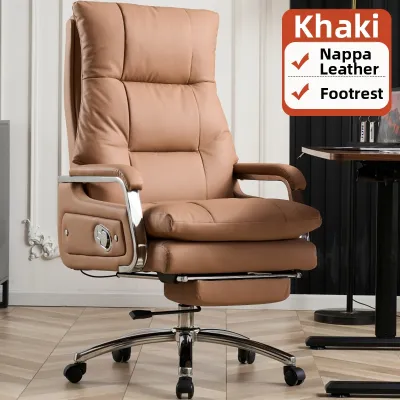
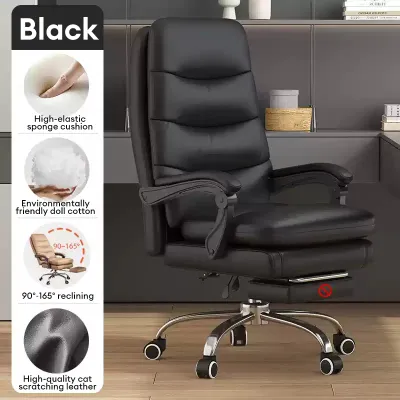
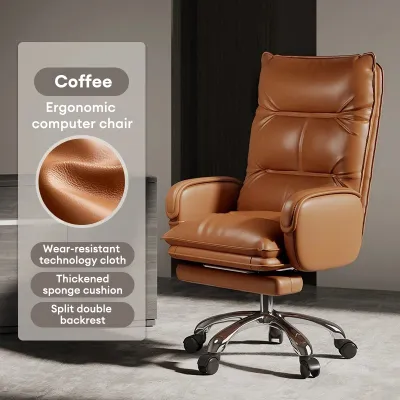
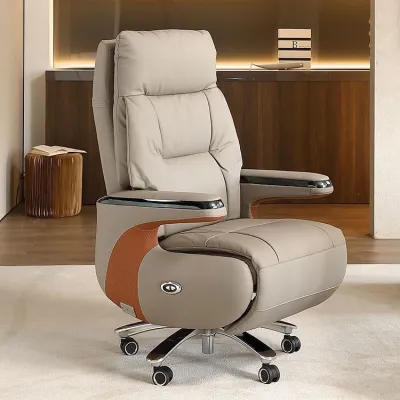
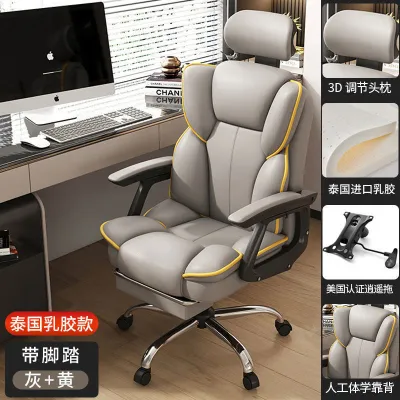
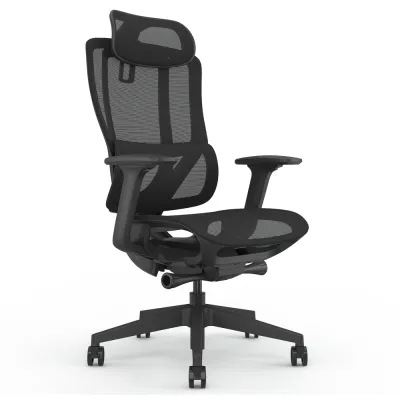
Prices are valid at publication and may change. Please refer to the product page for the latest price.
Lumbar Support and Adjustability
The lumbar region of your spine requires consistent, targeted support to maintain its natural inward curve while you sit. Many traditional leather office chairs feature a fixed lumbar curve built directly into the backrest padding. While this design offers immediate, pillowy comfort when you first sit down, it assumes a one-size-fits-all spinal shape that rarely accommodates the diverse physical heights and proportions of different users.
In contrast, premium ergonomic brands approach lower back support through active or highly adjustable mechanisms. Some utilize dynamic lumbar support systems that automatically pivot and adjust their tension as you shift your weight or change your posture throughout the day. Other high-end models feature manual height and depth adjustments, allowing you to position the support precisely against the curve of your lower back to relieve spinal pressure.
When comparing brands, always check the product specifications for adjustable lumbar options rather than relying on static padding. If you sit for more than four hours a day, a chair that allows you to customize the lumbar height and depth is essential for preventing lower back strain and maintaining a healthy posture over the long term.
Seat Depth, Tilt, and Armrest Customization
Beyond lumbar support, the mechanical adjustments of a chair dictate how well it conforms to your body. The tilt mechanism is the mechanical heart of any ergonomic chair, controlling how the backrest and seat move together. Advanced synchro-tilt mechanisms are highly favored in premium models because they allow the backrest to recline at a faster rate than the seat cushion (typically a 2:1 ratio), keeping your feet flat on the floor and your eyes level as you lean back.
Seat depth adjustment is another critical feature that is frequently omitted in budget-friendly models. A seat slider mechanism allows you to adjust the distance between the front edge of the seat and the backrest. Proper seat depth ensures that your thighs are fully supported without the front edge of the seat pressing against the back of your knees, which can restrict blood circulation and cause discomfort during long sitting sessions.
Armrest customization is equally vital for reducing strain on your upper body. Look for chairs equipped with 4D armrests, which can be adjusted for height, width, depth, and horizontal angle. This level of adjustability allows you to align the armrests perfectly with your desk height and shoulder width, preventing your shoulders from hunching and reducing tension in your neck and wrists.
Breathability and Thermal Comfort
One of the most common challenges associated with fully upholstered leather office chairs is heat retention. Leather is a dense, non-porous material that naturally traps body heat and moisture, which can lead to uncomfortable sweating and a sticky feeling during extended use. This issue is particularly pronounced in warm, humid climates like Singapore, where thermal comfort is a major consideration for daily productivity.
To address this concern, leading brands implement specific design features to enhance airflow and temperature regulation. Some manufacturers use perforated leather panels in the center of the seat and backrest, which allow body heat to escape more easily. Other brands offer hybrid designs that combine a breathable mesh backrest with a premium leather seat cushion, delivering the tactile luxury of leather where you sit while maintaining maximum ventilation for your back.
Additionally, some high-end chairs incorporate specialized cooling gel layers or breathable open-cell foam beneath the leather upholstery to help dissipate heat. When selecting a chair, evaluate your workspace environment and air conditioning levels. If your office tends to get warm, prioritizing a hybrid mesh-and-leather model or a highly perforated leather design will significantly improve your comfort during long working hours.
Evaluating Build Quality and Material Longevity
A premium office leather chair is a significant investment, and its long-term value depends entirely on the quality of its construction materials. Understanding the differences in leather grades, frame structures, and moving components will help you identify a chair that is built to last rather than one that will degrade within a few years.

Leather Types: Genuine, Top-Grain, and Polyurethane (PU)
The type of leather used in a chair’s upholstery directly impacts its durability, feel, and maintenance requirements. Genuine leather, particularly top-grain and full-grain varieties, represents the highest standard of luxury and longevity. These natural materials are highly breathable, incredibly durable, and develop a beautiful, unique patina over time. While genuine leather is highly resistant to wear, it requires periodic conditioning with specialized products to prevent it from drying out and cracking, and it carries a premium price.
Polyurethane (PU) leather is a synthetic alternative that has become highly popular due to its affordability and ease of maintenance. High-quality PU leather (often marketed as engineered or prime leather) is highly resistant to spills, easy to wipe clean, and can mimic the soft texture of genuine leather remarkably well. It is an excellent choice for busy office environments where low-maintenance durability is preferred.
However, buyers should be cautious of low-grade bonded leather, which is made by gluing shredded leather scraps together with polyurethane. Bonded leather is highly susceptible to peeling, flaking, and cracking within just one or two years of regular use. Always read the technical specifications carefully to identify the exact material composition, and avoid ambiguous marketing terms like “executive leather” that do not specify the leather grade.
Frame Construction and Weight Capacity
The structural integrity of an office chair begins with its frame and base. High-quality chairs feature frames and bases constructed from heavy-duty polished aluminum, reinforced steel, or solid die-cast metal. These materials provide exceptional stability, prevent the chair from wobbling, and ensure that the frame can withstand daily physical stress without bending or warping over time.
In contrast, budget-friendly models often utilize nylon or composite plastic bases. While modern high-strength nylon can be reasonably durable, it lacks the absolute rigidity and premium feel of solid metal. Over time, plastic bases are more prone to flexing, squeaking, and structural wear, especially under heavier loads or intensive daily use.
Before purchasing, always verify the manufacturer’s stated maximum weight capacity and look for independent testing certifications. Standards such as BIFMA (Business and Institutional Furniture Manufacturers Association) ensure that the chair’s frame, base, and structural joints have undergone rigorous load-bearing and durability tests. Selecting a chair with a certified weight capacity that safely exceeds your requirements is a key step in ensuring long-term safety and performance.
Casters and Moving Mechanisms
The moving parts of an office chair are subjected to constant friction and stress, making them common failure points if they are poorly constructed. Casters, the wheels at the base of the chair, must be chosen based on your flooring type. Hard nylon casters are designed to roll smoothly on carpeted floors, whereas soft polyurethane or rubber-coated casters are essential for protecting hardwood, laminate, or vinyl floors from scratches and scuffs.
The gas lift cylinder is the pressurized component responsible for height adjustment and must be built to high safety standards. High-quality chairs utilize Class 4 gas cylinders, which are certified to handle heavy loads and ensure smooth, consistent height adjustments without losing pressure or leaking fluid over time. A failing gas cylinder will cause the chair to slowly sink throughout the day, which is a common issue in lower-quality models.
Because the gas lift and tilt mechanisms are highly complex and undergo constant use, they are critical components to evaluate during your research. When comparing brands, check the specific warranty coverage allocated to these moving parts. A brand that offers dedicated, long-term warranty coverage for its mechanical components is a strong indicator of superior build quality and engineering.
Brand Evaluation: Warranties, Returns, and Long-Term Value
A manufacturer’s warranty and post-purchase support are direct reflections of their confidence in their product’s build quality. When investing in a high-end office leather chair, understanding the warranty terms and return policies is just as important as evaluating the physical specifications of the chair itself.
Premium ergonomic brands often lead the market by offering comprehensive 10-to-12-year warranties that cover both the structural frame and the internal mechanical components. This level of coverage ensures that if a gas cylinder fails or a tilt mechanism breaks down years after your purchase, the manufacturer will repair or replace the parts. This long-term support significantly increases the overall value of the chair, making a higher upfront cost more economical over a decade of use.
In contrast, mid-tier and budget-focused brands typically offer shorter warranties, often ranging from 1 to 5 years. When reviewing these warranties, it is crucial to read the fine print to understand what is excluded. Most warranties do not cover cosmetic wear and tear on the leather, natural softening of the foam cushions over time, or damage caused by improper cleaning methods. Understanding these limitations helps prevent unexpected out-of-pocket costs later on.
Return policies and trial periods are particularly important when purchasing an office chair online, where you cannot physically test the seat comfort or leather texture beforehand. Many reputable brands offer a trial period (typically 14 to 30 days) during which you can use the chair in your workspace and return it if it does not suit your body. Always check if the brand requires you to keep the original packaging for returns, and verify whether return shipping fees are covered, as shipping a heavy office chair can be costly.
When calculating long-term value, consider the cost per year of ownership rather than just the initial purchase price. A premium chair with a 12-year warranty may have a higher upfront cost, but it often proves more economical than replacing a cheaper chair every two or three years.
Decision Framework: How to Choose Your Leather Office Chair
Choosing the right leather office chair involves balancing your daily habits, ergonomic needs, and budget. To make an informed decision, you can categorize your requirements into a clear, condition-based framework.
- Choose a premium ergonomic brand if: You spend more than 8 hours daily at your desk, require highly adjustable features (such as 4D armrests, seat sliders, and dynamic lumbar support) to manage or prevent physical strain, and want the security of a comprehensive 10-to-12-year warranty. These chairs represent a higher initial investment but offer the best long-term support and durability.
- Choose a mid-tier or aesthetic-focused brand if: You prioritize the classic, commanding appearance of a leather chair for a home office, use the chair for moderate periods (3 to 6 hours daily), and want a comfortable, well-cushioned seat without the premium price tag of a highly engineered ergonomic model.
- Verify first if: The chair's physical dimensions—such as the seat height range, seat width, and overall footprint—are fully compatible with your desk clearance and available workspace. Additionally, ensure that the certified weight capacity safely exceeds your requirements and that the caster wheels are suitable for your specific floor type.
By focusing on these specific, objective criteria rather than brand marketing, you can select a leather office chair that provides the perfect combination of ergonomic support, material quality, and long-term value for your workspace.
Frequently Asked Questions (FAQ)
Is a leather office chair better than mesh for long hours?
Mesh generally offers superior breathability, making it the preferred choice for long hours in warm, non-air-conditioned environments where heat dissipation is crucial. However, a leather office chair provides a more luxurious tactile experience, denser cushioning, and an easier-to-clean surface. The ideal choice depends on whether you prioritize maximum airflow or rich aesthetic comfort and supportive padding.
How do I maintain and clean a genuine leather office chair?
To maintain a genuine leather office chair, perform regular, low-risk cleaning by dusting the surface with a soft, dry microfiber cloth and wiping away spills immediately with a clean, damp cloth. Always check the manufacturer’s specific care label and instructions before applying any leather conditioners or specialized cleaners. To prevent the leather from drying out, cracking, or fading prematurely, position the chair away from direct sunlight and heat sources.
Community discussion
Share your experience or ask a question. Comments are reviewed before publication.