
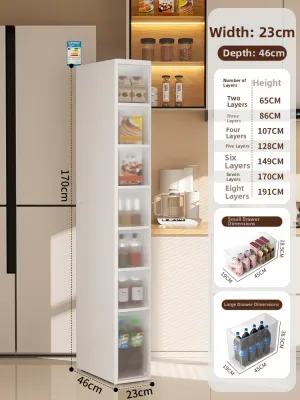
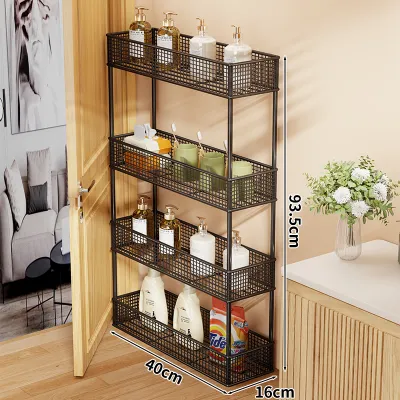
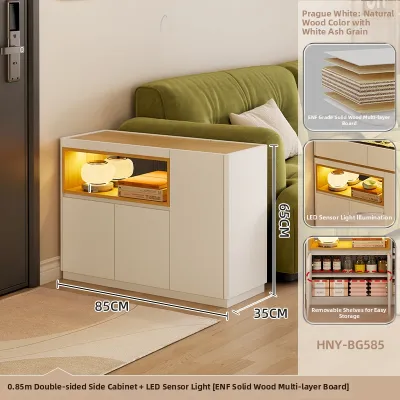
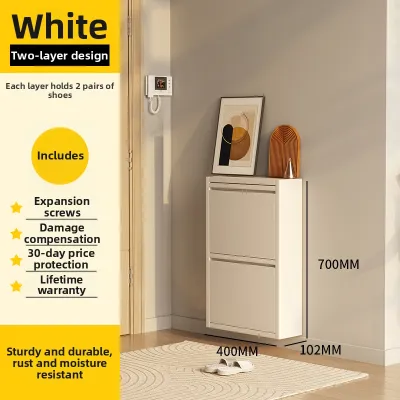
When planning storage for a compact bedroom, finding the right balance between floor space and storage capacity is a common challenge. To store clothes effectively without making a small room feel cramped, the most practical depth for a thin cabinet depends entirely on how you store your garments. For folded clothes, a shallow cabinet with an external depth of 35cm to 40cm is highly efficient and prevents items from getting lost at the back of shelves. However, if you need to hang clothes traditionally on a lateral rod, you will require a standard depth of at least 55cm to 60cm to accommodate adult hangers. If your bedroom layout cannot accommodate this depth, a thin cabinet of 35cm to 45cm can still work for hanging clothes, provided you swap the traditional hanging rod for a front-facing pull-out rod. Understanding these spatial requirements allows you to maximize every square centimeter of your bedroom floor plan.
Understanding the Core Trade-Off: Hanging vs. Folding
Choosing between hanging and folding is the first step in determining your cabinet’s dimensions. Traditional hanging storage relies on a lateral rod running parallel to the cabinet doors, which requires the cabinet to be deep enough to house the full width of a hanger and the garments draped over it. Folded storage, on the other hand, relies on horizontal shelves or drawers, which can be significantly shallower because folded garments occupy a much smaller, more controlled footprint.
In regions with warm, tropical climates like Singapore, daily wardrobes consist primarily of lightweight summer clothing such as T-shirts, shorts, linen trousers, and thin dresses. These garments are highly suited for folding or rolling, which means a shallow shelving unit can easily handle the bulk of your daily wear. Heavy, bulky items like winter coats or thick wool sweaters are rarely used and are typically kept in long-term storage rather than active daily wardrobes. Consequently, prioritizing folded storage in a thin cabinet of 35cm to 40cm is often the most practical way to save floor space while still meeting your daily storage needs.
Products mentioned in this guide
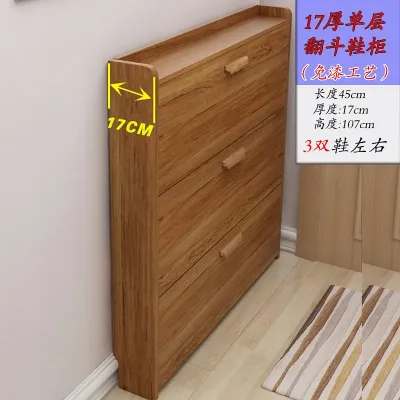
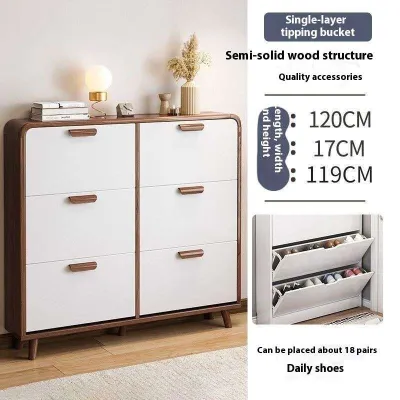
![[TheGoodFurniture] Plastic Cabinet. Personal Locker. Storage System. Multipurpose Cupboard. cupboard storage Washable and Durable. Slim and Tall Cabinet.*FAST DELIVERY*](https://img.lazcdn.com/g/p/123dc66709979b8b69307856305381b0.jpg_400x400q80.jpg_.webp)
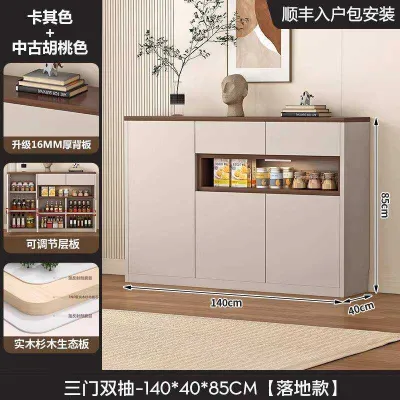
Prices are valid at publication and may change. Please refer to the product page for the latest price.
Depth Considerations for Hanging Clothes
If your wardrobe consists of formal wear, delicate dresses, or pressed shirts that must be hung to prevent creasing, cabinet depth becomes a critical factor. Standard adult clothes hangers typically measure between 40cm and 45cm in width. When you add the natural bulk of fabrics, particularly around the shoulder seams of shirts and jackets, the total width of a hung garment easily reaches 50cm to 55cm. To prevent the cabinet doors from constantly rubbing against your clothes or forcing you to squeeze them shut, a traditional wardrobe requires an internal depth of at least 55cm.

When dealing with a truly compact bedroom where a 55cm-deep cabinet would block walkways or prevent doors from opening, you must look at alternative hanging configurations. An ultra-thin cabinet with an external depth of 35cm to 45cm cannot accommodate a standard lateral hanging rod. Instead, you can install a front-facing, pull-out hanging rod. This hardware is mounted to the underside of a shelf and runs from the back of the cabinet to the front, allowing you to hang clothes facing forward. While this setup reduces the number of items you can hang on a single rod, it makes hanging storage possible in a cabinet that is only 35cm deep.
Another crucial factor to consider is the difference between external and internal cabinet depth. Sliding doors, which are highly popular in small bedrooms, require their own tracks. These tracks typically consume between 8cm and 10cm of the cabinet’s total depth. If you purchase a cabinet with an external depth of 50cm featuring sliding doors, the actual usable internal depth may only be 40cm, which is too shallow for traditional hanging. Always verify the internal clearance specifications before assuming a cabinet can accommodate standard hangers.
Depth Considerations for Folding and Shelving
For folded clothes, shallow shelves are often more practical than deep ones. A standard folded T-shirt, pair of jeans, or lightweight sweater typically measures approximately 30cm in length and 25cm in width. In a standard 60cm-deep wardrobe, folded clothes are often stacked in two rows—one in front of the other. This layout frequently leads to “dead space” at the back, where clothes are forgotten, difficult to reach, and prone to becoming disorganized when you search for items.
A thin cabinet with an internal shelf depth of 30cm to 35cm eliminates this issue entirely. Every folded item sits in a single, highly visible row right at the front of the shelf. This shallow depth makes it incredibly easy to maintain organization, as you can see and access every piece of clothing without disturbing other items. It also encourages a more disciplined approach to wardrobe organization, preventing clutter from accumulating in hidden corners.
To maximize the efficiency of shallow shelves, consider incorporating pull-out baskets, shallow drawers, or fabric drawer inserts. Drawers in a thin cabinet must be equipped with high-quality, full-extension runners so you can access the very back of the drawer easily. Using small storage bins or dividers within these drawers allows you to organize smaller items like socks, underwear, and accessories without them sliding around or getting mixed up when the drawer is opened and closed.
Room Layout and Cabinet Door Clearance
Selecting the right cabinet depth is not just about what fits inside; it is also about how the cabinet interacts with the rest of your bedroom. In a compact room, every centimeter of floor space affects how easily you can move around. You must carefully calculate the clearance required for both the cabinet doors and the walkways around your bed.
Hinged doors require clear floor space to swing open. For example, a cabinet with 40cm-wide hinged doors requires at least 45cm of unobstructed space in front of it to allow the doors to open fully and to let you stand in front of the cabinet comfortably. If your bed is positioned close to the wardrobe, hinged doors may bump against the mattress or frame. In contrast, sliding doors do not require any front clearance to open, making them highly suited for tight spaces where the bed sits close to the cabinet. However, keep in mind that sliding door mechanisms add to the cabinet’s overall external depth, whereas hinged doors do not.
Walkway clearance is another vital consideration for a comfortable bedroom layout. Ideally, you should maintain a minimum of 60cm of walking space between the edge of your cabinet and any adjacent furniture, such as the bed frame or a desk. If a standard 60cm wardrobe reduces your walkway to a cramped 30cm, opting for a 40cm thin cabinet will instantly reclaim 20cm of valuable floor space, dramatically improving the room’s flow and usability.
Finally, look out for physical obstructions on your walls and floor. Skirting boards along the base of the wall can prevent a flat-backed cabinet from sitting flush against the wall, which can waste 1.5cm to 2cm of depth. Additionally, take note of the locations of wall switches, power outlets, light fixtures, and air conditioning units or trunking. A cabinet that is too deep or placed incorrectly may block access to essential switches or interfere with the airflow from your air conditioner.
Pre-Purchase Measurement and Verification Checklist
Before purchasing a thin cabinet, taking precise measurements of your space and verifying product specifications will help you avoid costly mistakes. Use this step-by-step checklist to ensure a precise fit:
- Measure Wall Dimensions at Multiple Points: Walls and floors are rarely perfectly straight. Measure the width and height of your designated wall space at the bottom, middle, and top. Use the smallest measurement as your guide.
- Account for Skirting Boards and Trim: Measure the thickness of your skirting boards and deduct this from your available floor depth, or plan to use a cabinet with a recessed base that clears the skirting.
- Verify Usable Internal Depth: Check the manufacturer's product specifications for the actual internal depth. Deduct the thickness of the back panel and any door tracks to ensure your hangers or storage boxes will fit.
- Check for Wall Obstructions: Identify the positions of power outlets, light switches, window frames, and air conditioning trunking to ensure the cabinet will not block them.
- Map Out Door Swing and Walkways: Use masking tape on the floor to outline the cabinet's footprint and the path of swinging doors to ensure you have at least 60cm of clearance.
- Confirm Delivery Access Routes: Measure the height and width of your building's elevator door, the interior of the elevator, stairwell turns, and your apartment's front and bedroom doors to guarantee the cabinet parts can be brought inside safely.
Frequently Asked Questions (FAQ)
Can I use a thin cabinet for both hanging and folding clothes?
Yes, a thin cabinet can easily accommodate a hybrid layout. To make this work in a shallow depth of 35cm to 45cm, use shelves or drawers for the majority of your folded clothes, and install a front-facing pull-out rod in a dedicated vertical section for hanging items. This configuration allows you to keep delicate shirts or dresses hung up without requiring the deep footprint of a traditional wardrobe.
What is the minimum depth for a pull-out trouser rack?
A pull-out trouser rack typically requires a minimum internal depth of 35cm to 40cm to function properly. When selecting a trouser rack for a thin cabinet, look for front-loading designs where the trousers hang parallel to the sides of the cabinet. Always check the manufacturer’s hardware specifications to ensure the slide mechanism has enough clearance to extend fully without hitting the cabinet doors.
Community discussion
Share your experience or ask a question. Comments are reviewed before publication.