
Quick Answer: Which Premium Chair Fits Your Home Office?
Selecting a premium ergonomic office chair for a Singapore home office is a highly personalized decision. There is no single “best” chair that universally fits every individual. The ideal choice depends on your specific physical proportions, daily sitting habits, budget, and the spatial constraints of your residential layout.
Steelcase has established a distinct reputation in the high-end seating market by prioritizing active seating, flexible backrests, and exceptional mechanical durability. Unlike brands that design chairs to hold the body in a single, structurally optimized posture, Steelcase engineered its flagship models to flex and mimic the natural movement of the spine. This philosophy encourages continuous micro-movements, which can help reduce fatigue during long hours of focused task work.
Choose Steelcase if you prefer a chair with highly adaptive fabric or foam cushioning, exceptionally adjustable armrests, and a backrest that actively contours to your back as you shift positions.
Products mentioned in this guide
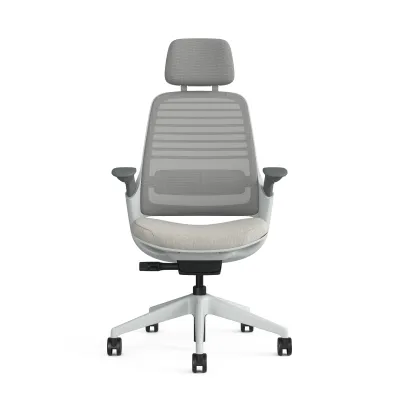
![[Ready Stock] Refurnished Steelcase Leap V2 with Headrest Solution Ergonomic Chair from USA](https://img.lazcdn.com/g/p/0851cf7bf1b9b6500233fd35775eabf4.jpg_400x400q80.jpg_.webp)
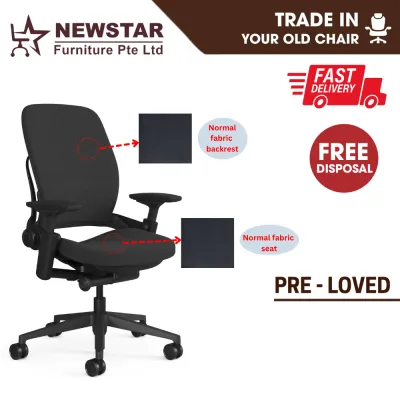
![[Pre-Loved] Steelcase Series 1 Sustainable Ergonomic Office Chair 6 Months Warranty - Newstar Furniture](https://img.lazcdn.com/g/p/ecceaab13c81bbb50612b84be270b3a1.png_400x400q80.png_.webp)
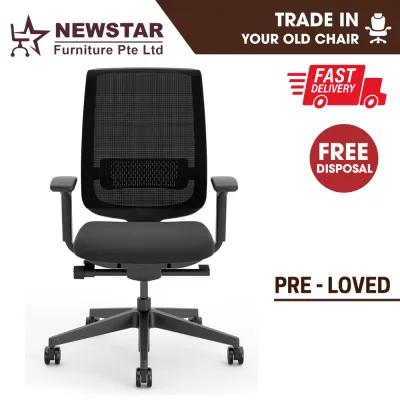
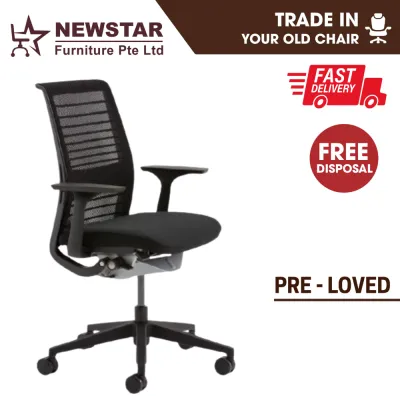
Prices are valid at publication and may change. Please refer to the product page for the latest price.
Explore other premium brands if you prefer the suspended, weightless sensation of a full-mesh seat and back, require a highly minimalist or executive aesthetic, or have specific physical requirements that align with a competitor’s proprietary support mechanisms.
This comparison focuses strictly on established, high-end ergonomic manufacturers available in Singapore—such as Herman Miller, Haworth, and Humanscale—rather than budget or mid-tier alternatives. These premium manufacturers design chairs intended for commercial-grade, multi-decade use, representing a long-term investment in your physical well-being.
Key Dimensions: Steelcase vs. Other High-End Brands
Evaluating a high-end office chair requires looking beyond marketing terminology to analyze the physical mechanisms, material properties, and structural dimensions. Comparing these core factors reveals how different design philosophies impact your daily comfort and home office setup.

Ergonomic Adjustability and Posture Support
Steelcase approaches ergonomics through the concept of dynamic support. In models like the Leap and Gesture, the backrest utilizes a flexible frame system designed to bend as you recline, maintaining support for the lower back without requiring manual tension adjustments every time you change posture. This is paired with a synchronized tilt mechanism, which slides the seat pan forward and down slightly as you recline, keeping your feet flat on the floor and maintaining a consistent line of sight to your computer screen.
In contrast, other premium manufacturers often employ different ergonomic philosophies. For example, some high-end competitors rely on highly tensioned elastomeric mesh suspended over a rigid frame. This design distributes body weight evenly to eliminate pressure points, but it does not flex or bend with your movements in the same way a flexible polymer backrest does. Other brands utilize weight-activated mechanisms that automatically balance the recline tension based on your body weight, eliminating manual adjustment knobs entirely.
When comparing ergonomic adjustments, pay close attention to three critical features:
- Lumbar Support: Determine whether you prefer an active, height-adjustable lumbar slide that applies direct pressure to the lower spine, or a passive, built-in curve integrated directly into the backrest material.
- Seat Depth Adjustment: Ensure the seat pan can slide forward or backward. A proper seat depth leaves a gap of approximately two to three fingers between the front edge of the seat and the back of your knees, preventing pressure on the popliteal veins.
- Armrest Articulation: High-end chairs often feature 4D armrests that adjust for height, width, depth, and horizontal pivot angle. This adjustability is crucial for supporting your forearms while typing, reducing strain on the shoulders and neck.
Because ergonomic comfort is highly subjective, always cross-reference your personal physical measurements with the manufacturer’s official specification sheets to verify that the adjustment ranges accommodate your height and torso length.
Build Quality, Materials, and Longevity
Premium office chairs are constructed using high-performance materials designed to withstand continuous wear. Structural frames typically consist of die-cast aluminum, glass-reinforced nylon, or high-strength polymers. Upholstery options generally fall into three categories: woven mesh, high-density molded foam covered in fabric or 3D knit, and premium leather.
It is important to recognize that a material name alone does not guarantee durability, scratch resistance, or long-term comfort. To evaluate the true quality of a chair, you should check the manufacturer’s official specifications for structural ratings and material testing standards:
- Weight Capacity: Verify the maximum load capacity on the product label. Most premium chairs are rated to support up to 136 kg or 150 kg, indicating robust joint and cylinder construction.
- Fabric Durability: Look for the Martindale or Wyzenbeek abrasion rating. Premium commercial fabrics often exceed 100,000 double rubs, ensuring the material will not thin or pill prematurely under daily use.
- Warranty Terms: Review the specific warranty documentation. High-end brands typically offer 10- to 12-year warranties, but you must verify which components are covered under the full term and which have shorter coverage limits, such as gas cylinders, foam pads, or armrest surfaces.
The choice between materials involves distinct functional trade-offs. Suspended mesh offers unmatched breathability, making it highly effective at heat dissipation. However, some users find that mesh can feel firm or cause localized pressure along the frame edges over long sitting sessions. High-density molded foam provides a plush, highly cushioned feel that distributes weight across the sit bones, but it retains more body heat and requires high-quality, breathable fabric covers to remain comfortable in warm environments.
Aesthetics and Home Office Footprint
Integrating a commercial-grade task chair into a residential space requires balancing ergonomic utility with interior design. Steelcase chairs often present a technical, highly functional aesthetic characterized by visible adjustment levers, robust structural spines, and pronounced curves. While this look fits seamlessly into a dedicated study, it can sometimes feel overly corporate in a multi-purpose room.
Other premium brands offer alternative design directions. Some focus on ultra-minimalist profiles with slim frames and hidden adjustment cables, while others emphasize organic, flowing lines that resemble high-end residential furniture rather than office equipment. To help these chairs blend into a home environment, manufacturers offer various colorways, allowing you to pair light-colored frames (such as platinum, seagull, or mineral) with neutral, pastel, or vibrant fabric upholstery.
Spatial planning is critical, particularly in compact Singapore residential layouts like HDB flats or condominiums. Before purchasing, measure your workspace carefully and consider the following dimensions:
- Base Diameter: Premium chairs typically feature a wide five-star caster base with a diameter of 65 cm to 70 cm to ensure stability. Verify that your desk legs have sufficient interior clearance to accommodate this footprint.
- Maximum Armrest Height: Measure the clearance height from the floor to the underside of your desk drawer or tabletop. Ensure the chair's armrests can lower sufficiently to allow the chair to slide fully under the desk when not in use, freeing up valuable floor space.
- Overall Height and Recline Range: Ensure the chair has enough clearance from nearby walls, bookshelves, or wardrobe doors, especially when fully reclined.
Navigating the Singapore Market: Purchasing and Climate Factors
Buying a premium office chair in Singapore involves navigating specific local market conditions, from distribution channels to environmental factors that directly affect material performance.
Purchasing Channels
In Singapore, premium ergonomic chairs represent a significant financial investment, with prices typically starting around S$1,000 and exceeding S$2,500 for fully optioned models. Because of this high entry point, visiting an authorized local showroom is strongly recommended. Testing a chair in person allows you to sit in it for at least 15 to 20 minutes, test every adjustment lever, and evaluate how the frame supports your specific body shape.
While online marketplaces or unauthorized parallel importers may offer lower upfront prices, purchasing from these sources carries substantial risks. Parallel-imported chairs often do not carry a valid local manufacturer’s warranty. If a pneumatic cylinder fails or a tension spring breaks, you may be left without recourse, as authorized local service centers generally refuse to service parallel-imported products or may charge high fees for parts and labor.
Climate Considerations
Singapore’s tropical climate—characterized by high relative humidity and year-round temperatures averaging 30°C—has a direct impact on the longevity and comfort of chair materials. If your home office relies on natural ventilation or ceiling fans rather than continuous air conditioning, material selection is paramount.
In these environments, traditional leather or thick, non-breathable synthetic polyurethane (PU) upholstery can trap heat and sweat. Over time, high humidity can cause synthetic leather to undergo hydrolysis, leading to cracking, peeling, and flaking. For non-air-conditioned spaces, highly breathable mesh or advanced 3D knit fabrics are superior choices, as they facilitate air circulation and wick moisture away from the body. If you prefer a foam seat cushion, ensure the fabric cover is highly breathable and check the manufacturer’s care instructions for managing moisture exposure.
Warranty and Support
Before finalizing your purchase, carefully verify the localized warranty terms with the authorized distributor in Singapore. Address the following details:
- Warranty Execution: Confirm whether the local distributor honors the global manufacturer's warranty directly, and whether they provide on-site repair services or require you to transport the heavy chair to their service center.
- Response Times: Ask about the typical response and resolution times for local warranty claims.
- Parts Availability: Verify whether the distributor maintains a local inventory of common replacement parts, such as gas cylinders, armrest pads, and casters. If parts must be shipped from overseas warehouses, repair times can extend to several weeks.
Delivery and Assembly
Premium office chairs are heavy, often weighing between 20 kg and 30 kg due to their robust steel, aluminum, and dense polymer construction. When ordering, clarify the delivery terms with the retailer. Many premium chairs are delivered fully assembled in large, bulky boxes.
Ensure that the delivery service includes transporting the item directly into your designated room. If you live in a high-rise residential building, verify that the delivery box dimensions can easily clear passenger lifts, corridor corners, and your front doorway frame. If your building requires walking up stairs due to lift maintenance or layout constraints, confirm whether the delivery team charges additional handling fees.
Decision Matrix: When to Choose Steelcase and When to Look Elsewhere
To help guide your final purchasing decision, use this structured framework to match your specific user profile and home environment to the right chair category.
Choose Steelcase if:
- You prefer active, dynamic sitting: You frequently shift positions, lean back to read, or lean forward to type, and you want a backrest that automatically contours to your movements without manual adjustments.
- You prefer cushioned comfort over mesh: You dislike the firm, suspended feel of mesh seat pans and prefer the supportive, pressure-distributing cushioning of high-density molded foam covered in high-performance fabric.
- You require highly adjustable armrests: You need precise armrest positioning to prevent shoulder and wrist strain, and you want to take advantage of multi-directional 4D adjustment mechanisms.
- You want a proven, heavy-duty workhorse: You prioritize a robust, highly mechanical build quality backed by a long-term manufacturer's warranty.
Choose other premium brands if:
- You want a full-mesh experience: You prioritize maximum breathability in Singapore's humid climate and prefer a suspended mesh seat pan that eliminates foam cushioning entirely.
- You require a minimalist or residential aesthetic: You want a chair with a slim profile, hidden mechanisms, or organic design lines that blend seamlessly into a modern living room or bedroom.
- You have highly specific physical proportions: You are exceptionally petite or tall, and you find that a competitor's specific frame sizing or unique lumbar adjustment mechanism provides a more tailored fit than Steelcase's standard models.
Verify first if:
- The chair will be shared: If multiple family members of different heights and weights will use the chair, look for models with intuitive, auto-weight-sensing tension controls that do not require constant manual recalibration.
- You have delicate flooring: Check the caster type. Standard hard-wheel casters can scratch or wear down engineered hardwood, parquet, or luxury vinyl tiles (LVT). Verify if the chair comes with soft-caster wheels designed for hard floors, or if you need to purchase a protective floor mat.
- You are buying refurbished or second-hand: If purchasing a refurbished model to save costs, verify whether the local distributor honors any remaining warranty for secondary owners, and inspect the joints, gas cylinder, and foam density in person before paying.
Ultimately, personal comfort is the deciding factor. Visiting an authorized local showroom to test these premium options side-by-side remains the most effective way to ensure your investment supports your health and productivity for years to come.
Frequently Asked Questions (FAQ)
How long do premium office chairs typically last?
Premium office chairs are engineered to commercial-grade standards, meaning they are built to withstand 24/7 continuous use in corporate environments. When used in a home office setting, a premium chair typically lasts between 10 and 15 years, and often longer with proper care. Most high-end manufacturers back their chairs with extensive 10- to 12-year warranties that cover structural frames, control mechanisms, and pneumatic cylinders. However, the actual lifespan of wear-and-tear components—such as armrest pads, foam cushions, and fabric upholstery—depends on daily usage hours, user weight, and environmental factors. Always review the manufacturer’s specific warranty policy to understand which components have shorter coverage limits.
Is it worth buying a refurbished premium chair in Singapore?
Buying a refurbished premium chair can offer substantial cost savings, often reducing the purchase price by 40% to 60% compared to buying new. However, this option carries specific trade-offs. Refurbished chairs purchased from unverified peer-to-peer marketplaces rarely include a manufacturer’s warranty and may have hidden defects, such as a slow-leaking gas cylinder, worn caster bearings, or degraded seat foam. If you choose to buy refurbished, it is highly recommended to purchase exclusively from established, reputable refurbishing companies in Singapore. These professional sellers typically deep-clean the upholstery, replace worn mechanical parts with original equipment manufacturer (OEM) components, and provide their own localized warranty (often ranging from six months to two years) to protect your investment.
Do premium chairs require special maintenance in humid climates?
Yes, Singapore’s high relative humidity and warm temperatures require regular, low-risk maintenance to prevent mold growth, fabric degradation, and mechanical squeaks. Vacuum the seat cushion and backrest at least once a month using an upholstery attachment to remove dust, skin flakes, and pet dander, which can trap moisture and encourage dust mites. If a spill occurs, immediately blot the area with a clean, dry microfiber cloth; never saturate the fabric, as excess moisture can seep into the underlying polyurethane foam and cause mold. For hard plastic frames and metal bases, wipe them down periodically with a slightly damp cloth and mild soap. Avoid harsh chemical solvents, bleach, or alcohol-based cleaners, which can degrade plastics or strip protective coatings. Always consult the manufacturer’s specific care label and user manual before applying any cleaning agents. If instructions conflict, stop and consult the manufacturer or a qualified professional.
Community discussion
Share your experience or ask a question. Comments are reviewed before publication.