
Quick Answer: Standalone Leg Massager or Full Massage Chair?
When seeking relief from lower-body fatigue, the choice between a standalone leg massager and an all-in-one massage chair comes down to a balance of physical space, financial investment, and your specific physical needs. If you primarily experience tired, aching lower limbs after a long day of walking or standing, investing in a dedicated device can provide targeted, high-intensity relief without overwhelming your living space or your budget. These compact units are highly optimized for localized therapy, making them exceptionally practical for smaller apartments, study rooms, or offices.
Conversely, a full massage chair serves as a comprehensive, whole-body relaxation station. It is designed for those who suffer from generalized tension across the upper back, shoulders, lower lumbar, and glutes, in addition to lower-limb fatigue. A massage chair represents a significant lifestyle and furniture investment, requiring a permanent footprint in your home. While it offers an unparalleled, integrated relaxation experience, it demands a much larger spatial and financial commitment. Understanding how these two categories compare across spatial, functional, and financial dimensions will help you select the ideal option for your household.
Space and Layout: Measuring Clearances and Floor Footprint
Physical footprint is often the ultimate deciding factor when choosing home wellness equipment, particularly in space-constrained urban environments like Singapore. A standalone leg massager offers unmatched spatial flexibility. Because these devices typically measure under 50 centimetres in width and depth, they require zero dedicated floor space when not in use. You can easily slide them under a bed frame, tuck them into a wardrobe, or place them neatly beside a sofa. Their lightweight construction allows you to move them effortlessly from the living room to the bedroom, adapting to your daily routine without permanently altering your home’s layout.
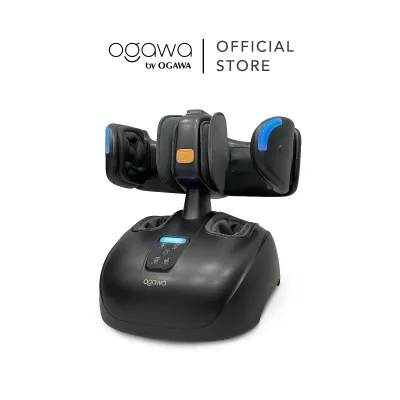
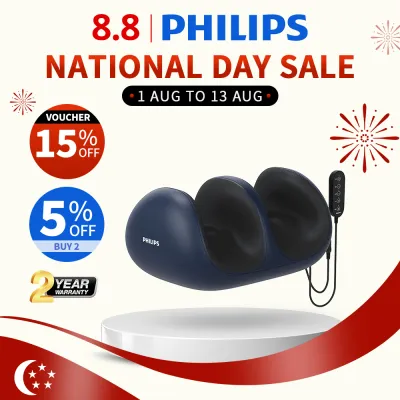
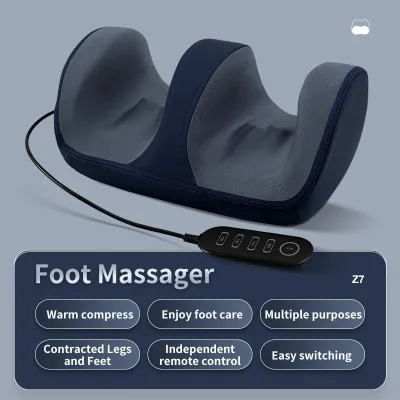
Products mentioned in this guide
![[✅SG Ready Stock] Thermal Knee Massager Electric Leg Joint Heating Vibration Massage Therapy Elbow Brace Arthritis Pain Physiotherapy Knee Support](https://img.lazcdn.com/g/p/a4bb6a111ceeb7a7d4fbb52cbdd42e3c.png_400x400q80.png_.webp)
Prices are valid at publication and may change. Please refer to the product page for the latest price.

A full-sized massage chair, on the other hand, is a dominant piece of furniture that demands careful spatial planning. When evaluating a massage chair, you must account for both its static footprint and its dynamic, fully reclined clearance. Traditional reclining models require a substantial gap of 30 to 50 centimetres between the backrest and the wall to tilt backward safely. Modern engineering has introduced wall-hugging or zero-gravity sliding designs that glide forward as they recline, reducing the required rear clearance to as little as 5 to 10 centimetres. However, the total extended length of a reclined chair can still exceed 1.8 metres, which can easily overwhelm a standard bedroom or a compact living room.
Beyond the final placement, you must carefully evaluate the delivery path and access points of your home. Before purchasing a massage chair, measure the finished dimensions of your main entryway, internal doorways, hallway corners, and passenger lift doors. Standard residential lifts in high-rise apartments often have strict width and depth limitations that can prevent a fully assembled massage chair from entering. Many premium chairs require professional on-site assembly, where delivery teams transport the core frame and side panels separately to navigate tight stairwells and narrow door frames. Always verify these access requirements with the retailer beforehand to avoid costly delivery failures.
From an interior design perspective, a standalone device remains visually discreet and can be easily hidden away when guests arrive. A massage chair is a permanent visual anchor that dictates the flow of a room. Because it occupies a significant portion of the visual plane, you must consider how its upholstery color, synthetic leather finish, and overall silhouette align with your existing home decor. It becomes a central fixture of your living space rather than a temporary utility, making its aesthetic integration just as important as its functional performance.
Massage Quality: Targeted Relief vs. Full-Body Integration
To understand which device will provide the relief you need, it is essential to examine the underlying mechanical systems. Standalone leg massagers are engineered with a singular focus: maximizing therapeutic pressure on the feet, ankles, and calves. Because their internal motors and pumps do not need to distribute power to a backrest or shoulder panels, they often deliver highly concentrated, vigorous massage sequences. Many models feature deep air compression wraps that mimic manual lymphatic drainage, paired with active under-foot rollers that perform shiatsu, scraping, and kneading techniques. Some specialized units also offer open-back designs or adjustable calf widths to comfortably accommodate different body types and leg circumferences.
Massage chairs integrate leg therapy into a broader, multi-zone system. The lower portion of a massage chair—the ottoman—typically relies on a network of inflatable airbags to compress the calves and ankles, alongside mechanical rollers under the soles. While highly relaxing, the compression in an integrated ottoman can sometimes feel less intense or less customizable than that of a dedicated standalone unit. Because the leg wells are built into a fixed structure, users with exceptionally long or short legs may find it challenging to align their calves perfectly with the internal airbag chambers, though premium chairs mitigate this with automated leg-rest extensions.
Coverage area is another critical point of differentiation. Most standalone leg massagers terminate just below the knee, leaving the upper thighs and hips untreated. If your daily fatigue extends to your quadriceps, hamstrings, and glutes, a massage chair offers a distinct advantage. High-end massage chairs utilize an extended L-track roller system that travels continuously from the base of the skull, down the spine, and underneath the seat to target the glutes and upper thighs. This is complemented by hip-squeezing airbags that help align the pelvis, providing a cohesive lower-body recovery session that a standalone unit simply cannot replicate.
Adjustability and user control vary significantly between the two formats. With a standalone massager, you retain complete control over your physical posture; you can tilt the device to various angles, use it while sitting upright at a desk, or recline on a sofa. Massage chairs rely on sophisticated automated body scanning systems, using optical or pressure sensors to map your spine and locate your shoulders before a session begins. While this automation offers a luxurious, hands-free experience, customizing the exact placement of a roller or the localized intensity of an airbag often requires navigating complex digital menus, whereas a standalone unit allows you to simply shift your legs slightly to target a specific sore spot.
Budget and Value: Initial Investment and Long-Term Upkeep
Evaluating the financial commitment of these devices requires looking beyond the initial purchase price to consider long-term utility, maintenance, and operating costs. In Singapore, standalone leg massagers occupy a highly accessible price band, typically ranging from S$150 for basic compression sleeves to S$800 for premium, multi-functional units featuring advanced thermal therapy and reflexology rollers. This makes them an excellent low-risk entry point for individuals seeking consistent lower-limb relief without committing a major portion of their household budget.
In contrast, a quality massage chair represents a major furniture-level investment. Entry-level models generally start around S$1,500, while mid-range to premium chairs packed with advanced 3D or 4D roller technology, zero-gravity positioning, and full-body air systems easily range from S$3,000 to over S$10,000. To determine the true value of such an investment, calculate the cost-per-use across your household. A massage chair becomes highly cost-effective if multiple family members utilize its full-body features daily, effectively replacing expensive external spa or physiotherapy appointments. However, if only one person intends to use the chair primarily for foot fatigue, a standalone unit delivers far superior financial utility.
Maintenance and repair logistics also differ dramatically. If a standalone leg massager experiences a mechanical failure outside its warranty period, the cost of shipping the compact unit to a repair center is modest, and in many cases, replacing the device entirely is financially viable. A massage chair is a complex electro-mechanical system with multiple motors, intricate air valve blocks, and extensive wiring. If a component fails, repairs require a specialized technician to visit your home. Before purchasing a massage chair, always verify the local distributor’s warranty terms, specifically checking if they offer on-site service, the duration of parts coverage, and the availability of replacement components in Singapore.
Power consumption is a minor but noteworthy consideration for daily operation. Standalone leg massagers are highly energy-efficient, typically drawing between 20 to 60 watts of power during a standard 15-minute cycle. Massage chairs, which must simultaneously power multiple heavy-duty motors, heating elements, and a high-capacity air compressor, draw significantly more power—often between 150 to 300 watts. While this will not dramatically spike your monthly utility bill, the cumulative energy usage of daily, multi-user sessions is worth noting when evaluating long-term running costs.
Daily Use and Maintenance: Setup, Cleaning, and Accessibility
Integrating wellness equipment into your daily routine should be seamless, meaning the physical effort required to operate and maintain the device must match your lifestyle. A standalone leg massager is a true plug-and-play device. It requires no professional assembly; you simply unbox it, plug it into a standard wall outlet, and begin your session. Its portability means you can easily move it between rooms or store it away when cleaning your floors. Conversely, a massage chair requires professional delivery, careful positioning, and a permanent connection to a power source. Once placed, its substantial weight—often exceeding 80 to 100 kilograms—makes moving it to clean underneath a highly challenging task unless the chair is equipped with specialized floor-protecting casters.
Hygiene and cleaning routines are essential for preserving the longevity of both devices. The upholstery of most massage chairs and standalone units is crafted from synthetic leather, such as polyurethane (PU) or polyvinyl chloride (PVC). In Singapore’s warm and humid climate, synthetic materials are susceptible to hydrolysis—a chemical breakdown that causes the material to peel, crack, or flake over time. To prevent this, always check the manufacturer’s specific care instructions before applying any cleaning solutions. Generally, you should wipe down the surfaces with a dry or slightly damp microfiber cloth after each use to remove sweat and skin oils. Avoid placing either device in direct sunlight, which accelerates material degradation.
+-----------------------+----------------------------------+----------------------------------+
| Feature / Dimension   | Standalone Leg Massager          | Full Massage Chair               |
+-----------------------+----------------------------------+----------------------------------+
| Average Price Range   | S$150 - S$800                    | S$1,500 - S$10,000+              |
| Dedicated Floor Space | None (portable/storable)         | High (up to 1.8m when reclined)  |
| Primary Therapy Zones | Feet, ankles, and calves         | Full body (neck to glutes/feet)  |
| Delivery & Assembly   | Plug-and-play; no assembly       | Professional delivery/assembly   |
| Power Consumption     | 20W - 60W                        | 150W - 300W                      |
| Maintenance Complexity| Low; simple component repair     | High; requires on-site technician|
+-----------------------+----------------------------------+----------------------------------+
Regular wear and tear inspections will help extend the lifespan of your equipment. For standalone units, periodically inspect the power cord for fraying and check that the zipper mechanisms on removable fabric leg covers are functioning smoothly. Removable covers are highly beneficial as they can be zipped off and machine-washed to maintain hygiene. For massage chairs, inspect the integrity of the airbag hoses near the joints of the ottoman, listen for any unusual squeaking or grinding sounds from the backrest rollers, and clear any dust or pet hair that accumulates around the mechanical tracks and air vents to prevent motor strain.
User accessibility is a crucial safety consideration, particularly for households with older adults or individuals with physical limitations. Getting into and out of a deep, reclining massage chair requires a certain level of core strength, balance, and mobility. If the chair reclines significantly back, an elderly user may feel disoriented or struggle to stand up safely. A standalone leg massager offers far safer accessibility; the user can remain seated in their preferred, stable armchair or sofa, keeping their feet flat on the floor or slightly elevated, maintaining complete physical control throughout the session.
The Decision Framework: Choose A, Choose B, or Verify First
To finalize your decision, evaluate your household’s specific circumstances against this structured framework to ensure your choice aligns with your spatial, physical, and financial realities.
Choose a Standalone Leg Massager if:
- Your living space is limited: You reside in a compact apartment or wish to keep your common areas free of large, bulky furniture.
- Your budget is focused: You want to spend under S$1,000 while securing high-quality, targeted therapeutic relief.
- Your fatigue is highly localized: Your primary physical complaints are sore feet, tight calves, or plantar fasciitis from prolonged standing or running.
- You require mobility: You want the flexibility to use the device in different rooms, at your office desk, or store it away when not in use.
Choose a Massage Chair with Leg Massage if:
- You have ample floor space: You have a dedicated relaxation room, a spacious study, or a large living area that can accommodate a fully reclined chair with proper clearances.
- You seek full-body wellness: You suffer from chronic tension in your neck, shoulders, lower back, and glutes, and want a unified, immersive recovery experience.
- It is a shared household investment: Multiple family members of varying heights and physical needs will use the device daily, maximizing the long-term value of the purchase.
- You prefer automated luxury: You enjoy hands-free, pre-programmed massage sessions with zero-gravity positioning and integrated heating.
Neither Option May Fit if:
- You have pre-existing medical conditions: If you suffer from deep vein thrombosis (DVT), severe neuropathy, active leg ulcers, advanced varicose veins, or have recently undergone lower-limb surgery, mechanical compression can pose serious health risks. Always obtain explicit medical clearance from your physician before using any automated massage equipment.
- Your home has structural or access limits: If your building lacks lift access, has exceptionally narrow stairwells, or if your floor structure cannot safely accommodate the concentrated weight of a heavy massage chair, a large unit is not a viable option.
Verify First Before Purchasing: Before finalizing your transaction, check the manufacturer’s official specifications for the maximum load capacity and user weight limits to ensure structural stability. Verify the adjustable leg-length range to confirm the device can comfortably accommodate the tallest and shortest users in your home. Finally, review the local warranty terms in detail, ensuring you have access to prompt customer support and on-site technical service in Singapore.
Frequently Asked Questions (FAQ)
Can I use a standalone leg massager while working at my desk?
Yes, using a standalone leg massager under a desk is highly practical, provided you measure your under-desk clearance first. Most standard desks have an under-desk clearance height of 65 to 75 centimetres. Ensure the height of the massager combined with your knee height while seated allows for comfortable clearance. Additionally, consider the noise level of the air compressor and mechanical rollers, which typically ranges from 45 to 60 decibels, as this may be audible during virtual meetings or phone calls.
Do massage chairs accommodate very tall or short users?
Modern massage chairs are designed to accommodate a wide range of heights, typically from 150 to 190 centimetres, using automated body scanning and adjustable ottomans. Many models feature spring-loaded or motorized footrests that extend outward by 15 to 20 centimetres to accommodate longer legs. However, if your height falls outside standard ranges, it is critical to check the manufacturer’s specific height limits and test the chair in a local showroom to ensure the rollers and airbags align correctly with your body.
Is it safe to use leg compression massage every day?
For most healthy individuals, using daily leg compression massage is safe and beneficial when limited to 15 to 30 minutes per session. Overusing the device can lead to muscle soreness or skin bruising. If you have underlying health conditions such as diabetes, peripheral artery disease, sensory neuropathy, or circulatory issues, you must consult a healthcare professional before establishing a daily massage routine to ensure compression therapy is safe for your vascular system.

Community discussion
Share your experience or ask a question. Comments are reviewed before publication.