
Finding the perfect balance between maximizing wardrobe space and keeping your footwear collection pristine can be a challenge, especially when dealing with limited closet footprints. The choice between a modular shoebox system and a sliding pull-out organizer often comes down to your wardrobe’s physical dimensions and how frequently you access your shoes.
If your goal is to utilize high, vertical shelves while protecting your shoes from dust and moisture, stackable shoeboxes offer a highly flexible, modular solution. Conversely, if you are dealing with deep, narrow closet bases where shoes easily get lost in the dark, a pull-out organizer brings your collection forward with a single fluid motion. Deciding between the two requires assessing your wardrobe’s layout, shelf weight capacities, and daily retrieval habits.
Quick Answer: Which Shoe Storage Works Best for You?
To make an immediate decision, look at your primary storage pain point. Stackable shoeboxes are the superior choice if you want to maximize vertical air space on existing shelves, customize your layout over time, and keep dust completely off your shoes. They work exceptionally well for seasonal footwear, high-value sneakers, and wardrobes with adjustable shelving.
Products mentioned in this guide
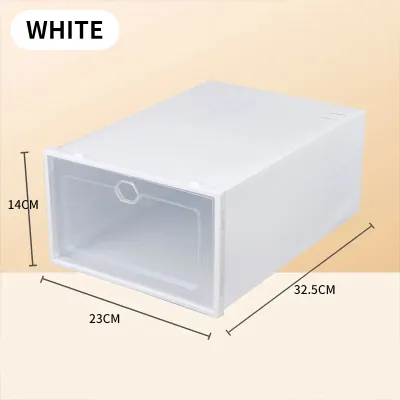
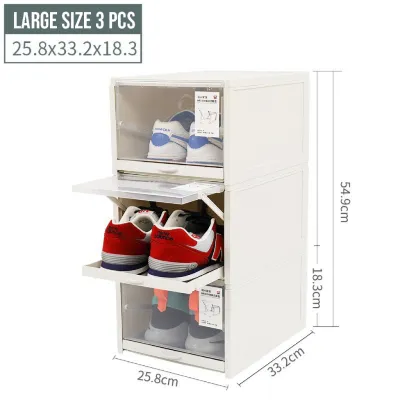
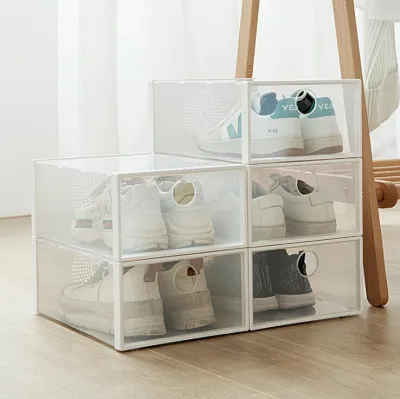
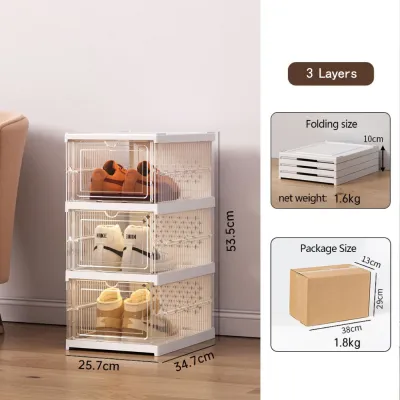
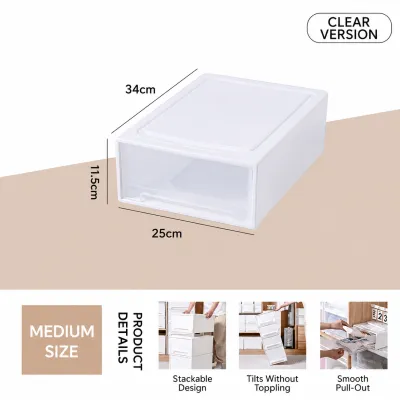
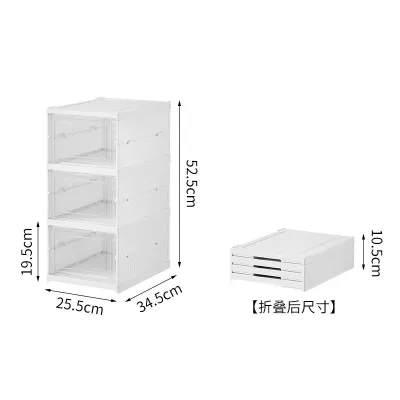
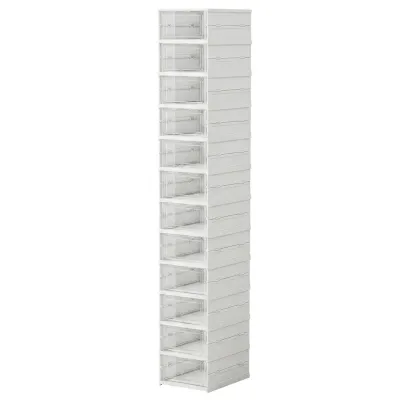
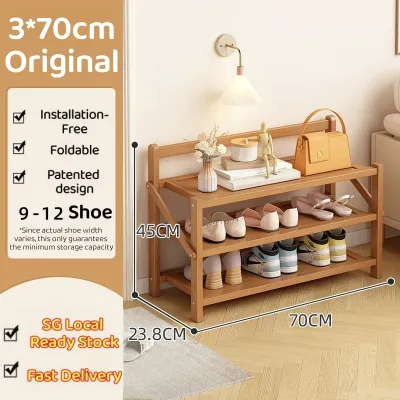
Prices are valid at publication and may change. Please refer to the product page for the latest price.
On the other hand, pull-out shoe organizers are ideal for deep or narrow wardrobe sections where reaching the back is difficult. These sliding systems eliminate the need to unstack boxes, making them highly efficient for your daily rotation.
Ultimately, your choice hinges on three core variables: your wardrobe’s internal depth, the weight capacity of your shelves, and whether you prioritize maximum storage density or instant, single-handed accessibility.
Stackable Shoeboxes vs Pull-Out Organizers at a Glance
Before diving into the structural details of each system, a high-level comparison can help clarify how these two options align with your wardrobe space. The table below highlights the fundamental mechanical and functional differences between stackable shoeboxes and pull-out organizers.

| Feature | Stackable Shoeboxes | Pull-Out Shoe Organizers |
|---|---|---|
| Primary Space Footprint | Vertical height and shelf width | Cabinet depth and floor/shelf base |
| Access Mechanism | Front-drop or side-drop magnetic doors | Sliding ball-bearing runner tracks |
| Assembly & Installation | Tool-free snap assembly; modular stacking | Screwed or mounted tracks; requires tools |
| Dust & Pest Protection | High (fully enclosed options available) | Low to moderate (typically open-air design) |
| Best For | High shelves, modular setups, sneaker collectors | Deep closet bases, narrow gaps, daily wear |
| Key Constraint | Height limits to prevent tipping | Requires clear horizontal pull-out path |
Note: Always verify specific product dimensions and weight limits against your actual wardrobe measurements before purchasing, as sizes vary significantly by manufacturer.
Evaluating Space Efficiency and Wardrobe Configuration
Integrating shoe storage into an existing wardrobe requires precise physical planning. Unlike freestanding shoe cabinets, wardrobe-interior organizers must operate within rigid, pre-existing wooden panels and door frames. Before committing to any storage system, use a metal measuring tape to record the exact internal height, width, and depth of your wardrobe compartments, taking care to account for door hinges, sliding door tracks, and protruding handles.
Maximizing Vertical Space with Stackable Shoeboxes
Stackable shoeboxes excel at turning unused vertical air space into highly organized storage zones. Standard wardrobe shelves often leave 30 to 40 centimeters of empty space above a row of shoes. By stacking modular boxes, you can fill this void completely, doubling or tripling your storage capacity on a single shelf.
When planning a stacked configuration, check the vertical clearance between your shelves. You must ensure that the total height of your stacked boxes sits at least two to three centimeters below the upper shelf to allow for comfortable positioning. Additionally, pay close attention to the opening mechanism of the boxes. While front-opening and side-drop doors operate perfectly within tight vertical gaps, top-opening or drawer-style boxes require extra clearance above or in front of the stack, which can severely limit their usability on middle shelves.
Another critical factor is the load-bearing capacity of your wardrobe shelves. Built-in wardrobes in Singapore often use particleboard or medium-density fibreboard (MDF) shelves supported by small plastic or metal pegs. A stack of six heavy leather boots or chunky sneakers housed in solid acrylic boxes can easily weigh over 10 kilograms. Ensure your shelves are structurally sound and free from bowing before building tall stacks.
Utilizing Depth and Narrow Gaps with Pull-Out Organizers
Pull-out shoe organizers are specifically designed to conquer the “dead space” found at the back of deep wardrobes. Standard wardrobes typically feature a depth of 60 centimeters, while a pair of shoes rarely exceeds 30 centimeters in length. This discrepancy means that shoes stored on standard shelves are either doubled up—forcing you to reach blindly behind the front row—or left with wasted space behind them.
A sliding organizer uses metal runner tracks to bring the entire rack forward, exposing the rear row of shoes instantly. This makes them incredibly efficient for narrow, deep compartments or the very bottom floor of your wardrobe.
However, installation requires careful planning of the pull-out clearance. You must ensure that the sliding rack can extend fully into your room without hitting open wardrobe doors, bed frames, or nearby furniture. If your wardrobe has sliding doors, verify that the organizer’s width is narrow enough to clear the door overlap when pulled out. Furthermore, the floor or shelf where the tracks are mounted must be perfectly level to prevent the organizer from rolling forward on its own or putting uneven stress on the sliding hardware.
Accessibility, Visibility, and Daily Convenience
The ease with which you can retrieve and put away your shoes directly dictates whether your wardrobe remains organized over time. A system that requires too many steps to access will inevitably lead to shoes being left piled on the bedroom floor.
Retrieval Dynamics and Door Mechanisms
The daily convenience of stackable shoeboxes depends heavily on their door design. High-quality boxes feature front-drop or side-drop doors equipped with magnetic closures or secure snap latches. These designs allow you to open a single box at the bottom of a stack, slide your shoes out, and close it back up without disturbing the boxes stacked on top.
In contrast, budget-friendly shoeboxes often feature top-opening lids or flimsy plastic tabs. If you stack these boxes, retrieving a pair from the bottom requires physically lifting every box above it. This tedious process quickly becomes frustrating, leading to neglected shoes or abandoned storage systems. When choosing stackable options, always opt for rigid, front-access models that maintain their structural shape under pressure.
Pull-out organizers offer a seamless “bring-to-you” experience. With a gentle pull, an entire multi-tier rack glides out of the dark wardrobe interior into the light of your bedroom. This makes it incredibly easy to scan your options and retrieve a pair in seconds. However, multi-tier sliding racks have their own ergonomic trade-offs. If the rack is mounted near the wardrobe floor, you will still need to bend down to access the lower tiers. Additionally, if the vertical spacing between the sliding shelves is too tight, taller shoes like high-top sneakers, heels, or boots may catch on the shelf above as you pull the unit out.
Dust Protection, Airflow, and Humidity Management
In Singapore’s tropical, high-humidity climate, shoe preservation is a constant battle against mold, dust, and material degradation. Enclosed stackable shoeboxes provide an excellent physical barrier against dust, pet hair, and insects. However, completely airtight plastic boxes can trap moisture, creating a breeding ground for mold and accelerating the hydrolysis of polyurethane soles on expensive sneakers.
To prevent this, look for stackable boxes that feature built-in ventilation slots on the rear panels to encourage passive airflow. For high-value leather shoes, placing a small pack of silica gel or a moisture-absorbing sachet inside each enclosed box is a highly effective preventive measure.
Open-air pull-out organizers offer superior natural ventilation, allowing damp or sweaty shoes to dry out quickly after wear. This constant airflow significantly reduces the risk of mold growth and unpleasant odors inside your wardrobe. The trade-off is that open racks provide zero protection against settling dust. If you store shoes on an open pull-out rack, you must be prepared to wipe them down more frequently and vacuum the wardrobe floor regularly to keep the space clean.
Installation, Stability, and Shoe Protection
The physical setup of your shoe storage system impacts both the safety of your household and the longevity of your footwear. A poorly installed or unstable system can lead to collapsed shelves, damaged shoes, or tipping hazards.
Ensuring Stability in Stackable Systems
Stackable shoeboxes rely on gravity and structural design to remain upright. When purchasing stackable boxes, look for models that feature physical interlocking mechanisms. These typically consist of molded grooves on the top lid that lock securely into matching recesses on the bottom of the box above it. This interlocking design prevents individual boxes from sliding forward or sideways when you open their doors.
To maintain structural integrity, always place your heaviest footwear—such as work boots, platform heels, or heavy leather dress shoes—in the bottom row of boxes. This lowers the center of gravity of the entire stack, making it much more stable.
As a general safety rule, avoid stacking lightweight plastic boxes more than five to six units high, especially if they are not anchored to a wall. Over-stacking puts immense pressure on the bottom box, which can cause the plastic to warp or buckle over time, leading to a catastrophic collapse of the entire stack.
Track Mechanics and Mounting for Pull-Out Racks
Pull-out organizers are mechanical systems that undergo constant physical stress from sliding back and forth. The quality of the runner tracks is paramount. Look for heavy-duty metal ball-bearing slides that offer smooth, quiet operation. Cheap plastic tracks or simple friction slides are prone to sticking, jamming, and bending under the weight of multiple pairs of shoes.
Weight distribution is crucial for sliding systems. If you load all your heaviest shoes onto one side of a pull-out shelf, the uneven weight can twist the tracks, leading to misalignment, derailment, or permanent damage to the ball bearings. Always distribute weight evenly across the width of the sliding tray.
Safety is another major consideration. Because a pull-out organizer shifts its center of gravity forward when extended, it can easily tip a lightweight wardrobe or unanchored shelf forward. For safety, especially in homes with young children or pets who might pull on the extended rack, ensure the organizer’s tracks are securely screwed into the wardrobe floor or side panels. If you are mounting a pull-out system onto an adjustable shelf, verify that the shelf itself is locked down with anti-tip shelf support clips.
Material Selection for Long-Term Shoe Health
The materials used in your storage system play a vital role in protecting your footwear. For stackable boxes, rigid high-impact polystyrene (HIPS) or acrylic is far superior to soft, flexible polypropylene (PP). Rigid boxes maintain their shape under load, ensuring that your shoes are never crushed or squeezed. Clear acrylic options also offer maximum visibility, allowing you to locate specific pairs instantly without opening multiple boxes.
For pull-out organizers, powder-coated steel or aluminum racks are highly durable and resistant to scratching from shoe soles and heels. If you prefer wooden pull-out trays, ensure they are treated with a moisture-resistant sealant to prevent the wood from absorbing oils, dirt, or dampness from your shoes, which can lead to staining and odor retention over time.
Decision Framework: Choose the Right Shoebox or Organizer
To finalize your wardrobe organization strategy, evaluate your specific storage environment and daily habits against these targeted guidelines.
Choose stackable shoeboxes if:
- You have tall, adjustable shelves: You can stack boxes to utilize the full height of your wardrobe compartments.
- You want maximum dust protection: You need to protect delicate materials like suede, silk, or high-end leather from dust and pests.
- You prefer a modular, scalable system: You want the flexibility to add more storage as your shoe collection grows or reconfigure the layout if you move house.
- You collect specialty footwear: You want to display your sneakers or heels clearly while keeping them individually protected.
Choose pull-out organizers if:
- You have deep or narrow wardrobe sections: You want to easily access shoes stored at the very back of a deep closet or wardrobe base.
- You prioritize quick, single-handed access: You want to pull out your entire daily shoe rotation in one smooth motion without dealing with doors or lids.
- You want optimal ventilation: You live in a humid environment and want to maximize airflow around your shoes to prevent mold.
- You prefer a built-in, integrated aesthetic: You want your shoe storage to feel like a seamless, permanent extension of your wardrobe's cabinetry.
Verify first if:
- Your shelves can support the load: Calculate the combined weight of your shoes and the storage units to ensure your wardrobe shelves will not sag.
- Your wardrobe doors have adequate clearance: Measure carefully to ensure sliding doors or hinges will not block a pull-out organizer from extending fully.
- The materials match your climate: Ensure your chosen setup includes ventilation features or moisture-control solutions suitable for local humidity levels.
Before making your final purchase, always take a final set of measurements of your wardrobe’s interior and compare them directly against the product specifications at checkout to guarantee a perfect fit.
Frequently Asked Questions (FAQ)
Can I mix stackable shoeboxes and pull-out organizers in the same wardrobe?
Yes, combining both systems is an excellent way to maximize wardrobe efficiency. You can install a pull-out organizer on the lower shelves or wardrobe floor to hold your daily-wear shoes, flats, and sneakers for quick access. Then, use stackable shoeboxes on higher, less accessible shelves to store seasonal footwear, formal shoes, or delicate pairs that require protection from dust and are accessed less frequently.
How do I prevent stacked shoeboxes from tipping over inside the wardrobe?
To ensure your stacked shoeboxes remain stable, always select boxes that feature interlocking grooves or physical peg connections on the top and bottom panels. Place your heaviest shoes in the bottom row of boxes to create a low center of gravity. Additionally, avoid stacking lightweight plastic boxes more than five to six units high, and ensure the stack is placed on a completely flat, level wardrobe shelf free from vibration or bowing.
Community discussion
Share your experience or ask a question. Comments are reviewed before publication.