
Selecting the right wardrobe brand for a Singapore Housing & Development Board (HDB) bedroom requires balancing tight spatial constraints with maximum storage capacity. With modern BTO (Build-To-Order) master bedrooms averaging around 11 to 13 square meters, and common bedrooms often shrinking to 9 square meters, every millimeter of floor space is highly valuable. Finding an efficient cabinet clothes system that fits these dimensions without obstructing walkways or blocking natural light is a common challenge for Singaporean homeowners. The ideal brand must offer designs that accommodate limited bed-to-wall clearances, adapt to awkward alcoves, and utilize vertical space effectively.
To resolve this layout dilemma, homeowners typically choose between custom built-in carpentry, modular semi-custom systems, or ready-to-assemble flat-pack units. Each category addresses different spatial needs, budgets, and long-term living plans. By evaluating brands based on their customization capabilities, design portfolios, and structural adaptability, you can secure a wardrobe that optimizes your bedroom layout while keeping your clothes organized and easily accessible.
How to Evaluate Wardrobe Brands for Compact HDB Spaces
When assessing wardrobe brands for a compact HDB bedroom, you must look beyond aesthetic appeal and focus on how well a brand’s products adapt to the specific architectural quirks of public housing in Singapore. HDB flats often feature structural columns, protruding air-conditioning ledges, uneven wall surfaces, and low ceiling heights that typically range from 2.6 to 2.8 meters. A standard, off-the-shelf wardrobe may leave awkward gaps that collect dust, or it may protrude too far into the room, leaving less than the recommended 60 centimeters of walkway clearance between the bed and the cabinet doors. Therefore, evaluating a brand’s understanding of these spatial constraints is the first step toward a successful installation.
Products mentioned in this guide
![[SG Seller] Twentyone 4FT Solid Plywood Sliding Door Wardrobe (Free Installation)](https://img.lazcdn.com/g/p/743fa061091c384b82c548955c5b4d54.jpg_400x400q80.jpg_.webp)
![[CozyNest ]Wardrobe Storage Cabinet Solid Wood Wardrobe For Compact Homes Bedroom Storage Cabinet For Domestic](https://img.lazcdn.com/g/p/bcb8f3d9a82205bff2b878cc52c7081f.jpg_webp_400x400q80.jpg_.webp)
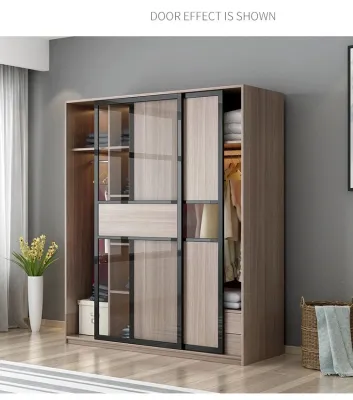
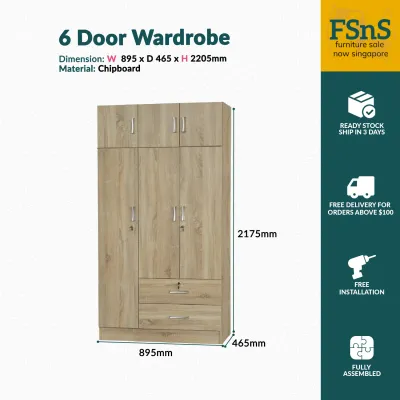
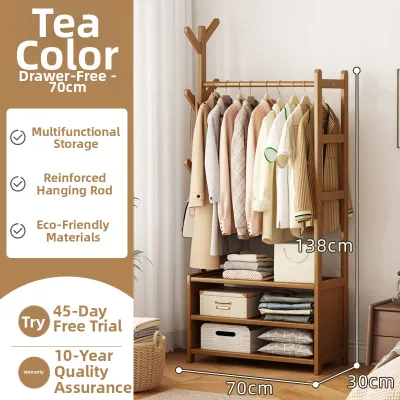
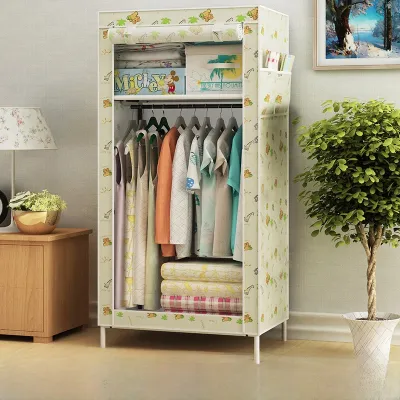
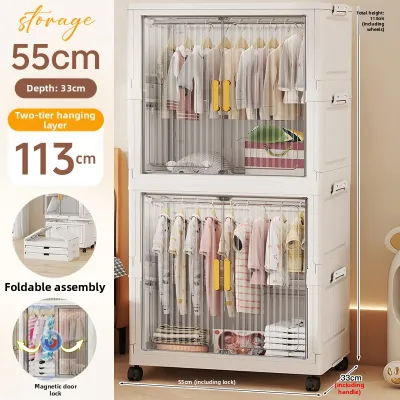
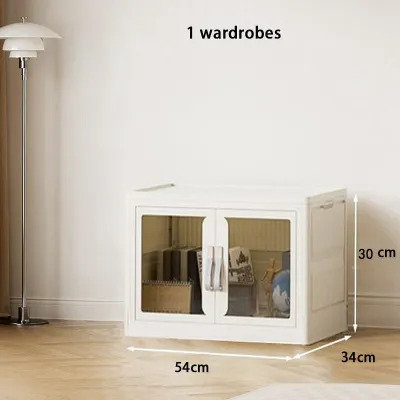
Prices are valid at publication and may change. Please refer to the product page for the latest price.
To determine if a brand is truly capable of maximizing your space, evaluate their customization options and modular flexibility. A high-quality brand should offer a diverse portfolio of past HDB installations, showcasing how they have resolved common layout challenges. Review their product specifications to check if they offer shallow-depth options (such as 40 to 45 centimeters instead of the standard 60 centimeters) and whether their systems can be built up to the ceiling. Examining real-world customer case studies rather than relying on polished marketing brochures will give you a realistic view of how their products perform in actual HDB layouts.
Furthermore, prioritize brands that offer comprehensive, professional on-site measurement services. HDB walls are rarely perfectly plumb, and floors can have subtle screed variations that affect the stability and alignment of a tall cabinet clothes unit. A professional site surveyor will account for these irregularities, as well as the height of skirting boards, the location of electrical sockets, and the path of air-con trunking. Choosing a brand that insists on a precise physical measurement before fabrication or delivery minimizes the risk of costly installation errors and ensures a seamless, flush fit against your bedroom walls.
Wardrobe Brand Categories for HDB Space Optimization
To find the right wardrobe brand, it is helpful to categorize them by their service model and manufacturing approach. Each category offers distinct advantages in terms of space utilization, lead times, and financial investment, allowing you to align your choice with your lifestyle and housing plans.

Custom Built-In Carpentry and Design Firms
Custom built-in carpentry remains the most effective way to eliminate dead space in highly irregular HDB bedrooms. Local interior design firms and specialized carpentry workshops can design a wardrobe that is scribed directly to your walls, columns, and ceiling. This means the wardrobe can wrap around structural beams, frame air-con trunking, and fit perfectly into shallow alcoves that would otherwise go unused. By extending the cabinet all the way to the ceiling, custom carpentry maximizes vertical storage, providing a dedicated space for seasonal bedding and luggage.
However, this level of personalization comes with notable trade-offs. Custom built-in wardrobes require a higher financial investment, with prices typically ranging from S$250 to S$350 per foot run, which can easily total S$3,000 to S$6,000 or more for a standard bedroom. The lead times are also longer, often requiring four to eight weeks for fabrication and installation. Additionally, because these fixtures are permanently anchored and scribed to the walls, they cannot be dismantled or moved to a new home. This makes custom carpentry best suited for homeowners who plan to reside in their current HDB flat for the long term.
Modular and Semi-Custom Furniture Retailers
Modular and semi-custom wardrobe brands offer a balanced middle ground, combining the flexibility of custom designs with the convenience of pre-engineered components. These brands provide standardized cabinet frames in various widths, depths, and heights, which can be combined and configured with a wide array of internal organizers. You can select from adjustable hanging rods, pull-out trouser racks, jewelry drawers, and wire baskets to customize the interior layout based on your specific wardrobe needs.
The primary advantage of semi-custom systems is their adaptability over time. If your storage needs change, you can easily rearrange the internal components or add new modules without undergoing major renovations. Many of these brands also offer filler panels that can be installed around the modular frames, creating a clean, built-in aesthetic without the permanent structural commitment of traditional carpentry. This makes modular systems highly appealing to young couples, tenants, or homeowners who anticipate moving or upgrading their flat within five to ten years, as the individual units can often be disassembled and reconfigured in a new space.
Ready-to-Assemble and Flat-Pack Specialists
For homeowners on a tight budget or a strict timeline, ready-to-assemble (RTA) and flat-pack specialists provide a highly practical solution. These brands specialize in standardized, mass-produced clothes cabinet designs that are readily available for immediate delivery and rapid installation. Many flat-pack brands have recognized the demand for space-saving furniture in urban apartments and now offer dedicated shallow-depth units and compact sliding door models designed specifically for narrow bedrooms.
When opting for a flat-pack wardrobe, you must strictly verify the finished dimensions against your room’s physical clearances. Because these units are manufactured to fixed specifications, they cannot be adjusted or scribed to accommodate uneven walls, protruding skirting boards, or low-hanging beams. Any discrepancy in your measurements could result in a cabinet that blocks a light switch, prevents a bedroom door from opening fully, or leaves an unstable gap. Despite this limitation, flat-pack brands offer unmatched price transparency, with complete wardrobes often costing under S$1,000, making them an excellent choice for budget-conscious buyers or temporary living arrangements.
Key Space-Saving Features to Look for in a Cabinet Clothes System
When browsing wardrobe catalogs or visiting showrooms, you should look for specific design features and hardware mechanics that actively conserve floor space and maximize internal storage volume. A well-designed cabinet clothes system should not only store your garments but also enhance the overall spatial flow of your bedroom.
The choice of door mechanics is one of the most critical decisions for a tight HDB layout. Sliding doors are highly beneficial for narrow walkways because they do not require any front clearance to open, allowing you to place the wardrobe close to the side of your bed. However, sliding door tracks typically add 8 to 10 centimeters of depth to the overall cabinet, and they restrict access to only one half of the wardrobe at a time. Conversely, hinged doors require 40 to 60 centimeters of swing clearance in front of the cabinet, but they allow you to view the entire interior simultaneously. If you have a very narrow but deep alcove, hinged doors equipped with 180-degree hinges may actually be more space-efficient, as they do not require the wide track space that sliding doors demand.
To make the most of your HDB bedroom’s vertical height, look for brands that offer floor-to-ceiling extensions. Utilizing the top-tier space of a 2.6-meter-high room allows you to store bulky, infrequently used items like winter coats, travel luggage, and extra pillows, freeing up valuable lower-level space for daily wear. Many space-saving brands offer specialized pull-down hanging rods, which allow you to hang clothes near the top of the wardrobe and easily pull them down to eye level when needed, eliminating the need for a step stool.
Internal organization features are equally vital for maximizing the cubic volume of your wardrobe. Instead of standard wide shelves that often lead to messy, disorganized stacks of clothes, look for pull-out trouser racks, shallow jewelry drawers, and double-hanging rods. Double-hanging rods allow you to hang shorter garments, like shirts and folded trousers, in two tiers, effectively doubling your hanging capacity. Additionally, integrated LED strip lighting can illuminate dark corners, making it easier to locate items and preventing the interior from feeling cramped.
Finally, consider visual design techniques that prevent a large wardrobe from making a small bedroom feel claustrophobic. Many brands offer wardrobe doors with integrated mirrored panels, which reflect light and create the illusion of a larger, more open space. High-gloss or light-colored finishes also help to bounce natural light around the room, while open-shelving hybrids or glass-fronted doors can break up the solid mass of a large cabinet, adding depth and visual interest to the bedroom.
Pre-Purchase and Installation Checklist for HDB Bedrooms
Before finalizing your wardrobe purchase or signing a carpentry contract, you must complete a thorough pre-purchase checklist to ensure the unit fits safely and complies with Singapore’s housing regulations. Skipping these steps can lead to costly modifications, delivery delays, or potential safety hazards during installation.
First, measure your bedroom clearances with extreme precision, accounting for all fixed architectural elements. Do not just measure the wall-to-wall distance; you must also subtract the thickness of skirting boards (which typically protrude 10 to 15 millimeters) and check for the location of power sockets, light switches, and air-conditioning trunking. Ensure that the wardrobe doors—whether sliding or hinged—will not obstruct window swings, block access to the DB box (distribution board), or interfere with the path of your bedroom door.
Second, familiarize yourself with HDB structural regulations regarding wall anchoring and modifications. In HDB flats, structural walls are made of reinforced concrete and form the load-bearing skeleton of the building. Hacking, deep drilling, or chiseling into these structural walls is strictly prohibited without proper permits. To ensure stability and prevent tip-over accidents, wardrobes must be securely anchored. If your wardrobe is positioned against a structural wall, you must use approved, non-destructive anchoring methods or opt for a floor-mounted, self-supporting clothes cabinet that only requires light, non-structural wall ties.
Lastly, verify the brand’s site-measurement policies, delivery logistics, and installation warranties. Confirm whether the brand’s delivery team can transport large wardrobe panels up the HDB passenger lift, as manual stair-carrying fees can add unexpected costs if panels are too large. Ask about their warranty coverage for structural joints, sliding tracks, and door hinges, as high-quality hardware is essential for the long-term durability of a space-saving wardrobe in Singapore’s humid climate.
Frequently Asked Questions (FAQ)
We have compiled answers to some of the most common questions Singaporean homeowners ask when planning a wardrobe installation in a compact HDB bedroom.
Can I install a built-in wardrobe on an HDB structural wall?
You cannot perform heavy drilling, hacking, or chiseling into an HDB structural wall, as doing so can compromise the structural integrity of the building block. However, you can safely install a built-in or freestanding wardrobe against a structural wall by utilizing floor-mounted designs that transfer the weight of the cabinet to the floor. To prevent tip-over hazards, the wardrobe should be lightly secured to the wall using HDB-approved, non-destructive wall plugs and anchors that do not penetrate deep into the reinforced concrete or damage internal steel bars.
Are sliding door wardrobes always better for small HDB bedrooms?
Sliding door wardrobes are highly effective at saving floor space because they eliminate the need for front door-swing clearance, making them ideal for narrow walkways. However, they are not always the best choice for every small bedroom layout. Sliding door systems require a wider overall cabinet depth to accommodate the overlapping tracks, which can consume up to 10 centimeters of internal storage space. For very narrow or shallow alcoves, a hinged door wardrobe equipped with 180-degree hinges may offer more usable internal space and better overall access, provided there is sufficient clearance for the doors to swing open.
Community discussion
Share your experience or ask a question. Comments are reviewed before publication.