
Finding the right umbrella storage for a small HDB entryway is a practical necessity in Singapore’s tropical climate. With frequent afternoon downpours, wet umbrellas can quickly clutter narrow foyers, create slipping hazards, and damage sensitive flooring. The best compact umbrella storage options—such as vertical wall-mounted racks, magnetic side-cabinet holders, and ultra-slim freestanding corner stands—maximize minimal square footage while safely containing moisture. By choosing a solution that fits your specific entryway layout, you can keep your home organized, safe, and dry.
Selecting the ideal setup requires balancing physical space limits with moisture management. Small entryways in three-room, four-room, or five-room flats often have narrow corridors, adjacent metal gates, and limited floor space shared with shoe cabinets. Evaluating your entryway’s spatial boundaries before purchasing any furniture ensures that your storage solution remains highly functional without disrupting daily foot traffic.
Measure Your HDB Entryway: Space, Swing, and Moisture Constraints
Before purchasing any storage unit, measure the full opening radius of your main wooden door and the outer metal gate. In typical HDB layouts, space is highly constrained, and a poorly placed rack can easily block entry or exit. Ensure that any floor-standing or wall-mounted rack sits completely outside this swing path to avoid collisions when family members enter or leave the flat. Even a minor overlap can lead to scratched doors or tipped-over stands during daily use.
Products mentioned in this guide
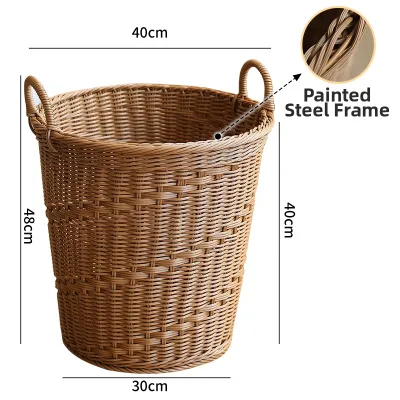
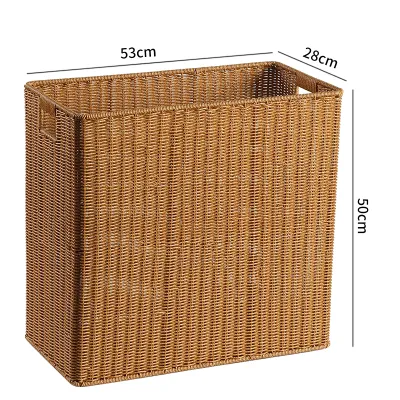
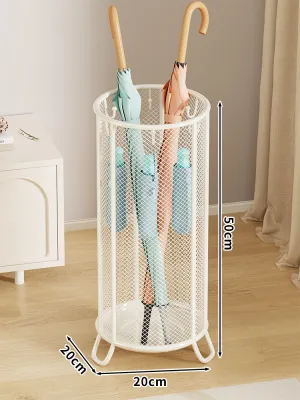
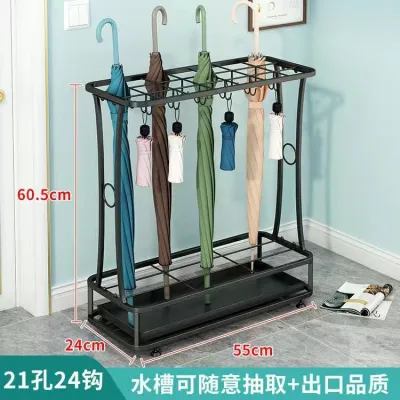
Prices are valid at publication and may change. Please refer to the product page for the latest price.
Next, identify narrow, unused gaps in your foyer. This could be a 10-to-15-centimeter space between your shoe cabinet and the wall, or an empty vertical wall segment beside the DB box (distribution board) door. When assessing these areas, distinguish between the floor footprint—the horizontal space the unit occupies—and the vertical clearance. Vertical clearance is crucial because tall walking-stick umbrellas require significant height to slide in and out of a stand without hitting overhead shelves, light switches, or decorative wall art.
Singapore’s heavy rain means umbrellas brought indoors are often completely saturated. You must evaluate your entryway flooring material before deciding on a storage setup. While homogenous tiles handle water well, vinyl, laminate, and engineered wood flooring are highly sensitive to standing water. A contained drip tray is an absolute necessity to prevent water from pooling on these surfaces, which can cause warping, joint swelling, or slippery walkways.
Finally, consider the structural constraints of your HDB walls. Precast concrete or structural walls, such as bomb shelter walls, are common in newer BTO flats. Drilling into these walls is highly restricted, requires heavy-duty rotary hammer drills, or is outright prohibited in certain structural zones. This makes non-drilling magnetic mounts, over-door hooks, or freestanding slim stands highly attractive alternatives for HDB residents who want to avoid damaging their walls or violating estate guidelines.
Top Space-Saving Umbrella Storage Types for Narrow Foyers
Wall-Mounted and Over-Door Racks
Slim, low-profile wall holders utilize vertical wall space without consuming any floor area. These systems typically consist of an upper bracket to hold the umbrella shafts in place and a lower cup that acts as a drip tray. When choosing these, verify your wall material’s compatibility with the mounting hardware. Ensure the lower cup is detachable so you can easily empty collected rainwater without removing the entire rack from the wall.

Utilizing the back of your main door or an adjacent closet door is another highly efficient way to hide clutter. Over-door hangers slide over the top edge of the door panel, keeping umbrellas off the floor entirely. Before buying, check the clearance gap between the top of your door and the frame (typically at least 2 millimeters is required) to ensure the door still closes smoothly without scraping. Also, check the door thickness to ensure the bracket fits snugly without rattling or scratching the paint.
Slim Freestanding Stands and Corner Units
If wall mounting is not an option, look for freestanding stands with an ultra-slim footprint. Rectangular bases that are only 10 to 12 centimeters wide can slide directly against a wall or tuck neatly alongside a console table. These compact designs keep the walkway clear while still providing a dedicated spot for your rain gear, making them ideal for long, narrow corridors.
However, a narrow base naturally has a higher risk of tipping over when loaded with long, top-heavy golf umbrellas. To counter this, verify that the product features a weighted base—often made of cast iron, heavy resin, or concrete—which lowers the center of gravity. Check the manufacturer’s maximum weight or capacity specifications to ensure it can support your household’s typical umbrella load without falling over.
Dead space in 90-degree corners is often underutilized in small HDB entryways. Triangular or L-shaped umbrella stands are engineered to slide flush into these corners, maximizing otherwise wasted space. This keeps the walkway completely open while providing a stable, tucked-away home for both long and short umbrellas, making the most of every square centimeter.
Multi-Functional Coat Racks and Shoe Cabinet Add-ons
For entryways that must handle bags, keys, and jackets alongside rain gear, a multi-functional freestanding coat rack is an excellent choice. Look for compact models that feature a dedicated lower ring or built-in hooks specifically designed to hold umbrellas upright. This combines multiple furniture pieces into a single, efficient footprint, saving valuable floor space near your entrance.
The flat side panels of wooden or laminated shoe cabinets are ideal surfaces for modular storage. Magnetic or adhesive-backed umbrella organizer pockets can be attached directly to these panels, utilizing otherwise wasted vertical space. If your shoe cabinet has a metal frame or is situated near a metal main door, magnetic racks offer an incredibly secure, drill-free attachment method that can be repositioned instantly.
An entryway bench provides a convenient spot to sit while putting on shoes. Many modern, compact benches designed for small apartments feature built-in slatted shelves or side-hanging wire baskets. These integrated compartments allow you to store umbrellas directly beneath the seat, keeping them organized, dry, and completely off the floor while maintaining a clean, minimalist aesthetic.
Essential Features to Verify for Singapore's Wet Climate
A high-quality umbrella storage unit must have a functional drip tray. Look for deep, removable trays that can be easily slid out, emptied, and washed. Avoid open-mesh bottoms or shallow trays that overflow quickly during the monsoon season. Standing water left in a tray can lead to mold, unpleasant musty odors, and can even become a breeding ground for mosquitoes if left neglected.
Singapore’s high humidity levels accelerate the rusting process of untreated metals. Do not rely on generic labels like “metal rack.” Instead, look for specific finishes such as powder-coated steel, rust-resistant stainless steel, or moisture-treated bamboo. If opting for plastic or ABS resin, ensure it is thick enough to withstand the weight of heavy walking-stick umbrellas without cracking or bending over time.
Households typically own a mix of long walking-stick umbrellas, large golf umbrellas, and small, foldable three-fold umbrellas. A good storage rack should have distinct compartments or built-in hooks. Look for models that feature small, elevated hooks specifically for hanging the loops of folded umbrellas, alongside deep slots that keep long umbrellas standing completely upright without tangling.
If you choose a drill-free, adhesive-mounted wall rack, pay close attention to the adhesive’s weight limits and surface compatibility. Standard double-sided tape often fails on textured HDB walls, painted plaster, or in high-humidity conditions. Verify that the manufacturer specifies compatibility with your wall surface (such as smooth tiles or glass) and check the maximum load capacity—remembering that a wet umbrella can weigh twice as much as a dry one.
Common Sizing and Placement Mistakes to Avoid
Even with a drip tray, water can splash onto surrounding surfaces when you place a wet umbrella into its holder. Avoid positioning your rack directly against unsealed wooden baseboards, porous plaster walls, or delicate wallpaper. Leave a small gap between the rack and the wall to allow air to circulate and prevent dampness from transferring to your home’s structure.
In an emergency, every second counts. Avoid placing a freestanding umbrella stand directly in the narrowest part of your HDB corridor or right in front of the main door’s opening path. A misplaced stand can easily become a tripping hazard in low-light conditions or block the smooth evacuation of household members, violating civil defense safety guidelines.
Before purchasing a tall, fully enclosed cylindrical stand, measure the length of your longest umbrellas. If the stand is too deep, short foldable umbrellas will fall to the bottom and become difficult to retrieve. Conversely, if a slim stand is too shallow and lacks a weighted base, a tall golf umbrella will stick out too far, making the entire unit unstable and prone to tipping.
Storing wet umbrellas in a tightly closed shoe cabinet or an unventilated corner is a recipe for mildew. Damp fabric needs constant airflow to dry properly. Ensure your chosen storage option has an open-frame or slatted design that allows air to circulate freely around the umbrellas, preserving the fabric and preventing rust on the metal ribs.
Frequently Asked Questions (FAQ)
Can I install wall-mounted umbrella racks on HDB walls without drilling?
Yes, you can use heavy-duty adhesive strips, magnetic mounts, or over-door brackets. However, you must carefully check the manufacturer’s weight limits. While these drill-free options work exceptionally well for lightweight, dry, or compact umbrellas, the combined weight of multiple large, wet umbrellas can easily exceed the adhesive’s load capacity. If applying adhesives, ensure the HDB wall surface is smooth, clean, and non-porous, and test a small, hidden area first, as strong adhesives can peel off wall paint during removal.
How do I prevent wet umbrellas from damaging my HDB entryway flooring?
To protect sensitive flooring like vinyl, laminate, or parquet, always select an umbrella storage unit equipped with a deep, removable drip tray. As an extra layer of defense, place a highly absorbent, quick-drying microfiber or diatomite earth mat directly underneath the stand to catch any accidental splashes. Make it a habit to empty and dry the drip tray regularly to prevent stagnant water accumulation, which can damage your floors, create mold, and attract pests.
Community discussion
Share your experience or ask a question. Comments are reviewed before publication.