
Finding the right balance between functionality and spatial efficiency is a common challenge when organizing a compact HDB or condo entryway in Singapore. With frequent tropical downpours and limited square footage, leaving wet umbrellas scattered on the floor leads to messy puddles, damaged flooring, and a cluttered foyer. The best umbrella holder for a small apartment is one that utilizes vertical space, tucks neatly into unused corners, or integrates seamlessly with existing entryway furniture. By selecting a design tailored to your specific layout, you can keep your home organized and dry without sacrificing valuable floor space.
Assessing Your Entryway Space and Door Clearance
Before purchasing an umbrella holder, take precise measurements of your entryway to ensure a seamless fit. Start by measuring the clear width of your foyer’s walkway. In many modern BTO flats and compact condominiums, entryways are narrow corridors where even a minor protrusion can disrupt daily foot traffic or make carrying groceries into the home awkward.
Next, measure the depth of any available wall or corner spaces. You will want to identify “dead zones,” such as the small gap between your shoe cabinet and the wall, or the space directly behind the main entrance door when it is fully open. Knowing these exact dimensions prevents you from buying a stand that is too deep for your designated spot.
Products mentioned in this guide
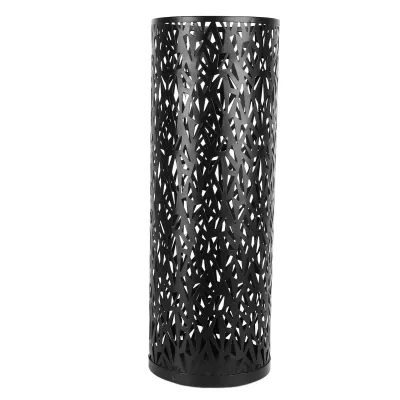
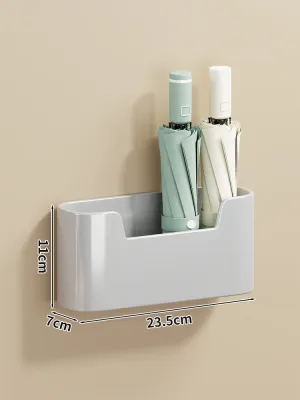
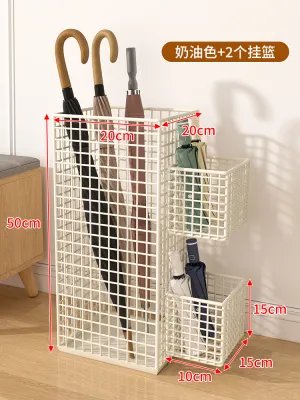
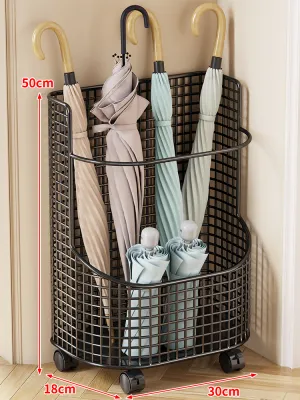
Prices are valid at publication and may change. Please refer to the product page for the latest price.
It is equally important to check the swing radius of your main door and any adjacent shoe cabinet doors. A poorly positioned umbrella holder can easily block a door from opening fully, leading to frustrating daily collisions. If you have a metal security gate outside your main wooden door—a standard feature in many Singapore apartments—ensure the holder does not interfere with the latching or swinging mechanisms of either barrier.
The type of flooring in your foyer also dictates your choice of holder. If your entryway features sensitive materials like vinyl, laminate, or parquet, even minor water pooling can cause warping, swelling, or staining over time. While homogenous tiles are more resilient, they can still become dangerously slippery when wet.
Finally, observe the drainage slope near your entrance. Unlike bathrooms or balconies, apartment foyers are completely flat and lack floor wastes, meaning any water brought in by wet umbrellas will remain pooled on the surface. Understanding these physical constraints ensures you choose a holder with adequate water containment features rather than relying on luck. Spatial efficiency starts with understanding the specific physical constraints of your apartment’s foyer before browsing products.
Top Space-Efficient Umbrella Holder Types for Compact Foyers
Selecting the right style of umbrella holder depends on how much floor space you can afford to allocate. In tight layouts, standard cylindrical bins are rarely the best choice. Instead, focus on specialized designs that prioritize verticality, corner placement, or multi-functional utility.

Wall-Mounted and Over-the-Door Holders
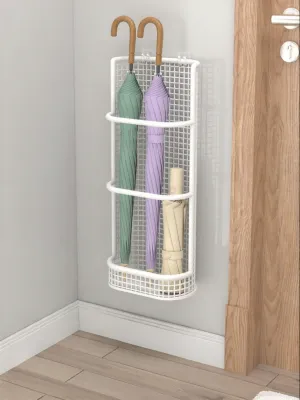
Wall-mounted racks and over-the-door hooks are excellent for completely freeing up precious floor area. These solutions utilize vertical surfaces, such as the back of the main door, the side of a shoe cabinet, or an adjacent concrete wall. Magnetic umbrella holders are particularly popular in Singapore because many HDB main doors are constructed with metal components that allow magnetic accessories to snap securely into place.
Before installing a wall-mounted holder, verify the construction of your wall and the weight capacity of your mounting method. Concrete walls require drilling and masonry plugs for a secure hold, while drywall partition walls, common in newer condo developments, require specialized hollow-wall anchors. If you prefer a drill-free option, high-strength adhesive strips or magnetic backings can work, but you must ensure the surface is clean, dry, and flat to prevent the rack from sliding down under the weight of wet umbrellas. Ensure the door frame can support the weight of wet umbrellas without sagging or damaging the finish.
The primary limitation of wall-mounted storage is the risk of water dripping down your walls or doors, which can ruin paint or cause wood laminate to peel. To mitigate this, look for wall-mounted models that feature a small, detachable plastic cup or tray at the bottom to catch runoff. Alternatively, you can place a small, waterproof silicone mat or a microfibre drip catcher on the floor directly beneath the hanging umbrellas to protect your flooring.
Slim Freestanding and Corner Designs
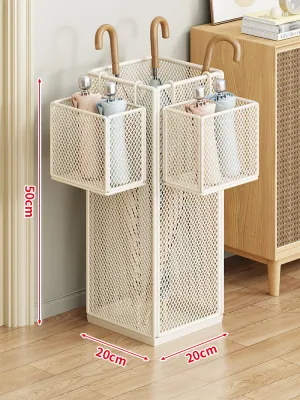
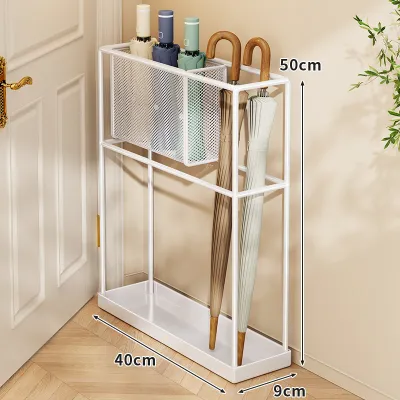
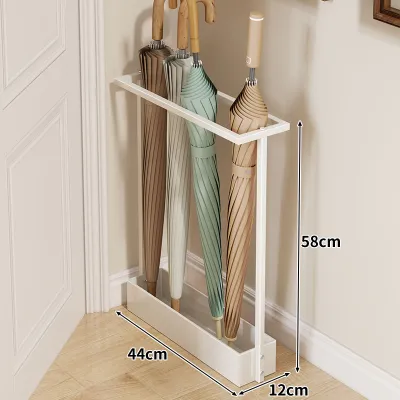
If wall mounting is not an option, ultra-slim freestanding stands or triangular corner holders are highly effective alternatives. These stands are designed with a narrow profile, often measuring less than 15 centimeters in depth, allowing them to slide flush against a wall or sit inconspicuously in the corner of your foyer.
When evaluating slim freestanding models, stability must be your top priority. Because these stands have a very small footprint, they are naturally prone to tipping over when loaded with long, top-heavy umbrellas. Look for stands that incorporate a heavily weighted base, such as cast iron or a solid resin block, to keep the unit upright. This is especially important in households with active pets or young children who might accidentally bump into the stand.
You should also verify the internal dimensions and configuration of the stand. Ensure the retaining rings or slots are high enough to support tall golf umbrellas without them leaning at a precarious angle. At the same time, look for models that feature lower hooks or dedicated shallow compartments so that compact, folding umbrellas do not get lost at the bottom of the stand.
Multi-Functional Racks and Shoe Cabinet Integrations
For homeowners looking to maximize every square centimeter, multi-functional furniture offers a highly efficient way to consolidate entryway storage. Instead of cluttering your foyer with a separate shoe cabinet, coat hook, and umbrella stand, you can opt for integrated solutions that combine these functions into a single footprint.
Many modern shoe cabinets feature built-in side slots, recessed side panels, or pre-installed hanging rails specifically designed to hold umbrellas. Alternatively, compact entryway trees or coat racks with integrated umbrella rings at the base allow you to hang keys, bags, and coats while keeping your umbrellas neatly corralled in the same space.
While multi-functional pieces offer incredible utility, they do come with trade-offs. They generally have a larger overall physical footprint than a standalone slim holder, which can make a very tight foyer feel crowded if not planned carefully. When choosing an integrated piece, ensure there is sufficient clearance to open all cabinet doors fully and that hanging coats or bags do not drape over wet umbrellas, which can transfer moisture and cause musty odors.
Essential Features to Prevent Clutter and Water Damage
In Singapore’s hot and humid climate, proper moisture management is critical to preventing mold, odors, and structural damage to your home. A good umbrella holder must do more than simply hold your umbrellas upright; it must actively manage the water they bring indoors.
A removable drip tray is an indispensable feature for any indoor umbrella holder. The tray should be easy to slide out, empty, and wash to prevent stagnant water from sitting for extended periods. Fixed trays that cannot be removed are incredibly difficult to clean, often leading to a buildup of grime, mold, and unpleasant smells. For an alternative, look for stands that utilize absorbent diatomaceous earth plates, which soak up water instantly and dry rapidly through natural evaporation. This is crucial for preventing water from pooling on laminate or vinyl flooring.
The materials used in the construction of your holder will determine its lifespan in a humid environment. Cheap, untreated metals will quickly rust when exposed to wet umbrellas and high ambient humidity. Prioritize durable, rust-resistant materials such as powder-coated steel, treated aluminum, or high-quality ABS and polypropylene plastics. If you prefer the look of wood, ensure it has been treated with a marine-grade waterproof varnish, though synthetic or metal options remain the most practical and low-maintenance choices. Budget-friendly plastic models often cost under S$15, while heavy-duty powder-coated steel or integrated designer stands can range from S$30 to over S$80.
Adequate ventilation is another critical factor. Avoid solid-walled, cylindrical buckets that trap moisture inside. Instead, choose open-frame, slatted, or wire-mesh designs that allow air to circulate freely around the wet umbrellas. Good airflow ensures that the fabric dries quickly, preventing the growth of mildew and the development of that familiar, damp smell in your enclosed entryway.
Finally, look for holders equipped with internal dividers, slots, or hanging hooks. These features keep your umbrellas organized and prevent them from tangling or jamming together. When multiple wet umbrellas are crammed into a single open compartment, they take much longer to dry, and retrieving one can result in pulling out the entire bunch, creating unnecessary frustration during your morning rush.
Common Sizing and Placement Mistakes to Avoid
When setting up your entryway, avoiding a few common spatial and functional errors can save you from daily frustration and potential property damage.
One of the most frequent mistakes is placing a freestanding holder directly in the main walking path or too close to the door hinge. In a compact HDB or condo, this creates an immediate tripping hazard, especially when carrying large items or navigating the foyer in the dark. Always position the holder in a low-traffic corner or flush against a non-obstructive wall.
Another serious error is using an umbrella holder without adequate drip management on sensitive flooring. Placing a basic metal frame directly onto parquet, laminate, or luxury vinyl tiles allows water to seep underneath, where it can remain trapped. Over time, this moisture will warp wood planks, cause vinyl tiles to lift, and leave unsightly stains that are costly to repair.
Do not be tempted by oversized, decorative ceramic cylinders or antique brass buckets that look stunning in spacious online showrooms. While visually appealing, these bulky items consume far too much valuable floor area and will quickly make a small foyer feel cramped. Stick to minimalist, slimline designs that respect the physical limits of your space.
Lastly, always consider the length and weight of your most frequently used umbrellas. If your household primarily uses large golf umbrellas, buying a shallow, lightweight holder will inevitably lead to it tipping over. Conversely, if you only use short, folding umbrellas, a deep holder without internal hooks will force you to reach deep inside to retrieve them, defeating the purpose of convenient storage.
Frequently Asked Questions (FAQ)
How do I prevent my umbrella stand from smelling musty?
To keep your umbrella holder smelling fresh, always shake off excess rainwater outside your door before bringing your umbrella inside. Whenever possible, leave wet umbrellas partially open in a well-ventilated area to dry before rolling them up and placing them in the stand.
Regularly empty the drip tray and wipe it down with a mild disinfectant or soapy water to prevent bacteria and mold from taking hold. If your entryway is particularly enclosed or lacks natural airflow, place a small hanging moisture absorber or a bag of activated charcoal nearby to help control humidity levels.
Can I use a decorative vase or bucket as an umbrella holder in a small space?
While repurposing a beautiful ceramic vase or a vintage metal bucket can be aesthetically pleasing, it is rarely practical for a compact entryway. These items typically lack drainage holes, removable drip trays, and proper ventilation, meaning water will pool at the bottom.
Trapped water will damage your umbrellas over time, causing metal ribs to rust and wooden handles to rot. Furthermore, if a heavy ceramic vase is accidentally knocked over in a tight foyer, it can shatter, creating a safety hazard and spilling dirty, stagnant water across your floor. Purpose-built holders with proper drainage and airflow are a much safer and more functional choice.
Community discussion
Share your experience or ask a question. Comments are reviewed before publication.