
In a compact Singapore apartment, the entryway is often the first area to succumb to clutter. With limited square footage in modern HDB flats and condominiums, shoes naturally pile up near the front door, creating both a visual eyesore and a tripping hazard. Finding the right shoe racks and organizers is not just about tidying up; it is about maximizing every square centimetre of your home while keeping your daily path clear.
Selecting the ideal compact storage solution requires balancing physical space constraints with the specific storage needs of your household. Whether you are dealing with a narrow external corridor, a tiny foyer, or a shallow built-in wardrobe, there are highly efficient designs tailored to these exact layouts. By understanding how to measure your space, evaluate different organizer types, and install them safely, you can create a streamlined, functional entryway that welcomes you home without the stress of clutter.
How to Measure Tight Entryways and Closets Before Buying
Before browsing online marketplaces or visiting local furniture showrooms, you must obtain precise measurements of your designated storage area. A mismatch of even a single centimetre can prevent a cabinet door from opening or block a vital walkway. To avoid these issues, follow a structured measuring process that accounts for both static dimensions and dynamic movement.
Products mentioned in this guide
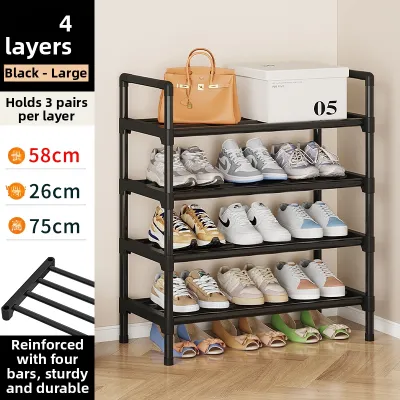
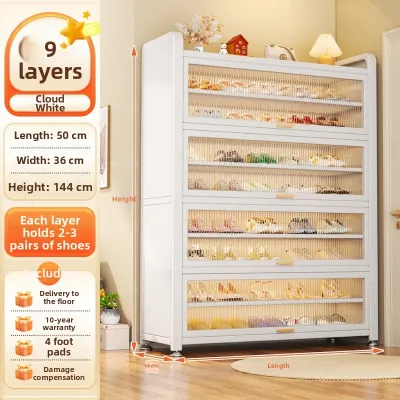
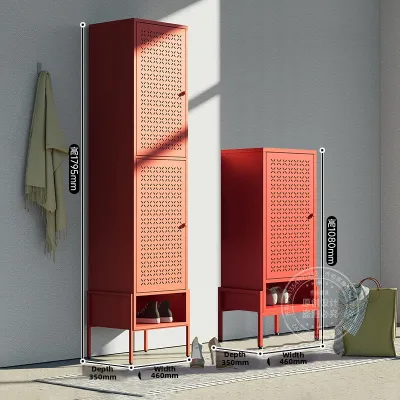
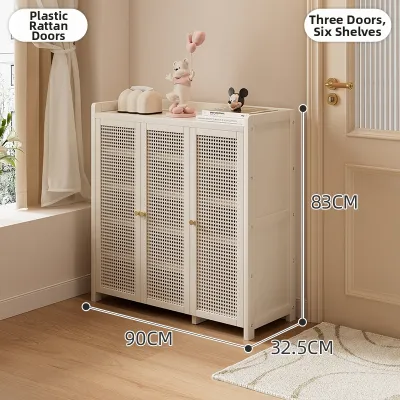
Prices are valid at publication and may change. Please refer to the product page for the latest price.
First, measure the absolute width, depth, and height of the available floor space. Use a metal measuring tape for accuracy, as fabric tapes can stretch over time. When measuring depth, pay close attention to the clearance required for your main entrance door and any adjacent doors. In Singapore, many HDB flats feature a household shelter (commonly known as a bomb shelter) near the entryway. These shelters have heavy, thick steel doors with wide steel frames; you must ensure that any nearby floor-standing organizer does not obstruct the swing radius of this door or block access to its ventilation sleeve.
Second, consider the dynamic space required for daily use. If you choose a cabinet with pull-out drawers or drop-down compartments, measure the space needed for these components to extend fully. You should still have enough room to stand comfortably in front of the organizer while retrieving your shoes. Additionally, be mindful of local community guidelines. If you plan to place a slim rack in an external HDB corridor, the Singapore Civil Defence Force (SCDF) regulations require a minimum clear escape passage of 1.2 metres. Obstructing this pathway with furniture is a safety hazard and a violation of municipal rules.
Finally, inspect the base of your walls for floor skirting boards. Skirting boards typically project 1 to 2 centimetres from the wall surface. If your chosen shoe rack does not have a recessed back or legs that clear the height of the skirting, the unit will be pushed away from the wall. This creates an unsightly gap behind the organizer, reduces the usable walkway space, and can compromise the stability of tall, freestanding units by preventing them from sitting flush against the wall.
Best Space-Saving Shoe Organizer Types for Small Layouts
Different architectural layouts demand different storage strategies. A deep but narrow closet requires a highly vertical, accessible system, whereas a tight foyer with zero floor space calls for wall-mounted or door-hung options. Understanding the strengths of each organizer type allows you to match the right product to your specific spatial challenges.

The key to successful small-space organization is identifying underutilized zones. These typically include corner dead spaces, the back of interior doors, and the vertical wall space above the skirting board. By shifting your storage focus from horizontal floor area to these neglected vertical planes, you can significantly increase your storage capacity without making your apartment feel cramped.
Slim, Stackable, and Corner Floor Racks
Floor-standing shoe racks are the most common storage solution, but standard models are often too bulky for small apartments. For tight layouts, look for slim, stackable, or corner-specific designs that optimize vertical space.
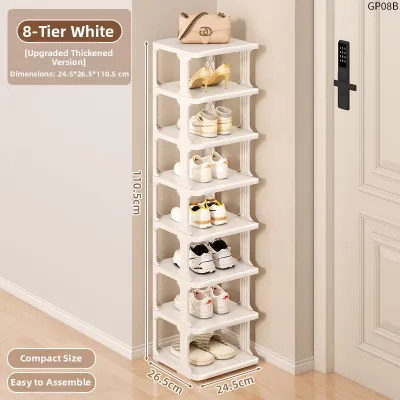
Maximizing Narrow Gaps and Corners Slim floor racks are engineered with a shallow depth, often measuring between 15 and 25 centimetres. These units fit perfectly into narrow gaps beside main doors, behind open doors, or in the unused corners of your foyer. Corner shoe racks utilize a triangular or L-shaped footprint, turning awkward 90-degree intersections into functional storage zones that would otherwise remain empty.
Stability and Anti-Tip Requirements Because slim and stackable racks have a very narrow base, their center of gravity rises quickly as you stack shoes upward. To prevent accidental tipping—especially in households with active pets or young children—it is crucial to evaluate the stability of the unit. Many tall, stackable plastic or metal organizers come with wall-anchoring brackets. If you stack a modular system higher than four tiers, always secure the top section to the wall using the manufacturer’s recommended hardware to ensure it remains stable under a full load.
Footprint and Walkway Clearance Before finalizing your purchase, compare the base footprint of the rack against your measured floor space. Ensure that the rack does not protrude into high-traffic walkways. If a rack forces family members to walk sideways or step awkwardly to avoid it, it is too wide for the space. Aim for a design that leaves at least 60 to 80 centimetres of clear walking space in internal foyers.
Over-the-Door and Hanging Closet Solutions
When floor space is entirely unavailable, the backs of doors and interior closet rods offer excellent alternative storage zones. These solutions require no drilling, making them ideal for renters and those who prefer a non-invasive installation.
Checking Door and Frame Clearances Over-the-door shoe organizers hang from the top of standard interior doors using flat metal hooks. Before buying, measure the thickness of your door—standard Singapore internal doors are typically 35mm to 40mm thick—and ensure the hooks match this dimension. You must also check the gap between the top of the door and the door frame. If this gap is less than 2 to 3 millimetres, the metal hooks may rub against the frame, preventing the door from closing smoothly or scratching the paintwork.
Weight Distribution and Hinge Integrity A fully loaded over-the-door organizer can weigh upwards of 10 to 15 kilograms, depending on the types of shoes stored. This concentrated weight puts continuous stress on the door hinges. To prevent the door from sagging or warping over time, distribute the weight evenly. Place heavier footwear, such as boots or thick-soled sneakers, in the middle and lower pockets, and reserve the top pockets for lightweight flats, sandals, or slippers.
Fabric versus Plastic Hanging Organizers Hanging closet organizers generally come in two material types: breathable fabric (such as non-woven canvas or polyester mesh) and clear plastic (PVC).
- Fabric Organizers: These offer superior breathability, which is vital in Singapore's hot and humid climate. Good airflow helps prevent moisture buildup, reducing the risk of mold, mildew, and unpleasant odors on your shoes.
- Plastic Organizers: These are highly durable, easy to wipe clean with a damp cloth, and allow you to see your entire collection at a glance. However, they trap moisture more easily, so ensure your shoes are completely dry before inserting them into plastic pockets.
Wall-Mounted and Fold-Down Cabinets
For a clean, minimalist look that completely frees up floor space, wall-mounted cabinets with fold-down compartments are the premier choice. These units conceal your footwear entirely, keeping your entryway looking neat and organized.
Depth and Wall Support Requirements Fold-down shoe cabinets feature tilting drawers that store shoes vertically rather than horizontally. This clever design allows the cabinet to maintain an ultra-slim profile, often as thin as 15 to 18 centimetres. However, because the cabinet is mounted off the floor, the wall must bear both the static weight of the cabinet and the dynamic weight of the shoes when the compartments are pulled open. Only mount these cabinets on solid concrete walls or properly reinforced partition walls; avoid mounting them on thin, unreinforced drywall.
Opening Clearance and Walkway Obstruction While the cabinet itself is slim when closed, the compartments swing outward when opened. You must ensure there is sufficient clearance in front of the cabinet for the drawers to open fully without striking opposite walls, furniture, or passing family members. Measure the projected depth of the cabinet when fully open and verify that it still allows for comfortable physical movement in the entryway.
Managing Visual Weight In small, enclosed spaces, bulky furniture can make a room feel dark and claustrophobic. Wall-mounted cabinets that float off the floor create an illusion of spaciousness by leaving the floor tiles visible beneath them. To minimize visual weight, opt for light colors, such as matte white, light oak, or soft grey, which blend seamlessly into typical apartment walls.
Matching Rack Capacity to Your Actual Footwear Collection
A common mistake when purchasing shoe racks and organizers is relying solely on the manufacturer’s stated “pair capacity.” These estimates are typically based on small, standard-sized flat shoes, such as women’s flats or low-profile slip-ons. Real-world collections are far more diverse and require careful calculation.
To determine your actual storage needs, categorize your footwear by height, width, and weight. High heels, platform shoes, and high-top sneakers require significantly more vertical clearance than sandals or canvas shoes. If your collection consists mainly of bulky athletic shoes or boots, a standard slim rack with fixed 15-centimetre shelf heights will quickly prove inadequate. Look for organizers with adjustable or removable shelves, allowing you to customize the compartment heights to fit your specific footwear mix.
Furthermore, larger shoe sizes—particularly men’s UK size 9 and above—often do not fit comfortably on shallow shelves. If a shelf is only 28 centimetres deep, a larger shoe will overhang the edge, preventing cabinet doors from closing or blocking narrow walkways. For households with larger shoe sizes, look for racks with angled shelves or diagonal fold-down compartments that accommodate longer shoes without increasing the overall depth of the cabinet.
It is also wise to plan for future growth and seasonal rotation. Instead of trying to squeeze your entire lifetime collection into a tiny entryway organizer, establish a rotation system. Keep your daily-wear items (typically 2 to 3 pairs per person) in the compact entryway rack, and store seasonal, formal, or outdoor sports footwear in deeper closet organizers or under-bed storage boxes in your bedroom. This keeps your main entrance clean and functional.
Installation and Safety Guidelines for HDB and Condo Walls
Installing wall-mounted organizers or securing tall floor racks requires careful attention to safety, structural integrity, and local property regulations. Improper installation can lead to damaged walls, falling furniture, or lease disputes.
First, you must determine whether the target wall is structural or non-structural. In Singapore HDB flats, structural walls are made of thick, reinforced concrete. These walls are load-bearing and require a high-powered rotary hammer drill with masonry bits to penetrate. Non-structural walls are typically lightweight concrete blocks or hollow drywall partitions. Drilling into structural columns or beams is strictly regulated, and you should consult the official floor plan of your flat to identify these zones.
Second, always review the HDB renovation guidelines or your condominium’s MCST (Management Corporation Strata Title) by-laws before undertaking any drilling work. While minor wall drilling for shelving generally does not require a formal permit, drilling into external common area walls (such as corridor walls) is strictly prohibited. If you are renting your apartment, you must obtain written permission from your landlord before drilling into any walls or doors to avoid disputes and deductions from your security deposit.
Third, using the correct wall plug or anchor is vital for load-bearing safety. For solid concrete walls, use standard plastic wall plugs (often called rawlplugs) or heavy-duty metal expansion anchors. For hollow drywall partitions, standard plugs will not hold; instead, use specialized toggle bolts or hollow wall anchors that expand behind the plasterboard to distribute the weight safely. If you are unsure of the wall material or lack the proper tools, hire a professional handyman to ensure a secure installation.
Finally, many renters turn to heavy-duty adhesive hooks or stick-on shoe holders to avoid drilling. While convenient, these adhesives carry significant risks. Singapore’s high relative humidity can degrade adhesive backings over time, leading to sudden failures and broken items. Furthermore, removing heavy-duty adhesives from painted plaster walls almost always tears the paint and plaster layers away, resulting in unsightly damage. If you are renting, stick to freestanding, over-the-door, or tension-rod organizers that require zero wall contact.
Frequently Asked Questions (FAQ)
How many pairs of shoes can a typical slim rack hold?
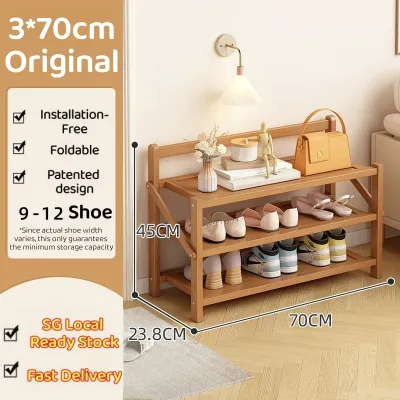
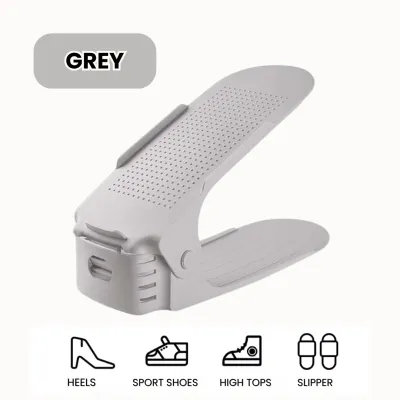
The practical capacity of a slim shoe rack is almost always lower than the manufacturer’s theoretical maximum. A standard three-tier slim floor rack typically claims to hold 9 to 12 pairs of shoes. However, this calculation assumes small, flat footwear placed side-by-side. If you store wide sneakers, high heels, or men’s formal shoes, a three-tier rack may only comfortably accommodate 6 to 8 pairs. To maximize space, look for models with adjustable shelves or use individual shoe slot organizers that stack one shoe directly above its pair on a single shelf.
Are adhesive shoe racks safe for rented HDB flats?
Generally, heavy-duty adhesive shoe racks are not recommended for rented HDB flats if they are mounted on painted walls. The combination of heavy footwear weight and Singapore’s humid climate often causes the adhesive to fail, which can damage your shoes and the floor. When it is time to move out, removing these adhesives frequently peels off the wall paint, which can lead to repair charges from your landlord. For damage-free rental storage, choose freestanding slim racks, over-the-door hanging organizers, or tension-rod systems that hold themselves securely in place without glue or screws.
Community discussion
Share your experience or ask a question. Comments are reviewed before publication.