
Finding the right storage balance in a compact HDB bedroom often feels like a game of spatial Tetris. Traditional, bulky wooden chests of drawers provide excellent capacity but permanently lock up precious floor space, leaving little room to move around a queen-sized bed or open a wardrobe door. Foldable drawer units offer a highly adaptable alternative, allowing you to expand your storage when needed and collapse the entire frame flat when your spatial priorities shift. These lightweight, versatile organizers bridge the gap between permanent furniture and temporary storage bins, making them an ideal choice for modern, space-constrained Singapore homes.
By opting for collapsible storage, you gain the freedom to reconfigure your room layout without the heavy lifting associated with traditional furniture. Whether you are renting a room, setting up a temporary nursery, or trying to maximize a tight BTO layout, these units provide immediate organization without a long-term spatial commitment. Understanding how to evaluate their dimensions, structural integrity, and material suitability is key to finding a unit that stands up to daily use while keeping your bedroom open and breathable.
Why Foldable Drawer Units Work for Compact Bedrooms
The primary appeal of foldable drawer units lies in their unmatched flexibility to reclaim floor space. In a typical HDB common bedroom, which often measures around nine to eleven square meters, every square centimeter of floor area is highly contested. When your storage needs decrease—such as after a seasonal wardrobe declutter or when a family member moves out—a traditional chest of drawers remains a permanent obstacle. A foldable unit, however, can be emptied, collapsed down to a fraction of its size, and slid out of sight, instantly opening up the room for other activities.
Products mentioned in this guide
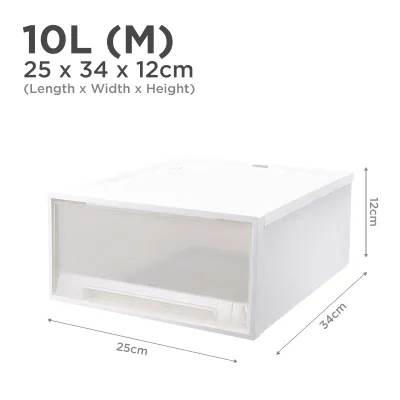
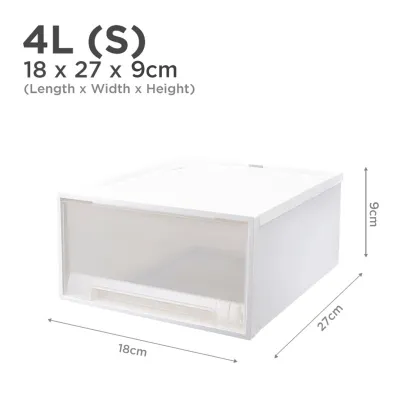
![[SG STOCK] Align Living Stackable Storage Drawers](https://img.lazcdn.com/g/p/1d94097bada33a5cf59253256d22629f.jpg_400x400q80.jpg_.webp)
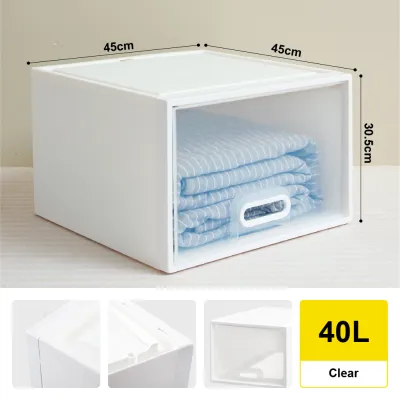
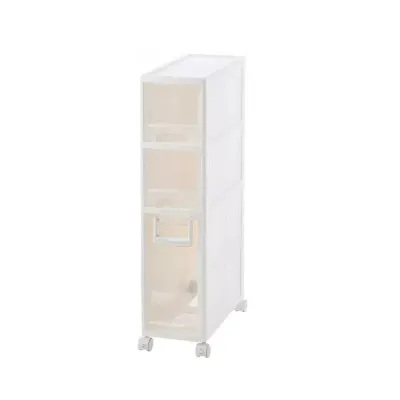
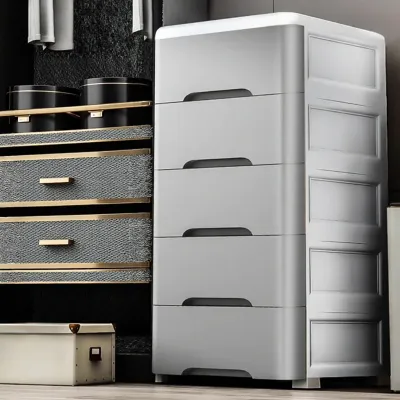
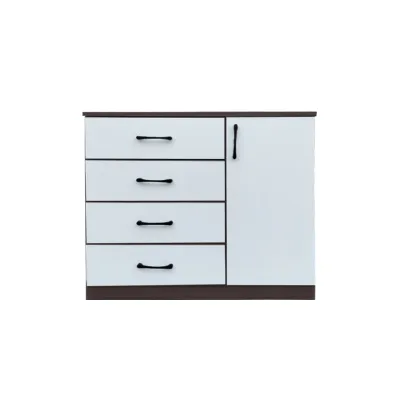
Prices are valid at publication and may change. Please refer to the product page for the latest price.
This adaptability makes collapsible drawers incredibly useful for multi-purpose rooms. Many Singaporeans use their spare bedrooms as hybrid spaces that function as a home office during the week and a guest room on weekends. A foldable drawer unit can hold office supplies, files, or extra bedding when the room is in use, and then be quickly packed away when you need to clear the floor for a folding mattress or a workout mat. This dynamic use of space ensures that your rooms are never locked into a single, rigid function.
Furthermore, these units simplify the logistics of relocation, flat-packing, and temporary storage. If you live in an older HDB flat undergoing the Home Improvement Programme (HIP), or if you are preparing for a room repaint, moving heavy solid-wood furniture is a physically demanding and stressful task. Foldable drawers can be collapsed in minutes and stacked neatly in a corner or transported in the boot of a standard car. This ease of handling reduces the risk of back strain and eliminates the need to hire professional movers for minor room transitions.
Key Dimensions to Evaluate Before Buying
Before purchasing any foldable drawer unit, you must carefully measure both its fully expanded footprint and its collapsed dimensions against your available bedroom clearance. It is a common mistake to only measure the wall space where the unit will stand. You must also account for the “extension clearance”—the space required to pull the drawers out fully while leaving enough room for you to stand comfortably in front of them. Ideally, you should maintain a clearance of at least 60 to 70 centimeters between the front of the expanded unit and any adjacent furniture, such as the edge of your bed frame or a study desk.

Equally important is verifying the collapsed dimensions of the unit if you plan to store it away periodically. Measure the narrow gaps in your home where the folded frame might live, such as the space under your bed, behind a sliding wardrobe door, or inside a household shelter. Most high-quality foldable units collapse to a thickness of 5 to 10 centimeters, but some models with rigid plastic panels or integrated wheels may require more storage depth. Knowing these measurements beforehand ensures the unit can actually be tucked away when not in use.
Because foldable furniture relies on moving joints rather than solid, glued wood joints, you must look past generic material names and verify the actual weight capacity labels. A unit advertised simply as “steel frame” or “hardened plastic” does not guarantee durability. Look for the manufacturer’s specified load capacity per drawer, which typically ranges from 3 to 10 kilograms. Examine the structural joint materials; reinforced steel rivets, locking metal brackets, or heavy-duty ABS plastic connectors are essential for maintaining stability under load, whereas cheap, thin plastic snap-fits are prone to cracking under daily stress.
Finally, pay close attention to the drawer slide mechanisms and folding hinges. Unlike traditional drawers that glide on metal ball-bearing runners, foldable drawers often slide along fabric slots, molded plastic tracks, or integrated wire frames. Test or research how smoothly these drawers operate when fully loaded, and check for built-in drawer stoppers that prevent the drawer from pulling completely out of the frame. The folding hinges on the main frame should feature secure locking pins or tension bars that prevent the unit from accidentally folding or swaying when you open the drawers.
Matching Storage Needs to Drawer Configurations
To get the most out of a foldable drawer unit, you must align the drawer configurations with the specific items you plan to store. Deep drawers, typically measuring 20 centimeters or more in depth, are highly suited for bulky, lightweight items. In a Singaporean household, these are perfect for storing winter wear reserved for overseas travel, spare bolster cases, extra bedsheets, or plush bath towels. When utilizing deep drawers, ensure the bottom of each drawer is reinforced with a rigid insert, such as a thick polypropylene board or a fabric-wrapped MDF panel, to prevent the base from sagging and dragging on the drawer below.
Shallow drawers, ranging from 10 to 15 centimeters in depth, are far more efficient for daily wear and smaller personal items. Using deep drawers for socks, underwear, accessories, or charging cables often leads to cluttered piles where items get lost at the bottom. Shallow drawers keep these everyday essentials visible and easily accessible. To maximize this setup, look for units that accommodate modular fabric dividers or adjustable plastic grids, allowing you to compartmentalize the drawer space and keep small items perfectly organized.
For maximum versatility, consider a mixed drawer configuration that combines both deep and shallow compartments within a single frame. A tiered unit with larger, deeper drawers at the bottom and smaller, shallower drawers at the top offers an excellent balance for daily HDB living. This layout naturally encourages you to place heavier items at the base, which lowers the unit’s center of gravity and significantly improves its overall stability, while keeping your frequently accessed daily accessories at a comfortable waist-to-chest height.
Pre-Purchase Checklist for HDB Constraints
Living in an HDB flat introduces specific environmental and logistical constraints that you must verify before making a purchase. First, consider the delivery journey of the product. Even though foldable units are designed to be compact, they are often shipped in large, flat-packed cardboard boxes. You should measure your HDB lift entrance dimensions, the width of your common corridor, and your bedroom door frames to ensure the packaged box can be easily maneuvered into your home. This is particularly important in older HDB estates where lift doors and corridors can be narrower than modern standards.
Next, evaluate the assembly requirements of the unit. While some foldable drawers feature a convenient “pop-up” design that requires zero tools and can be set up in under two minutes, others may require minor assembly of the wheels, top wooden boards, or drawer handles. Confirm whether the setup is a manageable single-person task or if it requires specialized tools that you might not own. Opting for a tool-free, accordion-style folding frame is generally the safest bet for those who want a hassle-free setup and quick disassembly down the road.
Singapore’s tropical climate, characterized by high relative humidity, is another critical factor to keep in mind. High humidity can cause mold to grow on untreated fabric drawers and rust to form on cheap, non-coated metal frames. When selecting a unit, look for powder-coated steel or rust-resistant aluminum frames, and choose drawers made from breathable, moisture-resistant non-woven fabrics or molded plastics. Additionally, inspect the base of the unit; it should feature non-slip rubber feet or lockable caster wheels to protect your vinyl, laminate, or parquet bedroom flooring from scratches when you slide or roll the unit across the room.
Where to Source and Verify Foldable Drawers
When sourcing foldable drawer units, it is crucial to cross-reference product specifications across official brand websites and general e-commerce platforms. Do not rely solely on stylized lifestyle photos, which often use clever camera angles and digital rendering to make the drawers appear larger and sturdier than they are in reality. Always look for the technical specification sheet or the product description tab to find the exact physical dimensions, weight limits, and material compositions listed in centimeters and kilograms.
User reviews are an invaluable resource for verifying the real-world durability of these units. When browsing online marketplaces, filter the reviews to look for customers who have uploaded photos of the product inside actual HDB bedrooms. Pay close attention to feedback regarding long-term hinge durability, drawer alignment after several weeks of use, and any initial chemical odors or off-gassing from the materials. A strong chemical smell can be highly disruptive in a small, air-conditioned bedroom, so look for reviews that confirm the materials are low-odor or certified non-toxic.
Finally, protect your purchase by thoroughly verifying the seller’s return policies, assembly support, and warranty coverage before checking out. Because foldable furniture contains multiple moving parts, hinges, and joints, there is a slightly higher risk of receiving a unit with a minor manufacturing defect or a misaligned frame. Ensuring that the seller offers a straightforward return or exchange policy within Singapore, along with a basic warranty on the structural frame, provides peace of mind and guarantees that you won’t be left with a faulty, unusable unit.
Frequently Asked Questions (FAQ)
Can foldable drawer units support heavy items like books?
Generally, no. Foldable drawer units are specifically engineered for lightweight to medium-weight household items, such as clothing, bed linens, toys, and light accessories. The folding joints, fabric panels, and thin plastic walls are not designed to withstand the dense, concentrated weight of books, heavy electronics, or tools. Overloading these drawers can warp the frame, strip the folding hinges, and cause the drawer bases to sag, which will jam the sliding mechanism. Always check the manufacturer’s specified weight limit per drawer. If you need to store a large collection of books, it is highly recommended to use static wooden bookshelves or reinforced metal utility racks instead.
How do I prevent foldable drawers from tipping over?
Because foldable drawer units are constructed from lightweight materials, they naturally have a higher center of gravity when fully loaded, making them more susceptible to tipping than heavy, static wooden furniture. To prevent tipping, always load your heaviest items—such as jeans, thick towels, or bedsheets—in the bottom drawers, reserving the upper drawers for lightweight items like t-shirts and socks. Never pull out multiple drawers simultaneously, as this shifts the weight forward and can cause the entire unit to topple. Additionally, check if the unit comes with an anti-tip wall-anchoring kit, or position the unit securely between other heavy, stable pieces of furniture to minimize lateral movement.
Community discussion
Share your experience or ask a question. Comments are reviewed before publication.