
The best folding bar stools for small Singapore apartments are those that fold to a depth of under 10 centimeters, feature non-marking rubber feet to protect local vinyl or homogeneous tile flooring, and match the precise vertical clearance of your kitchen counter. In compact HDB flats and condominiums, every square meter counts. Finding a seating solution that balances daily dining comfort with the ability to disappear when not in use is key to maintaining an open, airy home.
Maximizing Floor Space in Compact Singapore Kitchens
Singapore’s residential landscape is dominated by high-density housing, where floor plans often prioritize open-concept living to make smaller footprints feel larger. In modern HDB Build-To-Order (BTO) flats and executive condominiums, the kitchen often merges with the living area, frequently separated only by a compact kitchen island or a breakfast counter. While these counters serve as excellent multi-functional hubs for meal preparation, casual dining, and remote work, standard fixed bar stools can permanently block vital walkways.
A fixed stool occupies a constant footprint, narrowing the already limited passage between the kitchen counter and the living room sofa or dining area. In a busy household, this restriction can lead to constant physical bottlenecks, especially during peak morning routines. Opting for a folding bar stool allows you to adapt your space dynamically. By stowing the stools away when they are not actively needed, you instantly reclaim floor space, allowing for smooth traffic flow and a clean, uncluttered visual environment that makes your apartment feel significantly more spacious.
Products mentioned in this guide
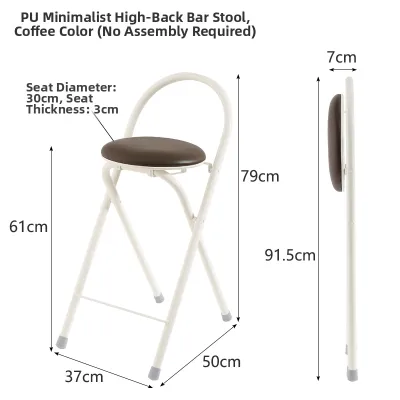
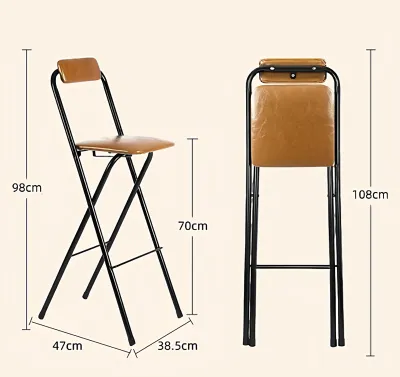
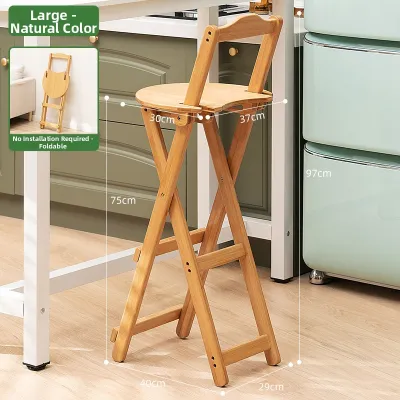
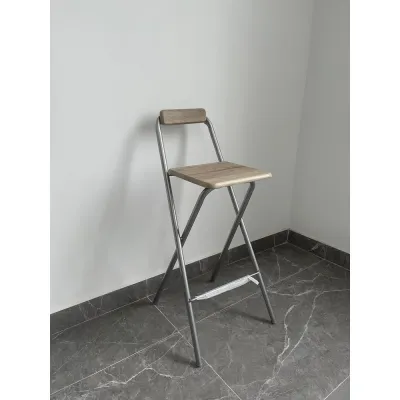
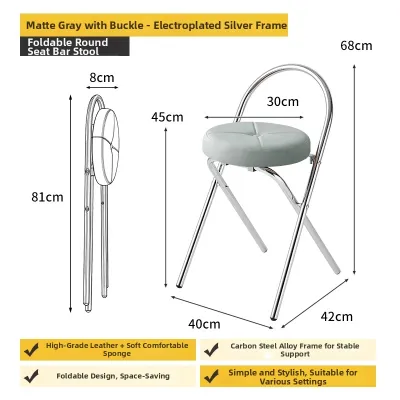
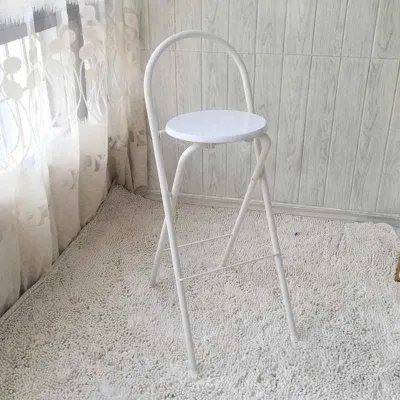
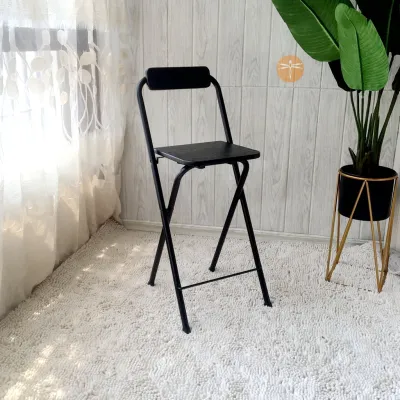
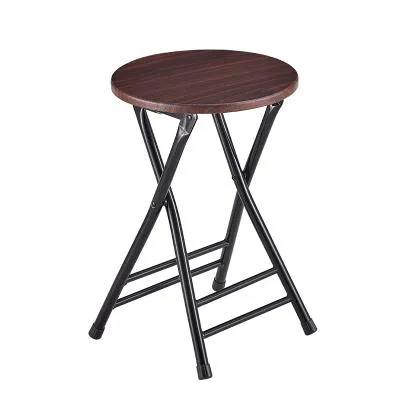
Prices are valid at publication and may change. Please refer to the product page for the latest price.
How to Measure Your Kitchen Island and Walkway Clearance
Selecting the perfect folding bar stool is not just about finding an appealing design; it requires precise spatial planning. Because these stools will be frequently folded, moved, and stored, you must measure your space with both the active and inactive states in mind. Taking accurate measurements prevents the frustration of buying furniture that is too tall to sit on comfortably or too bulky to store in your designated storage areas.

Checking Counter Height and Overhang
To determine the correct stool height, measure vertically from the floor to the exact underside of your kitchen counter or island. Do not measure to the top of the counter surface, as the thickness of the countertop material can vary significantly. For a comfortable sitting posture, you generally need a clearance of 25 to 30 centimeters between the top of the stool seat and the underside of the counter. This gap provides sufficient room for your thighs without forcing you to slouch.
Additionally, inspect the area beneath the counter overhang. Check for any structural supports, electrical outlets, drawers, or built-in appliances like dishwashers or wine coolers that might protrude. If your island has a shallow overhang, a stool with a deep seat or a prominent backrest may not tuck in fully when unfolded, leaving it sticking out into your walkway even when in use.
Calculating Folded Footprint and Traffic Clearance
Before purchasing, measure the width of the main walkway behind your kitchen island. When the stools are in use, there should still be enough space for someone to walk past comfortably without the seated person having to tuck in their chair. Once you have this baseline, evaluate where the stools will go when they are folded.
Measure the depth, width, and height of your intended storage nook, whether it is a gap beside the refrigerator, a dedicated household shelter, or a space inside a utility closet. Compare these dimensions directly with the manufacturer’s specified folded measurements. Make sure that storing the stools in this location does not block access to nearby cabinet doors, drawers, or major appliances. A stool that blocks your refrigerator door or dishwasher path will quickly become a daily annoyance.
Evaluating Stool Width and Seating Capacity
To figure out how many stools you can place along your counter, measure the total usable length of the counter edge. As a general rule of thumb, allow approximately 60 to 75 centimeters of horizontal space for each stool, measuring from the center of one seat to the center of the next. This spacing ensures that guests or family members have enough elbow room to eat comfortably without bumping into one another.
In smaller spaces, also consider the visual weight of the stools. A stool with thin, clean metal frames and a minimalist seat profile will look much lighter and less imposing in a compact kitchen than one with thick, dark wooden legs and a bulky padded backrest. Choosing a streamlined design helps maintain an open sightline across your apartment.
Key Features for True Space-Saving Performance
Not all folding stools are engineered equally. To find a model that truly excels in a compact Singapore home, you must look beyond aesthetics and evaluate the specific design features that contribute to daily ease of use and long-term durability.
Folded Dimensions and Storage Profiles
The folding mechanism dictates how easily a stool can be hidden away. Some models are engineered to fold completely flat, reducing their depth to as little as 5 to 8 centimeters. These ultra-slim profiles are ideal for sliding into narrow gaps, such as the space between a pantry cabinet and the wall, or for hanging on specialized storage hooks.
In contrast, other stools merely collapse their legs inward while the seat remains at a fixed angle, resulting in a bulkier, wedge-shaped folded profile. When browsing options, always verify the manufacturer’s listed folded thickness, height, and width. If your storage space is highly restricted, prioritizing a true flat-folding mechanism is essential for a seamless fit.
Weight, Portability, and Handling
Because you will likely fold and unfold these stools multiple times a week, if not daily, weight is a critical factor. A heavy stool becomes a chore to move, which often leads to it being left unfolded permanently, defeating its space-saving purpose. Look for lightweight materials such as high-grade aluminum, hollow steel tubing, or engineered polymers that offer a balance of structural strength and low physical weight.
Features like integrated carry handles or cut-outs in the seat make transporting the stools effortless, even for elderly family members or older children. Before buying, always check the manufacturer’s weight capacity label to ensure the lightweight frame can safely support your household members and guests.
Stability and Floor Protection
A folding stool must feel secure and stable when unfolded. Look for models with robust hinge joints and locking mechanisms that prevent the stool from accidentally collapsing while someone is sitting on it. The base should sit flat on the ground without any wobbling.
Floor protection is equally important. Most Singapore apartments feature homogeneous tiles, luxury vinyl tiles, or engineered timber flooring, all of which can be scratched or scuffed by bare metal or hard plastic legs. Ensure the stool is equipped with high-quality, non-slip, and non-marking rubber or soft plastic foot caps. These caps not only protect your flooring but also provide crucial traction, preventing the stool from sliding outward on smooth floors when a user sits down or shifts their weight.
Common Sizing and Clearance Mistakes to Avoid
Many homeowners make avoidable mistakes when purchasing folding bar stools, leading to returns or underutilized furniture. One common pitfall is ignoring the footrest protrusion. While the seat itself might be narrow, the legs and footrests of some folding stools flare outward at the bottom to provide stability. If you fail to account for this wider base footprint, the stools may trip passersby in narrow walkways or fail to fit neatly side-by-side under your counter.
Another frequent error is assuming that all “counter height” stools are standardized. In reality, seat heights can vary by several centimeters between different brands and models. Always check the exact seat-to-floor measurement against your specific counter height rather than relying solely on generic category labels.
Furthermore, remember to account for the swing radius of nearby cabinet doors, drawers, and appliances. A stool that fits perfectly when the kitchen is quiet might block the oven door from opening fully during meal preparation, or prevent a low kitchen drawer from being pulled out.
Lastly, avoid buying stools with excessively flared legs if your space is exceptionally tight. While flared legs offer excellent stability, they consume significantly more floor space than the seat width suggests, making a small kitchen layout feel unnecessarily cramped and restricted.
Maintaining Hinges and Storing Folded Stools Safely
To ensure your folding bar stools remain safe, functional, and easy to operate over many years, regular maintenance is necessary. The constant folding and unfolding action puts mechanical stress on the joints, hinges, and locking pins. Periodically inspect these moving parts to ensure that screws and bolts remain tight. Loose hardware can compromise the structural integrity of the stool, leading to wobbling or sudden failure.
Kitchen environments are prone to airborne grease, moisture, and dust, which can settle into the hinge mechanisms. Over time, this buildup can cause the folding action to stiffen or squeak. Clean the moving parts regularly with a soft, damp cloth and a mild detergent, ensuring you dry them thoroughly afterward to prevent rust on metal components. If a hinge becomes stiff, apply a small amount of silicone-based lubricant, wiping away any excess to avoid attracting more dust.
When it comes to storage, keep your folded stools in a dry, well-ventilated area. Singapore’s high relative humidity can accelerate the degradation of certain materials, such as untreated wood or low-grade metals. If you store the stools by leaning them against a wall, ensure they are fully locked in their folded position and placed on a non-slip surface so they do not slide down. Accidental falls can damage the stools, scratch your walls, or create a serious tripping hazard for anyone walking through the home.
Frequently Asked Questions (FAQ)
Can I wall-mount folding bar stools to save even more floor space?
While hanging stools on the wall is an excellent way to clear floor space, you should only do so if the manufacturer explicitly states the stool is designed for wall-mounting and provides the appropriate hardware. Never attempt to hang standard folding stools using generic hooks. Additionally, be cautious of the wall type in your Singapore home; hollow partition walls or drywall common in some modern layouts may not support the weight of heavy stools without proper anchoring into studs. Concrete or solid brick walls are far safer for mounting, but always verify the weight limits first.
Are folding bar stools comfortable enough for daily meals?
Folding bar stools are designed primarily for space efficiency and portability, which often involves a trade-off with long-term seating comfort. They typically feature minimal padding and simpler backrests compared to fixed dining chairs. However, many models offer contoured seats or slight back support that is perfectly adequate for quick breakfasts or casual meals. If you plan to use them for extended periods, such as working at your kitchen island, consider choosing models with slightly wider seats or adding thin, removable, non-slip seat pads that can be stored separately.
What is the difference between counter-height and bar-height folding stools?
The primary difference lies in the seat height, which is designed to match different counter levels. Counter-height folding stools typically feature a seat height of 60 to 65 centimeters, making them ideal for standard kitchen islands and breakfast counters that stand around 90 centimeters tall. Bar-height folding stools are taller, with seat heights usually ranging from 70 to 75 centimeters, designed for elevated commercial-style bars or high-top tables that stand around 100 to 105 centimeters tall. Always measure your specific counter’s underside height before purchasing to ensure you select the correct size.
Community discussion
Share your experience or ask a question. Comments are reviewed before publication.