
Selecting the ideal foldable coffee table for a compact Singapore apartment requires balancing daily functionality with spatial efficiency. In typical Housing & Development Board (HDB) flats and modern condominiums, the living room often serves multiple purposes, acting as a relaxation zone, a home office, and an occasional dining area. A well-designed foldable coffee table addresses these overlapping needs by transforming its shape and footprint on demand, allowing you to reclaim valuable floor space when the table is not in use.
To find the best fit, you must look beyond aesthetics and evaluate how a table’s physical dimensions, mechanical design, and material construction align with your specific layout. The right choice will seamlessly integrate into your home, offering the utility of a larger surface without permanently crowding your living area.
Measuring Your Space and Delivery Clearances
Before browsing designs, you must establish the precise spatial limits of your living room. Begin by measuring the clear floor area between your sofa and the television console or opposite wall. As a general rule, you should maintain a walkway clearance of at least 50 to 60 centimeters around the coffee table when it is fully closed to ensure comfortable movement. If you choose a model that expands, you must repeat these measurements using the table’s fully deployed dimensions to confirm that it will not block essential pathways or collide with other furniture.
Products mentioned in this guide
![[3S FURNITURE] Modern Rustic Simple Solid Rubber Wood Foldable Coffee Table with Storage Panel * FREE DELIVERY *](https://img.lazcdn.com/g/p/63e8aa4a6743093f0d281c796b72676d.png_400x400q80.png_.webp)
![[3S FURNITURE] Modern Rustic Simple Solid Rubber Wood Foldable Coffee Table * FREE DELIVERY * (1Yr Local Warranty)](https://img.lazcdn.com/g/p/204cfe405828c8ecbaeacf2b4c69c93d.jpg_400x400q80.jpg_.webp)
Prices are valid at publication and may change. Please refer to the product page for the latest price.
Equally important is verifying the delivery route from the arrival point to your living room. Singapore apartments often present tight navigation challenges, particularly in older HDB estates with narrow corridors or smaller passenger lifts. Measure the height and width of your apartment’s main entrance door, any internal hallway clearances, and the dimensions of the estate’s lift cabin. If a foldable table is delivered fully assembled, these entry points dictate the maximum package size that can safely reach your unit without damage.
Finally, consider the vertical clearance and arc of movement required by the table. If you select a design that lifts or swings outward, ensure there is sufficient clearance beneath wall-mounted televisions, floating shelves, or low-hanging pendant lights. Mapping out these physical boundaries beforehand prevents the frustration of purchasing a piece that is either too cumbersome to deliver or too restrictive to use.
Choosing the Right Folding Mechanism for Your Layout
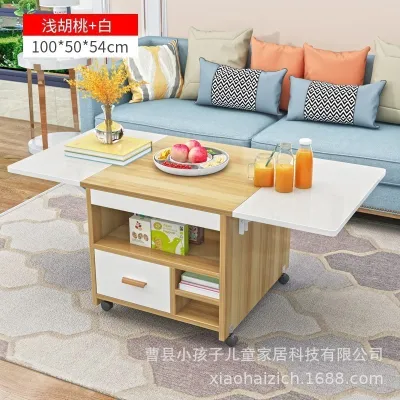
The mechanism that drives a foldable coffee table determines how effectively it adapts to your daily routine. Drop-leaf and gateleg designs are highly practical for households that require occasional dining or workspace expansion. These tables feature hinged side panels that hang vertically when folded and swing upward to lock into place when extra surface area is needed. They allow you to keep the table compact for daily coffee breaks while quickly scaling up to accommodate guests or project materials.

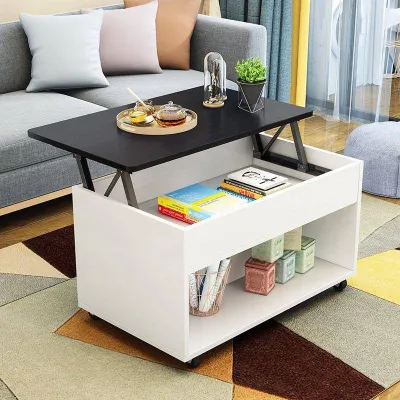
Lift-top mechanisms offer a different kind of versatility by elevating a portion of the tabletop to a comfortable working height. This design is particularly beneficial for those who use their sofa as a temporary home office or dining spot, as it brings the surface closer to you and reduces the need to hunch forward. Additionally, lift-top tables often feature integrated storage compartments directly beneath the moving surface, providing a hidden zone to tuck away remote controls, chargers, and stationery.
Nesting or expandable tables provide a modular alternative for highly flexible seating arrangements. Nesting sets consist of two or three tables of graduating sizes that slide completely underneath one another, allowing you to deploy them individually when hosting visitors and stack them away to free up floor space afterward. Slide-out or drawer-style extensions also offer a seamless way to increase surface length without altering the table’s overall height or visual profile.
When comparing these mechanisms, contrast the exact floor space required when the unit is fully folded versus its fully expanded state. A table that requires a massive clearance arc to open may not be practical in a narrow living room, even if its folded footprint is minimal. Choose a mechanism that expands in a direction that aligns with your room’s longest open axis.
Balancing Material Durability and Visual Lightness
In a compact living room, the visual weight of your furniture significantly influences how spacious the area feels. Heavy, solid-wood coffee tables with blocky bases can make a small room feel cramped and dark. To maintain an open, airy atmosphere, look for tables that incorporate visually light materials, such as tempered glass tops, slender metal legs, or light-toned wood veneers. These elements allow light to pass through and around the furniture, creating the illusion of a larger floor area.
However, visual lightness must not come at the expense of structural integrity. Because foldable coffee tables rely on moving parts, the durability of the frame and joints is far more critical than the material name of the tabletop. Instead of assuming a table is durable simply because it is labeled as solid wood, inspect the quality of the hinges, brackets, and connecting hardware. Look for robust metal joints that are securely bolted to the frame rather than held together by simple wood screws, as these connection points bear the physical stress of daily folding and unfolding.
Additionally, pay close attention to the surface finish and its care requirements. Since these tables often serve multiple roles—including dining and working—the surface must withstand heat, moisture, and accidental spills. Check the manufacturer’s specifications to ensure the top layer is treated with a protective, easy-to-clean sealant. For example, high-pressure laminates or treated engineered woods often offer excellent resistance to daily wear and tear, making them highly practical choices for busy Singaporean households.
Matching Table Functions to Your Daily Routine
To get the most value from a foldable coffee table, you should align its features with your household’s specific lifestyle patterns. If your living room tends to accumulate clutter, prioritize designs with built-in storage compartments, such as hidden under-top cavities or integrated drawers. These spaces allow you to keep daily essentials close at hand while maintaining a clean, minimalist aesthetic on the main surface.
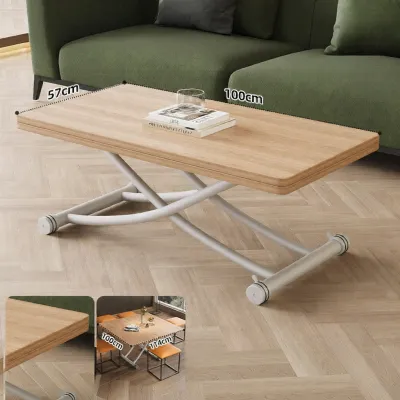
If your apartment lacks a dedicated dining room or study, your coffee table may need to perform double duty. In this scenario, a lift-top or height-adjustable table is highly advantageous, as it can transition from a standard coffee table height of around 40 to 45 centimeters to a comfortable dining or typing height of 60 to 75 centimeters. This dual-purpose capability eliminates the need to purchase separate, bulky furniture pieces, preserving precious square footage in your home.
You must also consider the physical effort required to operate the table. If you plan to fold and store the table daily, look for lightweight frames or models equipped with smooth, assisted-opening gas struts. A table that is excessively heavy or requires complex manual assembly to fold will likely remain permanently open, defeating the purpose of its space-saving design. Ensure that the folding process can be easily managed by a single person without straining.
Verifying Stability, Safety, and Joint Maintenance
Safety and structural stability are paramount when selecting any furniture with moving components. Always check the manufacturer’s stated weight capacity limits, paying close attention to how the load limit changes when the table is fully expanded or lifted. An extended leaf or elevated top naturally has a lower weight tolerance than the central base, so you must avoid placing heavy items on the outer edges of these extended surfaces to prevent tipping.
Inspect the safety features of the folding mechanisms before making a purchase. High-quality foldable tables should feature secure locking pins, safety latches, or soft-close hinges that prevent the table from collapsing unexpectedly if bumped. These mechanisms are especially important for protecting fingers during operation, ensuring that the folding action is controlled and smooth rather than sudden.
Finally, maintain the longevity of your table by performing regular hardware checks. Over time, the repetitive motion of folding and unfolding can cause screws and hinges to loosen slightly. Follow the manufacturer’s care instructions, which typically recommend inspecting the joints every few months and tightening any loose fasteners with basic hand tools. Keeping the moving parts clean and occasionally applying appropriate lubricants, as specified by the manufacturer, will ensure your table operates smoothly and safely for years to come.
Community discussion
Share your experience or ask a question. Comments are reviewed before publication.