
To maximize the livable area of a Singapore Housing & Development Board (HDB) flat, choosing the right drawer configuration is a necessity rather than a design preference. The ideal space-saving drawer unit depends entirely on matching your flat’s physical layout constraints with your specific storage signals. Whether you are dealing with a compact 3-room BTO flat or a mature resale unit, identifying where dead space exists—and how you need to access your belongings—will dictate whether a slim pull-out, under-bed, corner, or stackable drawer system is your optimal solution.
Assess Your HDB Room Dimensions and Storage Signals
Conducting a thorough spatial audit is the first step in reclaiming floor space. Walk through your rooms with a measuring tape and look beyond the obvious open areas. Identify unused vertical space, narrow gaps between existing furniture, and awkward corners that currently serve no purpose. These often-overlooked zones are prime real estate for targeted storage solutions.
Next, analyze your storage signals to determine what actually needs to be put away. Bulky, infrequently used items like seasonal bedding, winter clothing for overseas travel, or extra pillows require deep, out-of-sight storage where daily access is not a priority. Conversely, small, daily-use accessories like keys, chargers, socks, and cosmetics demand highly accessible, shallow drawers located at waist or chest height.
Products mentioned in this guide
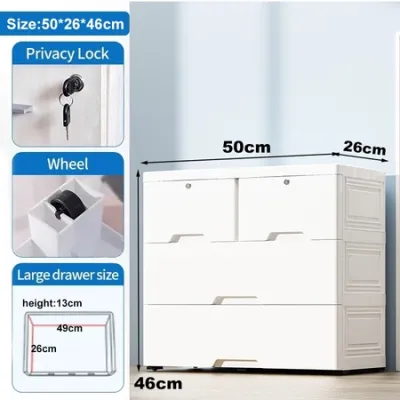
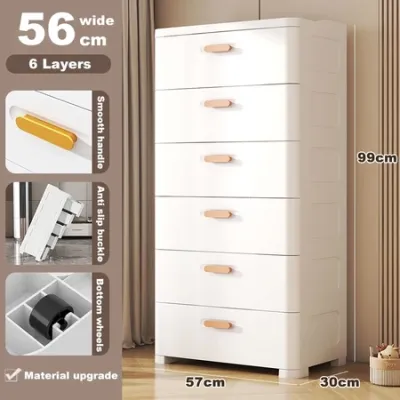
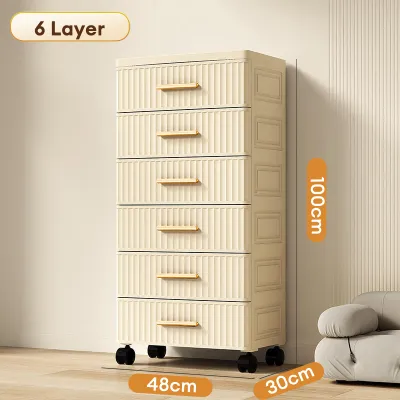
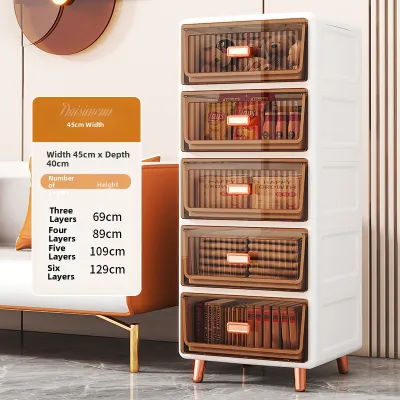
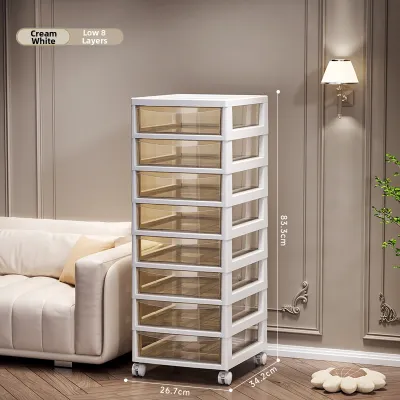
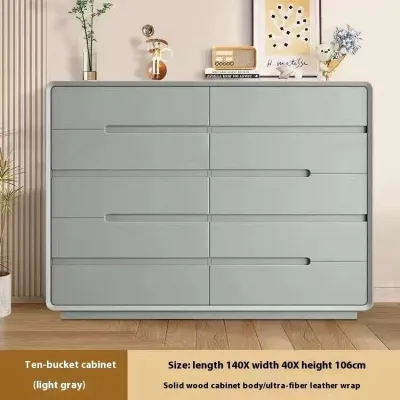
Prices are valid at publication and may change. Please refer to the product page for the latest price.
You must also recognize the common physical constraints inherent in HDB layouts. Built-in wardrobes often leave awkward gaps near bedroom doors, while household shelters (bomb shelters) feature thick, non-drilling structural walls and heavy steel doors that must remain completely unobstructed. Additionally, wall-mounted air-conditioning trunking runs along ceilings and walls, reducing vertical clearance, and narrow walkways in bedrooms and corridors limit how far drawers can physically extend.
Establishing a clear decision framework helps you choose between optimizing existing dead space and reconfiguring your room’s overall layout. If your current furniture arrangement is highly functional, focus on finding drawer units that slip seamlessly into existing dead zones, such as under the bed or between the wardrobe and the wall. If the room feels constantly cramped and lacks clear walkways, it may be time to reconfigure the layout entirely to accommodate a more substantial vertical drawer stack.
Match the Right Drawer Configuration to Your Layout
Selecting the right drawer configuration is not a one-size-fits-all decision; it requires balancing your spatial limits with the physical design of the furniture. Different configurations excel at solving specific layout challenges. By understanding the strengths and limitations of each type, you can choose a unit that integrates smoothly into your daily routine.

Slim Pull-Out Drawers for Narrow Gaps
Slim pull-out drawers are specifically engineered to exploit tight, vertical gaps that standard furniture cannot utilize. These units are highly effective in narrow spaces, such as the gap beside a bedroom bed frame, next to a kitchen refrigerator, adjacent to a washing machine in the service yard, or right beside a built-in wardrobe. These gaps, often measuring between 10cm and 20cm, are typically left as empty dust-catchers.
These ultra-narrow units are best used for storing flat or slender items that would otherwise clutter your countertops or shelves. In the kitchen or service yard, they hold cleaning supplies, laundry detergents, or narrow spice jars. In the bedroom, they are ideal for organizing small accessories, ties, belts, or daily-use items that require quick, organized retrieval.
Before purchasing a slim pull-out unit, you must check several critical physical limitations. Verify the depth of the gap, as kitchen gaps are often much deeper than those in bedrooms, and a unit that sticks out will block walkways. Because these units are tall and narrow, check their weight capacity and ensure they feature high-quality, smooth-gliding tracks to prevent the drawer from jamming or tipping sideways when fully extended.
Under-Bed Drawers for Hidden Bedroom Storage
Under-bed drawers are the premier solution for utilizing the expansive, horizontal dead space beneath your bed frame. This area is often completely wasted or filled with disorganized boxes that accumulate dust. Converting this zone into structured drawer storage allows you to free up valuable wardrobe space without consuming a single square centimeter of additional floor area in your bedroom.
To use under-bed drawers successfully, you must verify several spatial prerequisites. First, measure the exact vertical clearance from the floor to the bottom of the bed frame, which typically ranges from 15cm to 30cm. Check for floor skirting boards that might prevent a drawer from sliding out cleanly, and ensure your bed base is compatible; platform beds cannot accommodate these drawers unless they are built-in, whereas slatted frames offer open access.
Under-bed storage is ideal for bulky, low-frequency items such as extra bedsheets, seasonal blankets, shoes, or travel luggage accessories. Because this zone is highly prone to dust accumulation, look for drawers equipped with fitted lids or zippered fabric covers. Ensure the drawers feature smooth-rolling caster wheels or run on dedicated tracks to prevent them from getting stuck on your bedroom flooring.
Corner Drawers for Awkward Angles
Corner drawer units are designed to maximize utility in 90-degree corners or irregular alcoves that standard rectangular drawers cannot fill. In many HDB flats, corners become dead zones because standard furniture placed adjacent to them blocks access. Corner drawers resolve this by utilizing specialized hardware that allows the drawer fronts to pull out diagonally or in an L-shaped configuration.
These specialized units are highly effective when placed along living room edges, inside tight study nooks, or in dining area corners. They turn an awkward, unused corner into a functional storage station for documents, stationery, or dining accessories. This configuration keeps the center of the room open and free of clutter.
However, corner drawers involve distinct trade-offs that you must consider. Because of their complex internal geometry, the actual usable volume inside a corner drawer is often smaller than that of a standard rectangular drawer of the same external width. Additionally, items stored deep in the back of a corner unit can be more difficult to access, so reserve these drawers for items you do not need to retrieve multiple times a day.
Stackable Drawers for Flexible Vertical Space
Stackable drawers offer an incredibly flexible approach to storage, allowing you to build upwards rather than consuming precious floor area. This modular design is perfect for adapting to changing household needs over time. You can start with a low, two-drawer stack and add additional units as your storage requirements expand, making them highly versatile for growing families.
These units are ideal for empty wall spaces, inside walk-in wardrobes, or placed on top of existing low cabinets. Because they are modular, you can customize the height and width of the stack to fit your exact space. They also offer the unique advantage of being easy to disassemble and relocate if you decide to reconfigure your room layout in the future.
When planning a stackable setup, you must verify several critical vertical constraints. Measure the total projected height of the stack against your ceiling, wall-mounted light fixtures, and air-conditioning trunking. Ensure that the stack does not block window sills, light switches, or electrical outlets, and verify that the individual drawer units lock securely into one another to prevent sliding or collapsing.
Essential Measurements and Clearances to Verify Before Buying
Before purchasing any drawer unit, conducting precise physical measurements is essential to ensure the furniture fits and functions correctly in your HDB flat. A drawer that cannot open fully or that blocks a primary walkway is a major inconvenience. Following a systematic measurement checklist will prevent costly buying mistakes and ensure a seamless installation.
Start by measuring the exact footprint of the area where the drawer unit will stand. Do not simply measure wall-to-wall; you must account for floor skirting boards, which typically protrude 1 to 2 centimeters from the wall. If a drawer unit cannot sit flush against the wall due to these skirting boards, it will create a rear gap that pushes the entire unit forward, reducing your front clearance space.
Next, calculate the drawer extension clearance. A drawer unit is only functional if its drawers can open fully. Measure the depth of the cabinet when closed, and add the full length of the drawer when it is pulled out completely. To ensure comfortable use, there should be at least 60 centimeters of additional “standing room” in front of the fully extended drawer so you can stand and access your items without being pinned against a wall or bed frame.
Verify all vertical clearances from the floor to the lowest overhead obstruction. In Singapore flats, this includes ceiling fans, light fixtures, wall-mounted air-conditioning units, and horizontal trunking pipes. A tall drawer unit or a high stack of modular drawers must clear these obstacles easily to prevent accidental damage to your home fixtures or restricted drawer access.
Finally, check the levelness of your flooring. Many HDB flats, particularly older resale units, may have slight floor slopes or uneven tiles. Place a spirit level on the floor area where the drawer unit will stand; uneven flooring can cause drawer tracks to bind, slide open on their own, or roll unpredictably if the unit is equipped with caster wheels.
Safety, Anchoring, and Reconfiguration Rules
Ensuring the physical safety and stability of your drawer configuration is paramount, especially in compact spaces. Tall, narrow pull-out drawers and high-stacked modular units present a significant tipping risk. When multiple drawers are pulled out simultaneously, the center of gravity shifts forward dramatically, which can cause the entire unit to topple over.
To mitigate this risk, you must use anti-tip wall anchors for any drawer stack or narrow unit that exceeds 1 meter in height, particularly in homes with children or pets. Safety check: Before drilling into any wall to install anchors, always consult your flat’s layout plans and check the manufacturer’s instructions for both the drawer unit and the wall mounting hardware to avoid damaging hidden electrical conduits or water pipes.
Proper weight distribution is another simple yet highly effective way to maintain stability. Always load your heaviest items—such as books, heavy linens, or tools—into the bottom-most drawers of the unit. Use the upper drawers strictly for lightweight items like clothing or accessories, which keeps the overall center of gravity low and stable.
Lastly, recognize when a space is simply too cramped for safe drawer operation. If opening a drawer requires you to squeeze past other furniture, step into an adjacent room, or block a main walkway, the layout is unsafe. Never allow drawer units to obstruct emergency exit routes, the path to your household shelter, or main walkways; if a unit blocks these areas, stop and reconfigure the room layout.
Frequently Asked Questions (FAQ)
Can I install built-in drawers inside my HDB household shelter?
No, you cannot install built-in drawers that require drilling or anchoring inside an HDB household shelter (bomb shelter). HDB regulations strictly prohibit drilling, nailing, or anchoring anything into the reinforced concrete walls, floor, ceiling, or the heavy steel door frame of the shelter. Doing so compromises the structural integrity and protective capability of the shelter during an emergency, which is a serious safety violation.
Instead, you should utilize freestanding, non-anchored storage solutions inside this space. Modular stackable plastic drawers, heavy-duty freestanding metal shelving units, or rolling utility carts are excellent alternatives. These options provide ample, organized storage for household supplies and emergency kits without violating HDB safety guidelines or damaging the shelter’s structure.
How do I prevent under-bed or pull-out drawers from scratching HDB floors?
HDB flooring materials, such as vinyl, laminate, or polished homogeneous tiles, are highly susceptible to scratches and scuffs from heavy, moving furniture. When selecting rolling under-bed or pull-out drawers, avoid units with hard plastic wheels. Instead, opt for caster wheels made of soft polyurethane or rubber, which glide smoothly across the floor without leaving marks or causing damage.
For stationary drawer units that you occasionally slide out for cleaning, apply heavy-duty felt pads or silicone sliders to the base of the legs. Alternatively, you can lay down a thin, low-pile protective floor runner rug along the drawer’s path of motion. This provides a physical barrier that protects your flooring while allowing the drawers to operate smoothly.
Community discussion
Share your experience or ask a question. Comments are reviewed before publication.