
Finding the perfect storage cabinet for clothes in a Singaporean HDB flat is a delicate balancing act. With modern BTO bedroom dimensions shrinking, every square meter of floor space is premium real estate. Standard off-the-shelf furniture often leaves awkward gaps or blocks natural light, making a compact room feel even smaller. To optimize your layout, you must choose between flexible modular systems, seamless custom built-in carpentry, or space-saving freestanding units. This guide breaks down how to assess your space, identify critical design features, and compare wardrobe types to find the most space-efficient solution for your home.
Assessing HDB Bedroom Dimensions and Space Constraints
Measuring a bedroom for a new storage cabinet for clothes requires more than a quick floor check. You must map out the entire three-dimensional footprint of your intended wall. Start by measuring the exact length, width, and height of the space, taking note of any unevenness in the floor or walls. In many HDB flats, structural columns, electrical DB boxes, and air-conditioning trunking run along the upper wall, which can severely restrict where a tall cabinet can stand.
Next, account for clearance zones. A standard hinged door requires at least 50 to 60 centimeters of clear space in front of the wardrobe to open fully, which might clash with your bedframe or bedside table. If your bedroom layout is tight, sliding doors are often the superior choice because they operate entirely within the wardrobe’s footprint. Additionally, look out for wall-mounted power outlets, light switches, and window frames. Blocking an outlet or a window not only reduces functionality but can also create safety hazards or block natural ventilation.
Products mentioned in this guide
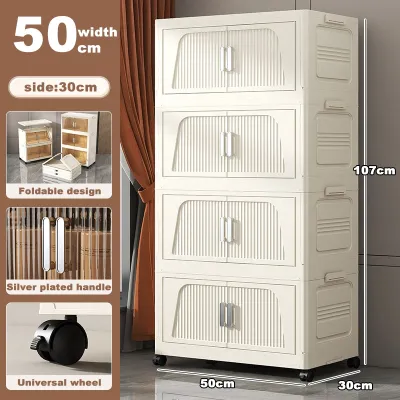
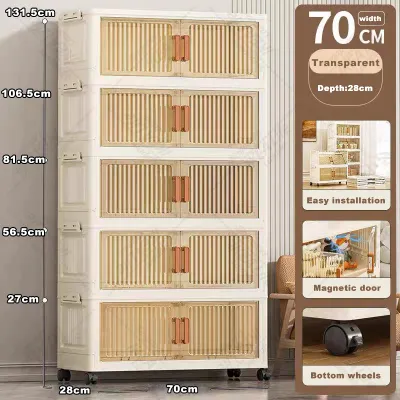
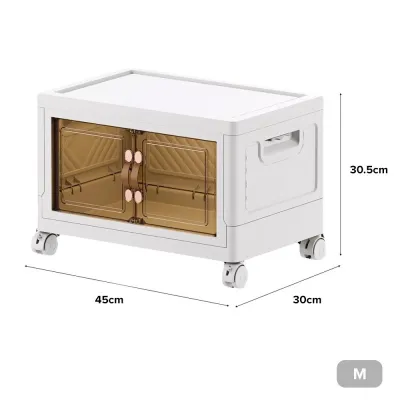
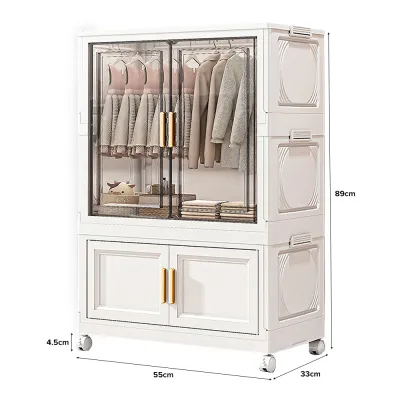
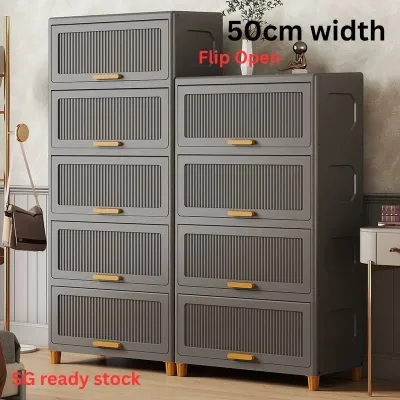
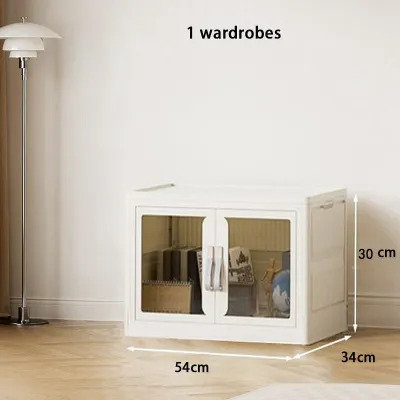
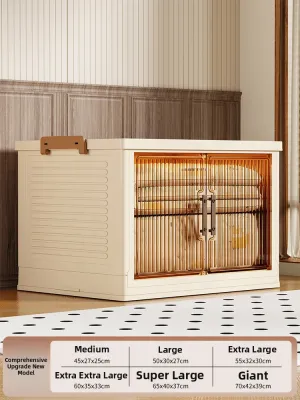
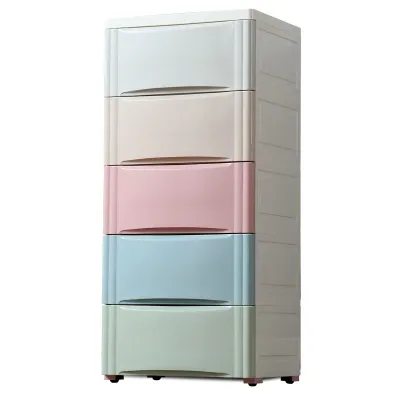
Prices are valid at publication and may change. Please refer to the product page for the latest price.
Finally, identify underutilized “dead zones” in your bedroom layout. The space directly above a door frame, the narrow alcove beside an entryway, or the empty wall space above your bedhead are prime spots for creative storage. Specialized storage cabinets for clothes, such as bridge wardrobes or shallow-depth units, can turn these awkward areas into highly functional closets without eating into valuable walkway space.
Key Features to Seek in Space-Optimized Storage Cabinets for Clothes
When shopping for a space-saving storage cabinet for clothes, the door mechanism is your first major decision. Sliding door wardrobes are highly popular in compact HDB master bedrooms because they do not require any frontal clearance. However, they do require a deeper overall cabinet footprint—usually around 65 centimeters—to accommodate the double-track sliding system. Hinged doors, on the other hand, can fit on slimmer 55-centimeter-deep cabinets, allowing you to reclaim precious floor space in narrow walkways, provided you have the swing clearance.

Maximizing vertical space is another critical strategy for small rooms. Standard off-the-shelf wardrobes often stop at 2.1 meters, leaving a 50-centimeter gap below the typical 2.6-meter HDB ceiling. This gap quickly becomes a dust-gathering zone or an unsightly pile of storage boxes. Opting for floor-to-ceiling designs or adding top-cabinet extensions allows you to store seasonal bedding, travel luggage, and winter wear high up, keeping your daily-use areas clutter-free.
The internal layout of your wardrobe dictates how much clothing you can actually store. In a compact wardrobe, standard hanging rods can be incredibly inefficient. Look for brands that offer modular internal accessories, such as pull-out trouser racks, multi-tiered jewelry drawers, and adjustable shelving that can be rearranged as your wardrobe changes. Corner carousels and pull-down hanging rods are also excellent for deep or hard-to-reach corners, ensuring no space goes to waste.
If your bedroom is exceptionally narrow, consider shallow-depth wardrobes. While standard hangers require a cabinet depth of at least 60 centimeters, shallow models measure just 40 to 45 centimeters deep. To make these work, look for pull-out, front-facing hanging rods where clothes hang parallel to the door rather than sideways. While this reduces the total number of hanging items, it keeps the walkway clear and prevents the room from feeling claustrophobic.
Wardrobe Solution Types and Brand Categories in Singapore
Modular and System Furniture Brands
Modular and system wardrobes offer a practical middle ground between cheap freestanding units and expensive custom builds. These systems consist of pre-designed cabinet frames in standardized widths—typically 50, 75, or 100 centimeters—that you can mix and match to fit your wall. The primary benefit of system furniture is its high flexibility and immediate availability. If you move homes or decide to reconfigure your bedroom, you can easily dismantle, move, or add new internal shelves and drawers to the existing frames.
However, modular systems have fixed depth and width increments. If your HDB wall is 230 centimeters wide, and you use two 100-centimeter modules, you will be left with an awkward 30-centimeter gap that cannot easily be filled. Before purchasing, always measure your wall lengths precisely and compare them against the brand’s standard module dimensions. Many major global and regional furniture brands provide free online 3D planning tools, allowing you to input your room’s dimensions and drag-and-drop different modules to preview how the storage cabinet for clothes will fit before making a purchase.
Custom Carpentry and Built-in Specialists
For highly irregular HDB bedrooms with awkward structural columns, sloped ceilings, or tight corners, custom carpentry is often the most effective solution. Local carpentry specialists and interior design firms build wardrobes from scratch to fit your room’s exact dimensions. This built-in approach ensures a seamless, flush finish that utilizes every millimeter of space from wall to wall and floor to ceiling. It also allows you to hide unsightly structural beams, electrical wiring, or air-con pipes behind elegant timber panels.
The trade-offs of custom carpentry are its permanence, longer lead times, and higher upfront costs. Unlike modular furniture, a built-in wardrobe cannot be moved to a new home, and removing it during a future renovation will require professional hacking. When hiring a local carpenter, always ask to see their portfolio of compact HDB bedroom installations. Pay close attention to their material specifications; in Singapore’s highly humid climate, cheap particleboard can swell and warp. Ensure the carpenter uses high-quality plywood with ABS edge banding to protect the edges of the cabinet doors and shelves from moisture penetration.
Freestanding and Multi-Functional Storage Cabinets
If you are renting your HDB flat or prefer a non-permanent furniture layout, freestanding and multi-functional storage cabinets are excellent alternatives. Multi-functional furniture is designed to serve double duty, which is incredibly useful in small study rooms or guest bedrooms. For instance, loft bed frames with integrated wardrobes underneath allow you to combine sleep and storage into a single footprint. Alternatively, freestanding wardrobes with finished back panels can double as room dividers to separate a sleeping area from a home office.
When opting for freestanding units, look for narrow-depth designs that can fit into tight corridors or behind doors. These units are highly portable, allowing you to rearrange your room layout whenever you please. However, because freestanding wardrobes are not anchored to the ceiling, you must carefully verify their structural stability. Tall, narrow cabinets can easily become top-heavy when loaded with heavy winter coats or boxes, making them prone to tipping if not properly balanced or secured.
Evaluating and Comparing Brands for Compact Layouts
To make an informed decision, it is helpful to compare the three main wardrobe types across key practical dimensions. Below is a conceptual comparison matrix to guide your evaluation:
| Feature | Modular System Wardrobes | Custom Built-in Carpentry | Freestanding Cabinets |
|---|---|---|---|
| Space Efficiency | Moderate (may leave gaps) | Maximum (tailored to room) | Low to Moderate |
| Customizability | Moderate (preset modules) | High (fully bespoke) | None (sold as-is) |
| Average Cost Band | S$800 – S$2,500 | S$2,000 – S$6,000+ | S$200 – S$1,000 |
| Portability | High (can be dismantled) | None (permanent) | Very High (move as-is) |
| Installation Time | 1 to 2 days | 1 to 2 weeks (plus fabrication) | Immediate (flat-pack/assembled) |
Beyond the structural type, pay close attention to hardware quality. The moving parts of a wardrobe—such as sliding door tracks, soft-close hinges, and drawer runners—endure heavy daily wear and tear. In a compact bedroom where doors are opened frequently in tight spaces, cheap hardware will quickly fail, causing doors to sag or jump off their tracks. Look for brands that use reputable hardware brands like Blum or Hettich, and check the warranty terms specifically for these moving components.
You should also assess a brand’s customization limits. Some modular brands offer “semi-custom” services where they can trim standard filler panels to close the gaps between the cabinet and your walls or ceiling. If you have a prominent HDB structural beam, ask if the brand can notch the back of the cabinet to fit around it. Always request detailed 3D renderings or technical drawings from your provider to verify that all doors, drawers, and pull-out accessories have sufficient clearance to open without hitting your bed or bedroom entry door.
Pre-Purchase Checks, Delivery Logistics, and Safety
Before finalizing your purchase or signing a carpentry contract, you must ensure compliance with local housing guidelines. Under HDB regulations, you do not need a permit to install wardrobes, but you are strictly prohibited from hacking, drilling into, or damaging structural walls and reinforced concrete columns. If your built-in wardrobe requires wall anchoring, verify with your contractor that they are drilling only into non-structural partition walls or using approved hollow-wall anchors.
Delivery logistics are another common bottleneck in Singapore’s high-rise estates. While a wardrobe might fit perfectly in your bedroom, its individual panels can be incredibly long and heavy. Measure your HDB block’s passenger lift dimensions, corridor widths, and any tight turns in your home’s entryway. If a 2.4-meter-tall side panel cannot fit into the lift, delivery workers will have to carry it up the staircase, which often incurs hefty manual lifting fees per floor.
Safety should always be a primary consideration, especially for tall freestanding furniture. To prevent dangerous tip-over accidents, any freestanding storage cabinet for clothes taller than 120 centimeters must be securely anchored to the wall. This is particularly critical in homes with young children or pets who might attempt to climb the drawers. Most reputable furniture brands include anti-tip wall-mounting kits with their wardrobes; ensure these are installed correctly according to the manufacturer’s guidelines.
Lastly, if your wardrobe is being installed close to electrical mains, DB boxes, or air-conditioning units, consult a qualified professional. Ensure there is adequate ventilation around your air-con trunking to prevent condensation from building up behind the wardrobe panels, which can lead to mold growth and damage your clothing.
Frequently Asked Questions (FAQ)
Is custom carpentry always better than modular wardrobes for small HDB rooms?
While custom carpentry is excellent for maximizing every square centimeter of an irregular or tight HDB room, it is not always the best choice for every homeowner. Built-in wardrobes are designed to fit a specific wall exactly, making them highly permanent and impossible to relocate if you move. They also require a significant upfront financial investment and longer fabrication times.
In contrast, modular wardrobes offer excellent flexibility, lower costs, and faster installation times. If you are renting, planning to sell your flat in a few years, or prefer the ability to reconfigure your storage layout over time, a modular system is often the more practical and cost-effective solution. Ultimately, the right choice depends on whether you prioritize absolute spatial optimization or long-term flexibility and budget.
Community discussion
Share your experience or ask a question. Comments are reviewed before publication.