
Finding the right shoes stand for a compact Singapore apartment requires balancing limited floor space with daily convenience. In typical HDB flats and condominiums, the entryway is often a narrow corridor or a shared foyer where every centimeter counts. The ideal design depends on your household’s footwear habits, the physical dimensions of your foyer, and the specific layout of your front door. By evaluating vertical space, accessibility, and ventilation, you can select a storage system that keeps your entryway organized without obstructing daily foot traffic.
Assessing Your Entryway and Spatial Constraints
Before purchasing a shoes stand, precise measurements of your entryway are essential to avoid blocking vital pathways. Start by measuring the available floor footprint, noting the maximum width and depth that a storage unit can occupy without extending into the main walking path. You must also measure the vertical wall height, especially if you are considering tall, vertical shelving units that utilize overhead space. Take note of any wall-mounted fixtures, such as electrical distribution boards, light switches, or intercom systems, which could restrict where a tall unit can stand.
Door clearance and swing radius are critical factors that are frequently overlooked. Measure the distance between the wall and the edge of the front door when it is fully opened to ensure the door does not strike the shoes stand. If your entryway features a security gate or a secondary door, verify that the opening path of both barriers remains completely unobstructed. A narrow corridor requires a clear walkway width of at least 90 to 100 centimeters to allow residents to move comfortably, carry groceries, or maneuver larger household items.
Products mentioned in this guide
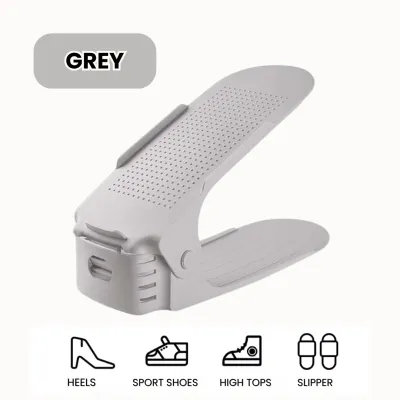
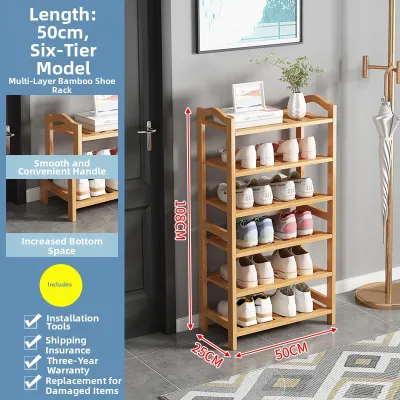
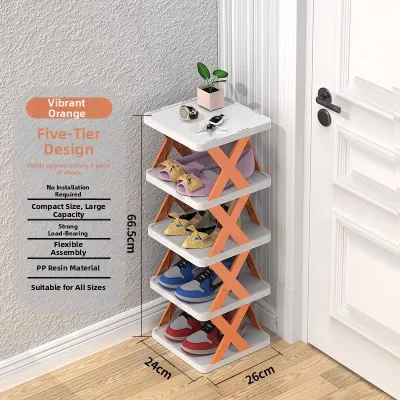
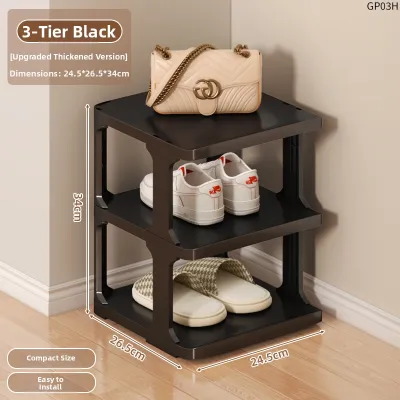
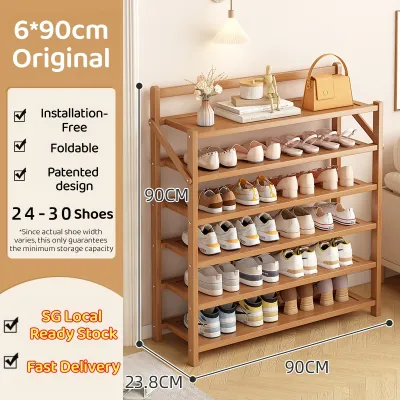
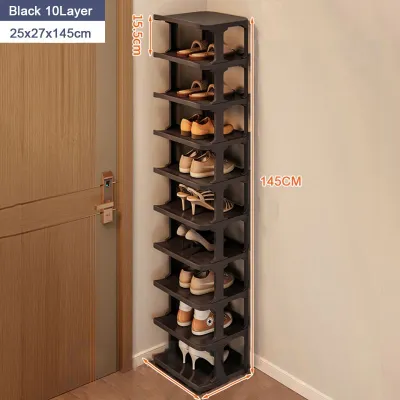
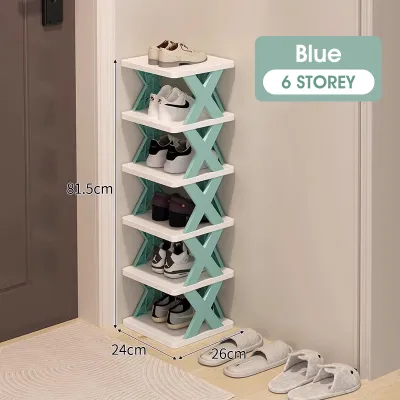
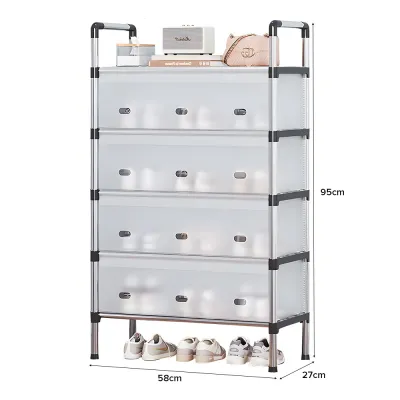
Prices are valid at publication and may change. Please refer to the product page for the latest price.
Environmental conditions near the main door also influence your choice of storage. In Singapore’s tropical climate, entryways are often exposed to high humidity, occasional rain splashes from open corridors, and ambient dust. If your front door opens directly to an outdoor common corridor, your shoes stand will face more dust and moisture than a unit placed inside an enclosed condominium foyer. Identifying these environmental factors beforehand helps you determine whether you need an enclosed cabinet to protect your footwear or an open rack that promotes maximum airflow.
Comparing Space-Efficient Shoe Stand Designs
Selecting the right shoes stand involves a direct comparison of how different designs utilize vertical versus horizontal space. Horizontal units offer easy access and double as functional surfaces, but they consume valuable floor real estate that is often scarce in compact apartments. Vertical designs, on the other hand, maximize wall height to increase storage capacity while maintaining a minimal footprint on the floor.

Every design type presents distinct trade-offs between storage capacity, daily accessibility, and visual clutter. Open shelving allows you to grab your footwear quickly on the way out, but it exposes your shoe collection to plain sight, which can contribute to a cluttered visual aesthetic. Enclosed storage options provide a clean, minimalist look but require extra clearance to open doors or drawers, and they can trap moisture if not properly ventilated. Understanding these structural dynamics allows you to match a design to your household’s specific daily routines.
Tiered Racks and Slim Shelving
Tiered racks and slim-profile shelving are highly effective for narrow corridors because they minimize floor footprint while scaling upward. Many slim shoes stand models feature tilting drawers or ultra-thin shelves that measure less than 20 centimeters in depth, allowing them to sit flush against entryway walls. When evaluating these units, look for models with adjustable or removable tiers, which allow you to customize the shelf height to accommodate flat shoes, sneakers, or high-top boots.
Because tall and narrow structures have a higher center of gravity, stability is a primary safety concern. A slim shoes stand can easily wobble or tip over when fully loaded with heavy footwear or when accidentally bumped. It is crucial to check the structural rigidity of the frame and verify whether the manufacturer includes wall-anchoring hardware. If you cannot drill into your entryway walls due to rental agreements or concealed wiring, you should prioritize wider, lower-profile tiered racks that offer a more stable base.
Stackable Boxes and Clear Organizers
Stackable boxes and clear plastic organizers offer a modular approach to shoe storage, making them highly adaptable to changing household needs. These individual units can be stacked vertically in bedroom closets, placed under entryway benches, or arranged inside existing cabinets to maximize unused pockets of space. The modular nature of these boxes allows you to build a custom storage configuration that fits precisely around architectural obstacles or awkward corners.
When choosing stackable boxes, the interlocking mechanism is the most critical feature to inspect. High-quality modular boxes feature secure tabs or grooves that lock the units together, preventing the stack from shifting or sliding when you retrieve a pair of shoes. Additionally, consider the visibility and access speed of the design; clear front-opening doors allow you to identify your footwear instantly and slide a pair out without needing to unstack the boxes above.
Over-Door and Hanging Solutions
Over-door and hanging organizers utilize the often-ignored vertical space on the back of bedroom, closet, or utility doors. These solutions typically feature fabric pockets or metal wire loops that hold individual pairs of shoes vertically against the door surface. This design completely eliminates any floor footprint, making it an excellent choice for ultra-compact apartments where floor space must be kept entirely clear.
However, hanging solutions require careful verification of your door’s physical limits before installation. You must check the weight capacity of the door hinges to ensure they can support the added load of multiple pairs of shoes without sagging or misaligning. Additionally, measure the clearance gap between the top of the door and the frame; if the hanging hooks are too thick, they will prevent the door from closing smoothly or damage the door frame over time. These organizers are best suited for lightweight footwear, such as sandals, slippers, and canvas sneakers, rather than heavy leather boots or bulky athletic shoes.
Bench-Style and Multi-Functional Storage
Bench-style shoes stand units combine seating with integrated storage, offering high utility for entryways where residents prefer to sit while putting on or removing footwear. These multi-functional pieces typically feature a cushioned or solid top surface with open shelves, cubbies, or a pull-out drawer underneath. By combining two essential entryway functions into a single piece of furniture, you reduce the need for separate items and create a more cohesive look.
The primary trade-off with a bench-style unit is its larger horizontal floor footprint compared to slim vertical racks. Because they must accommodate the depth of a seated adult, these benches are generally wider and deeper, which may restrict their use in very narrow HDB corridors. Before purchasing, verify the manufacturer’s specified weight capacity for the seating surface to ensure it can safely support users. Check the overall structural stability, looking for reinforced joints and solid leg construction that will not wobble under shifting weight.
Key Selection Criteria for Compact Homes
When selecting a shoes stand for a small apartment, material finishes and structural joints require close inspection to ensure long-term durability. The high humidity levels characteristic of Singapore’s climate can cause low-grade particleboard to swell, warp, or develop mold over time, especially when exposed to damp footwear. Look for materials with moisture-resistant finishes, such as sealed solid wood, powder-coated steel, or high-density plastics. Examine the joints and assembly hardware; metal-to-metal connections generally offer greater longevity and stability than simple wood screws driven directly into composite materials.
Shelf depth and height adjustability are critical for accommodating a diverse range of footwear sizes within a compact frame. Standard shoe shelves may not comfortably fit larger shoe sizes or high-heeled boots without bending the footwear or leaving the cabinet doors slightly ajar. Measure your longest pair of shoes and compare this to the internal depth specifications of the shoes stand. Opting for a unit with adjustable shelving pegs allows you to reconfigure the interior layout as your footwear collection changes, preventing wasted vertical space between shorter shoes.
Proper ventilation is another vital criterion, particularly for enclosed shoe cabinets in compact spaces. Enclosed dark environments with trapped moisture are highly susceptible to mold growth and unpleasant odor buildup. If you prefer an enclosed design to maintain a clean aesthetic, look for features that promote continuous airflow, such as slatted doors, perforated back panels, or open-mesh shelving. For completely sealed cabinets, you will need to allocate space for moisture-absorbing sachets or charcoal deodorizers to maintain a fresh environment.
Installation, Safety, and Maintenance Checks
Ensuring the safety and stability of your shoes stand is paramount, particularly for tall, vertical units placed in high-traffic entryways. Any shelving unit that is significantly taller than it is deep poses a potential tipping hazard if bumped or overloaded. To mitigate this risk, plan to anchor the unit securely to the wall using the manufacturer-provided brackets or heavy-duty wall anchors suitable for your wall type. Always verify the location of hidden electrical conduits and water pipes before drilling into entryway walls.
Routine cleaning and maintenance are necessary to preserve both the shoes stand and your footwear. Establish a regular cleaning schedule to wipe down shelves, removing accumulated dust, dirt, and outdoor debris brought in by your shoes. Always refer to the manufacturer’s care instructions for specific cleaning agents; for instance, powder-coated metal frames may only require a damp microfiber cloth, while natural wood finishes might need specialized wood cleaners to avoid stripping the protective sealant.
Over time, regular use can cause structural joints and assembly screws to loosen, compromising the stability of the stand. Periodically inspect your shoes stand for any signs of structural wear, such as wobbling, sagging shelves, or misaligned doors. Tighten any loose screws or cam locks immediately to prevent structural failure. If you notice moisture buildup or mold spots on the unit, temporarily remove all footwear, clean the affected areas with an appropriate disinfectant, and allow the stand to dry completely in a well-ventilated area before restocking.
Frequently Asked Questions (FAQ)
How do I determine the maximum shoe capacity for a slim rack?
To calculate the practical shoe capacity of a slim shoes stand, start by measuring the usable width of a single shelf in centimeters. Next, measure the width of your widest pair of daily-use shoes at their broadest point. Divide the shelf width by the shoe width to determine how many pairs can sit side-by-side on one tier; for example, a 60-centimeter shelf will comfortably fit three pairs of shoes that are each 18 centimeters wide. Always check the manufacturer’s specified weight limit per tier to ensure that heavier footwear, such as boots or thick-soled sneakers, does not exceed the structural capacity of the shelves.
What should I check before installing an over-door organizer on a fire-rated door?
Before hanging any organizer on a fire-rated door, which is common for main entrance doors in many Singapore apartments, you must consult your building management or the door manufacturer’s guidelines. Fire-rated doors are precision-engineered safety barriers, and adding excessive weight can strain the hinges, potentially misaligning the door and compromising its fire seal. Verify that the hanging hooks do not interfere with the door’s self-closing mechanism, latching hardware, or intumescent seals around the frame. If the organizer prevents the door from closing and latching completely on its own, it violates safety regulations and must be removed immediately.
Community discussion
Share your experience or ask a question. Comments are reviewed before publication.