
Choosing the right material for your TV console is a balancing act between structural strength, visual appeal, and your household budget. The ideal choice depends on what you prioritize most for your living space. While solid wood offers timeless beauty and exceptional longevity, engineered alternatives like plywood and MDF provide practical, cost-effective solutions for modern homes.
To make an informed decision, you need to understand how these materials differ in their construction, how they perform under the weight of heavy media equipment, and how they respond to daily wear and environmental conditions. By evaluating these factors, you can select a console that safely supports your television while complementing your interior design.
Solid Wood, Plywood, and MDF: Core Material Differences
Solid wood refers to natural timber cut directly from trees. Each piece of solid wood furniture is unique, showcasing natural grain patterns, knots, and color variations that develop over the tree’s lifetime. Because it is an organic material, solid wood remains responsive to its environment. It naturally expands and contracts in response to changes in air temperature and humidity, which requires careful construction techniques to prevent warping.
Products mentioned in this guide

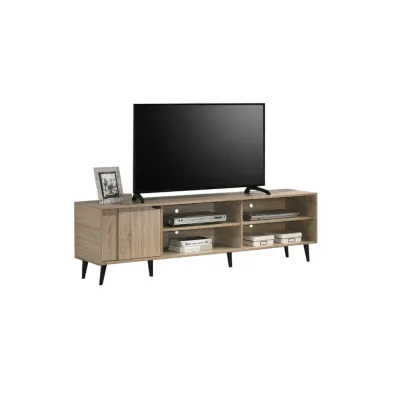
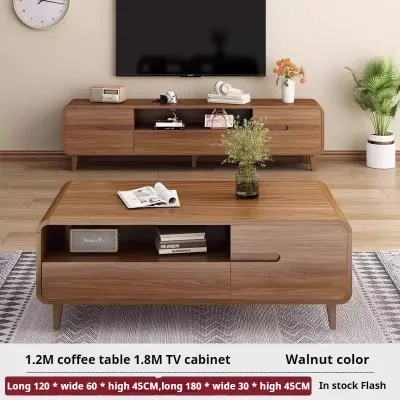
![[SG Ready Stock] Designer TV Cabinet (Wooden TV Console) Home And Style](https://img.lazcdn.com/g/p/87e73cf2dcca66015fc1d6ab80d2c425.jpg_400x400q80.jpg_.webp)
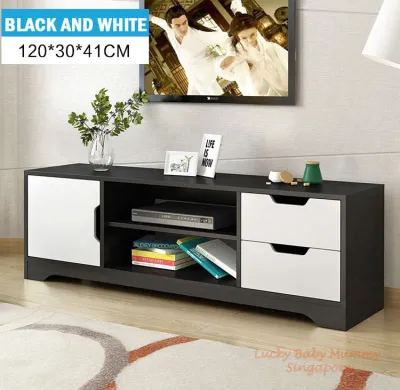
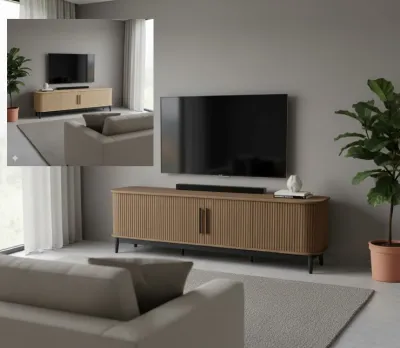
Prices are valid at publication and may change. Please refer to the product page for the latest price.
Plywood is an engineered wood product made by gluing together multiple thin layers of wood veneers, known as plies. These layers are stacked with their grain directions alternating at right angles, a process called cross-graining. This cross-grained structure gives plywood excellent dimensional stability. It is highly resistant to splitting, cracking, and warping, making it a reliable choice for structural furniture components.
Medium-Density Fiberboard, commonly known as MDF, is another engineered wood product but with a completely different manufacturing process. It is made by breaking down wood residuals into fine fibers, mixing them with wax and resin binders, and pressing them into dense panels under high heat and pressure. MDF has a completely uniform structure with no grain, knots, or voids, resulting in an incredibly smooth and consistent surface.
Assessing Durability and Load-Bearing Capacity
When selecting a TV console, ensuring it can safely support your television and media accessories is paramount. Rather than assuming a material is strong based solely on its name, always verify the manufacturer’s stated weight limits and recommended shelf spans. The structural design of the furniture often plays a larger role in load capacity than the raw material itself.

Solid wood and high-grade plywood are inherently strong and offer excellent load-bearing capabilities. They can easily support heavy televisions, multi-channel receivers, and book collections without bending. However, you must still inspect the quality of the joints and hardware. Look for robust joinery methods like mortise-and-tenon or dowel joints, and ensure the support brackets are securely fastened to the frame.
MDF requires more careful consideration when it comes to weight distribution. Because it lacks the continuous grain structure of natural wood, long, unsupported MDF shelves are more susceptible to sagging under heavy, concentrated loads. If you choose an MDF console, look for designs that feature shorter shelf spans, thicker panels, or central support legs that transfer the weight directly to the floor.
Environmental conditions also play a critical role in the long-term durability of your furniture. In Singapore’s consistently warm and humid climate, moisture in the air can gradually penetrate unsealed furniture materials. This moisture can cause wood fibers to swell and weaken over time. To protect your investment, check the manufacturer’s care instructions and ensure the console is placed in a well-ventilated area away from direct sources of moisture or air conditioning condensation.
Aesthetics, Finishes, and Daily Maintenance
The visual character of your TV console sets the tone for your entire living room. Solid wood brings an organic warmth and character that is difficult to replicate. Over time, natural wood can develop a beautiful patina. If the surface gets scratched or dented, solid wood can be sanded down and refinished to restore its original appearance. However, it requires regular maintenance, including dusting with a dry cloth and occasional polishing with specialized wood conditioners, and it must be kept out of direct sunlight to prevent uneven fading.
Plywood consoles are typically finished with a real wood veneer or a high-pressure laminate, offering a wide range of design options. This allows you to enjoy the appearance of premium wood grains at a more accessible price point. When evaluating a plywood console, pay close attention to the quality of the edge banding. The edges must be sealed tightly to prevent moisture from entering the inner plies, which could cause the layers to delaminate over time.
MDF is the preferred choice for sleek, modern, and minimalist aesthetics. Its ultra-smooth surface is ideal for painted finishes, high-gloss lacquers, or decorative laminates, free from the texture of natural wood grain. Maintaining MDF is straightforward, requiring only a quick wipe with a slightly damp microfiber cloth. However, you must avoid using excessive water or harsh chemical cleaners. If water pools on the surface or seeps into the joints, the underlying fibers can swell and ruin the finish.
Budgeting and Making the Final Decision
Your budget is a major deciding factor when choosing between these three materials. Solid wood consoles typically command a premium price in S$, reflecting the cost of raw timber and skilled craftsmanship. If you view your furniture as a long-term investment that you plan to keep for decades, the durability and timeless appeal of solid wood can make the higher upfront cost worthwhile.
Plywood offers a highly practical middle ground. It provides much of the strength and moisture resistance of solid wood but at a more moderate price point. This makes it an excellent choice for families who want a durable, reliable TV console that can withstand daily use without stretching their home renovation budget too far.
MDF is generally the most budget-friendly option available. It allows you to achieve a clean, contemporary look on a modest budget. While it may not have the multi-decade lifespan of solid wood, a well-made MDF console is highly suitable for starter homes, rental properties, or those who enjoy updating their interior decor every few years.
Before making your final purchase, remember to measure your available living room space and compare it against the finished dimensions of the console. Ensure the unit can easily fit through your doorways and lift access during delivery, and verify if the assembly conditions require professional installation or basic home tools. By matching these practical needs to the unique characteristics of solid wood, plywood, and MDF, you can confidently select the perfect TV console for your home.
Frequently Asked Questions (FAQ)
Is MDF safe for use in living room furniture?
The safety of MDF depends entirely on the manufacturing standards and the types of resin binders used during its production. Reputable manufacturers produce engineered wood that complies with strict international safety regulations.
When browsing options, look for product labels or manufacturer specifications that indicate low formaldehyde emissions. Ratings such as E0 or E1 demonstrate compliance with recognized safety standards.
To ensure a healthy indoor environment, keep your living room well-ventilated when you first assemble and place your new furniture, allowing any manufacturing odors to dissipate naturally.
Can I repaint or refinish my TV console later?
Solid wood is highly adaptable and can be sanded, stained, or repainted multiple times throughout its lifespan. Always check the manufacturer’s guidelines and identify the existing finish before starting your project.
Plywood consoles finished with a genuine wood veneer can be lightly sanded and refinished, but you must be careful not to sand through the thin veneer layer. Consoles finished with laminate or melamine cannot be sanded and require specialized primers to paint.
MDF cannot be sanded down to reveal a natural wood grain, but it can be repainted to update its color. You must apply an appropriate solvent-based primer first, as water-based primers can cause the raw MDF fibers to swell and lose their smooth texture.
Community discussion
Share your experience or ask a question. Comments are reviewed before publication.