
Choosing a wooden dining table in Singapore requires balancing aesthetic appeal with the realities of a tropical climate. The constant battle between high outdoor humidity and dry, air-conditioned indoor air can take a toll on wooden furniture. While solid wood offers unmatched longevity and the ability to be restored, engineered wood provides excellent dimensional stability that resists warping. Deciding which material is right for your home depends on your willingness to perform routine maintenance, your budget, and the specific environmental conditions of your dining space.
Both materials have distinct structural characteristics that dictate how they perform over time. Understanding these differences, along with how moisture interacts with wood fibers, will help you select a table that remains beautiful and structurally sound for years to come.
Understanding Wood Types and Humidity Impact
To make an informed decision, it is essential to understand what goes into the construction of these tables. Solid wood tables are crafted from fully natural timber cut directly from trees. Common hardwoods used for dining furniture include teak, oak, walnut, and mahogany. These woods are prized for their unique grain patterns, heavy weight, and natural density. Because solid wood is a organic, porous material, it remains “alive” even after being processed into furniture, meaning it naturally breathes and reacts to its environment.
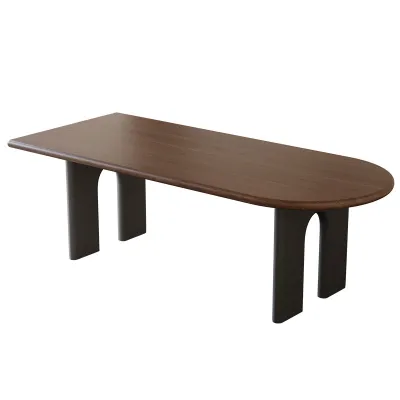
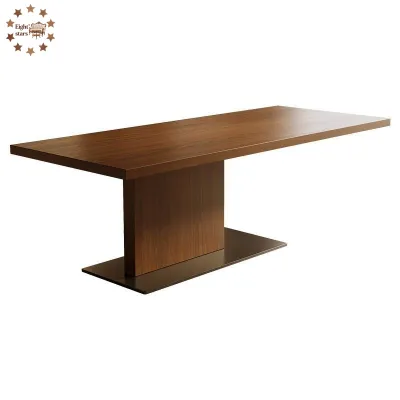
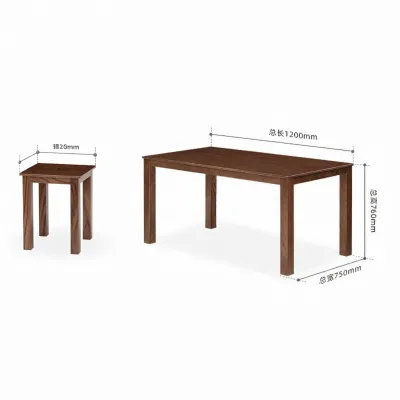
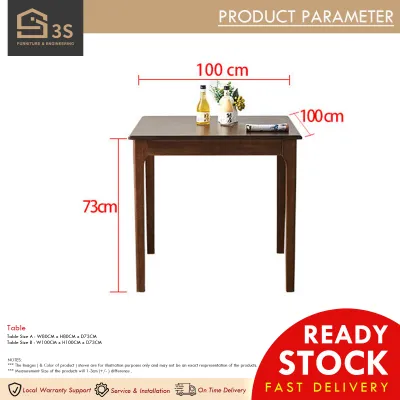
Products mentioned in this guide
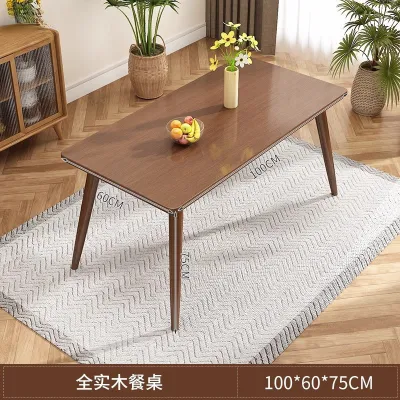
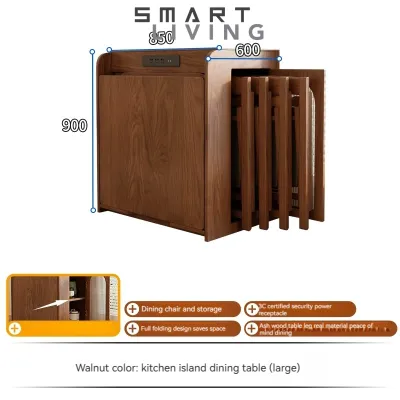
5 Lazada user ratings
Super satisfied! Looks exactly like the pictures – no color difference. Hardly any smell, and the service was awesome. Definitely recommend!
I feel satisfied with this table. The quality is high, and it is pretty. I like it very much!
I like this table. It is foldable, and it quality is high. I like its design very much!
Prices are valid at publication and may change. Please refer to the product page for the latest price.
Engineered wood, on the other hand, is a manufactured product. It is created by binding wood fibers, particles, or thin veneers together with adhesives under high pressure. Common variations include plywood, which consists of cross-laminated wood veneers; Medium-Density Fibreboard (MDF), made from fine wood fibers; and particleboard, which utilizes coarser wood chips. In dining tables, these engineered cores are typically topped with a thin slice of real wood called a veneer, or a synthetic laminate, to mimic the appearance of solid timber.
Singapore’s tropical climate presents a unique challenge for both materials. The outdoor relative humidity consistently hovers around 80% or higher. When you open your windows, this moisture-laden air enters your home. However, many households frequently run air conditioning, which rapidly lowers both the temperature and the humidity levels indoors. This constant fluctuation causes natural wood fibers to expand as they absorb moisture and contract as they dry out. Over time, this cycle of expansion and contraction can cause solid wood to warp, cup, or split if it is not properly managed.
To mitigate these climate-induced movements, manufacturers rely on protective finishes. Factory-applied sealants, such as polyurethane, clear lacquers, or specialized wood oils, create a barrier that slows down the rate of moisture exchange. For engineered wood, edge banding—the narrow strip of material used to seal the exposed edges of MDF or plywood cores—is the primary defense against humidity. If these protective barriers are compromised, moisture can easily penetrate the core, leading to structural degradation.
Durability and Moisture Resistance Compared
When comparing how these materials handle daily wear and moisture exposure, their physical differences become highly apparent. Solid wood is incredibly robust and possesses high structural integrity. If a solid wood table suffers from surface scratches, water rings, or minor dents, the damage is rarely terminal. The wood can be sanded down to its bare state, treated, and resealed, effectively restoring it to its original condition. However, if the protective finish on a solid wood table wears away and the wood is exposed to extreme humidity shifts, it can develop cracks along the grain lines or warp across its width.

Engineered wood behaves differently. Because of its composite construction—particularly plywood with its alternating grain directions—engineered wood exhibits superior dimensional stability. It does not expand or contract nearly as much as solid wood when exposed to humidity changes, making it highly resistant to warping. However, its vulnerability lies in its reaction to direct liquid exposure. If water spills are left unattended and seep through the seams of the veneer or the edge banding, the inner core of MDF or particleboard will absorb the liquid like a sponge. This causes the core to swell, bubble, and crumble. Unlike solid wood, this swelling is irreversible; once the core of an engineered wood table is water-damaged, it cannot be sanded down or compressed back into shape.
When shopping for a wooden dining table, you can evaluate its potential moisture resistance by performing a few physical checks:
- Inspect the underside: Ensure the bottom of the tabletop is sealed with the same finish as the top. Unsealed undersides absorb moisture faster than the sealed top, leading to uneven expansion and warping.
- Examine the joints: Look for tight, flush joints. In solid wood tables, look for traditional joinery like mortise-and-tenon joints, which allow for slight natural movement without splitting. For engineered wood, ensure there are no visible gaps where the legs meet the apron.
- Check the edge banding: Run your fingers along the edges of engineered wood tables. The banding should feel completely seamless, with no sharp edges, peeling corners, or visible glue lines where moisture could enter.
- Assess the finish uniformity: Look at the table under direct light to ensure the lacquer or oil coating is consistent across the entire surface, including the corners and edges.
Long-Term Value and Maintenance in Singapore
Maintaining a wooden dining table in a humid environment requires consistent, proactive care. For both solid and engineered wood, the golden rule is to wipe up liquid spills immediately using a dry or slightly damp microfiber cloth. Leaving standing water on the surface is the fastest way to ruin the finish of solid wood or cause the veneer of engineered wood to lift. Additionally, you should always use coasters, placemats, and trivets to protect the surface from hot dishes and condensation from cold drinks. Direct sunlight from large windows should also be avoided, as UV rays can degrade protective finishes and cause uneven fading.
Repairability is where the two materials diverge significantly. If a solid wood table experiences years of family use, it can be professionally refinished or DIY-restored multiple times. This makes solid wood an heirloom-quality investment that can last for decades, or even generations. Engineered wood tables have a very limited repair scope. The top veneer layer is often incredibly thin—sometimes less than a millimeter. Sanding an engineered wood table runs the high risk of wearing completely through the veneer, exposing the unsightly composite core beneath. Once the veneer chips or peels away, matching and patching the damaged area is incredibly difficult.
From a financial perspective, you must weigh the upfront cost against the expected lifespan. In Singapore, a high-quality solid wood dining table is a significant investment, often ranging from S$1,200 to over S$4,000 depending on the wood species, size, and craftsmanship. However, because it can be repaired and refinished, its cost-per-year over a 30-year lifespan is remarkably low. An engineered wood dining table is much more budget-friendly, typically costing between S$300 and S$900. While the initial investment is low, you may find yourself needing to replace the table within 5 to 10 years if the edges begin to peel or the core suffers water damage, making it a shorter-term solution.
Decision Framework: Which Wooden Dining Table Fits Your Home?
To help you decide which material aligns with your household needs, consider the following practical guidelines.
Choose solid wood if:
- You view the dining table as a long-term investment and want a piece that can be passed down through generations.
- You appreciate the natural, unique variations of real wood grain and do not mind the minor character marks that develop over time.
- You are willing to commit to periodic maintenance, such as reapplying wood wax or oil every few years, and can maintain a relatively stable indoor climate.
- You want the flexibility to change the table's look in the future by sanding it down and applying a different stain or finish.
Choose engineered wood if:
- You are working with a stricter budget or are furnishing a temporary rental property.
- You prefer a lightweight table that is easier to move, assemble, and transport through tight doorways or apartment lifts.
- You want a highly consistent, modern aesthetic with perfectly uniform wood grain patterns.
- You prefer a low-maintenance surface that does not require periodic oiling or waxing, provided you protect it from major liquid spills.
Verify your home's environmental conditions first:
Before finalizing your purchase, assess where the table will sit. If your dining area is located directly adjacent to an open kitchen, it will be exposed to frequent steam, grease, and heat, making a highly sealed, easy-to-clean surface essential. If the table will sit directly under or opposite an air-conditioning vent, the localized draft can cause rapid drying; in this scenario, engineered wood’s dimensional stability might prevent warping, whereas solid wood would require a highly robust, professional sealant. Finally, if the table is positioned next to large, west-facing windows, the intense afternoon sun will accelerate the degradation of any finish, requiring you to use curtains or window films to protect your investment.
Frequently Asked Questions (FAQ)
Can I use a dehumidifier to protect my wooden dining table?
Yes, using a dehumidifier can help maintain a stable indoor environment for your wooden dining table, but it must be used correctly. In Singapore’s humid climate, keeping the indoor relative humidity between 50% and 60% is ideal for preventing solid wood from expanding excessively. However, you should avoid placing the dehumidifier directly next to or pointing its warm exhaust air toward the table. Rapidly drying out one specific area of the wood can cause uneven shrinkage, leading to localized cracking or warping. A general, room-wide humidity control approach is much safer.
How do I know if an engineered wood table is high quality?
To identify a high-quality engineered wood table, start by checking the weight and density; heavier tables usually indicate a dense, high-quality MDF or multi-layered plywood core rather than cheap, airy particleboard. Next, closely examine the edges. High-quality tables feature thick, professionally applied edge banding that shows no visible seams, gaps, or glue residue. Finally, look at how the legs and hardware attach to the tabletop. Quality engineered tables utilize metal-to-metal threaded inserts for bolts, rather than screwing wood screws directly into the engineered core, which can easily strip and compromise the table’s stability over time.
Community discussion
Share your experience or ask a question. Comments are reviewed before publication.