
Choosing the right wooden dining table requires balancing daily household habits, aesthetic preferences, and financial considerations. While solid wood is often celebrated for its natural character and longevity, engineered wood offers remarkable stability and design versatility at a different price point. The ideal material is not universally one or the other; instead, the best option depends on how you weigh factors like moisture exposure, moving frequency, and long-term maintenance. By understanding the structural differences and surface treatments of each material, you can select a table that serves your household reliably for years to come.
Understanding Solid Wood and Engineered Wood Options
To make an informed decision, it is essential to understand what actually constitutes each material category. Solid wood refers to furniture constructed entirely from natural lumber cut directly from trees. These tables are typically made by laminating several solid wood planks together edge-to-edge to form a wide tabletop, which is then secured to a support frame using joinery methods that allow the wood to expand and contract naturally with changes in humidity. Common species used in dining furniture include hardwoods like oak, walnut, and teak, as well as softer woods like pine.
Engineered wood, conversely, is a composite material manufactured by binding wood fibers, particles, or thin veneers together with adhesives under high pressure. The core of an engineered wood table is typically made of Medium-Density Fibreboard (MDF), particleboard, or multi-layered plywood. To achieve the appearance of natural timber, manufacturers apply a thin layer of real hardwood, known as a wood veneer, over this stable composite core. This construction method minimizes the natural warping and splitting associated with solid timber because the cross-grain layers counteract seasonal movement.
Products mentioned in this guide
1 Lazada user ratings
Quality good with well packing!!
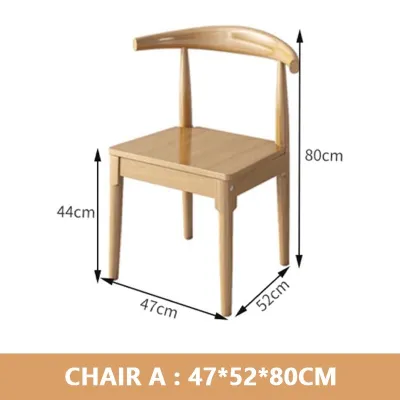
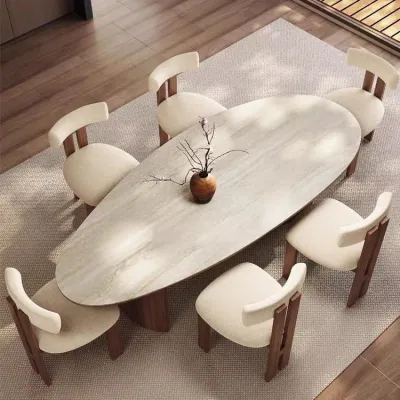
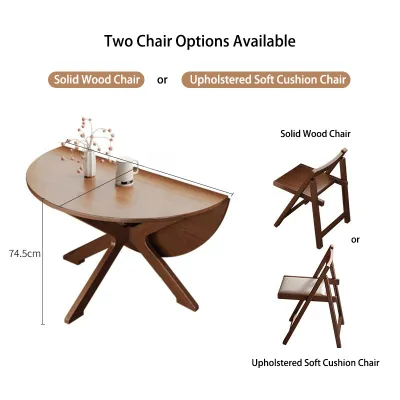
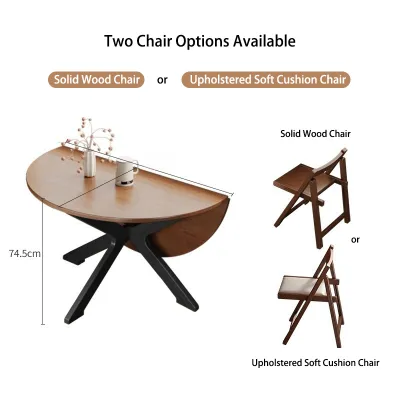
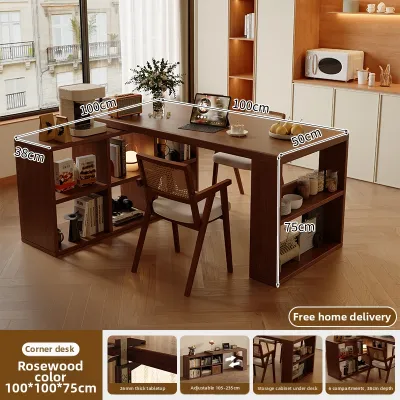
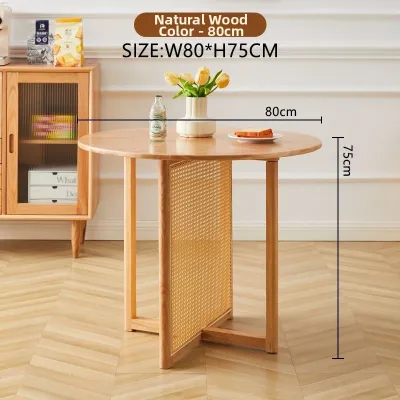
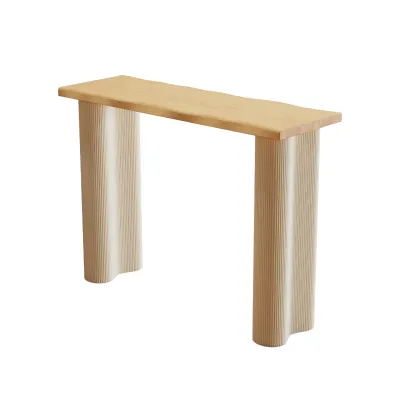
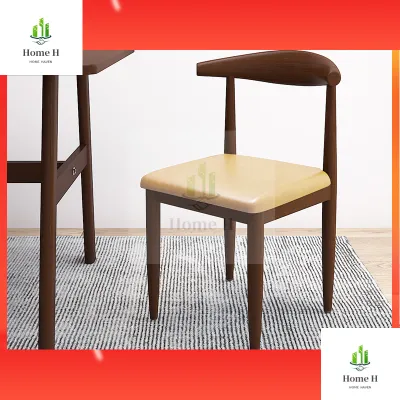
Prices are valid at publication and may change. Please refer to the product page for the latest price.
When browsing online marketplaces or physical showrooms, navigating marketing terminology can be challenging. Terms like “all-wood,” “hardwood solids,” or “real wood veneers” can obscure the actual composition of the table. To ensure transparency, look closely at the product specification sheets for precise material identifiers. A high-quality table should explicitly state the core material (such as high-density MDF or birch plywood) and the specific veneer species, rather than using vague descriptors that gloss over the structural core.
Evaluating Durability, Surface Treatments, and Maintenance
A common misconception is that the durability of a wooden dining table is determined solely by whether the base material is solid or engineered. In daily use, the longevity of your table depends heavily on the surface finish applied by the manufacturer. A solid wood table with a weak finish can stain or scratch easily, while an engineered wood table sealed with a high-performance protective coating can withstand heavy daily use.

When evaluating potential tables, check the product specifications for the type of finish used. Common options include polyurethane, lacquer, and hard wax oils. Polyurethane and lacquer finishes create a hard, impermeable barrier over the wood, offering excellent moisture resistance and heat tolerance against warm plates. Hard wax oils, on the other hand, penetrate the wood fibers to highlight the natural texture, but they require more frequent reapplication and offer less protection against standing liquids. Always review the manufacturer’s care instructions to understand the recommended cleaning agents and maintenance intervals.
Scratch repairability is another critical factor that varies by material and finish. Solid wood tables can be sanded down and refinished multiple times to erase deep scratches, dents, or water rings, effectively restoring the piece to its original condition. Engineered wood tables with thin veneers cannot tolerate aggressive sanding, as you risk wearing through the thin hardwood layer to expose the composite core beneath. For engineered options, minor surface scratches must be treated with specialized touch-up markers or wax sticks recommended by the manufacturer.
Beyond the surface, the structural integrity of the table relies on its joints and assembly mechanisms. Inspect the underside of the table to evaluate how the legs attach to the tabletop. Look for heavy-duty metal-to-metal bolt connections or traditional mortise-and-tenon joints rather than simple wood screws driven directly into composite materials. For engineered wood tables, pay close attention to the edge banding; high-quality edge banding should be seamlessly applied to prevent moisture from penetrating the core, which can cause the material to swell and delaminate over time.
Aesthetics, Aging, and Design Versatility
The visual appeal of a dining table often dictates how well it integrates into your home’s design scheme. Solid wood tables are prized for their unique, organic variations. No two solid wood tables are identical, as each piece displays distinct grain patterns, knots, medullary rays, and color shifts. Over time, solid wood reacts to ambient light and air, developing a rich patina that adds character and depth to the surface, a quality many homeowners find highly desirable.
Engineered wood tables offer a different aesthetic advantage: consistency and precision. Because the wood veneers are sliced systematically from a single log, manufacturers can arrange them in highly uniform patterns, such as book-matching or herringbone designs. This allows for a sleek, contemporary appearance with predictable grain alignment across the entire surface. If you prefer a minimalist or modern aesthetic where symmetry is key, engineered wood with a high-quality veneer can deliver a level of visual uniformity that solid wood cannot easily match.
The edge profile of the table is also influenced by its construction. Solid wood allows for intricate, carved edge profiles, beveled details, and organic live-edge designs. Engineered wood tables are generally limited to straight or subtly chamfered edges because the underlying composite core must remain completely covered by the edge banding or veneer. When considering future design changes, remember that solid wood offers the flexibility to be stained a completely different color decades down the road, whereas engineered wood tables must generally retain their original finish throughout their lifespan.
Navigating Budget, Pricing Factors, and Long-Term Value
Understanding the cost variables of wooden dining tables helps you align your purchase with your financial parameters. The price of a solid wood table is driven primarily by the rarity and growth rate of the wood species, the thickness of the timber planks, and the complexity of the craftsmanship. Hardwoods like walnut or oak require decades to mature, making them premium investments. Additionally, solid wood tables require robust structural engineering to accommodate natural wood movement, which adds to the manufacturing cost.
Engineered wood tables are generally more accessible because the composite cores utilize wood byproducts, and only a thin layer of premium hardwood is required for the veneer. However, price variations still exist within the engineered category. A table featuring a high-density fiberboard (HDF) or multi-ply birch core paired with a thick, premium veneer and high-grade hardware will command a higher price than a basic particleboard table with a paper laminate finish. Investing in a well-constructed engineered table ensures better structural stability and a longer lifespan.
To evaluate long-term value, consider your current lifestyle and potential future transitions. If you live in a rental property and anticipate frequent relocations, a heavy solid wood table can be difficult to transport and susceptible to structural stress during moves. A lighter, high-quality engineered wood table with robust, demountable leg fasteners might offer better utility and ease of transport. Conversely, if you are settled in a permanent home and view the dining table as an heirloom piece to pass down through generations, the higher initial S$ investment in a solid wood table is offset by its indefinite lifespan and repairability.
Decision Framework: Matching Material to Your Household Needs
To finalize your choice, evaluate how your household actually uses the dining space. Busy households with young children, pets, or frequent dinner parties may benefit from a table with a highly durable, low-maintenance finish. If you opt for solid wood in a high-activity home, select a hard species like oak or maple finished with a protective polyurethane coat. If you prefer engineered wood, ensure the table features thick edge banding and a water-resistant top coat to guard against spills and impact.
Before making any purchase, perform essential spatial and structural checks. Measure your dining area carefully, leaving at least 90 centimeters of clearance on all sides of the table to allow chairs to pull out comfortably. Do not forget to measure your home’s entry points, including doorway widths, hallway turns, and lift cabin dimensions. Solid wood tables are often exceptionally heavy and may arrive fully assembled, requiring ample clearance to navigate tight spaces. Engineered wood tables frequently arrive flat-packed, making them easier to transport through narrow stairwells, though they will require careful home assembly.
Finally, always review the manufacturer’s technical specifications before completing your order. If the product listing lacks critical details—such as the maximum load capacity, the specific core materials, or clear assembly instructions—contact the retailer directly to request these documents. Verifying these details beforehand prevents safety hazards and ensures the table is fully compatible with your household’s daily demands.
Frequently Asked Questions (FAQ)
Can an engineered wood dining table be refinished or sanded?
Refinishing an engineered wood dining table depends entirely on the thickness of the natural wood veneer and the manufacturer’s guidelines. If the veneer is exceptionally thin, any attempt to sand the surface will quickly wear through to the composite core, causing irreparable damage. Always check the manufacturer’s product specifications or consult a qualified furniture restoration professional before attempting to sand or refinish an engineered wood table.
How can I verify the quality of a wooden dining table before buying?
To verify table quality, inspect the joints under the tabletop to ensure they are secured with sturdy metal-to-metal bolts or traditional joinery rather than simple wood screws or glue. Test the table’s stability by applying gentle pressure to the corners to check for wobbling or flexing in the legs. Finally, request a detailed material specification sheet and care manual from the retailer to confirm the exact core materials, finish type, and weight capacity.
Community discussion
Share your experience or ask a question. Comments are reviewed before publication.