
Selecting a bed frame is a foundational decision for any bedroom, directly impacting both your sleep quality and your long-term household budget. When choosing between solid wood and engineered wood, the decision ultimately hinges on balancing upfront affordability against lifetime durability. Solid wood frames offer exceptional structural integrity and the potential to last for generations, but they require a higher initial investment and careful environmental management. Conversely, engineered wood frames provide a highly accessible, lightweight, and modern alternative that fits tight budgets, though they are more susceptible to moisture damage and wear over time. By understanding how these materials perform under daily use, you can select a frame that aligns with your financial goals and living conditions.
Understanding the Core Material Differences
Solid wood bed frames are constructed from natural timber harvested directly from trees. These frames are milled from single, continuous pieces of wood, preserving the natural grain, knots, and organic variations of the source tree. Common varieties range from softwoods like pine to dense hardwoods like oak, walnut, or teak. Because each piece is unique, solid wood frames carry an organic aesthetic where no two items are identical, and their structural strength relies entirely on the natural fibers of the timber.
Engineered wood, on the other hand, is a manufactured product created by binding wood fibers, particles, or thin veneers together using industrial adhesives, heat, and pressure. Common types include Medium-Density Fibreboard (MDF), particleboard, and plywood. MDF and particleboard utilize compressed wood waste and resins to create uniform panels, while plywood consists of cross-laminated layers of thin wood veneers. This manufacturing process eliminates natural imperfections like knots, resulting in highly consistent boards that do not warp as easily as raw timber.
Products mentioned in this guide
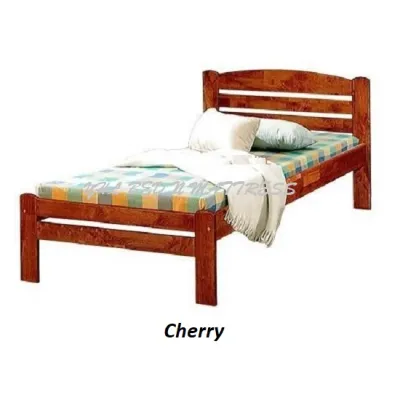
43 Lazada user ratings
Sturdy and durable, delivery was communicated and prompt.
bed ok but mattress to bounce
Value for money.
quality product
fixed nicely.
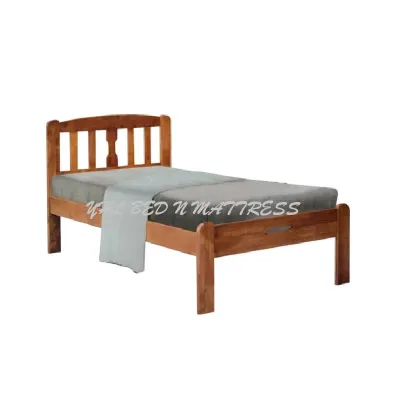
105 Lazada user ratings
Satisfied with the product and value for money. Delivery is prompt and set up is less than 5 mins.
Provides excellent support for the mattress, fast delivery, sturdy bed frame, and nice color.
item looks good and driver contacted 1 day before delivery.
fast delivery. quality not bad
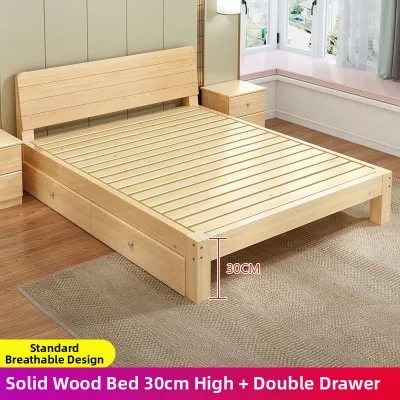
2 Lazada user ratings
very bad, the seller mixed up the packing and worst of all there's no quality control over manufacturing. And delivered wrong size. I am ver…Read full reviewShow less
very bad, the seller mixed up the packing and worst of all there's no quality control over manufacturing. And delivered wrong size. I am very disappointed.
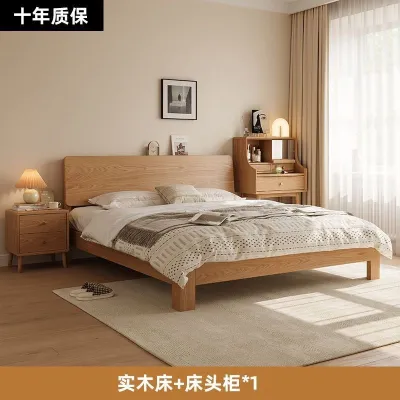
1 Lazada user ratings
waiting time too long
![[🇸🇬 SELLER]🔥Solid Wood Bed Made Of Beech Wood Super Single Size Bed Frame Queen Size Bed Frame King Size Bed Frame](https://img.lazcdn.com/g/p/c2a1549028c4e6bf197b60e7aaa84801.jpg_400x400q80.jpg_.webp)
49 Lazada user ratings
Great value for money, Easy to assemble, Unique and eye-catching design, Variety of color options,
Minimalist and nice white bed frames. Quite sturdy. No squeaking sound.
Product is ok, simple and functional for the price.
quality good thanks seller 👍
received in good condition
61 Lazada user ratings
Quality is very good but I wish they do installation carefully - they put scratches on wooden floor while moving plywood.
Order on 26/Dec & delivered on 30/Dec
Sturdy bed. Highly recommended.
Great value for money,
🎨Design: Good
Prices are valid at publication and may change. Please refer to the product page for the latest price.
The initial appearance and tactile feel of these materials are heavily influenced by their surface finishes. Solid wood frames are typically finished with clear sealants, oils, waxes, or stains that highlight the natural wood grain and allow the material to breathe. Engineered wood frames rely on synthetic or thin natural overlays for their appearance. These overlays, such as wood veneers, plastic laminates, or printed paper foils, are bonded to the exterior of the engineered core to mimic the look of high-end timber or provide sleek, solid-colored modern surfaces.
This fundamental structural divergence establishes the core trade-off of your purchasing decision. Solid wood relies on natural density and fiber continuity for its strength, offering unmatched longevity at a premium price point. Engineered wood leverages industrial processing to maximize material efficiency and minimize production costs, delivering highly uniform, budget-friendly furniture that trades away long-term structural resilience.
Evaluating Long-Term Durability and Maintenance
The long-term durability of a solid wood bed frame depends heavily on joint construction and how the wood responds to its environment. Natural timber is hygroscopic, meaning it continuously absorbs and releases moisture from the surrounding air. This process causes the wood to expand and contract, which can put stress on joints and fasteners over time. High-quality solid wood frames mitigate this by utilizing traditional joinery, such as mortise-and-tenon joints, or heavy-duty metal-to-metal connectors that accommodate natural movement without loosening or squeaking.

Engineered wood frames face different structural vulnerabilities, particularly regarding moisture sensitivity and edge wear. Because materials like MDF and particleboard consist of compressed fibers bonded with water-soluble adhesives, exposure to high humidity or direct liquid spills can cause the core to swell, crumble, or lose its structural bonding. Furthermore, the protective laminate or veneer edges on engineered wood frames are prone to chipping or peeling over time when subjected to daily bumps, exposing the vulnerable inner core to further degradation.
Maintenance and repairability represent a major point of divergence between the two materials. Solid wood is highly forgiving; surface scratches, dents, or water rings can typically be sanded down, filled, and refinished with a fresh coat of oil or varnish, effectively restoring the frame to its original condition. Engineered wood, however, is exceptionally difficult to repair once damaged. If a veneer peels or the underlying particleboard cracks or strips around a screw hole, the material cannot be easily sanded or patched, often requiring the replacement of the entire damaged panel or the frame itself.
To ensure you are making a realistic assessment of durability, always check the manufacturer’s care instructions and structural warranty terms before purchasing. Look for specific guidelines regarding humidity control, weight limits, and recommended cleaning agents. A longer structural warranty often indicates the manufacturer’s confidence in the frame’s joint integrity and material stability under normal household conditions.
Budget Considerations and True Cost-Effectiveness
When evaluating the financial aspect of your purchase, the upfront price is only the starting point. Solid wood bed frames generally command a higher price tag, with costs in S$ varying widely depending on the wood species, craftsmanship, and brand reputation. Hardwoods like teak or oak sit at the premium end of the spectrum, while softwoods like pine offer a more accessible entry point into solid timber. Engineered wood frames are significantly more affordable upfront, making them highly attractive for temporary living situations or immediate budget constraints.
To determine the true value of your investment, calculate the cost-per-year of ownership based on expected lifespan. A premium solid wood bed frame can easily last for decades, often serving as an heirloom piece that moves with you from home to home. If a frame costing S$1,500 lasts for fifteen years, its annual cost is S$100. Conversely, an engineered wood frame costing S$300 that needs replacement after three years due to sagging or joint failure carries the same annual cost, but requires the repeated hassle of shopping, delivery, and assembly.
Beyond the purchase price, consider potential hidden costs associated with each material type. Solid wood frames are heavy and bulky, which can translate to higher delivery fees and specialized assembly charges. They can also be challenging to transport during relocations, potentially incurring higher moving costs or risking damage if not handled carefully. Engineered wood frames are typically sold as flat-packs, which are cheaper to ship and easier to maneuver through tight spaces, but they may require extensive self-assembly time or additional fees if you opt for professional installation.
Practical Checks for Stability, Assembly, and Space
Before finalizing any bed frame purchase, you must verify that the finished dimensions of the frame will comfortably fit your bedroom layout while leaving adequate walking space. Measure your doorways, hallways, and lift cabins to ensure the packaged components can be safely delivered to your room. This is particularly critical for solid wood frames, which often feature large, pre-assembled headboards or solid side rails that cannot be disassembled into smaller pieces, unlike flat-packed engineered wood.
Next, inspect the joint types and slat support systems, as these components bear the brunt of daily physical stress. Look for frames that utilize robust metal-to-metal bracket connections or traditional woodworking joints rather than simple wood screws driven directly into the material. The slat system should feature closely spaced, sturdy slats—ideally made of solid timber or high-quality plywood—and include a dedicated center support beam with adjustable legs that contact the floor to prevent the mattress from sagging.
Always verify the frame’s stated weight capacity against the combined weight of your mattress and all sleepers. Solid wood frames generally offer significantly higher load capacities due to the natural strength of timber, making them highly suitable for heavy latex or pocket-sprung mattresses. Engineered wood frames may have lower weight limits, and overloading them can lead to bowing slats, cracked side rails, or stripped joint fasteners over time.
Finally, evaluate the complexity of the assembly process and determine if you have the tools and physical capability to complete it safely. Flat-pack engineered wood frames often require precise alignment of numerous small cam locks, dowels, and screws, which can be time-consuming and physically demanding. If the assembly instructions seem overly complex or require specialized tools, factor the cost of professional assembly services into your overall budget to ensure the frame is built securely.
Decision Framework: Which Bed Frame Should You Choose?
To make your final decision, align your choice with your current living situation, long-term housing plans, and aesthetic preferences. Choose a solid wood bed frame if you are looking for a long-term investment, prioritize natural materials and unique wood grains, and want a highly stable structure capable of supporting heavy mattresses. It is the ideal choice for permanent homes where the furniture will not need to be frequently disassembled and moved.
Opt for an engineered wood bed frame if you are working with a strict upfront budget, living in temporary or rented accommodation where lightweight mobility is a priority, or prefer a highly uniform, minimalist aesthetic. Engineered wood is also highly practical if you enjoy updating your bedroom decor every few years and do not want to be tied down to a single, high-value piece of furniture.
Before purchasing either option, verify the environmental conditions of your bedroom. If you live in a high-humidity environment without consistent climate control, ensure that any solid wood frame is properly sealed and that any engineered wood frame has high-quality, fully sealed edges to prevent moisture absorption. Additionally, check your mattress manufacturer’s warranty guidelines, as some brands require specific slat spacing or center support configurations to maintain coverage.
Frequently Asked Questions (FAQ)
Can engineered wood bed frames support heavy mattresses?
Yes, engineered wood bed frames can support heavy mattresses, but their capacity depends entirely on the structural design rather than the material alone. A well-engineered frame featuring a robust center support beam, closely spaced slats, and multiple support legs that touch the floor can distribute weight effectively. Always check the manufacturer’s specified weight limit before purchasing, and avoid assuming that a frame is sturdy simply because of its visual thickness.
Is solid wood always better for humid climates?
Not necessarily, as both materials react differently to moisture. Solid wood naturally expands and contracts with humidity fluctuations, which can cause minor warping or joint squeaks if the timber is not properly seasoned or sealed. Engineered wood is highly stable in terms of expansion, but if its protective veneer or laminate edge is compromised, moisture can penetrate the core, causing irreversible swelling and structural weakening. For humid environments, choose a solid wood frame with a high-quality polyurethane or lacquer finish, or an engineered wood frame with fully sealed, moisture-resistant edges, and always follow the manufacturer’s specific care instructions.
Community discussion
Share your experience or ask a question. Comments are reviewed before publication.