
Choosing between a smart sofa bed and a motorized recliner comes down to balancing your daily lounging habits with your overnight hosting needs. While both categories leverage modern engineering to maximize living room utility, they serve fundamentally different primary purposes. A smart sofa bed prioritizes a flat, expansive sleeping surface, making it ideal for overnight guests, whereas a motorized recliner focuses on highly adjustable, ergonomic seated support for daily relaxation. Evaluating these options requires looking closely at their mechanical designs, structural support systems, and spatial footprints rather than relying on generic brand promises.
To make an informed investment, you must assess how each piece of furniture performs under real-world conditions. This guide provides a practical framework to compare lounging and sleeping comfort, evaluate mechanical reliability, and measure your space to ensure a seamless delivery and installation.
Understanding the Core Differences in Dual-Use Design
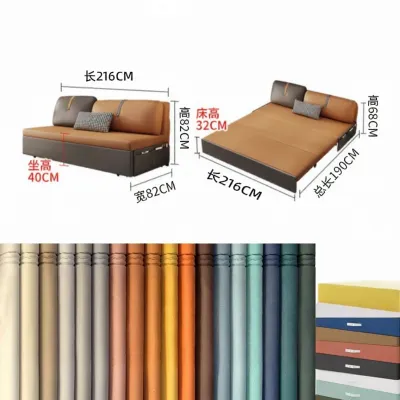
To set realistic comfort expectations, it is essential to understand how the underlying architecture of these two furniture types dictates their performance. A smart sofa bed typically utilizes a fold-out, pull-out, or click-clack convertible frame. This design is engineered to transition a multi-person seating area into a flat, uniform sleeping surface. Because the frame must accommodate a mattress or folding cushions, the seating base is often firmer and shallower to conceal the internal mechanism. This makes the sofa bed highly efficient for hosting but sometimes less accommodating for deep, contoured lounging.
Products mentioned in this guide
![[Pre Order] Smart electric sofa bed living room small apartment fully automatic remote control double foldable sofa](https://img.lazcdn.com/g/p/7c7b3cc12dac6b67415e945d7f4e42cf.jpg_400x400q80.jpg_.webp)
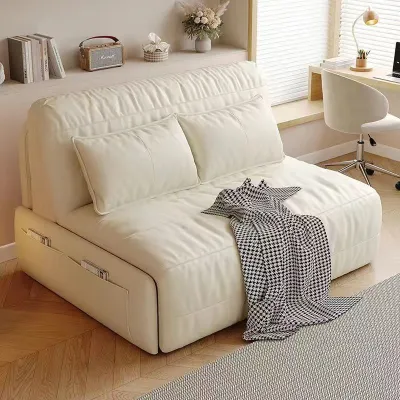
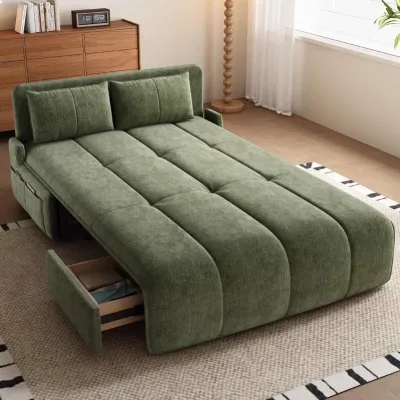
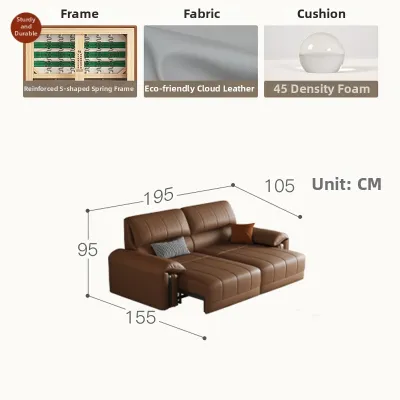
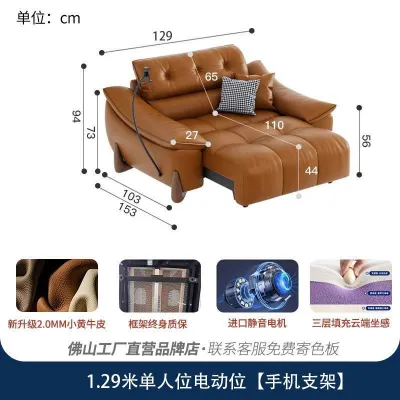
Prices are valid at publication and may change. Please refer to the product page for the latest price.
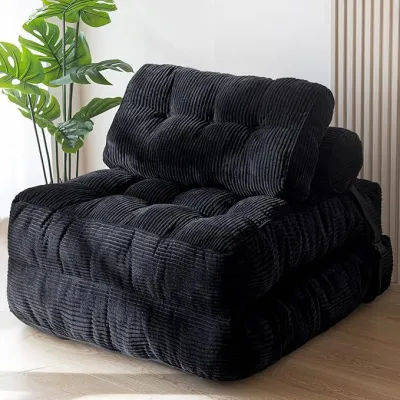
In contrast, a motorized recliner is built around an articulating metal base designed to support the natural curves of the human body in various seated and semi-reclined positions. These mechanisms allow the footrest and backrest to move independently or in tandem, offering highly customized posture support. However, because the surface remains segmented to allow for articulation, a recliner cannot provide a truly flat, seamless sleeping surface. It is optimized for individual lounging comfort rather than overnight horizontal rest.
The table below outlines the primary structural and functional differences to help you identify which design aligns with your household’s daily routine:
| Feature | Smart Sofa Bed | Motorized Recliner |
|---|---|---|
| Mechanism Type | Fold-out, pull-out, or click-clack convertible frame | Articulating motorized metal base with footrest and backrest |
| Primary Comfort Focus | Flat sleeping surface and multi-person seating | Individual ergonomic lounging and customized posture support |
| General Space Requirements | Requires significant forward clearance for full mattress deployment | Requires rear clearance for reclining and forward clearance for footrest extension |
Key Dimensions for Evaluating Lounging Comfort
When evaluating lounging comfort, the physical dimensions and cushion construction of the furniture play a decisive role. For standard seating, look for a seat depth of 50 to 60 centimeters and a seat height of 40 to 50 centimeters to ensure your feet rest flat on the floor while your thighs are fully supported. Cushion density is equally critical; high-density polyurethane foam (typically rated around 30 to 40 kg/m³) or pocket spring cores offer the best balance of initial softness and long-term structural support, preventing the “sinking” feeling that leads to lower back strain.

Motorized recliners excel in this category due to their adjustable lumbar support and headrest articulation. When testing a recliner, verify that the lumbar support can be adjusted independently of the backrest angle. This allows you to maintain the natural inward curve of your lower spine whether you are sitting upright reading or fully reclined watching television. Headrest articulation is similarly important; it should tilt forward as you recline to keep your eyes aligned with your screen or book without straining your neck muscles.
Upholstery selection directly impacts how comfortable the furniture feels during extended use, particularly in warm and humid environments like Singapore. Synthetic leathers and low-grade vinyl can trap body heat and moisture, leading to an uncomfortably warm and sticky seating experience. Instead, prioritize highly breathable materials such as top-grain leather, natural linen blends, or high-tech performance fabrics engineered for moisture-wicking and heat dissipation. Always check the manufacturer’s specifications for breathability ratings and fabric composition before making a final choice.
Assessing Sleeping Comfort and Mattress Support
If your primary goal is to provide a comfortable night’s sleep for yourself or your guests, the mattress and frame construction of a smart sofa bed require rigorous inspection. A high-quality sofa bed mattress should have a minimum thickness of 10 to 12 centimeters. Anything thinner often allows the sleeper to feel the rigid metal support bars of the underlying frame. Memory foam, natural latex, or pocket-sprung mattresses generally offer superior pressure relief and motion isolation compared to traditional open-coil designs.
Beyond the mattress itself, the design of the supporting frame is critical to sleep quality. Inspect the mechanism for gaps, hinges, or crossbeams that run directly under the main sleeping zones, such as the shoulders and hips. High-quality smart sofa beds utilize bi-fold or tri-fold mechanisms with tensioned webbing or wooden slats that distribute body weight evenly, eliminating the central sag common in older, budget-friendly models.
Finally, evaluate the ease of transition and bedding compatibility. A smart sofa bed should transition from sofa to bed mode smoothly, ideally assisted by gas struts or a motorized folding mechanism that requires minimal physical effort. Check whether the design allows you to fold the mechanism away with standard sheets and a thin mattress protector still attached. If you must completely strip the bed and find separate storage for all bedding every time you use it, the daily convenience of the smart furniture is significantly reduced.
Smart Features and Motorized Mechanisms to Verify
The integration of technology and motorized parts adds convenience but also introduces components that require careful verification. When comparing motorized models, pay close attention to the motor noise levels and operational speed. High-quality brushless motors operate almost silently and transition smoothly without sudden jerks. Because electronic components are more prone to wear than solid wood frames, always verify the specific warranty coverage; reputable manufacturers often provide separate, extended warranties for the motors and control modules compared to the upholstery.
Smart features should offer practical utility rather than just novelty. Look for models that feature memory presets, allowing you to save your preferred lounging or sleeping angles with a single button press. Built-in USB-C charging ports, wireless charging pads, and integrated LED path lighting add genuine convenience to modern living spaces. Some advanced models also offer companion mobile applications, allowing you to adjust the furniture’s position or run diagnostics directly from your smartphone.
A critical safety and convenience feature to confirm is the presence of a power backup system or a manual override option. In the event of a power outage, a motorized recliner or smart sofa bed without a backup can leave you stuck in a fully reclined or deployed position. Look for models that include an integrated lithium-ion battery pack or a manual release lever that allows you to safely return the furniture to its closed position without electrical power.
Decision Framework: Choosing the Right Dual-Use Furniture
To make the final decision between these two versatile furniture types, you must weigh your primary lifestyle needs against your physical space constraints. A smart sofa bed is the clear choice if your main priority is accommodating overnight guests or maximizing a multi-functional room, such as a home office that doubles as a guest bedroom. It provides a true bed-like experience that can comfortably sleep two adults, making it a highly efficient use of floor space when deployed only occasionally.
Conversely, a motorized recliner is the superior option if your focus is daily, personalized comfort and ergonomic support for one or two primary users. If you spend hours reading, watching television, or managing chronic back pain, the precise adjustability of a motorized recliner offers therapeutic benefits that a flat sofa bed simply cannot match. However, keep in mind that a recliner is designed for individual use; it will not replace the wide, communal seating capacity of a traditional multi-seat sofa during large family gatherings.
Before purchasing either option, you must conduct a thorough spatial audit. Measure the exact footprint of the furniture in its fully closed, fully reclined, and fully deployed states. Ensure there is adequate clearance around the piece to allow for comfortable foot traffic and that it does not block doorways, radiators, or electrical outlets.
Equally important is verifying the delivery path. Because smart and motorized furniture contains heavy steel frames and electrical components, these pieces are often exceptionally heavy and rigid. Measure the width and height of your apartment doors, hallway corners, stairwells, and passenger lifts. In high-rise urban environments like Singapore, ensuring the delivery team can safely transport the unit to your living room without damaging the walls or the furniture mechanism is just as critical as choosing the right fabric or mattress.
Frequently Asked Questions (FAQ)
Do smart sofa beds and motorized recliners require a dedicated power outlet?
Yes, almost all motorized recliners and smart sofa beds require access to a standard electrical outlet to power their internal motors, control panels, and integrated charging ports. It is highly recommended to position the furniture within direct reach of a wall outlet to avoid running long extension cords across the room. To maintain a clean aesthetic and prevent safety hazards, look for models with built-in cable management channels along the base. If you must run a cable across a walkway, use a heavy-duty, low-profile floor cord protector to prevent tripping and to shield the power cord from being crushed or pinched by the heavy moving joints of the furniture.
What are the essential maintenance steps for motorized joints and smart fabrics?
To ensure the longevity of your smart furniture, establish a simple routine of mechanical and fabric care. Every six months, vacuum the undercarriage of the furniture using a brush attachment to remove dust, pet hair, and lint that can accumulate in the motor tracks and metal joints. Periodically inspect the visible bolts and pivot points, tightening any that have loosened from regular movement. For fabric maintenance, always refer to the manufacturer’s specific cleaning code located on the care label. Avoid using harsh chemical solvents or saturating the fabric with water near electronic components; instead, use a dry or slightly damp microfiber cloth to spot-clean spills immediately, ensuring the area is completely dry before operating the motorized functions.

Community discussion
Share your experience or ask a question. Comments are reviewed before publication.