
Maximizing tight spaces in modern apartments requires smart, space-saving furniture. When floor space is limited, corners often go underutilized. A slim corner shelf is an excellent storage solution to reclaim these awkward angles, turning empty corners into functional display areas.
Choosing the right unit requires looking beyond just the height of the piece. You must understand how width, depth, tier spacing, and load capacity interact to fit your specific corner while holding your belongings securely. Evaluating these specifications carefully ensures you select a piece that is both practical and visually balanced.
Quick Guide to Slim Corner Shelf Dimensions
When shopping for a slim corner shelf, having a baseline of standard measurements helps you narrow down your options quickly. In this furniture category, dimensions generally fall within the following ranges:
Products mentioned in this guide
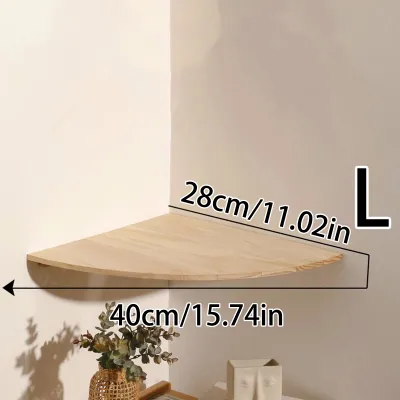
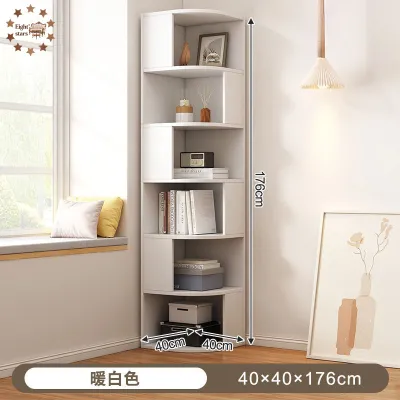
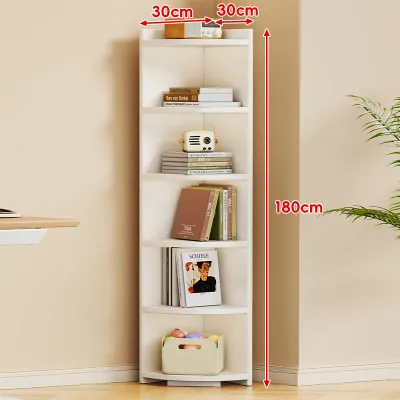
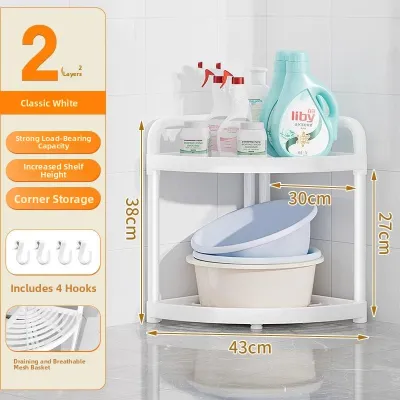
Prices are valid at publication and may change. Please refer to the product page for the latest price.
- Width (along the wall): 20 cm to 35 cm
- Depth (from corner to front edge): 15 cm to 25 cm
- Height: 80 cm (low, three-tier units) to 180 cm (tall, five- or six-tier bookcases)
In the context of corner furniture, “slim” typically refers to the narrow profile of the individual shelf tiers rather than the overall footprint of the unit. The primary decision factor when choosing a shelf is matching the usable tier depth to the specific items you intend to store, ensuring your belongings fit neatly without overhanging the edges.
Width and Depth: Defining "Slim" and the Corner Fit
To understand how a corner shelf fits your room, you must distinguish between the wall-along width and the actual usable depth of the tiers. Because corner shelves are designed to fit into a 90-degree angle, their shapes are usually triangular, curved (radial), or pentagonal. This geometry significantly impacts the actual storage space.

For a slim corner shelf, the usable depth—the distance from the front edge of a shelf to the back corner—typically ranges between 15 cm and 25 cm. While a wall-along width of 30 cm might sound spacious, the triangular shape means the surface area tapers sharply toward the back. This narrow profile limits your storage options. These shelves are ideal for small potted plants, paperbacks, smart speakers, or decorative items, but they cannot accommodate standard storage boxes, large binders, or deep kitchen appliances.
Another critical detail is how the unit sits against your walls. Most homes feature skirting boards (baseboards) running along the bottom of the walls. If a corner shelf has a solid back or lacks a baseboard cutout, the skirting boards will prevent the unit from sitting completely flush in the corner. This creates an unstable gap behind the shelf and pushes the unit forward into the room. Look for designs with recessed back legs or specific cutouts to ensure a tight, flush fit.
Height and Tier Spacing: Maximizing Vertical Storage
Once you establish the footprint, vertical dimensions dictate both the storage capacity and the visual impact of the shelf in your room. Choosing the right height involves balancing your storage needs with the scale of your space.
Tall units, ranging from 150 cm to 180 cm, maximize vertical space. However, in smaller rooms, a tall, solid corner shelf can feel visually heavy and make the space feel cramped. To avoid this, consider open-frame designs that let light pass through. Ensure you check your ceiling clearance, especially if you have low ceilings or decorative cornices that might interfere with a tall unit.
Tier spacing—the vertical distance between individual shelves—determines what items can actually fit.
- Fixed Tiers: Many slim corner shelves feature fixed shelves with a standard clearance of 25 cm to 30 cm. This is sufficient for standard novels and small decor items, but will not accommodate taller vases or larger hardcovers.
- Adjustable Tiers: If you plan to store items of varying heights, look for units with adjustable shelf pegs. While rarer in triangular designs, adjustable tiers offer the flexibility to customize the vertical layout as your storage needs change.
If you are selecting a shelf purely for decorative purposes, exact tier spacing is less critical. You can arrange smaller items freely to create an attractive display. For functional storage, measure your tallest intended items first to ensure they will fit comfortably between the shelves.
Load Capacity and Structural Specs: What the Numbers Mean
Because slim corner shelves have a narrow footprint and smaller support structures, they inherently support less weight than standard, wide bookcases. Understanding load capacity is essential to prevent structural damage and ensure safety.
Always check the manufacturer’s specifications for both the per-tier load capacity and the total weight capacity of the unit. A typical slim corner shelf may support between 3 kg and 8 kg per tier, depending on the materials and construction.
If the product listing lacks explicit load capacity numbers, you can estimate strength by checking the material thickness and joint design. Solid wood and powder-coated steel frames generally offer higher structural integrity than thin engineered wood (MDF or particle board) without metal reinforcement. Look for sturdy joints and diagonal support brackets under the shelves for added stability.
Overloading narrow shelves can cause the tiers to bow over time or make the entire unit top-heavy, increasing the risk of tipping. To maintain stability, always distribute weight evenly. Place your heaviest items, such as books or heavy ceramic pots, on the bottom tiers to lower the center of gravity, and reserve the upper shelves for lightweight decorative pieces.
How to Measure Your Corner Space Accurately
Before purchasing a shelf, taking precise measurements of your physical space is crucial to avoid installation issues. Follow these steps to ensure a perfect fit:
- Check the Corner Angle: Do not assume your walls form a perfect 90-degree angle. Many walls are slightly out of square. Push a flat piece of paper or a corner square tool directly into the corner. If you notice a significant gap at the sides or the corner, a rigid, solid-backed shelf may not sit flush.
- Measure the Wall Lengths: Measure along both walls from the corner out to the maximum width you can accommodate. Ensure the shelf will not overlap door frames, window casings, or curtains.
- Identify Obstructions: Look for wall sockets, light switches, electrical trunking, or air conditioning pipes. A slim shelf blocking a power outlet can make the outlet unusable or force you to position the shelf away from the wall.
- Verify the Delivery Path: Even if a shelf is flat-packed for home assembly, some units come fully assembled or in large, rigid sections. Measure your entryways, narrow hallways, and passenger lift dimensions to ensure the packaged product can safely reach your home.
Frequently Asked Questions (FAQ)
Do slim corner shelves need to be anchored to the wall?
Yes, wall anchoring is highly recommended for tall, narrow furniture. Because of their small base and high center of gravity, slim corner shelves pose a significant tipping risk if they are loaded unevenly or accidentally bumped. If your shelf is taller than 120 cm, or if you have children or pets in your home, you should secure the unit to the wall using the manufacturer-provided tip-over restraint kit. Shorter, heavy-based units under 100 cm may remain stable without anchors, but you should always refer to the manufacturer’s safety instructions.
What is the standard depth for a slim bookcase?
While a standard bookcase typically has a depth of 28 cm to 35 cm to accommodate large binders and storage baskets, a slim bookcase or slim corner shelf usually features a depth of 15 cm to 25 cm. This reduced depth is specifically engineered to save valuable floor space in tight areas, though it requires you to store smaller items or align books parallel to the wall rather than spine-out.
Community discussion
Share your experience or ask a question. Comments are reviewed before publication.