
Finding the perfect wardrobe for a Singapore Board (HDB) flat requires a careful balance of spatial efficiency, structural adaptability, and functional design. In the compact layouts of modern BTO (Build-To-Order) and older resale flats, every square centimeter of floor space counts. A well-designed sliding cabinet offers an elegant solution to these spatial challenges, eliminating the need for door-swing clearance and allowing you to maximize your bedroom’s layout.
Whether you opt for fully customized local carpentry, modular systems from established retail brands, or integrated storage lines from interior design firms, selecting the right fit depends on your specific room dimensions, budget, and long-term living plans. By understanding the unique structural constraints of HDB flats and matching them with the right brand type, you can install a sliding wardrobe that feels seamless, spacious, and highly durable.
Spatial Constraints: Why Sliding Cabinets Work Best in HDB Bedrooms
Standard HDB bedrooms—particularly common rooms in newer BTO flats—often present tight layouts where space is at a premium. A typical common bedroom must accommodate a queen-sized or single bed, a study desk or vanity, and walkways that allow for comfortable movement. In these compact environments, traditional wardrobe designs with hinged doors can severely restrict your layout options, as they require a significant clearance zone directly in front of the unit to allow the doors to swing open fully.
Products mentioned in this guide
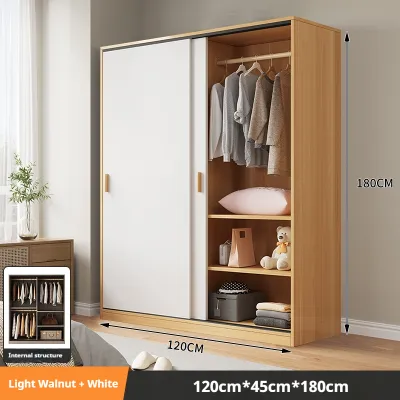
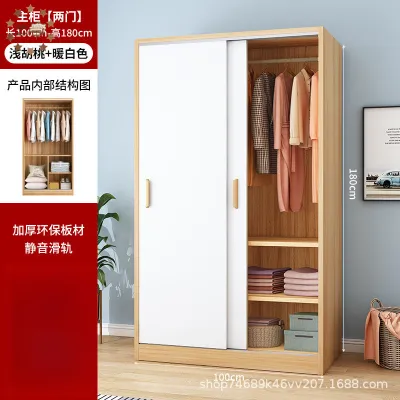
Prices are valid at publication and may change. Please refer to the product page for the latest price.
Choosing a sliding cabinet completely eliminates this door-swing radius. Because the doors glide horizontally within a dedicated track system, the wardrobe operates entirely within its own footprint. This allows you to place other essential furniture, such as a bedside table, a desk, or even the edge of your bed frame, just centimeters away from the wardrobe front without blocking access to your clothes. This spatial efficiency is particularly valuable in narrow rooms where the walkway between the bed and the wardrobe is minimal.
Beyond physical space savings, sliding wardrobes offer significant visual benefits for smaller bedrooms. The flush, continuous front panels of a sliding system create clean, uninterrupted lines that make a compact room feel less cluttered. When customized with minimalist finishes or integrated mirrors, these large sliding surfaces reflect light and create the optical illusion of a much deeper, more open space.
Choosing the Right Wardrobe Brand Type for Your HDB Layout
Navigating the Singapore market for sliding wardrobes involves choosing between three main procurement paths. Each option offers distinct advantages regarding customization, cost, installation speed, and spatial adaptability.

Custom Built-In and Local Carpentry Solutions
Custom built-in wardrobes fabricated by local carpentry workshops represent the gold standard for maximizing HDB bedroom space. Because these units are built from scratch, they can be tailored to the precise floor-to-ceiling and wall-to-wall dimensions of your room, leaving zero wasted space.
- Scribing and Alignment: HDB walls and ceilings are rarely perfectly level. Local carpenters use a technique called "scribing," where filler panels are cut to match the subtle curves or slopes of your concrete walls, creating a flawless, gap-free fit.
- Structural Integration: Custom carpentry can easily build around structural columns, air-conditioning trunking, or ceiling beams that would otherwise block a standard ready-made wardrobe.
- Material and Hardware Quality: Working with local carpenters allows you to select high-quality, moisture-resistant solid plywood cores—essential for Singapore's humid climate—and specify premium sliding track hardware with soft-close mechanisms.
While highly adaptable, custom carpentry requires a larger upfront investment, typically ranging from S$200 to over S$350 per foot run. It also involves longer lead times of several weeks and is a permanent fixture that cannot be easily dismantled or relocated if you move.
Modular and Ready-Made Furniture Brands
For homeowners seeking a faster, more budget-friendly, or temporary option, modular and ready-made sliding wardrobes from retail brands offer an excellent alternative. Brands like IKEA (with their highly customizable PAX system) and local online furniture retailers provide pre-designed units that can be assembled quickly on-site.
- Cost-Effectiveness: Ready-made sliding wardrobes are highly economical, with prices often ranging from S$400 to S$1,500 depending on the size and internal configurations.
- Flexibility and Speed: These units are usually in stock or have short delivery lead times, making them ideal for quick move-ins. They can also be dismantled and moved to a new home if you are renting or planning a future relocation.
- Standardized Dimensions: The primary challenge of modular units is their fixed sizing. They typically come in standard widths (such as 120cm, 150cm, or 180cm) and heights (usually up to 236cm). This can leave awkward gaps at the sides or top of the wardrobe where dust can accumulate.
To make a modular sliding wardrobe look cohesive, you can style the top gap with matching storage baskets or work with a handyman to install a simple drywall pelmet overhead, mimicking a built-in look.
Interior Design Firms with Integrated Wardrobe Lines
If you are undergoing a comprehensive home renovation, hiring an interior design (ID) firm that offers integrated wardrobe lines is a highly cohesive approach. Many Singaporean ID firms partner with dedicated manufacturing workshops to deliver coordinated bedroom furniture packages.
- Design Cohesion: An ID firm can design your sliding wardrobe to match your bed frame, headboard, wall paneling, and lighting schemes perfectly, using identical laminates and design languages.
- Comprehensive Spatial Planning: Your designer will map out the entire bedroom layout, ensuring the sliding wardrobe does not obstruct electrical sockets, light switches, or the airflow from your air-conditioning unit.
- Project Management: The firm handles all coordination, delivery, and installation, saving you the hassle of managing multiple subcontractors.
When choosing this route, always verify the specific hardware brands and plywood grades your ID firm intends to use. Ensure they specify reputable sliding track systems to guarantee smooth operation over the years.
Essential Features to Look for in HDB-Friendly Sliding Cabinets
To ensure your sliding wardrobe remains functional, durable, and easy to use in a compact HDB bedroom, look for several critical design and hardware features before making a purchase.
- Track and Roller Systems: The sliding mechanism is the most important component of the wardrobe. Top-hung track systems, where the doors hang from an upper rail, offer incredibly smooth gliding and are less prone to trapping dirt. Bottom-rolling systems are highly stable but feature a floor track that requires regular cleaning. Whichever you choose, ensure the system includes anti-jump mechanisms to prevent the doors from derailing, alongside high-quality soft-close dampers.
- Internal Configurations: Deep sliding wardrobes can make it easy to lose track of items stored at the back. Opt for highly functional internal fittings such as adjustable shelving, pull-out trouser racks, shallow accessory drawers, and integrated LED sensor lights that illuminate the interior when the doors slide open.
- Door Materials and Finishes: In a small bedroom, the wardrobe doors occupy a large visual area. Utilizing full-length mirror panels on at least one sliding door is a highly effective way to reflect natural light and visually expand the room. If you prefer a wood or matte finish, ensure the panels are lightweight yet structurally rigid (such as aluminum-framed panels) to minimize wear and tear on the track rollers.
- Depth and Clearance: Keep in mind that a sliding door track system typically consumes about 5cm to 10cm of the wardrobe's total external depth. To hang standard clothes hangers comfortably without them rubbing against the sliding doors, you will need a minimum external depth of 60cm. If your room can only accommodate a shallower cabinet, consider installing pull-out valet rods that allow clothes to hang facing forward.
Pre-Purchase Checklist: Measuring and Planning Your HDB Bedroom
Before finalizing your wardrobe order, complete these practical measuring and planning steps to avoid costly delivery and installation errors.
- Measure at Multiple Points: Do not rely on a single wall-to-wall measurement. Take width and height measurements at the top, middle, and bottom of the designated wall area. This accounts for any bowing or unevenness in your HDB's concrete structure.
- Identify Obstructions: Mark the exact locations of wall sockets, light switches, air-conditioning copper pipes, ceiling fans, window frames, and skirting boards. Ensure that the wardrobe's depth will not block access to these features, and that a spinning ceiling fan has a safe clearance distance from the top edge of the wardrobe doors.
- Verify Delivery Access: This is a crucial, often-overlooked step for HDB living. Measure your flat's entrance door, corridor widths, and lift dimensions. Large, pre-assembled modular wardrobe frames or long sliding door panels must be able to fit inside your building's lift and navigate tight corridor corners to reach your bedroom safely. If staircase carrying is required, check if the retailer charges additional handling fees.
Frequently Asked Questions (FAQ)
Can I install a sliding wardrobe if my HDB bedroom has uneven walls?
Yes, you can install a sliding wardrobe even with uneven walls, but your choice of brand type will dictate how the gaps are handled. Custom built-in carpentry brands excel here, as their installers use scribing techniques to trim custom filler panels, ensuring the wardrobe fits flush against crooked walls. If you choose a ready-made modular wardrobe, you may need to purchase separate filler strips or use flexible gap sealants to close any visible spaces between the wardrobe frame and the wall.
Are sliding wardrobes more prone to dust accumulation than hinged doors?
Sliding wardrobes can collect dust more easily than hinged doors, primarily within the bottom track channels where the rollers glide. Over time, accumulated dust, hair, and lint can obstruct the rollers and cause the doors to glide unevenly. To maintain smooth operation, vacuum the tracks weekly using a narrow crevice tool. Additionally, look for sliding wardrobes equipped with top-hung track systems or dust-exclusion brush strips along the door edges to minimize dust entry.
What is the minimum depth required for a functional sliding cabinet?
For a standard sliding wardrobe where clothes are hung sideways on hangers, the minimum recommended external depth is 60cm. Because the sliding door track mechanism itself takes up approximately 5cm to 10cm of depth, a 60cm external depth leaves about 50cm to 55cm of usable internal space, which prevents hangers from rubbing against the doors. If your bedroom layout only permits a shallow cabinet of 45cm to 50cm, you should utilize pull-out valet rods where clothes hang facing forward instead of sideways.
Community discussion
Share your experience or ask a question. Comments are reviewed before publication.