
Are Slatted Bed Bases Safe for Bunk Beds? The Short Answer
Slatted bed bases are safe and highly effective for children’s bunk beds, but only when they are engineered, certified, and secured specifically for elevated frames. While standard floor-level beds can tolerate minor shift or flex in their support systems, elevated sleeping surfaces demand absolute structural rigidity. A slatted base on a top bunk is subject to unique physical forces, making its design, material quality, and installation method critical safety factors.
The primary danger of using an incompatible or poorly constructed slatted base on an upper bunk is the risk of structural failure under dynamic load. Children do not simply lie still; they toss, turn, sit down heavily, and occasionally climb. If the slats are not anchored securely, these movements can cause the wooden boards to slide, spread apart, or slip off their supporting ledges. This structural shifting can lead to mattress sagging, create hazardous gaps where limbs can become trapped, or cause the entire mattress support system to collapse onto the bottom bunk.
Because the top bunk experiences magnified kinetic energy from movement at height, parents must treat the slatted base as an active safety component rather than a passive piece of wood. Ensuring the base is structurally integrated with the bed frame and locked firmly in place is non-negotiable to prevent catastrophic falls and structural failures.
Products mentioned in this guide
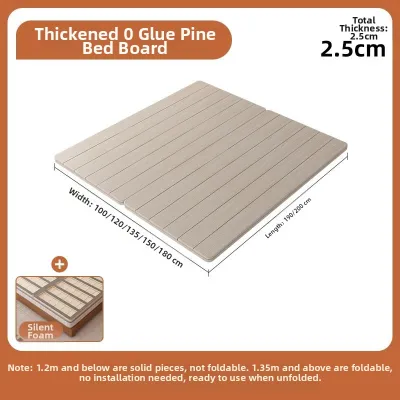
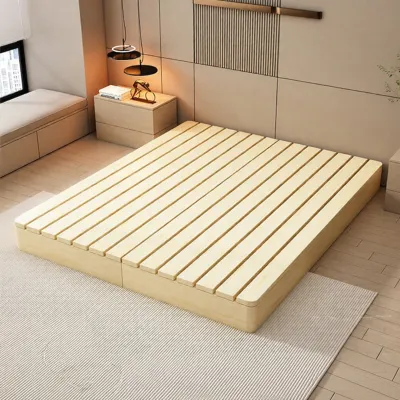
Prices are valid at publication and may change. Please refer to the product page for the latest price.
Safety Standards and Certifications to Verify Before Buying
When shopping for children’s bunk beds in Singapore, parents should never assume that a generic furniture safety label guarantees protection. Elevated beds require specialized testing to ensure they can withstand structural stress and prevent falls. Parents must look for explicit compliance with recognized international and local safety frameworks.

The most rigorous international standards for elevated beds are EN 747 (the European standard) and ASTM F1427 (the American standard). These standards dictate strict rules for structural integrity, load-bearing capacity, guardrail dimensions, and the prevention of entrapment hazards. A bunk bed and slatted base certified under EN 747-1 and EN 747-2, for example, have undergone strenuous testing, including dropping heavy weights repeatedly onto the bed base to simulate years of dynamic impact.
In Singapore, the Consumer Product Safety Office (CPSO) monitors the safety of consumer goods. Under the Consumer Protection (Consumer Goods Safety Requirements) Regulations (CGSR), children’s furniture sold locally must comply with recognized international standards like EN or ASTM. Before purchasing, ask the retailer for proof of compliance or look for documentation certifying that the entire bed assembly—including the slatted base—meets these specific safety benchmarks.
Additionally, Singapore’s tropical climate introduces a unique environmental factor: high relative humidity. Excessive moisture in the air can cause low-quality timber slats to warp, expand, or weaken over time, compromising their fit within the frame. Certified bunk beds often utilize kiln-dried timber or high-grade engineered wood treated to resist moisture-induced warping, ensuring the slatted base remains structurally stable and securely fitted throughout its lifespan.
4 Structural Features That Determine Slatted Base Safety
To ensure a slatted bed base is safe for a child’s bunk bed, parents must look beyond aesthetics and inspect the physical dimensions and mechanical design of the system. Four critical structural features determine whether a slatted base is safe for elevated use.
Slat Spacing and Entrapment Risks
The gap between individual slats is a major safety consideration. If the spaces between the slats are too wide, they create dangerous entrapment zones. A young child’s foot, leg, or arm could easily slip between the gaps, leading to painful sprains, fractures, or the child becoming stuck.
To prevent entrapment, international safety standards require that the distance between individual slats must not exceed 75 mm. For optimal safety and mattress support, a spacing of 50 mm to 60 mm is highly recommended. Parents should physically measure these gaps with a tape measure rather than relying on a visual estimate, ensuring that the spacing remains uniform across the entire length of the bed base.
Weight Capacity and Load Distribution
An upper bunk base must support a complex combination of weights. This includes the weight of the mattress, the child, their bedding, and the temporary dynamic forces of movement. A safe slatted base must distribute this weight evenly across the entire frame to prevent localized stress points.
- Total Capacity: Verify that the manufacturer's certified weight limit for the top bunk (often between 80 kg and 100 kg) accommodates your child and mattress with a wide safety margin.
- Slat Quantity and Thickness: A safe base typically features a higher count of individual slats (usually 14 or more for a single bed) made from dense, sturdy wood like beech, birch, or solid pine. Individual solid wood slats should be at least 15 mm to 20 mm thick to prevent bowing under pressure.
- Load Distribution: Closely spaced, thick slats ensure that weight is transferred smoothly to the side rails, preventing any single board from taking the brunt of an impact.
Slat Fixation and Anti-Slip Design
How the slats are attached to the bunk bed frame is the single most important factor in preventing a sudden collapse. Loose, roll-out slats connected only by a fabric ribbon are highly dangerous for an upper bunk because they can easily slide horizontally or bunch up.
To ensure safety, the slatted base must be locked into a fixed position. Look for systems where individual slats are screwed directly into the frame’s side support ledges, or locked into pre-drilled dowel holes. Premium designs often use heavy-duty plastic or rubber slat caps (holders) that anchor each slat securely to the side rails. This mechanical fixation prevents the slats from shifting, sliding, or popping out when the bed is in use.
Mattress Fit and Guardrail Clearance
The safety of a top bunk is directly tied to the height of its guardrails, which prevent children from rolling out of bed. However, the height of the slatted base and the thickness of the mattress can compromise this protective barrier if not calculated carefully.
Under safety standards like EN 747, the top of the guardrail must stand at least 160 mm above the top surface of the mattress. If a slatted base is unusually thick or sits high on its support ledges, it raises the starting height of the mattress. Parents must ensure that the combined height of the slatted base and the chosen mattress leaves a safe, compliant guardrail clearance. Always check the bunk bed frame’s safety label for the maximum recommended mattress thickness.
How to Inspect and Maintain the Slatted Base Over Time
Because bunk beds are subjected to continuous vibration, shifting, and movement, a slatted base that was perfectly safe at installation can loosen or degrade over time. Regular maintenance is essential to ensure the bed remains safe throughout its years of use.
Parents should establish a routine inspection schedule every three to six months. This inspection is particularly critical for the top bunk, where structural issues are harder to see from floor level.
Routine Inspection Checklist:
- Verify Hardware Tightness: Check all screws, bolts, and fasteners connecting the slats to the side rails. Gently tighten any that have vibrated loose over time, using hand tools to avoid stripping the wood.
- Inspect for Wood Damage: Examine each slat for cracks, deep splinters, bowing, or warping. Pay close attention to areas around wood knots, which are natural weak points prone to splitting under stress.
- Check Slat Alignment: Ensure that no slats have slipped out of their designated plastic caps or shifted away from their fixed positions.
- Examine the Side Rails: Inspect the wooden or metal ledges that support the slats. Ensure they are firmly attached to the main bed frame and are not bowing outward, which could cause the slats to lose their footing and fall through.
When performing adjustments, always remove the mattress entirely to get an unobstructed view of the base. If you need to reposition the mattress, lift it fully rather than dragging it, as dragging can catch on the slats and pull them out of alignment.
Stopping Conditions (When to Cease Use): If you discover a cracked, broken, or severely warped slat during your inspection, immediately stop using the upper bunk. Do not attempt to patch a broken slat with tape, glue, or temporary wooden splints. Similarly, if the side support rails show signs of splitting, or if the screw holes in the frame have stripped out so that the slats can no longer be anchored securely, cease use of the bed. Contact the manufacturer or a professional furniture repair service to obtain certified replacement parts before allowing a child to sleep on the bed again.
Frequently Asked Questions (FAQ)
Can I use a standard single bed slatted base for a bunk bed?
No, you should not use a standard single bed slatted base for a bunk bed unless it is explicitly approved and certified by the bunk bed manufacturer. Standard slatted bases, particularly loose roll-out designs, are engineered for low-profile floor beds where a structural slip results in a harmless drop of a few centimeters. On an elevated bunk bed, a loose base lacks the necessary mechanical fixation, side-rail brackets, or screw-down points required to lock the slats securely to the frame. Without these safety features, dynamic movement on the top bunk can cause the slats to slide, bunch up, or fall through, posing a severe injury risk to children on both the top and bottom bunks.
Do slatted bed bases require a specific type of mattress for bunk beds?
Yes, bunk beds with slatted bases require mattresses that meet specific thickness and flexibility guidelines. The mattress must be flexible enough to conform to the slats and distribute weight evenly, but firm enough to prevent sagging into the gaps between the slats. Most importantly, the mattress must strictly adhere to the maximum thickness limit specified by the bunk bed manufacturer—usually between 10 cm and 15 cm in Singapore. Using a mattress that is too thick will raise the sleeping surface too close to the top of the guardrails, reducing the protective barrier to an unsafe height and increasing the risk of accidental falls.
Community discussion
Share your experience or ask a question. Comments are reviewed before publication.