
When selecting a new centerpiece for your living room, finding the perfect balance between daily durability and high-end design is essential, and choosing a sintered coffee table has become an increasingly popular option. The central challenge of choosing a stone-look surface lies in understanding how engineered materials compare to traditional natural stones like marble and granite. Each material brings distinct physical properties, maintenance requirements, and aesthetic qualities to your home, meaning the right choice depends heavily on your household’s daily habits, aesthetic preferences, and willingness to perform regular maintenance.
Quick Answer: Which Coffee Table Material Fits Your Lifestyle?
To make an informed decision, it is helpful to look at the core trade-offs between these three prominent materials. Sintered stone is an engineered material designed for maximum durability, offering exceptional resistance to scratches, stains, and heat, making it highly suitable for busy, low-maintenance households. Natural marble represents the pinnacle of classic luxury with its unique, organic veining, but it requires diligent care due to its soft, porous, and acid-sensitive nature. Natural granite provides a middle ground, offering extreme hardness and a classic speckled aesthetic, though it still requires periodic sealing to remain fully protected against deep stains.
To identify your best match quickly, consider how your household aligns with the following scenarios:
Products mentioned in this guide
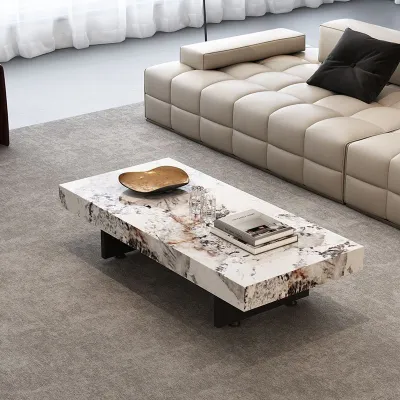
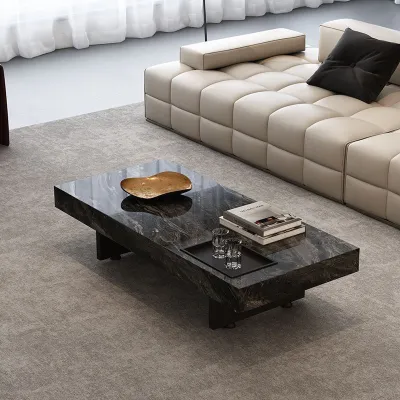

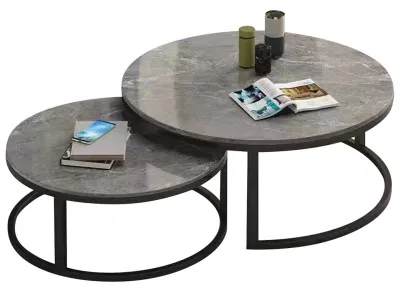
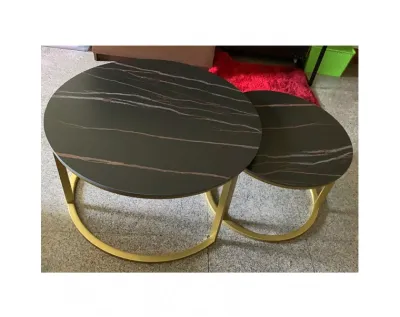

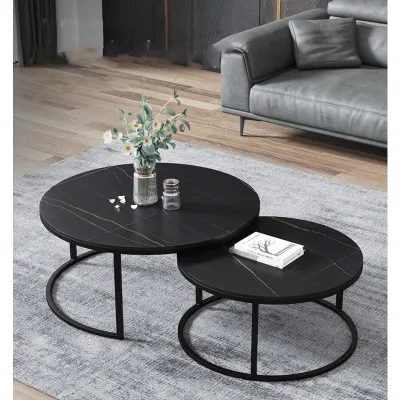

Prices are valid at publication and may change. Please refer to the product page for the latest price.
- Choose Sintered Stone if: You want a modern, highly durable, and virtually maintenance-free surface that can withstand spilled coffee, hot mugs, and heavy daily use without staining, scratching, or requiring periodic resealing.
- Choose Natural Marble if: You prioritize one-of-a-kind organic beauty, appreciate the prestigious character of genuine natural stone, and are fully prepared to use coasters consistently, clean up spills immediately, and apply protective sealants regularly.
- Choose Natural Granite if: You desire a highly durable, natural stone with a distinctive speckled pattern, want excellent scratch resistance, and do not mind performing occasional sealing checks to keep the surface pristine.
While these general material characteristics provide a helpful starting point, the final performance of your coffee table depends on the specific product’s execution. Before finalizing any purchase, always verify the manufacturer’s technical specifications for weight limits, edge treatments, and recommended care instructions, as these details can vary significantly between different brands and slab thicknesses.
Understanding the Contenders: Material Profiles
Sintered Stone Coffee Tables
Sintered stone is a highly advanced engineered material created through a process known as sintering, which replicates the natural formation of stone in a matter of hours. Natural minerals—including quartz, silica, feldspar, and clay—are ground into a fine powder, subjected to extreme pressure of over 15,000 tons, and then fired in a kiln at temperatures exceeding 1,200°C. This intense heat and pressure fuse the mineral particles together without melting them, resulting in an incredibly dense, ultra-compact slab with virtually zero porosity.

Because of this controlled manufacturing process, sintered stone is highly uniform throughout its structure, containing no internal voids or weak points. When shopping for a sintered coffee table, ask the retailer for the manufacturer’s technical data sheet. This document will verify key performance metrics, such as the material’s specific hardness rating, its resistance to UV light (which prevents fading near sunny windows), and the recommended cleaning agents safe for that particular surface finish.
Natural Marble Coffee Tables
Natural marble is a metamorphic rock that forms when sedimentary limestone is subjected to intense heat and pressure within the Earth’s crust over millions of years. This geological process causes the calcium carbonate in the limestone to recrystallize, creating a interlocking mosaic of carbonate crystals. The distinctive, elegant veining that defines marble is caused by mineral impurities—such as clay, silt, sand, or iron oxides—that were present in the original limestone layers as the rock formed.
This natural origin means that every single marble slab is completely unique, possessing patterns and color variations that cannot be exactly replicated. However, because marble is primarily composed of calcium carbonate, it is inherently softer and more porous than engineered alternatives. When purchasing a natural marble coffee table, it is critical to verify with the supplier whether the stone has been pre-sealed at the factory and to obtain their specific, written instructions regarding the recommended resealing schedule and safe cleaning products.
Natural Granite Coffee Tables
Natural granite is an intrusive igneous rock, meaning it formed from the slow cooling and solidification of molten magma deep beneath the Earth’s surface. This slow cooling process allows large, visible crystals of minerals to form, giving granite its characteristic speckled or granular appearance. The primary minerals in granite are quartz and feldspar, which provide its remarkable hardness, along with smaller amounts of mica and other minerals that contribute to its varied colors.
Granite is significantly harder and less porous than marble, making it a highly durable choice for natural stone enthusiasts. However, its crystalline structure still contains micro-fissures and pores that can absorb liquids if left unprotected. When evaluating a granite coffee table, inspect the surface finish—such as highly polished, matte honed, or textured leathered—and confirm the exact sealing requirements with the manufacturer to ensure long-term stain prevention in your living room.
Comparing Sintered Coffee Table Surfaces with Marble and Granite
Scratch and Impact Resistance
The ability of a coffee table to withstand the physical wear and tear of daily life depends heavily on the material’s surface hardness. Hardness is commonly referenced using the Mohs scale, which measures a material’s resistance to scratching on a scale from 1 (softest) to 10 (hardest). Sintered stone typically ranks exceptionally high on this scale, often achieving a hardness rating of 7 or 8, which means it cannot be easily scratched by metal utensils, keys, or ceramic mugs. Granite also ranks highly, generally falling between 6 and 7 on the Mohs scale, offering excellent resistance to daily abrasions.
In contrast, natural marble is a much softer material, typically ranking between 3 and 4 on the Mohs scale. This means that sliding a ceramic coaster, a metal tray, or even a decorative item with a rough base across an unprotected marble surface can easily leave permanent micro-scratches. While you should always verify the specific slab’s hardness rating with your supplier, the surface finish also plays a major role in how wear is displayed. Polished finishes on all three materials tend to show fine scratches and chips much more prominently under direct light, whereas honed, matte, or textured finishes are far more forgiving at concealing minor surface imperfections over time.
Stain Resistance and Daily Maintenance
Stain resistance is directly tied to a material’s porosity, which refers to the volume of open pores on the surface that can draw in liquids. Sintered stone has a virtually non-porous surface, with water absorption rates typically below 0.1%. This means that common household liquids like spilled red wine, dark coffee, tea, or ink cannot penetrate the surface, preventing deep stains from forming and making daily cleanup incredibly straightforward.
Natural stones, however, are naturally porous materials that act like dense sponges on a microscopic level. Marble, being highly alkaline due to its calcium carbonate composition, is extremely sensitive to acids. Acidic substances—such as citrus juices, vinegar, carbonated soft drinks, and even certain soaps—will chemically react with the marble, dissolving the surface minerals in a process known as “etching.” Etching leaves a dull, cloudy mark on the stone that cannot be simply wiped away, regardless of whether the surface has been sealed. To maintain these surfaces properly, follow this daily cleaning checklist:
- Use a soft, clean microfiber cloth dampened with warm water for daily dusting and light cleaning.
- Apply only pH-neutral stone cleaners specifically formulated for natural stone when tackling greasy residue or stubborn spots.
- Avoid all acidic, alkaline, or abrasive cleaners, including window sprays, vinegar, lemon juice, and scouring powders, which can strip protective sealants and damage natural stone.
- Blot spills immediately rather than wiping them, which can spread the liquid across a larger area of porous stone.
- Verify safe cleaning products with the manufacturer before applying any new commercial cleaner to your coffee table surface.
- Perform a water droplet test on natural stone surfaces periodically; if water stops beading and quickly sinks into the stone, it is time to clean and apply a fresh coat of sealer.
Aesthetics, Veining, and Design Versatility
The visual impact of a coffee table is often the deciding factor for many homeowners, and the choice between natural and engineered materials represents a fundamental design philosophy. Natural marble and granite offer an organic, unrepeatable beauty that carries a sense of timeless prestige. The random swirls of marble veining and the complex, shimmering mineral deposits in granite tell a geological story spanning millions of years, ensuring that your furniture piece is entirely unique.
Sintered stone, as an engineered product, offers unmatched design versatility and consistency. Advanced high-definition printing technology allows manufacturers to replicate the look of rare, ultra-premium marbles or exotic granites with incredible accuracy. This means you can achieve the look of a highly sought-after white Calacatta marble without the high maintenance or structural fragility of the natural stone. However, because the pattern is printed, it is important to inspect the physical slab carefully. Check whether the veining pattern is only present on the top surface or if it continues through the entire thickness of the slab (known as through-body veining), which is crucial for maintaining a realistic stone appearance along the exposed edges.
When choosing your table, inspect physical slab samples in person whenever possible. Look closely at the pattern consistency, ask about book-matching options (where two adjacent slabs mirror each other) if you are ordering a large or multi-piece table, and examine the edge detailing. Edge profiles—such as a clean mitered joint, a soft bullnose, or a chamfered edge—not only affect the visual weight of the table but also influence how the material handles daily impacts.
Weight, Stability, and Floor Protection
All three materials are exceptionally heavy, a factor that must be carefully accounted for when planning your living room layout and selecting a table base. A standard 12mm thick sintered stone top or a 20mm thick natural stone slab can easily weigh between 30kg and 60kg, depending on the overall dimensions. This substantial weight requires a highly robust, structurally sound base made of reinforced metal, solid hardwood, or heavy-duty composite materials to prevent sagging, wobbling, or structural failure over time.
In high-rise residential buildings, such as typical HDB flats or condominiums in Singapore, managing this weight requires extra planning. Always check the exact product dimensions and total weight of the fully assembled coffee table to ensure it complies with your building’s lift carriage weight limits and can be safely maneuvered through narrow corridors and doorways. Additionally, because of the concentrated downward pressure exerted by a heavy stone table, it is highly recommended to install heavy-duty felt, rubber, or silicone protective pads under the table legs or base. These pads distribute the weight more evenly and prevent the heavy frame from leaving permanent indentations, scratches, or cracks on delicate flooring materials like vinyl, parquet, engineered wood, or polished marble tiles.
Matching the Material to Your Household Lifestyle
High-Traffic Homes with Children or Pets
In a bustling household where the living room serves as the primary play and gathering area, a coffee table must be able to withstand constant activity. Children playing with plastic toys, pets jumping onto furniture, and accidental spills of juice or milk can quickly ruin a delicate surface. For these high-traffic environments, sintered stone and granite are highly forgiving options. Their extreme surface hardness resists scratches from toys and pet claws, while their low porosity prevents permanent stains from forgotten spills.
However, physical safety must be a primary consideration when selecting a heavy stone table for a home with young children or active pets. Sharp, 90-degree mitered corners pose a significant risk of injury during accidental bumps or falls. When browsing designs, look for rounded edge profiles, such as a demi-bullnose, a full bullnose, or a radiused corner. Always check the manufacturer’s specific guidelines regarding the impact resistance of the table’s corners and edges, as even the hardest engineered stones can chip if subjected to a sharp, high-force blow from a heavy object.
Formal or Low-Traffic Aesthetic Spaces
If your living room is primarily used as a formal reception area, a quiet reading space, or a low-traffic aesthetic showcase, the delicate nature of natural stone becomes much easier to manage. In these refined environments, a natural marble coffee table can serve as a stunning, sophisticated centerpiece that elevates the entire design scheme. The unique veining and organic texture of genuine marble add a layer of warmth and luxury that engineered materials struggle to fully replicate.
To keep a natural stone table looking pristine in a formal space, you must balance its visual impact with a commitment to careful daily use. This includes establishing a strict coaster policy for all beverages—especially hot drinks, wine, and acidic sodas—and using felt-bottomed decorative trays to hold remotes, books, or vases. Avoid placing heavy, sharp, or abrasive decorative objects directly onto the stone surface, and ensure that anyone using the space is aware of the material’s sensitivity to prevent accidental etching or scratching.
Budget and Long-Term Value Considerations
The total cost of owning a stone coffee table extends far beyond the initial purchase price, making it important to evaluate both immediate expenses and long-term maintenance costs. Sintered stone coffee tables are available across a wide price range, with costs heavily influenced by the slab’s thickness, the complexity of the edge fabrication, and the quality of the backing material (such as whether the thin stone is laminated to a supportive sheet of glass or medium-density fiberboard). Natural marble and granite prices are highly variable, determined primarily by the rarity of the specific quarry, the country of origin, the thickness of the solid slab, and the amount of custom stone-cutting required.
When calculating the lifetime value of your investment, factor in the ongoing maintenance requirements of each material. Natural marble and granite require periodic application of high-quality stone sealants to maintain their water and stain resistance. While this can be done as a do-it-yourself project, some homeowners prefer to hire professional stone restoration services in Singapore to deep-clean, polish, and reseal their tables every few years, which adds to the long-term cost. Sintered stone, requiring no sealing and only basic household cleaners, incurs virtually zero ongoing maintenance costs, making it an exceptionally cost-effective option over its lifespan.
Practical Buying and Placement Checklist
Before finalizing your purchase of a sintered stone, marble, or granite coffee table, use this practical checklist to ensure a seamless buying, delivery, and installation process:
- Verify Walkway Clearance: Ensure there is a minimum of 45cm to 60cm of open space between the edge of the coffee table and your sofa, TV console, or armchair to allow for comfortable walking paths and legroom.
- Align Table Height: Select a coffee table height that is within 2cm to 5cm of your sofa's seat cushion height. A table that is too high or too low will be physically uncomfortable to use and visually disproportionate.
- Measure the Living Room Rug: Confirm that the coffee table sits comfortably within the boundaries of your area rug, leaving enough rug border visible on all sides to create a balanced, anchored layout.
- Check High-Rise Lift Dimensions: For apartments in Singapore, measure your building's elevator door width, interior height, and diagonal clearance. Heavy, large stone tops often cannot be tilted easily and must fit flat inside the lift carriage.
- Inspect the Table Base Support: Verify that the table's frame or base provides full, even support across the underside of the stone slab. Thinner stone tops (such as 6mm or 12mm) should be fully supported by a solid sub-top substrate to prevent cracking under localized weight.
- Request Care and Warranty Documents: Always ask the retailer for the official manufacturer care guide and warranty terms. Ensure you understand what specific types of damage (such as accidental chipping, etching, or structural cracking) are covered before completing your purchase.
Frequently Asked Questions (FAQ)
Can I place hot mugs directly on a sintered stone coffee table?
Yes, sintered stone generally possesses excellent thermal shock resistance due to its high-temperature manufacturing process, meaning it will not burn, crack, or discolor from contact with hot mugs or plates. However, because temperature tolerances can vary depending on the specific slab thickness, surface finish, and backing materials used by individual brands, checking the manufacturer’s heat guidelines is always recommended. Using coasters or trivets remains a protective best practice to keep the surface clean and prevent localized heat buildup from affecting any underlying adhesives or support structures.
How often does a marble coffee table need to be resealed?
The frequency of resealing a marble coffee table depends on how often the table is used, the type of sealer previously applied, and the natural porosity of the specific marble variety. As a general guideline, most marble surfaces benefit from being resealed every six to twelve months to maintain an effective barrier against liquid penetration. To check if your table needs a fresh coat of sealer, perform a simple water drop test by placing a few drops of water on the surface; if the water beads up and remains on top after ten minutes, the seal is intact, but if it sinks in and darkens the stone, it is time to reseal.
Is sintered stone the same as quartz or porcelain?
No, sintered stone is distinct from both quartz and traditional porcelain, though they share some similarities. Quartz is an engineered stone made of quartz mineral chips bound together with polymer resins and pigments, which makes it sensitive to high heat and UV exposure. Porcelain is made from clay fired at high temperatures, but sintered stone uses a more complex blend of natural minerals—including silica, feldspar, and quartz—and is processed under vastly higher pressure and heat. This specialized manufacturing process results in a material that is denser, harder, and more resistant to weather and mechanical stress than standard porcelain, so always check the product’s official material certification to verify its exact classification.
Community discussion
Share your experience or ask a question. Comments are reviewed before publication.