
Choosing between a single seater recliner and a standard armchair comes down to balancing personal relaxation habits with the physical constraints of your living room. A recliner offers adjustable, multi-angle comfort and leg elevation at the press of a button or pull of a lever, making it ideal for long reading sessions or movie nights. A standard armchair, on the other hand, provides a stable, upright seating position and a compact, stationary footprint that integrates seamlessly into formal seating arrangements. While the recliner prioritizes deep, personalized physical relief, the armchair excels in design versatility, ease of movement, and space efficiency. Evaluating how you use your space daily, your physical mobility needs, and the layout of your room will point you toward the right choice.
Core Differences in Design and Function
The fundamental distinction lies in the internal engineering. A reclining single seater sofa is a complex piece of machinery wrapped in upholstery. It relies on an internal metal chassis, tension springs, and pivot joints to transition from an upright position to a semi-horizontal state. Manual recliners use a side-mounted lever or a push-back mechanism that responds to body weight, while power recliners utilize electric motors and control panels to allow precise, incremental adjustments. These moving parts add weight and structural complexity to the piece.
In contrast, a standard armchair is built on a stationary, solid frame, typically constructed from kiln-dried hardwood or engineered timber. It lacks moving parts, relying instead on a fixed suspension system—such as sinuous springs or webbing—and layered foam or fiber cushioning to provide support. Because it does not need to accommodate internal mechanical pathways, the armchair can feature open bases, slender legs, and varied silhouettes that are physically impossible in a recliner.
Products mentioned in this guide
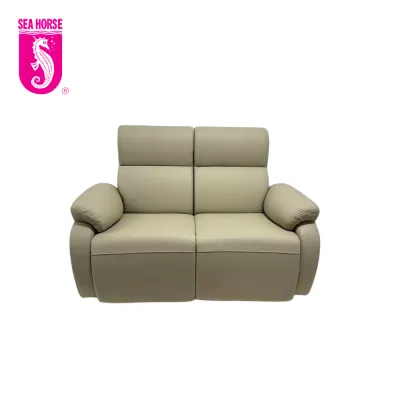
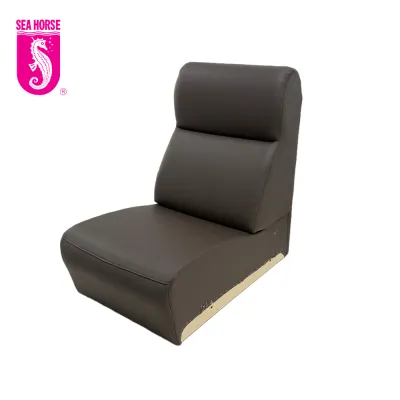
11 Lazada user ratings
Slight delay in shipping but was communicated probably to us. Cheaper to buy on lazada than in retail store with voucher. Sofa is good and h…Read full reviewShow less
Slight delay in shipping but was communicated probably to us. Cheaper to buy on lazada than in retail store with voucher. Sofa is good and hard which my mom likes.
comfortable to sit, good quality
优质皮革面料, 时尚家居装饰选择 。
经典扶手椅设计, 优质皮革面料,。
Prices are valid at publication and may change. Please refer to the product page for the latest price.
This structural difference directly impacts the visual footprint of each option. Recliners tend to have a bulkier, more substantial appearance because their bases must conceal the metal mechanisms and footrest extensions. They often feature deep, overstuffed cushioning to ensure comfort when fully extended. Standard armchairs offer a much broader spectrum of design styles, ranging from mid-century modern with tapered wooden legs to classic wingbacks and sleek minimalist profiles, making them easier to match with diverse interior aesthetics.
The weight of these two seating options also differs significantly. A standard armchair is relatively lightweight and can be easily repositioned by one or two people when vacuuming or rearranging the room. A recliner, burdened by its heavy steel mechanism and sometimes an electric motor, is a semi-permanent fixture that is difficult to move without assistance. This weight difference is an important consideration if you enjoy frequently updating your room layout.
Space Requirements and Room Layout
Spatial planning is critical when integrating new seating into a living room. A standard armchair offers exceptional placement flexibility due to its static nature. Because its dimensions do not change during use, you can place it flush against a wall, tuck it into a tight corner, or position it at an angle next to a bookshelf. Its footprint is predictable, allowing you to plan surrounding walkways and side tables with high precision.

A single seater recliner demands a dynamic spatial assessment. You must account for two distinct dimensions: the static footprint when upright and the fully extended footprint when reclined. Most traditional recliners require significant wall clearance—often ranging from 10 to 50 centimeters depending on the model’s design—to tilt backward without hitting the wall. Additionally, the front footrest requires clear floor space to extend fully, which can block high-traffic walkways or collide with low coffee tables.
To avoid layout conflicts, measure your room with both states in mind. Use painter’s tape on the floor to mark the maximum length of the recliner when fully extended, ensuring there is still at least 60 centimeters of walking space around it. Check for nearby obstacles such as floor lamps, side tables, area rugs that might catch on the footrest, or electrical outlets needed for power models. If space is tight, look for “wall-hugger” or “zero-wall” recliners, which slide forward on their tracks as they recline, requiring only a few centimeters of rear clearance.
Beyond physical measurements, consider the visual flow of the room. A bulky recliner can dominate a small space, making the room feel cramped even if it technically fits. Standard armchairs, especially those with exposed legs and low backs, allow light and sightlines to pass through, creating an illusion of openness. If you choose a recliner for a smaller room, selecting a model with a streamlined profile and neutral upholstery can help minimize its visual impact.
Comfort, Posture, and Daily Use
The daily experience of sitting in these chairs differs significantly based on your posture and activity. A single seater recliner is designed for prolonged, solitary relaxation. By elevating your legs and tilting your torso, a recliner helps distribute your body weight more evenly, reducing pressure on the lower back and promoting circulation. This makes it highly beneficial for reading, watching television, or napping, where deep physical decompression is the primary goal.
Standard armchairs are better suited for active sitting, socializing, and tasks that require an upright posture. The firm, consistent support of a well-designed armchair keeps the spine aligned and makes it easier to engage in conversation with guests, hold a cup of tea, or work on a laptop. Because you do not sink as deeply into the cushions, your core remains slightly engaged, which many users find more comfortable for shorter, more active periods of sitting.
Physical mobility is another crucial factor to consider. While a recliner offers excellent support once you are settled, getting in and out of one can be challenging for individuals with limited core or leg strength. Deep, soft cushions and a reclining angle can make it difficult to find leverage, and manual footrests require leg strength to push down and lock into place. A standard armchair, with its firm seat height, stable armrests, and lack of movement, provides a reliable platform for pushing oneself up to a standing position safely.
In multi-user households, the versatility of the seating becomes paramount. A standard armchair is highly accommodating for guests of various heights and sizes, offering a neutral sitting experience. A recliner, however, is often a highly personalized purchase. A model that fits a taller person perfectly may leave a shorter person with their feet dangling or unable to reach the headrest comfortably. If multiple family members will use the chair, look for adjustable headrests or tension settings that can be customized.
Durability, Maintenance, and Longevity
The longevity of your seating depends heavily on its construction and how it is maintained. Because a recliner contains numerous moving parts, it is naturally more susceptible to mechanical wear over time. The metal linkages can loosen, motors in power models can fail, and the frame experiences localized stress at the pivot points. When shopping, it is essential to check the manufacturer’s weight capacity ratings and look for robust warranties specifically covering the reclining mechanism, which often differ from the frame warranty.
Standard armchairs generally offer greater structural longevity due to their simplicity. Without moving parts, the primary wear points are limited to the frame joints and the cushion filling. High-quality armchairs with dowelled, glued, and screwed joints can remain structurally sound for decades. Cushion sagging is the most common issue over time, but this can often be mitigated by choosing high-density foam cores or chairs with removable, flippable cushions that allow for even wear.
Maintenance routines also differ between the two designs. Cleaning a standard armchair is relatively straightforward, requiring regular vacuuming of the seat and crevice areas. A recliner requires more thorough upkeep; dust, pet hair, and small items can easily fall into the internal mechanism when the footrest is extended. You will need to periodically extend the chair fully to vacuum the interior frame, inspect the moving parts for debris, and clean the hard-to-reach fabric folds that open up during recline.
Upholstery wear is another area where the two designs diverge. Because a recliner undergoes constant movement, the fabric or leather at the joints and footrest is subjected to friction and stretching. This can lead to premature wear, creasing, or tearing if the material is not highly durable. Standard armchairs experience less friction on the upholstery, meaning delicate fabrics like velvet or linen may last longer without showing signs of distress.
Decision Framework: Which Single Seater Sofa Fits Your Home?
To make the final choice, evaluate your primary use case and the physical realities of your home. Opt for a single seater recliner if your main priority is personal comfort, stress relief, or creating a dedicated spot for media consumption. Ensure you have ample floor space to accommodate the full extension of the footrest and the necessary wall clearance behind the backrest. A power recliner is particularly useful if you want precise control over your seating angle without physical exertion.
Select a standard armchair if your living room serves as a multi-functional space for hosting guests, or if you prefer a cohesive, styled interior design. Armchairs are the superior choice for compact rooms, formal seating arrangements, and homes where users require a firm, stable seat that is easy to stand up from. They also offer a wider variety of upholstery and design styles, allowing you to make a bold aesthetic statement or match existing decor perfectly.
Before finalizing any purchase, perform a few essential checks to guarantee a successful delivery and fit. Measure the width of your entryways, hallways, and lift doors to ensure the chair can physically enter your home, as recliners can be exceptionally heavy and bulky. Test the seat depth and height in person if possible, checking that your feet rest flat on the floor when sitting upright. Finally, verify the manufacturer’s care instructions and warranty terms to ensure the piece aligns with your long-term maintenance expectations.
Community discussion
Share your experience or ask a question. Comments are reviewed before publication.