
Quick Answer: Which Headboard Style Fits Your Small HDB Bedroom?
Selecting the right single bed headboard for a compact Housing & Development Board (HDB) bedroom requires balancing floor space preservation, structural safety, and daily utility. The ideal headboard style depends heavily on your room’s specific dimensions, your wall composition, and whether you have permission to drill into the structure.
Wall-mounted headboards offer the ultimate space-saving solution by keeping the floor entirely clear, making them perfect for maximizing narrow walkways. Freestanding headboards provide a renter-friendly, zero-drilling alternative that can be easily moved or rearranged. Storage-integrated headboards add valuable utility by replacing bulky bedside tables, though they demand a larger physical footprint.
Because a standard Singapore single bed mattress measures 91cm in width and 190cm in length, even a minor addition to the bed’s overall depth can disrupt the flow of a small bedroom. Managing this depth is crucial to prevent the bed from blocking wardrobe doors, walkways, or electrical outlets. By evaluating your room layout and wall constraints first, you can select a headboard that enhances your bedroom without making it feel cramped.
Products mentioned in this guide
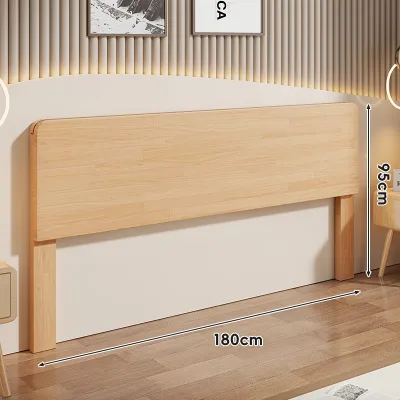
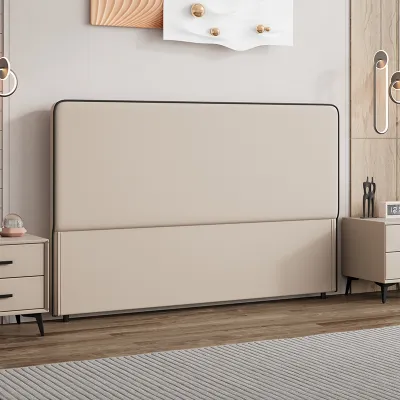
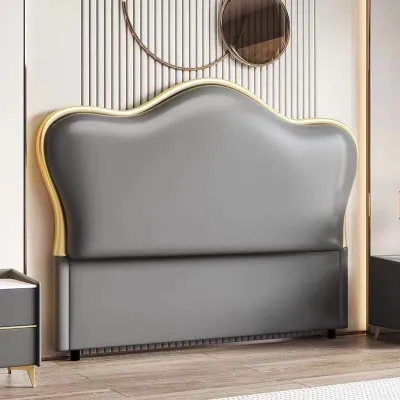
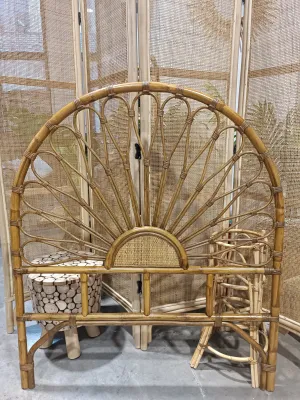
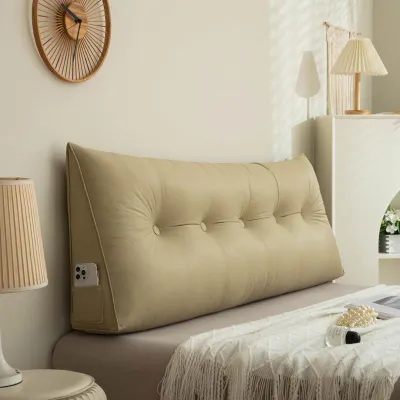
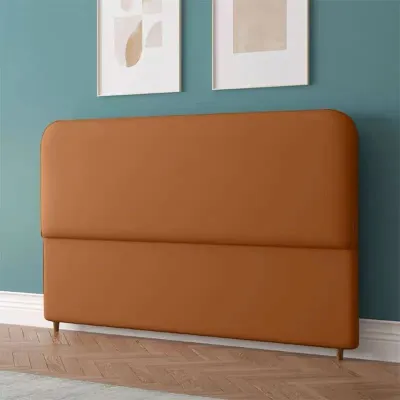
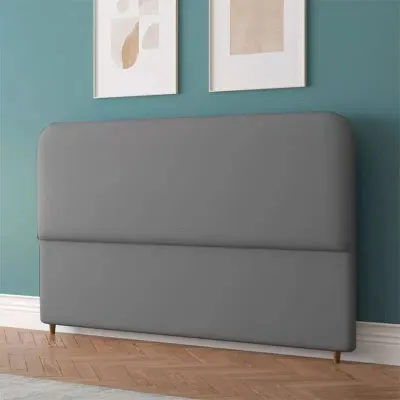
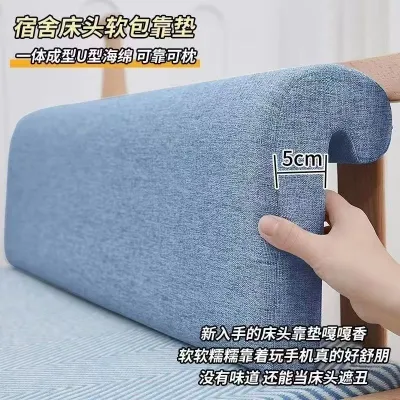
Prices are valid at publication and may change. Please refer to the product page for the latest price.
Space & Layout: How Each Style Impacts Small HDB Floor Plans
In a typical HDB common bedroom, which often ranges from 9 to 11 square meters, every centimeter of floor space is highly valuable. The way a headboard occupies physical and visual space can dramatically alter how open or restricted the room feels.

Wall-Mounted Headboards
Wall-mounted headboards are fixed directly to the wall behind the bed, meaning they do not require support legs that touch the floor. This design creates a floating effect that exposes more of the floor tiles, visually expanding the room. Because they typically feature a slim profile—often between 3cm and 8cm in depth—they keep the bed frame as close to the wall as possible. This minimal depth maximizes the walkway clearance at the foot of the bed, which is particularly beneficial in narrow, rectangular rooms where the bed must face a built-in wardrobe or a study desk.
Freestanding Headboards
Freestanding headboards stand on the floor and are either sandwiched between the wall and the bed frame or bolted directly to the frame itself. While they are highly convenient, they introduce a physical gap due to the room’s skirting boards. Most HDB flats feature tiled or timber skirting boards along the base of the walls, usually measuring between 1.5cm and 2cm in thickness. If a freestanding headboard does not have a bottom recess or cutout to accommodate this skirting, the top of the headboard will be pushed away from the wall. This creates a small, hard-to-clean gap behind the bed and forces the entire bed frame further into the room, reducing valuable walkway clearance.
Storage-Integrated Headboards
Storage-integrated headboards combine a headboard with built-in shelves, cubbies, or hidden compartments. While highly functional, they add significant depth to the bed setup, typically ranging from 15cm to 30cm. In a compact bedroom, adding 30cm to a 190cm mattress results in a total bed length of 220cm. If your bedroom is 2.4 meters wide, this leaves only 20cm of clearance at the foot of the bed. Such a tight clearance can make it difficult to walk comfortably, open hinged wardrobe doors, or access window handles. To make a storage headboard work, you must ensure your room layout can accommodate this extra depth without restricting key functional areas.
Installation & Structural Limits in HDB Flats
Before purchasing any headboard, you must consider the practical and regulatory constraints of installing furniture in Singapore HDB flats. Different headboard styles carry unique installation requirements that could affect your home’s structure or your tenancy agreement.
Wall-Mounted Constraints
Installing a wall-mounted headboard requires drilling into the wall, which demands a clear understanding of your flat’s wall types. HDB flats consist of structural reinforced concrete walls and non-structural internal partition walls (such as precast concrete panels or drywall).
- Structural Concrete Walls: These walls are exceptionally hard and require a rotary hammer drill and heavy-duty masonry wall plugs to secure mounting brackets safely.
- Non-Structural Partition Walls: These walls are easier to drill but have lower load-bearing capacities, requiring specialized toggle bolts or hollow-wall anchors to prevent the headboard from pulling free.
Before drilling, you must check for concealed electrical conduits and water pipes, which are commonly embedded in walls sharing boundaries with bathrooms or kitchen areas. Additionally, if you are renting your flat, drilling into walls is often restricted by landlords, making wall-mounted designs less practical.
Freestanding Advantages
Freestanding headboards require no drilling or permanent wall modifications. This makes them the ideal choice for tenants who want to avoid security deposit deductions, as well as homeowners who prefer to keep their layout options flexible. If you decide to rearrange your bedroom or move to a new home, a freestanding headboard can be disassembled and transported with minimal effort, leaving the walls completely undamaged.
Storage-Integrated Safety
Because storage-integrated headboards are designed to hold books, lamps, water bottles, and electronic devices, they can become exceptionally heavy when fully loaded. This high concentration of weight makes them prone to tipping forward if they are not properly balanced or anchored. In high-traffic areas, or in homes with young children, a top-heavy storage headboard poses a safety risk. You must verify the manufacturer’s anchoring recommendations and ensure the unit is placed on a completely level surface. If the design requires wall anchoring for safety, you must also confirm that your wall type can support the anchoring hardware.
Functionality & Storage Trade-Offs
Choosing a headboard is not just about managing physical space; it is also about aligning the furniture’s features with your daily habits and maintenance preferences.
Storage-Integrated Utility
For bedrooms that lack the lateral wall space for a traditional bedside table, a storage-integrated headboard is an excellent alternative. It utilizes vertical space directly behind your head to store essentials like phones, reading glasses, and books. This eliminates the need for a separate nightstand, which typically requires 40cm to 50cm of width next to the bed. By saving this lateral space, you can place your bed closer to a corner or leave more room for a larger wardrobe or study desk.
Minimalist Designs (Wall-Mounted & Freestanding)
If you prefer a clean, uncluttered aesthetic, minimalist wall-mounted or freestanding headboards are highly effective. These designs focus on providing comfortable back support for sitting up in bed to read or watch television. Because they do not feature horizontal shelves, they do not collect dust or clutter near your sleeping area. Furthermore, because they have a simpler structure, cleaning around and underneath the bed is much easier, helping you maintain a hygienic sleeping environment.
Material & Finish Verification
When choosing a headboard, do not rely solely on material names like “solid wood,” “laminate,” or “upholstery” to assume durability. Instead, perform specific checks based on your daily usage and Singapore’s humid climate:
- Laminated and Engineered Woods: Check the quality of the edge banding. Poorly sealed edges can absorb moisture from the air or floor mopping, causing the material to swell and peel over time.
- Upholstered Fabrics: Fabric headboards offer soft comfort but can trap dust, pet dander, and moisture. Check if the fabric has been treated for stain resistance and verify if it requires professional cleaning or regular vacuuming.
- PU and Synthetic Leathers: While easy to wipe clean with a damp cloth, low-grade synthetic leathers can crack or peel when exposed to sweat, body oils, or direct sunlight from nearby windows. Check the manufacturer's care instructions to ensure the material is rated for durability.
Decision Framework: Which Headboard Should You Choose?
To simplify your decision, use this conditional framework to match your bedroom’s layout and structural limits with the right headboard style.
Choose Wall-Mounted if:
- You need to keep the floor completely clear to maximize a narrow walkway.
- You have confirmed that the wall behind your bed is suitable for drilling and is free of concealed pipes or wiring.
- You own the property or have explicit permission from your landlord to drill into the walls.
- You prefer a modern, streamlined look with a very slim profile.
Choose Freestanding if:
- You are renting your home and need a completely non-destructive, drill-free furniture solution.
- You enjoy rearranging your bedroom layout periodically.
- Your bed frame is placed against a wall with prominent skirting boards, and you have selected a headboard designed to accommodate or bypass this gap.
- You want a straightforward, quick assembly process without the need for heavy power tools.
Choose Storage-Integrated if:
- Your bedroom layout has absolutely no space for a separate bedside table.
- You have verified that your room has at least 2.3 meters of clearance from the headboard wall to the opposite wall or wardrobe doors, ensuring walkways remain unobstructed.
- You need extra storage space for small personal items and want to utilize vertical space efficiently.
- You can securely anchor the unit to prevent tipping risks.
Verify First if:
- You are unsure of your wall's composition (e.g., whether it is solid concrete or hollow drywall).
- You have not measured the exact clearance required for your wardrobe doors, bedroom door, or windows to open fully without hitting the bed.
- You have power outlets directly behind the bed that might be blocked or made inaccessible by a solid headboard design.
Pre-Purchase Measuring & Verification Checklist
Before finalizing your headboard purchase, complete these essential physical measurements and safety checks to ensure a perfect fit in your HDB bedroom.
- Measure the Mattress and Frame Width: Confirm your single bed's exact width. While a standard Singapore single mattress is 91cm wide, the bed frame itself may be slightly wider. Ensure your headboard matches or slightly exceeds this width without blocking adjacent light switches or power sockets.
- Calculate Walkway Clearance: Measure the distance from the headboard wall to the opposite wall or furniture. Ensure you maintain at least 60cm of clear walkway space at the foot of the bed for comfortable movement.
- Check Swing Radii: Open your wardrobe doors, bedroom entry door, and window grilles fully. Verify that the extended bed length (including the headboard's depth) does not interfere with these openings.
- Identify Wall Outlets: Locate all wall sockets and light switches near the bed. Ensure the headboard does not block access to these outlets, or choose a design with built-in cable management cutouts.
- Confirm Wall Type and Drilling Guidelines: If mounting to a wall, check your flat's floor plan to identify structural walls. Refer to HDB's renovation guidelines regarding drilling depths and structural limitations.
- Request Manufacturer Specifications: Do not rely on visual estimates from online photos. Always request the exact depth, height, weight, and assembly instructions directly from the manufacturer or retailer to confirm compatibility with your space.
Frequently Asked Questions (FAQ)
Can I install a wall-mounted headboard on an HDB household shelter wall?
No, you cannot install a wall-mounted headboard on an HDB household shelter (bomb shelter) wall. HDB renovation guidelines strictly prohibit any drilling, hacking, or mounting of heavy fixtures onto the reinforced concrete walls or steel doors of a household shelter. Doing so can compromise the structural integrity and protective capabilities of the shelter. If your single bed must be placed against a household shelter wall, you should opt for a freestanding headboard or a floor-leaning design that does not require any wall penetration.
How do I clean behind a freestanding or storage headboard in a tight space?
Cleaning behind bulky headboards in tight spaces is essential to prevent the buildup of dust, mold, and dust mites, which thrive in Singapore’s humid climate. To make maintenance easier, look for freestanding headboards with raised legs that allow a vacuum nozzle or flat dust mop to slide underneath easily. If you choose a heavy storage-integrated headboard, select a model with smooth, wipeable laminate or wood finishes rather than deep fabric tufting, which tends to trap dust. For very tight layouts, consider mounting a slim, wipeable wall-mounted headboard with a small gap at the bottom, allowing you to clean the floor area without having to move the entire bed frame.
Community discussion
Share your experience or ask a question. Comments are reviewed before publication.