
Quick Answer: Is the Sihoo M57 the Right Choice for You?
The Sihoo M57 represents a highly popular benchmark in the mid-range ergonomic chair segment in Singapore, particularly for those seeking full-mesh breathability without a premium price tag. If your primary goal is to combat Singapore’s tropical humidity with a fully ventilated seat and backrest while enjoying multi-dimensional adjustability, this chair is a strong contender. However, it is not a universal solution. Users who require plush, deep-cushioned support, highly specialized heavy-duty frames, or premium industrial-grade materials may find it falls short of their expectations.
To determine if it represents the best value for your home office, we must evaluate it across four critical dimensions: adjustability, material durability in high humidity, daily comfort, and long-term value. This comparison will help you weigh the M57 against other mid-range options available in the local market, ensuring you make an informed decision based on your body type, work habits, and workspace constraints.
Setting the Baseline: What to Expect from Mid-Range Chairs
In Singapore’s furniture market, the “mid-range” ergonomic chair category generally spans from approximately S$150 to S$400. At this price tier, buyers should expect a significant step up from basic office task chairs, which often lack adjustable lumbar support or customizable armrests. A typical mid-range chair features adjustable lumbar mechanisms, multi-directional armrests, a tilt-and-lock recline function, and a choice between high-density foam or entry-level mesh materials.
Products mentioned in this guide
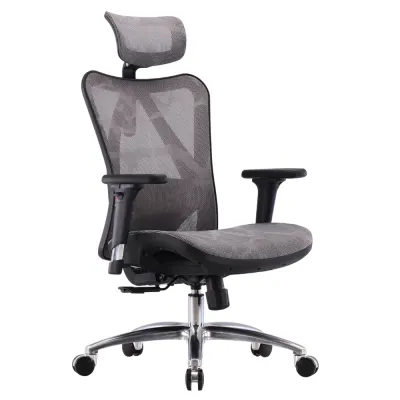
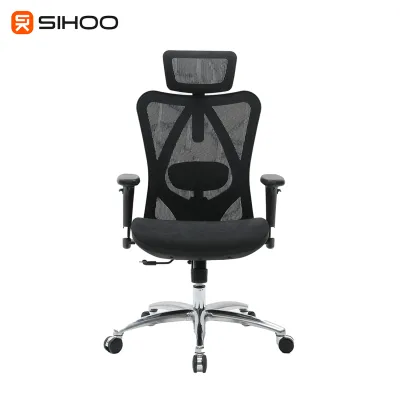
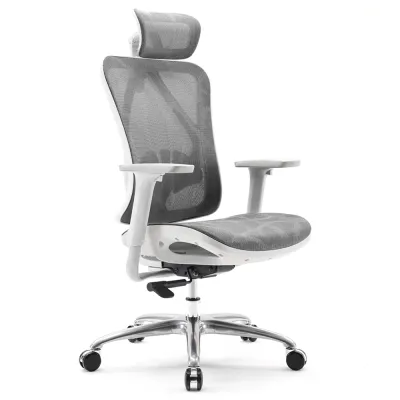
Prices are valid at publication and may change. Please refer to the product page for the latest price.

However, it is vital to manage expectations regarding build quality and longevity. While premium chairs costing upwards of S$1,000 offer extensive warranties of ten years or more and die-cast aluminum components, mid-range chairs usually provide more modest warranties, typically ranging from one to three years. The structural components often rely on reinforced nylon or lightweight steel rather than heavy-duty polished alloys. Buyers should view these chairs as highly functional, ergonomic tools designed to support healthy posture for several years, rather than lifetime furniture investments. Understanding this baseline prevents unrealistic expectations and helps you focus on functional adjustability rather than luxury finishes.
Adjustability and Support: How the M57 Stacks Up
Lumbar Support and Recline Mechanics
One of the defining features of the Sihoo M57 is its dedicated lumbar support system, which offers both height and depth adjustments. Many competing chairs in the mid-range bracket utilize a fixed lumbar band or a simple plastic pad that only slides vertically. The M57’s dual-direction adjustability allows you to fine-tune the pressure exerted on your lower back, helping to maintain the natural inward curve of your spine. However, because the lumbar pad is relatively firm, you should verify whether you prefer a subtle, hands-off support system or a highly pronounced physical prompt against your lumbar region.
The recline mechanics of the M57 feature a standard tilt-tension control and a multi-position locking system. This design allows you to tilt back and lock the chair into specific angles for resting or reading. When comparing this to other mid-range options, look closely at whether competitors offer synchronous tilting—where the seat tilt angle adjusts in a healthy ratio to the backrest tilt—or simple single-point tilting, which can lift your feet off the floor. Always check the manufacturer’s specifications to confirm the exact recline angles and whether the tilt-tension knob can be easily adjusted to match your body weight. Proper calibration of the tilt tension ensures that the chair supports you dynamically without requiring excessive effort to recline.
Armrests, Headrest, and Seat Depth
The Sihoo M57 features 3D adjustable armrests, which can move up and down, forward and backward, and rotate inward or outward. This level of adjustability is crucial for preventing shoulder strain, as it allows you to position the armrests to support your forearms at a comfortable 90-degree angle relative to your desk. In contrast, some mid-range alternatives only offer 1D (height-only) or 2D armrests, which can limit your ability to pull the chair close to your desk without hitting the armrest edges.
The headrest on the M57 is also highly adjustable, offering both height and angle modifications to support the cervical spine. However, seat depth adjustment—a sliding mechanism that moves the seat pan forward or backward—is notably absent on the M57. If you have particularly long or short legs, you should check competitor specifications for a seat depth slider. A properly adjusted seat depth ensures that you have roughly two to three fingers of space between the edge of the seat and the back of your knees, preventing restricted blood circulation. When analyzing competing models, check if these secondary features require aftermarket additions or if they are fully integrated into the base price.
Build Quality and Material Durability in Singapore's Climate
Full-Mesh Breathability vs. Foam Cushions
Singapore’s tropical climate, characterized by high temperatures and relative humidity levels often exceeding 80 percent, makes material selection a primary comfort factor. The Sihoo M57 addresses this by utilizing a full-mesh design for both the backrest and the seat pan. This construction allows for maximum airflow, preventing the heat build-up and sweating associated with traditional fabric or leather chairs. For home offices without continuous air conditioning, full-mesh seating can make a substantial difference in daily comfort.
However, choosing full mesh involves clear trade-offs against high-density foam cushions. While foam offers an immediate, plush sensation of softness, it acts as an insulator, trapping body heat over hours of continuous use. Conversely, mesh provides a firmer, more suspended seating experience. To assess the quality of a mesh chair, look for reinforced edges and double-woven patterns. Over time, lower-grade mesh can stretch and sag, causing your thighs to come into contact with the hard plastic frame underneath. If you prefer a softer sit, some mid-range competitors combine a breathable mesh backrest with a contoured foam seat cushion to balance cooling and plushness.
Frame Stability and Weight Capacity
The structural integrity of a mid-range chair relies heavily on its base and gas lift mechanism. The Sihoo M57 typically features an aluminum alloy base, which offers superior durability and a more premium aesthetic compared to the reinforced nylon bases common among budget competitors. When evaluating any mid-range chair, look at the caster material; polyurethane (PU) coated casters are generally preferred for Singaporean homes with vinyl, laminate, or parquet flooring, as they glide quietly without scratching the surface.
Safety is another critical factor that should never be taken for granted. Rather than relying on generic marketing claims, you should verify that the chair’s gas lift carries legitimate certifications from recognized testing bodies such as SGS, BIFMA, or TÜV. These certifications ensure the gas cylinder has undergone rigorous pressure and durability testing. Additionally, check the manufacturer’s stated weight capacity—typically around 120kg to 150kg for this class—and ensure your physical profile fits comfortably within these limits to prevent premature wear on the hydraulic seals. A sturdy base and certified gas lift are essential for preventing stability issues or sudden height loss over years of daily use.
Daily Comfort and Ergonomic Fit
A chair’s technical specifications only tell part of the story; the real test is how it feels during an eight-hour workday. Because the Sihoo M57 features a full-mesh seat, the tension of the mesh distributes your weight across the seat pan. For lighter individuals, this can feel like floating, but heavier users may experience high pressure points on the underside of their thighs, especially if the mesh stretches to its limit.
To mitigate this pressure, the M57 incorporates a waterfall front edge, where the front of the seat curves downward and is padded with a thin layer of foam beneath the mesh. This design helps maintain healthy blood circulation to your lower legs. However, if the chair is not adjusted to the correct height, or if your feet do not rest flat on the floor, even a waterfall edge cannot fully prevent leg fatigue.
Because ergonomic fit is highly subjective, you should take active steps to verify comfort before purchasing. If possible, visit a local physical showroom in Singapore to sit in the chair and test the adjustments yourself. If you are purchasing online, carefully measure your own body dimensions—such as your hip width and the distance from your hip to the back of your knee—and compare them directly against the chair’s official spec sheet. Furthermore, check the retailer’s return policy to see if they allow exchanges or returns if the seat tension does not suit your body type.
Evaluating True Value and After-Sales Support
When comparing mid-range chairs in Singapore, the true value of your investment is determined by the total cost of ownership, which includes after-sales support and warranty coverage. A lower upfront price can quickly lose its appeal if a broken caster or a failing gas lift renders the chair unusable after six months. Look closely at the warranty terms: some manufacturers offer a blanket three-year warranty, while others split the coverage, offering three years on the steel frame but only one year on moving parts like the armrests, casters, and mesh.
After-sales support is particularly important when buying through online marketplaces or local distributors. Before finalizing your purchase, verify whether the seller is an authorized distributor capable of providing genuine replacement parts. Check customer reviews specifically for mentions of customer service responsiveness and the ease of claiming warranty support. A reliable local distributor in Singapore who stocks replacement casters, armrest pads, and gas lifts can save you from having to purchase an entirely new chair if a single component fails. Additionally, check the delivery and assembly terms, as some sellers charge extra fees for lift-access delivery or on-site assembly.
Final Decision Framework
To help you make a confident decision, use this structured framework to match your specific needs to the right category of mid-range ergonomic chair.
Choose the Sihoo M57 if:
- You prioritize maximum breathability and want to stay cool in Singapore's humid climate without relying constantly on air conditioning.
- You prefer a firm, suspended seating experience rather than sinking into a soft cushion.
- You require highly adjustable 3D armrests and a multi-dimensional lumbar support system to customize your seating posture.
Choose a different mid-range alternative if:
- You prefer the immediate, plush comfort of a contoured high-density foam seat cushion.
- You require an integrated seat depth slider to accommodate exceptionally long or short legs.
- You prefer a minimalist or premium aesthetic that relies less on exposed plastic structural elements.
Verify first if:
- You are near the upper limits of the chair's recommended weight capacity, as mesh tension may feel excessively firm or sag over time.
- You have pre-existing, severe spinal conditions that may require a specialized, medical-grade ergonomic assessment rather than a standard retail chair.
- Your home workspace has limited floor space or low desk clearance; always measure your desk height, available floor space, and even lift access before finalizing your order.
Frequently Asked Questions (FAQ)
How long does a mid-range mesh chair typically last?
A mid-range mesh chair typically lasts between three to five years under standard daily usage of eight hours. The actual lifespan depends heavily on the user’s weight, environmental humidity, and regular maintenance. To maximize durability, check the manufacturer’s warranty period as a baseline indicator of quality, and inspect the mesh periodically for signs of fraying, loss of tension, or cracking along the plastic frame joints.
Is the Sihoo M57 suitable for taller or heavier individuals?
The Sihoo M57 is generally well-suited for users of average height and weight, but individuals over 185 cm or close to the 150 kg limit should proceed with caution. Before purchasing, compare your specific measurements—such as your inseam and shoulder height—against the chair’s official specification sheet. Pay close attention to the maximum height of the headrest and the range of the lumbar support to ensure they align correctly with your spine.
What should I check if a new mesh chair feels too firm?
If your new mesh chair feels excessively firm, allow a break-in period of two to three weeks for your body to adapt and the mesh to settle. First, verify that your feet rest flat on the floor and your knees are at a 90-degree angle to relieve thigh pressure. Next, adjust the tilt tension to allow a slight, natural give when you lean back, and reposition the lumbar height to ensure it supports the curve of your lower back rather than pushing directly against your spine.

Community discussion
Share your experience or ask a question. Comments are reviewed before publication.