
If your office chair is starting to look worn, stained, or outdated, you do not always need to replace it. Deciding whether to use a cover for chair or replace the entire unit depends on a clear distinction: cosmetic wear can be easily hidden, but structural and ergonomic failures require a brand-new seat. A simple fabric slipcover can instantly refresh a chair’s appearance for a fraction of the cost, but it cannot restore lost lumbar support, fix a sinking gas lift, or correct a misaligned frame that causes back pain.
To make the right choice, evaluate the physical condition of your chair’s core components. Investing in a cover for a structurally compromised chair is a temporary cosmetic fix that can lead to poor sitting posture and physical discomfort over time. Conversely, discarding a perfectly supportive chair just because of a minor stain or faded fabric is both expensive and wasteful.
Quick Diagnostic: Do You Need a Cover for Your Chair or a Replacement?
Before spending money on either a new slipcover or a brand-new piece of furniture, a quick physical assessment will clarify your path. The primary decision-making rule is simple: safety, posture support, and mechanical integrity cannot be fixed by fabric. If the chair’s internal frame is solid and the cushion still supports your weight comfortably, a cover is highly effective. If the chair fails to support your body properly, a replacement is necessary.
Products mentioned in this guide
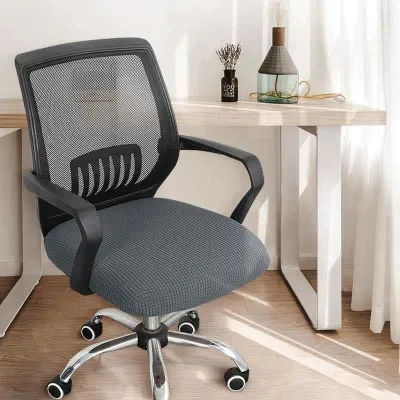
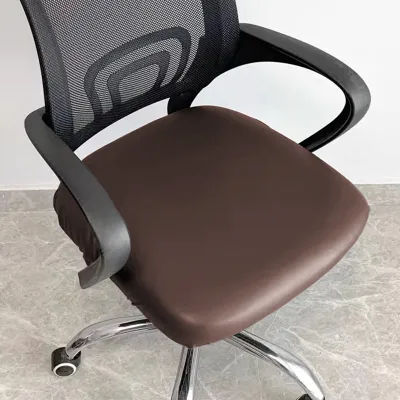
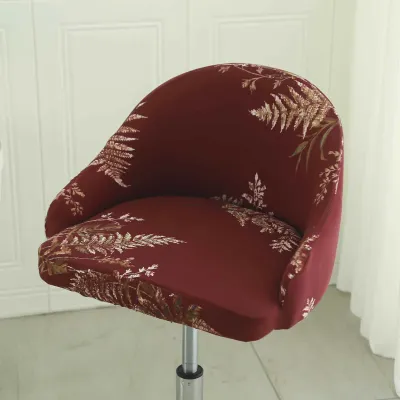
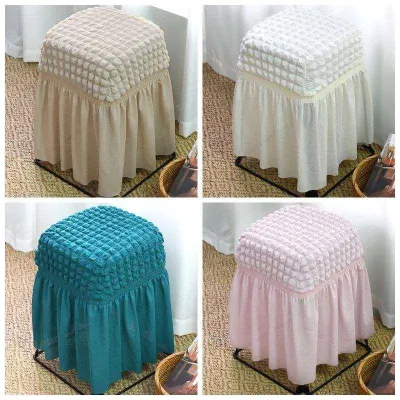
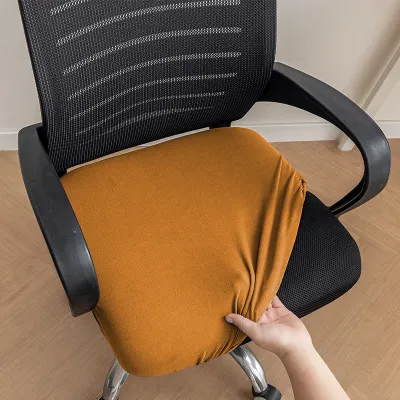
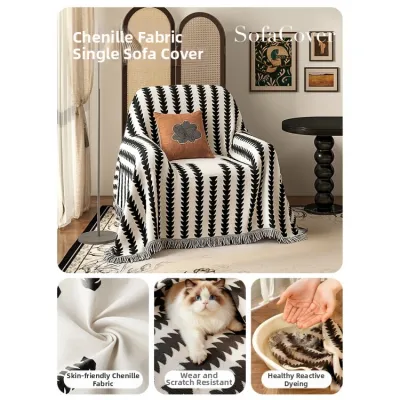
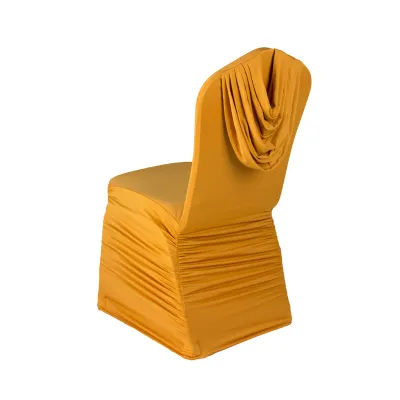
Prices are valid at publication and may change. Please refer to the product page for the latest price.
To perform this diagnostic, sit in your chair and run through a basic assessment workflow. First, check if the chair maintains its height throughout the day or if it slowly sinks. Next, lean back to test the tension and tilt mechanism, ensuring it locks securely without sudden slips. Finally, stand up and inspect the base and casters for cracks or structural instability. If any of these mechanical tests fail, bypass the cover options and begin shopping for a replacement.
Signs Your Office Chair Only Needs a Cover
If your office chair passes the mechanical safety checks, surface-level wear is highly suitable for a slipcover. Visual and tactile blemishes such as fabric pilling, fading from sunlight, minor stains, or superficial scratches on plastic armrests do not affect the chair’s utility. A cover for chair acts as an immediate aesthetic shield, transforming an unsightly seat into a clean, cohesive piece of furniture that matches your home decor.

Another critical factor is the integrity of the seat cushion. Press down firmly on the seat pan to confirm that the foam still provides even, resilient support and bounces back quickly when you stand up. If the foam is still comfortable and has not flattened to the hard plastic or wood base beneath it, the underlying structure is perfectly healthy. In this scenario, a cover is the ideal solution to address surface wear while preserving a comfortable seat.
Additionally, you should verify that the base, casters, armrests, and gas lift cylinder remain fully functional. If the chair rolls smoothly across your floor, swivels without resistance, and adjusts in height without slipping, the mechanical foundation is sound. Protecting these working parts with a fresh cover allows you to extend the usable life of your furniture without sacrificing daily comfort or mobility.
Structural Red Flags: When to Replace Your Chair Entirely
When an office chair suffers from compromised ergonomics, a cover is no longer a viable option. A sinking gas cylinder that drops unexpectedly during the day is a clear sign of seal failure, which a fabric cover cannot fix. Similarly, if the built-in lumbar support has broken, flattened, or shifted out of alignment, continuing to use the chair can lead to chronic back strain and poor posture.
Mechanical failures within the chair’s adjustment systems also demand a full replacement. A stuck tilt mechanism that prevents you from reclining safely, or a locking system that slips under pressure, poses a direct safety risk. Loose, wobbly armrests that cannot be tightened due to stripped internal threads, or persistent loud squeaking from the internal metal frame, indicate that the structural joints have degraded beyond simple home repair.
Finally, physical safety hazards require immediate replacement to protect both yourself and your home environment. A cracked nylon or steel star base can collapse under weight, leading to sudden falls and potential injury. Damaged or seized casters can drag across your floor, leaving deep scratches on expensive parquet or vinyl flooring. Furthermore, if the internal foam has degraded to the point of crumbling, exposing the hard frame underneath, a cover will not prevent the seat from causing physical soreness.
How to Choose the Right Cover for Your Chair
If your chair is structurally sound and you decide to purchase a cover, taking precise measurements is the first step to ensuring a clean, non-slip fit. Use a flexible measuring tape to record the backrest height, backrest width, seat depth, and seat width. Compare these dimensions carefully against the manufacturer’s sizing charts on online marketplaces, as a cover that is too small will rip at the seams, while one that is too large will bunch up and slide around.
The material of the cover should be chosen based on your care preferences and your local environment. In Singapore’s warm and humid climate, highly breathable fabrics like lightweight polyester-spandex blends or cotton-rich knits are preferable to heavy velvet or thick faux leather, which can trap heat and sweat. Look for materials with high stretch recovery to ensure the cover retains its shape after repeated washings, and check care labels to confirm the fabric is machine washable for easy maintenance.
You must also evaluate the installation requirements of the cover against your chair’s specific design. Some universal covers require you to unscrew and remove the armrests to slide the fabric over the backrest, which requires basic tools and extra effort. Additionally, if your ergonomic chair features a pronounced, adjustable headrest or highly contoured lumbar curves, you will need to search for specialized multi-piece covers rather than standard one-piece designs to avoid flattening the chair’s ergonomic profile.
Cost and Value: Weighing a Cover Against a New Chair
Weighing the financial trade-offs between a cover and a new chair requires looking at both immediate costs and long-term value. A universal stretch cover for chair typically costs between S$15 and S$40, making it an incredibly low-cost way to refresh your workspace. In contrast, a reliable, entry-level ergonomic office chair generally starts around S$150, while mid-tier models with advanced adjustability can range from S$300 to S$800 or more.
While a cover is highly economical, you must consider the expected lifespan extension it provides. A quality cover can keep a structurally sound chair looking great for several more years, delaying a major purchase. However, if your current chair lacks adjustable armrests, lumbar depth, or seat tilt, spending money on a cover will not improve your physical comfort. In that case, investing in a new ergonomic chair provides long-term health benefits and posture support that far outweigh the initial financial outlay.
In some cases, a hybrid approach can offer the best value if you are willing to perform minor repairs. If your chair’s fabric is stained and the casters are broken, but the frame and gas lift are perfect, you can purchase replacement casters and a new cover together. This combined approach can restore both the look and function of your chair for under S$60, saving you hundreds of dollars compared to buying a brand-new high-end office chair.
Frequently Asked Questions (FAQ)
Can a chair cover fix a peeling faux leather office chair?
While a fabric cover will successfully hide unsightly peeling faux leather, it does not stop the underlying synthetic polyurethane or vinyl material from continuing to degrade. Over time, the friction of sitting and moving on the cover will cause more flakes to shed underneath. To prevent a messy cleanup, thoroughly brush or vacuum away all loose, peeling flakes from the chair before slipping the cover on, and choose a snug-fitting cover to minimize internal friction.
Will a universal cover fit a high-back ergonomic chair with a headrest?
Standard universal covers are generally designed for mid-back office chairs and often fit poorly over high-back models with integrated or adjustable headrests. Attempting to stretch a standard cover over a headrest can pull the fabric taut across the upper backrest, creating an empty gap that ruins the chair’s ergonomic contours. For high-back chairs, look for specialized two-piece cover sets or designs explicitly labeled as compatible with high-back ergonomic chairs to ensure a proper fit.

Community discussion
Share your experience or ask a question. Comments are reviewed before publication.