
Determining how many shoebox storage units your household needs depends on your total shoe count, the physical dimensions of your footwear, and the available space in your home. For a typical household, a single adult might require anywhere from 10 to 20 individual units, while a family of four can easily need 60 or more. To find your exact number, you must conduct a thorough inventory of your collection, measure your largest shoes, and assess your home’s layout to ensure a safe and organized setup.
Assess Your Current Shoe Collection and Household Needs
To plan an effective storage system, start by conducting a comprehensive inventory of every pair of shoes in your household. Footwear cannot be treated as uniform units; a pair of slim canvas slip-ons occupies a fraction of the space required by chunky basketball sneakers or structured dress shoes. Group your collection into distinct categories such as athletic shoes, formal wear, casual flats, and high heels. This categorization helps you identify the specific space profiles you need to accommodate, as different shoe types require different vertical and horizontal clearances.
Do not limit your inventory to daily-wear items. Remember to account for seasonal footwear, specialized sports shoes, and occasional-use items like formal heels or dress shoes that spend most of their time in storage. Additionally, guest slippers are a staple in many households and require their own dedicated, easily accessible space near the entryway. Neglecting these occasional-use items is a primary cause of entryway clutter, as they often end up kicked under racks or left in walkways.
Products mentioned in this guide
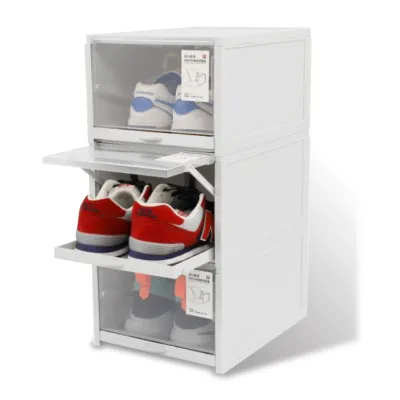
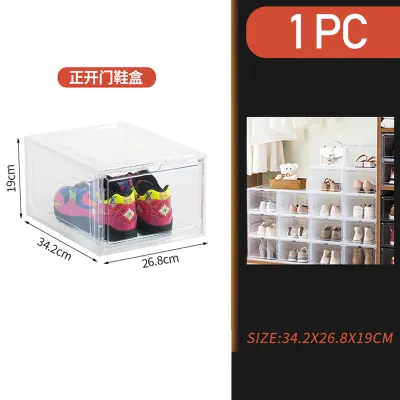
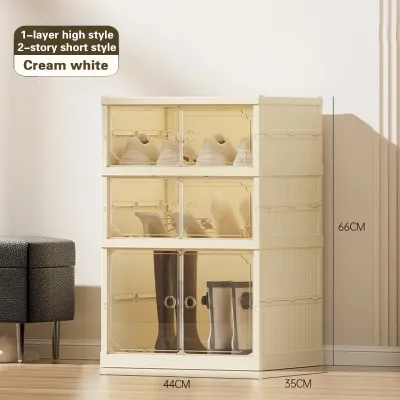
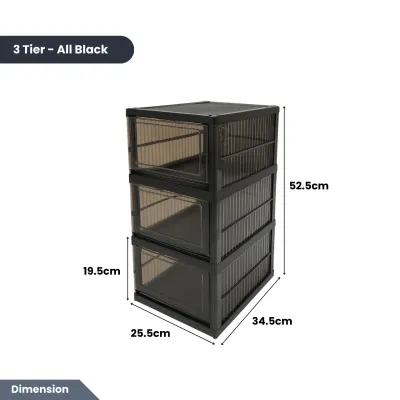
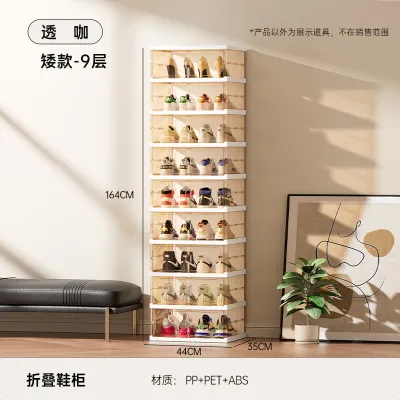
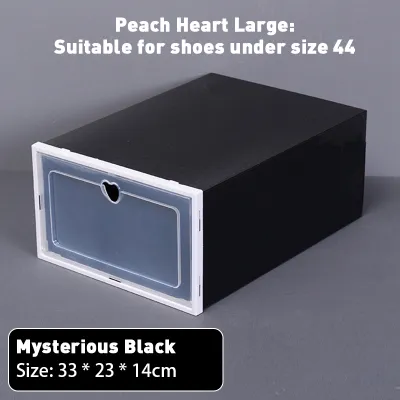
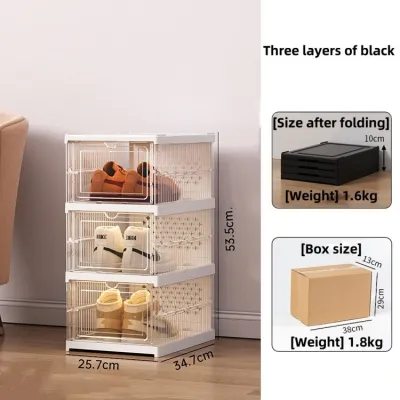
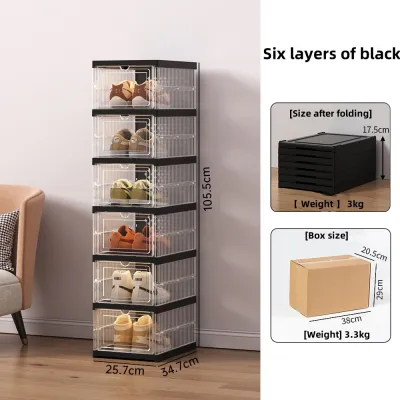
Prices are valid at publication and may change. Please refer to the product page for the latest price.
Finally, factor in future household growth and lifestyle changes. If you have young children, their shoe sizes will increase rapidly over the coming years, meaning storage units that fit their shoes today will be too small tomorrow. If anyone in the household plans to take up new outdoor hobbies, sports, or fitness routines, you must anticipate the addition of specialized footwear. To ensure your storage system remains functional over time, it is wise to build in a buffer of at least 10% to 15% beyond your current shoe count.
Understand Shoebox Storage Dimensions and Configurations
Understanding the physical dimensions and configurations of shoebox storage units is crucial to ensuring your footwear actually fits. Standard stackable boxes are widely available, but they may not accommodate larger shoe sizes or high-top designs. Oversized units are designed for larger shoe sizes, typically accommodating up to men’s US size 13 or 14. Drop-front configurations are highly recommended for vertical stacks because they feature a front-opening door, allowing you to retrieve a pair of shoes from the bottom of a stack without moving the boxes above it.

Before purchasing any storage units, measure the longest and tallest shoes in your collection. Use a measuring tape to find the exact length, width, and height of your bulkiest pairs, such as high-top sneakers, platform heels, or heavy work boots. Compare these measurements against the internal dimensions specified by the manufacturer, rather than the external footprint. A common mistake is assuming a box will fit your shoes based on its external size, only to find that the internal frame or door mechanism reduces the usable space, forcing you to store shoes sideways or angled.
You must also evaluate the structural limits of the storage units. Stackable plastic boxes rely on interlocking mechanisms to remain stable when arranged vertically. Check the manufacturer’s specifications for the maximum recommended stack height and weight capacity. Rigid acrylic or heavy-duty polypropylene boxes offer greater structural integrity than thin, flexible plastics. To maintain stability, always place your heaviest footwear, such as leather boots or formal dress shoes, in the bottom row of your stack to keep the center of gravity as low as possible.
Calculate the Required Number of Units and Plan the Layout
Translating your shoe inventory into a specific number of storage units requires a straightforward calculation. Start with your total number of active shoe pairs, add your occasional and seasonal footwear, and include your guest slippers. Multiply this total by 1.15 to account for a 15% future expansion buffer. For example, if your household has 35 pairs of active shoes, 10 pairs of occasional shoes, and 5 pairs of guest slippers, your baseline is 50 pairs. Multiplying by 1.15 gives you a target of 58 individual shoebox storage units.
Once you have your target number, you must plan how these units will physically fit into your home. Measure the available floor space, wall height, and depth in your designated storage area, such as an entryway foyer, a hallway, or inside a built-in wardrobe. Be sure to account for practical constraints like door swings, light switches, electrical outlets, and baseboards. In Singapore, where residential layouts often feature compact entryways or narrow corridors, it is vital to ensure your stacked storage does not obstruct walkways or violate building safety guidelines regarding clear evacuation paths.
A modular layout offers a practical balance of capacity and stability. If you need 60 units, arranging them in a grid of six columns wide and ten rows high is generally much safer and more stable than creating three towering columns of twenty. If your available wall space is limited, you can split the storage across multiple zones, placing daily-wear shoes in a smaller stack near the main door and storing occasional-use footwear in a closet or household shelter. When planning a modular setup, select a standard, widely available box model so you can easily purchase matching units as your collection grows.
Common Capacity Planning Mistakes to Avoid
One of the most common capacity planning mistakes is confusing the external footprint of a storage box with its actual internal usable space. Manufacturers often advertise the external dimensions to help buyers plan floor space, but interlocking tabs, reinforced corners, and front-door frames can reduce the internal width and height by one to two centimeters. Always look for the internal clearance specifications to avoid purchasing boxes that are slightly too narrow or short for your footwear.
Another critical error is ignoring ventilation requirements, which can lead to moisture traps. In humid climates like Singapore, storing shoes that are damp from sweat or rain in completely sealed plastic boxes creates a conducive environment for mold, mildew, and bad odors. This moisture trap can degrade shoe materials, causing soles to crumble or faux leather to peel. To prevent this, choose storage units designed with ventilation holes, slotted doors, or breathable rear panels that promote continuous airflow, and ensure your shoes are completely dry before putting them away.
Lastly, failing to secure tall stacks poses a significant safety hazard. As stackable shoeboxes are piled higher, the risk of tipping increases, especially if the floor is slightly uneven or if the stack is subjected to accidental bumps. Always verify the manufacturer’s guidelines regarding maximum stack heights. If your planned layout requires stacking boxes above chest height, check if the units can be anchored to the wall or if they feature interlocking connectors on all four sides. Never compromise on stability for the sake of saving floor space.
Frequently Asked Questions (FAQ)
How do I store oversized footwear like tall boots in standard shoebox storage?
Standard shoebox storage units are rarely tall enough to accommodate ankle boots, mid-calf boots, or knee-high boots without folding or bending the shafts, which can cause permanent creasing and damage to the material. To store these items safely, look for specialized extra-tall boot boxes or modular storage units with adjustable or removable internal shelves. If rigid boxes are not an option, consider using plastic boot shapers to keep the shafts upright and placing them on open shelving, or utilizing hanging boot organizers inside a wardrobe. Always check the internal height specifications of any storage unit before purchasing to ensure it can accommodate your tallest footwear.
Is it better to buy a large modular shoe cabinet or individual stackable shoeboxes?
The choice between a large modular shoe cabinet and individual stackable shoeboxes depends on your living arrangements, space constraints, and aesthetic preferences. A large, freestanding or built-in wooden shoe cabinet offers a clean, seamless look that hides clutter and provides excellent structural stability, making it a solid choice for permanent homeowners with dedicated entryway space. On the other hand, individual stackable shoeboxes offer unmatched flexibility and scalability. They are highly portable, making them highly suitable for renters, and they allow you to customize your storage layout to fit awkward spaces, such as under stairs or inside narrow closets, where a standard cabinet simply would not fit.

Community discussion
Share your experience or ask a question. Comments are reviewed before publication.