
Finding the right shoe rack with doors in Singapore involves balancing aesthetic preferences, budget constraints, and the unique challenges of a tropical climate. Because there is no single brand that serves as a universal winner for every household, the most reliable approach is to evaluate options based on material stability, hardware durability, and ventilation design. Enclosed shoe cabinets are excellent for maintaining a clean, clutter-free entryway, but they can also trap moisture and odors if not chosen carefully. By understanding how different brand tiers construct their furniture, you can select a unit that keeps your footwear organized, accessible, and well-protected.
What to Look for in a Shoe Rack with Doors
When shopping for an enclosed shoe cabinet, the local climate must be your primary consideration. Singapore’s high relative humidity means that poorly sealed materials can easily absorb moisture from the air, leading to warping, swelling, and the growth of mold. Look for materials that offer high moisture resistance. While solid wood is highly durable, it must be treated with a protective sealant. For engineered wood options, high-density fiberboard or melamine-faced particle boards with robust edge-banding perform significantly better than basic, untreated paper-foiled alternatives.
Structural integrity is another critical factor. A single pair of shoes might seem light, but filling a cabinet with twenty or thirty pairs adds substantial weight. Check the manufacturer’s specifications for shelf load capacities. A quality shoe rack should feature sturdy shelves that do not sag under load, supported by a rigid back panel that prevents the entire unit from swaying or leaning over time.
Products mentioned in this guide
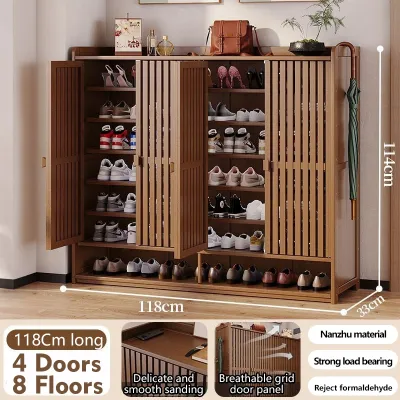
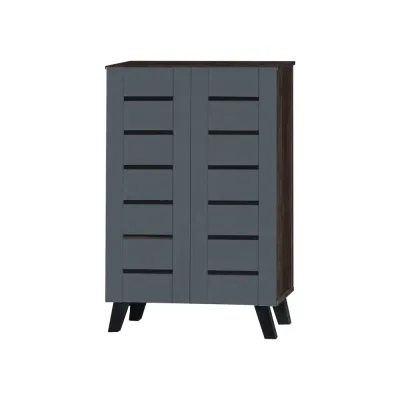
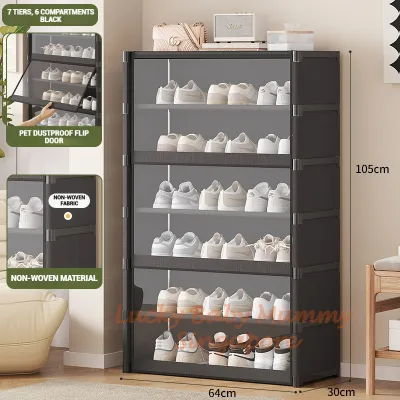
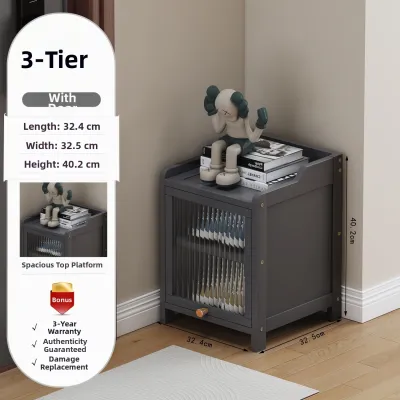
![[OKLIFE. SG]Narrow Door Shoe Rack Shoe Cabinet Shoe Rack Multi-layer Shoes Rack](https://img.lazcdn.com/g/p/d92e84bb5966102511923716c0970224.jpg_400x400q80.jpg_.webp)
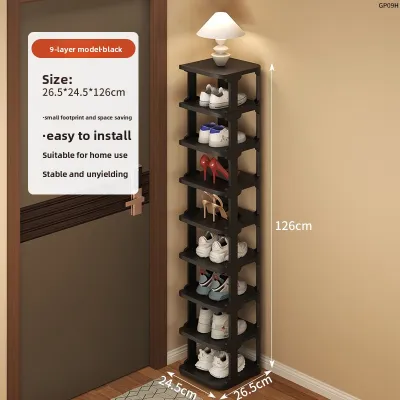
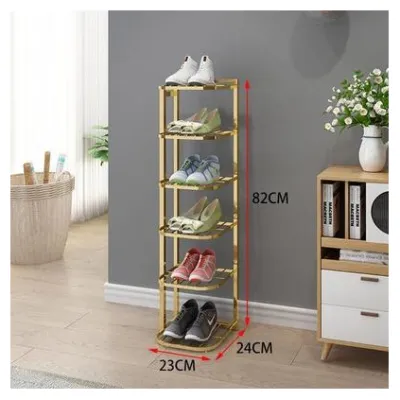
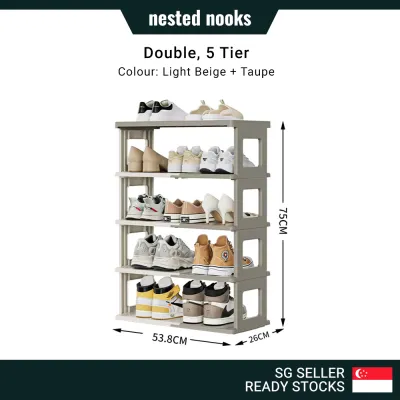
Prices are valid at publication and may change. Please refer to the product page for the latest price.
Finally, ventilation is non-negotiable for enclosed shoe storage. Without proper airflow, damp shoes worn during a sudden afternoon downpour will trap moisture inside the cabinet, creating an ideal environment for bacteria and musty odors. Look for design features such as louvered doors, cut-outs in the back panel, or internal gaps between the shelves and the cabinet frame that encourage continuous air circulation.
Comparing Brand Tiers Available in Singapore
To make an informed purchase, it helps to categorize the available options in the local market into three distinct brand tiers: mass-market flatpack retailers, mid-range solid-wood specialists, and custom built-in providers.

Mass-market flatpack brands are highly popular due to their affordability, modern minimalist designs, and immediate availability. These units are typically constructed from engineered wood, such as particle board or medium-density fiberboard, finished with a thin laminate or paper foil. While they are highly budget-friendly and easy to transport, they have structural limitations. The joints, often held together by standard cam locks and wooden dowels, may loosen over time with frequent relocation. Additionally, these materials are highly sensitive to moisture; if placed near a damp entryway or an open balcony, the edges may swell and peel.
Mid-range and solid-wood specialists offer a significant step up in build quality and material density. These brands typically utilize solid timber—such as rubberwood, oak, or teak—or premium plywood finished with real wood veneers. The construction methods are more robust, often featuring reinforced joints, heavy-duty screws, and superior surface treatments that resist scratches and light moisture. While these units require a higher initial investment, they offer excellent stability, do not wobble when fully loaded, and can last for decades with basic care.
Custom and built-in providers represent the premium tier of home storage. Instead of buying a freestanding piece of furniture, homeowners work with interior designers or carpentry workshops to build a tailored shoe cabinet directly into the entryway. This approach allows for complete customization of dimensions, materials, and internal layouts. You can integrate full-height storage, seating benches, and specialized lighting. The hardware used in custom carpentry is typically of a much higher grade, featuring soft-close mechanisms and heavy-duty hinges. However, this option requires a substantial financial investment, involves longer lead times, and cannot be moved if you relocate.
Evaluating Door Mechanisms and Ventilation
The doors of a shoe cabinet are its most active components, subjected to multiple openings and closings every single day. Therefore, evaluating the quality of the door mechanisms is crucial for long-term satisfaction. Look for units equipped with soft-close hydraulic hinges. These hinges prevent the doors from slamming shut, which not only reduces noise but also protects the cabinet frame and door joints from structural wear.
When inspecting a cabinet in a showroom or reviewing product specifications, check if the hinges are adjustable. High-quality cabinets use three-way adjustable hinges that allow you to fine-tune the door alignment vertically, horizontally, and in depth. Over time, as a building settles or the cabinet carries a heavy load, doors can sag or become misaligned. Adjustable hardware ensures you can easily correct these issues with a simple screwdriver, preventing the doors from scraping against the frame.
Air circulation is the other half of the durability equation. Louvered doors, which feature overlapping angled slats, are the gold standard for enclosed shoe racks because they allow continuous airflow while keeping the contents completely hidden from view. If you prefer solid doors for a sleeker look, ensure the cabinet has alternative ventilation paths. This could include a generous gap at the bottom of the cabinet, ventilation grilles installed on the side panels, or an open-back design that allows air to escape behind the unit.
Pre-Purchase Space and Clearance Checks
Before committing to a specific shoe rack, precise measurements of your entryway are essential to avoid delivery and installation headaches. Begin by measuring the available floor width and depth. Do not forget to account for skirting boards along the base of your walls. A skirting board can prevent a flat-backed shoe cabinet from sitting flush against the wall, requiring you to factor in an extra centimeter or two of clearance.
Next, measure the door swing clearance. Ensure that when the cabinet doors are fully open, they do not block your main entrance door, metal gate, or narrow hallway passages. If space is exceptionally tight, consider alternative door styles, such as sliding doors or tilting shoe drawers, which require minimal front clearance to access your footwear.
Equally important is checking the internal dimensions of the shelves. Standard shoe cabinets typically have an internal depth of around 32cm to 35cm, which accommodates most shoe sizes. However, if anyone in your household wears larger shoe sizes or high-heeled shoes, you must verify that the internal depth is sufficient to store the shoes straight. Placing shoes at an angle significantly reduces the cabinet’s overall storage capacity. Finally, verify the delivery access routes. Measure your lift doors, elevator interior dimensions, and stairwell clearances to ensure the delivery team can safely transport the unit to your home, especially if you are purchasing a pre-assembled solid wood cabinet.
Decision Framework: Which Brand Tier Fits Your Home?
To determine which brand tier is the right fit for your household, consider your current living situation, budget, and long-term plans.
You should choose mass-market flatpack brands if you are currently renting, plan to move in the near future, or are working with a strict budget. These units are highly cost-effective, easy to replace, and lightweight enough to move around. To maximize their lifespan, place them in dry areas of the home, avoid overloading the shelves, and handle the doors gently.
You should choose mid-range solid-wood brands if you own your home, prioritize long-term durability, and want a freestanding piece of furniture that adds warmth and character to your entryway. These cabinets offer superior stability, resist moisture better, and can withstand the daily wear and tear of a busy household.
You should choose custom built-in providers if you have an awkward entryway layout, require maximum storage capacity from floor to ceiling, or want a seamless, integrated look that matches your overall home interior design. This option is ideal for homeowners undergoing a complete renovation who want to invest in permanent, high-quality storage solutions.
Regardless of the tier you choose, always verify the retailer’s warranty terms before making a purchase. A reliable brand should offer clear, documented warranties covering structural defects, joint stability, and door hardware like hinges and tracks. This ensures your investment remains protected against premature wear.
Frequently Asked Questions (FAQ)
How do I prevent mold inside an enclosed shoe rack?
To prevent mold growth in Singapore’s humid climate, never store damp or wet shoes inside an enclosed cabinet. Allow your shoes to air-dry completely in a well-ventilated area before putting them away. Additionally, place moisture-absorbing products, such as activated charcoal bags or disposable dehumidifier tubs, on the shelves to capture excess moisture. Regularly wipe down the interior of the cabinet with a dry cloth and leave the doors open for a few hours during dry days to encourage complete air exchange.
Can I adjust the shelves for tall boots?
Many modern enclosed shoe racks feature adjustable shelves, but you must verify this in the product specifications before purchasing. Look for units that use adjustable shelf pins, which allow you to raise, lower, or completely remove individual shelves to accommodate taller footwear like boots or high heels. If the cabinet has fixed shelves, measure the vertical clearance between each shelf to ensure your tallest shoes will fit comfortably without being bent or compressed.

Community discussion
Share your experience or ask a question. Comments are reviewed before publication.