
Finding the perfect entryway storage solution often comes with a frustrating realization: the shoe rack you bought does not hold nearly as many pairs as the manufacturer promised. Most brands advertise storage capacity based on a best-case scenario, usually assuming small, low-profile shoes like flat sandals or slim loafers stored side-by-side without any gaps. If your collection consists of chunky trainers, high-top sneakers, or boots, or if you prefer keeping your footwear protected inside a shoebox, the actual capacity of your rack can drop by as much as 30% to 50%.
In Singapore, where entryway space in HDB flats and condominiums is highly optimized, choosing the wrong storage unit leads to cluttered corridors and obstructed doorways. To avoid a mismatched purchase, you must look past the marketed “pair capacity” and analyze the raw internal dimensions of the furniture. Understanding how different rack designs accommodate various shoe styles and box sizes is the key to maintaining an organized, functional foyer.
Decoding Shoe Rack Capacity: Pairs vs. Shoeboxes
When a brand labels a product as a “12-pair shoe rack,” they are using a standardized industry estimate. This estimate typically assumes a standard shoe width of 18 to 20 cm and a height of under 10 cm per pair. This formula works well for lightweight footwear, but it completely falls apart when applied to modern streetwear, athletic shoes, or formal wear, which require significantly more physical volume.
Products mentioned in this guide
Prices are valid at publication and may change. Please refer to the product page for the latest price.
Storing shoes inside a shoebox changes the spatial math entirely. A standard cardboard box for a men’s US size 10 sneaker measures approximately 33 cm in length, 20 cm in width, and 12 cm in height. This means the box itself adds an extra 2 to 3 cm of width and height compared to storing the shoes loose. For oversized basketball shoes, high-top boots, or designer heels, the packaging is even larger, often reaching 36 cm in length and 14 cm in height. Storing shoes in their original boxes protects them from dust and Singapore’s high humidity, but it drastically reduces the number of pairs you can fit on a single shelf.
To recalculate a brand’s marketed capacity for your own collection, you can use a simple spatial framework. First, identify whether you will store your shoes loose or boxed. If you plan to use boxes, divide the total internal width of the shelf by the average width of your boxes (usually 20 to 22 cm) rather than the manufacturer’s estimated shoe width. If a shelf is 80 cm wide, it might comfortably hold four pairs of loose women’s flats, but it will only accommodate three standard boxes. Additionally, you must ensure the vertical clearance between shelves is at least 13 to 15 cm to allow the boxes to slide in and out without scraping the shelf above.
Real-World Capacity of Popular Shoe Rack Designs
Different structural designs handle the trade-off between physical footprint and actual storage volume in unique ways. Choosing the right style depends on whether you prioritize quick access, modular expansion, or complete dust protection.

Freestanding and Tiered Racks
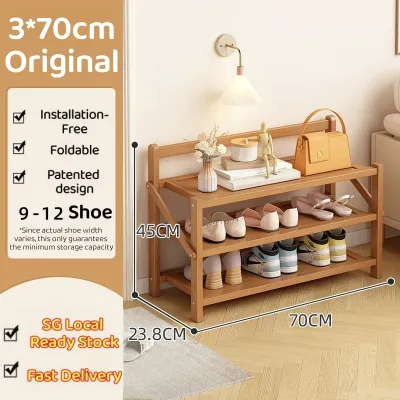
Open-tiered racks made of metal, wood, or plastic are highly popular due to their affordability and excellent ventilation. However, their real-world capacity is highly dependent on whether the shelf heights are fixed or adjustable. Fixed-tier racks, which commonly feature a rigid 15 cm clearance between shelves, are highly inefficient; they waste valuable vertical space when holding flat sandals, yet they are too short to accommodate high-top sneakers or boot boxes.
When selecting a freestanding rack, look for models that offer adjustable shelf heights or removable panels. This flexibility allows you to condense shelves for low-profile shoes and open up larger gaps for bulky items or cardboard boxes. Keep in mind that open racks require sturdy frame construction to prevent wobbling, especially if you stack heavy boxes on the upper tiers. Always verify the manufacturer’s specified load capacity per shelf to ensure the frame can support your collection without sagging over time.
Modular and Stackable Storage Cubes
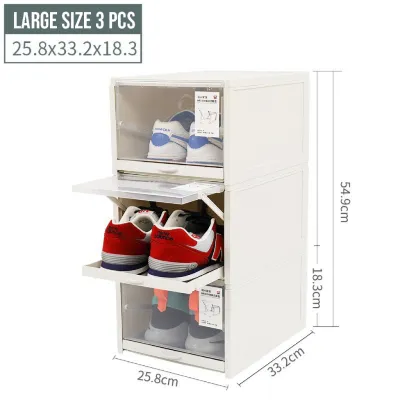
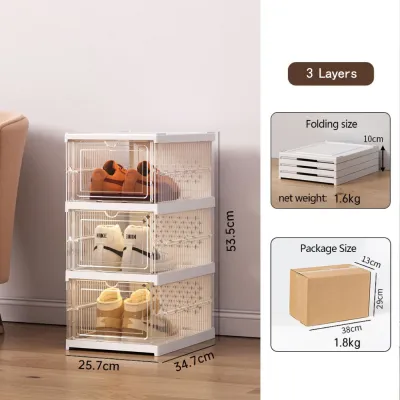
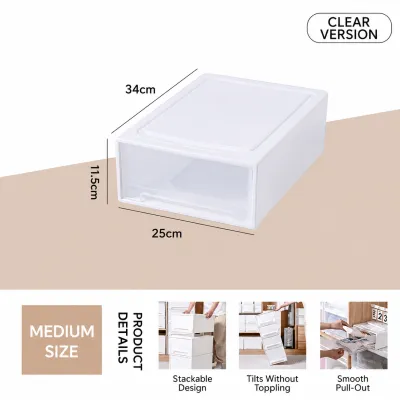
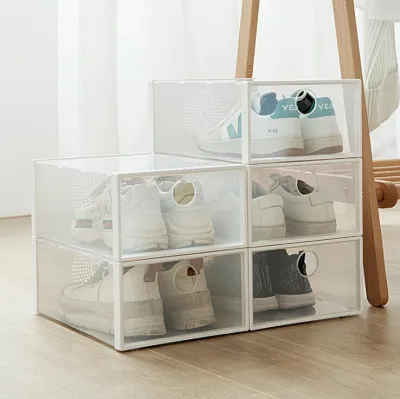
Modular plastic or acrylic storage cubes have become the go-to choice for sneaker collectors who want to display their shoes while keeping them organized. The general rule for these systems is “one pair or one standard shoebox per cube.” This one-to-one ratio makes it incredibly easy to calculate your total storage capacity and allows you to expand your setup incrementally as your collection grows.
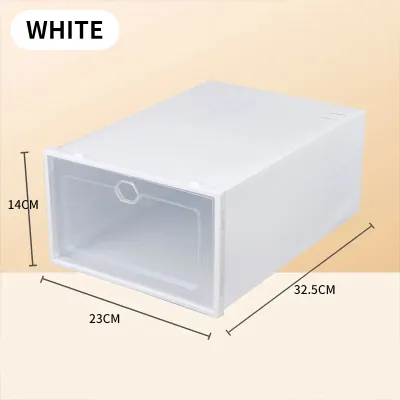
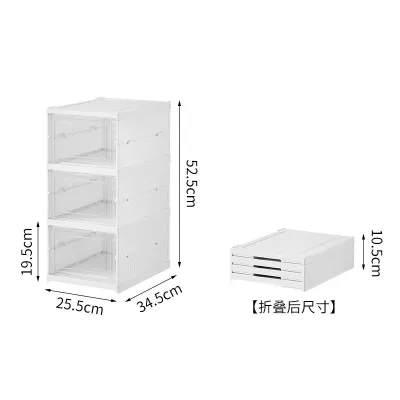
Before purchasing a modular system, you must carefully check the internal depth of the individual cubes. Many budget-friendly plastic cubes sold on online marketplaces have an internal depth of only 30 cm. While this accommodates smaller shoe sizes, a men’s US size 11 running shoe or a standard athletic box requires a minimum internal depth of 34 cm to allow the front door of the cube to snap shut. Look for premium, reinforced acrylic display boxes that feature magnetic front-drop doors and an internal depth of at least 35 cm to ensure compatibility with all footwear styles.
Enclosed Cabinets and Drawers
Enclosed shoe cabinets are favored for their clean, minimalist aesthetic and their ability to hide footwear clutter from view. They are particularly useful in Singapore’s humid climate, as they protect leather and suede shoes from direct exposure to airborne dust and moisture. However, enclosed cabinets require the most precise measurements because there is zero margin for error once the doors are closed.
When evaluating an enclosed cabinet, look past the external depth and focus entirely on the internal shelf depth and door clearance. A cabinet with an external depth of 35 cm might only offer an internal usable depth of 31 cm once you subtract the thickness of the back panel and the front doors. If your original cardboard boxes are 33 cm long, they will prevent the cabinet doors from closing fully. To solve this, look for cabinets with adjustable internal shelves that can be tilted downward, which allows longer shoes and boxes to fit within a shallower cabinet footprint.
How to Measure Your Space and Shoe Collection
To ensure your new shoe storage unit fits both your home layout and your footwear collection, you must follow a systematic measurement process before making a purchase.
- Step 1: Measure your largest footwear items. Gather your longest, widest, and tallest shoes or boxes. Use a measuring tape to record the maximum length from heel to toe, the widest part of the sole, and the total vertical height. If you plan to store your shoes inside their original packaging, measure the outer dimensions of the largest shoebox in your collection instead of the shoes themselves. This establishes the absolute minimum internal shelf depth and height you require.
- Step 2: Assess your entryway layout. Measure the physical floor space where the rack will stand. In typical Singapore apartments, entryways are often narrow corridors or shared foyers. Measure the available wall length and depth, taking care to account for skirting boards, which can push a flat-backed cabinet 1 to 2 cm away from the wall. Ensure there is at least 90 cm of clear walkway width in front of the proposed location to allow for comfortable foot traffic and to comply with local corridor safety guidelines.
- Step 3: Calculate clearances and door swings. If you are buying an enclosed cabinet, measure the swing radius of the doors or the pull-out distance of the drawers. Ensure that opening the cabinet does not block the main entrance door, the bomb shelter door, or adjacent room access. Additionally, if you are opting for a tall, narrow cabinet to maximize vertical space, verify that you have solid wall space to install anti-tip anchoring hardware, which is essential for maintaining stability.
Always prioritize a product’s internal dimensions over its external footprint or marketed pair claims. A cabinet may look spacious on the outside, but thick wooden frames, middle dividers, and fixed shelf brackets can significantly reduce the actual usable storage area.
Common Sizing Mistakes When Buying a Shoe Rack
Avoiding a few common pitfalls during the shopping process can save you the hassle of returning a heavy piece of furniture or dealing with a cluttered entryway.
- Assuming all shelves are adjustable: Many buyers purchase multi-tier cabinets assuming they can customize the layout of every shelf. In reality, many models feature one or two fixed shelves that serve as vital structural supports to keep the frame stable. If these fixed shelves are spaced too closely together, you will be unable to store taller boots or boxes on those levels.
- Ignoring the width of chunky footwear: A shelf that is 90 cm wide is often marketed as holding four pairs of shoes. However, chunky trainers, wide-sole running shoes, or men's formal dress shoes can easily measure 24 cm in width per pair. When placed side-by-side, three pairs of these shoes will occupy 72 cm of space, leaving an 18 cm gap that is too narrow for a fourth pair. This effectively turns a four-pair shelf into a three-pair shelf, reducing the rack's overall capacity by 25%.
- Forgetting frame and hardware thickness: The product dimensions listed on retail websites represent the outermost edges of the unit. A shoe cabinet listed at 80 cm wide might have side panels that are 2 cm thick on each side, reducing the internal shelf width to 76 cm. Furthermore, internal hardware such as magnetic door catches, hinges, and shelf support pegs often protrude into the storage space, blocking shoes or boxes placed at the far ends of the shelves.
- Neglecting ventilation and material checks: In humid tropical climates, storing damp or dirty shoes in an airtight, enclosed wooden cabinet is a recipe for mold growth and unpleasant odors. When buying an enclosed cabinet, check for built-in ventilation features such as slatted doors, open back panels, or mesh grilles. If you are choosing a wooden cabinet, verify that the material has a moisture-resistant laminate or sealed finish, as untreated particle board can warp and swell when exposed to damp soles or wet umbrellas near the entryway.
Frequently Asked Questions (FAQ)
Can I store shoes in their original shoeboxes on any rack?
No, original cardboard boxes will not fit on every type of shoe rack. Open-tiered racks with adjustable shelf heights and deep modular storage cubes are highly compatible because they easily accommodate the extra height, width, and depth of a standard shoebox.
Conversely, you should avoid using shallow tilt-out cabinets, narrow shoe benches, or low-clearance wire racks for boxed storage. These space-saving designs are engineered specifically for loose, low-profile footwear; attempting to force large cardboard boxes into them will prevent doors from closing, block sliding mechanisms, or leave the boxes protruding awkwardly into your walkway.
How do I maximize shoe rack capacity in a small apartment entryway?
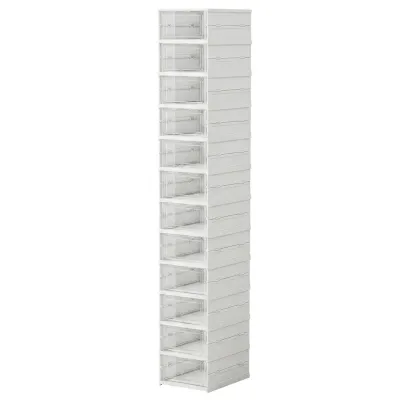
To maximize storage in a compact foyer, focus on vertical space by choosing a tall, narrow cabinet rather than a wide, low-profile rack. Ensure the unit is securely anchored to the wall to maintain stability and safety.
To double your usable shelf capacity, remove bulky cardboard boxes for your everyday footwear and utilize slim, double-decker shoe slots or stackers, which allow you to store one shoe directly above the other. Reserve boxed storage exclusively for high-value collectibles, seasonal shoes, or delicate formal wear, and store those less-frequently worn boxes on the uppermost shelves of your cabinet or in a separate closet.
Community discussion
Share your experience or ask a question. Comments are reviewed before publication.