
Selecting the right shoe mat capacity is essential for maintaining an organized, clean, and dry entryway. As a general rule of thumb, you should allocate space on your shoe mat for 2 to 3 pairs of everyday shoes per household member, plus a buffer of 2 to 4 pairs for frequent guests. A shoe mat or entryway shoe tray functions primarily as an active daily drop zone rather than a long-term storage solution. Keeping this distinction in mind prevents your foyer from becoming overcrowded while ensuring your floors remain protected from outdoor dirt, moisture, and debris.
When determining the physical size of your mat, you must look beyond mere pair counts. The final dimensions of the mat must accommodate the actual physical footprints of your household’s most frequently worn footwear. Furthermore, the mat needs sufficient surface area or a raised border to successfully contain water runoff, mud, and grit. Balancing these factors allows you to choose a mat that fits your specific space constraints without sacrificing utility.
Calculating Daily Shoe Rotation by Household Size
To establish an accurate capacity requirement, you must first distinguish between your total shoe collection and your active daily rotation. Many homeowners make the mistake of sizing their entryway storage to fit every shoe they own. This approach inevitably leads to an oversized mat that dominates the foyer and disrupts the flow of your home. A shoe mat is meant to catch the shoes currently in use, while the rest of your collection should reside in closed shoe cabinets, closets, or secondary storage areas.
Products mentioned in this guide

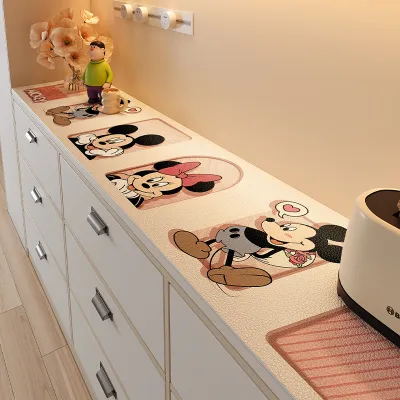
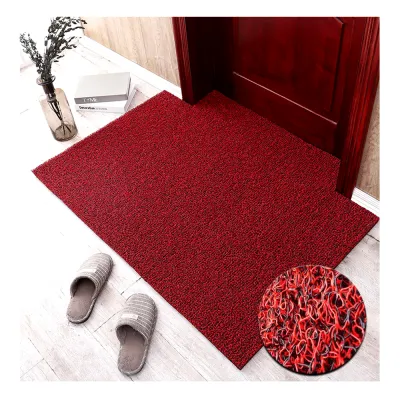
Prices are valid at publication and may change. Please refer to the product page for the latest price.
Conducting a simple entryway audit is the most effective way to determine your true daily rotation needs. Over the course of a typical week, observe how many pairs of shoes actually accumulate near the front door. You will likely find that regardless of how many pairs each family member owns, they consistently cycle through only a few favorites. This audit provides a realistic baseline for your capacity calculations and prevents you from purchasing a mat that is either wastefully large or frustratingly small.
Estimating Per-Person Everyday Footwear
For an individual household member, daily footwear needs generally consist of one pair of work or school shoes, one pair of casual sneakers or sandals, and perhaps a pair of athletic shoes. Even if a person owns dozens of pairs, they rarely keep more than two or three pairs in active rotation at any given time. Calculating your capacity based on these active pairs keeps your entryway tidy and prevents shoes from being piled on top of one another.
Applying this logic to different household sizes yields clear capacity targets. A household of two will typically require a shoe mat that holds 4 to 6 pairs of shoes. For a family of four, a capacity of 8 to 12 pairs is ideal to accommodate everyone’s daily footwear without overcrowding. By structuring your purchase around these realistic numbers, you ensure that every active shoe has a dedicated spot on the mat.
Factoring in Guests and Bulky Footwear
Your household’s daily shoes are only one part of the equation; you must also account for visitors and seasonal changes. If you frequently host extended family, friends, or neighbors, your entryway will experience sudden surges in footwear volume. Adding a permanent buffer of 2 to 4 pairs to your calculation prevents guest shoes from spilling onto your clean living room tiles or blocking the corridor outside your front door.
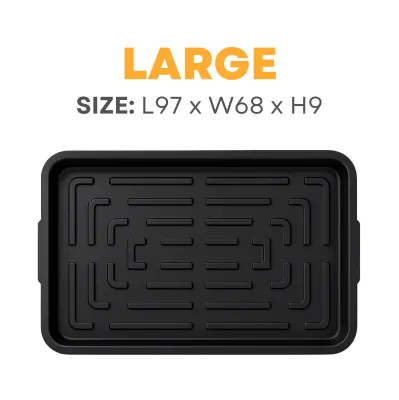
Additionally, the physical style of your footwear heavily influences the amount of space required. While flat sandals, slippers, and children’s shoes take up minimal surface area, bulky running shoes, high-top sneakers, and heavy boots demand significantly more room. During Singapore’s intense monsoon seasons, wet footwear and dripping umbrellas require extra containment. Selecting a deeper tray or a mat with a raised outer lip is crucial during these periods to prevent water from overflowing onto sensitive flooring like laminate, parquet, or polished marble.
Translating Shoe Pairs to Physical Mat Dimensions
Once you have calculated your required pair capacity, you must translate that number into physical dimensions that fit your home’s layout. Grab a measuring tape and map out your foyer, HDB entryway, or condominium landing. Take precise note of any structural pillars, built-in cabinetry, or floor transitions that might limit where the mat can lie flat.

To estimate the physical space required, consider that an average adult shoe footprint is approximately 25 to 30 centimeters long and 10 to 12 centimeters wide. A single pair of adult shoes placed side-by-side requires a footprint of roughly 25 to 30 centimeters in width and depth. Therefore, a mat designed to hold 4 pairs of shoes in a single row needs to be at least 100 to 120 centimeters wide. Always add a margin of 5 to 10 centimeters around the perimeter to ensure the shoes do not sit directly on the edge, allowing the mat’s border to effectively trap water and dirt.
Spatial constraints are critical in high-traffic entryways, particularly regarding door clearance. If your front door swings inward over the entryway, a thick mat will catch on the bottom of the door, preventing it from opening fully or scratching your floor. Measure the clearance between the bottom of the door and the floor tile before selecting a mat. If your clearance is less than 1 centimeter, you will need a low-profile, heavy-duty rubber or microfiber mat rather than a thick coir mat or a rigid plastic tray.
For narrow corridors or awkwardly shaped foyers, a single long rectangular mat may not be practical. In these scenarios, modular or interlocking mats offer an excellent alternative. You can piece them together to form an L-shape around a corner or line them up in a single file along a narrow hallway. Modular designs also allow you to scale your capacity up or down as your household size changes or when you expect a large group of visitors.
Evaluating Structural and Furniture Integration
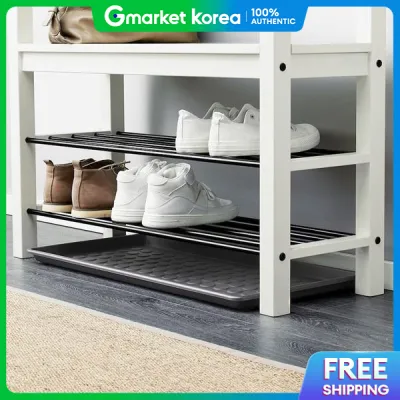
If you are considering a shoe mat that is integrated into an entryway bench or a multi-tier rack, you must evaluate several structural factors. First, verify the finished dimensions of the furniture piece to ensure it can pass through your doorway and lift access during delivery. A rigid, pre-assembled bench that is too large can cause significant logistical headaches.
For integrated seating benches, always check the manufacturer’s specified load capacity and stability. A high-quality entryway bench should support the weight of an adult sitting down to put on shoes without wobbling or sliding. Examine the joints and finish of any wooden or metal components; verify the manufacturer’s care instructions to ensure the materials can withstand wet shoes. For safety, taller or heavier multi-tier units should be anchored securely to the wall to prevent tip-over accidents, especially in active households.
Common Capacity and Sizing Mistakes to Avoid
Selecting a shoe mat seems straightforward, but several common pitfalls can ruin your entryway’s functionality and aesthetics.
Mistake 1: Sizing the mat for your entire shoe collection. The most frequent error is purchasing an oversized mat to accommodate every shoe your family owns. This turns your entryway into a cluttered visual eyesore and physically blocks the walkway. Keep your mat sized strictly for daily rotation, and store off-season or formal footwear in dedicated closed cabinets.
Mistake 2: Ignoring shoe height and bulk. If you purchase a shallow tray or a flat mat without considering the height and width of your family’s footwear, you will quickly run out of usable space. Bulky shoes will overlap, causing dirt from the sole of one shoe to fall onto the upper material of another. Ensure your mat has adequate depth, and look for models with raised edges or internal grid designs to keep shoes elevated above collected water.
Mistake 3: Forgetting to measure door clearance. Many homeowners purchase a beautifully textured, thick mat only to find that their front door cannot slide over it. Always measure your door’s bottom clearance. If your door swings inward over the mat area, choose an ultra-thin, slip-resistant mat that lies completely flat.
Before finalizing your purchase, run through this quick verification checklist:
- Measure the exact width and depth of your available floor space.
- Open your front door fully to verify the clearance height between the floor and the door bottom.
- Count the number of active shoes your household wears daily to determine your capacity needs.
- Check if the mat's backing material is compatible with your floor type to prevent discoloration.
- Confirm that the mat is easy to clean and maintain, especially if you expect heavy rain runoff.
Frequently Asked Questions (FAQ)
Should I buy one large shoe mat or multiple smaller ones?
A single large shoe mat provides a clean, seamless look and ensures superior water containment since there are no gaps where moisture can seep through to your floor. This is ideal for spacious, rectangular entryways. However, multiple smaller mats or individual trays offer unmatched flexibility. They are much easier to pick up, shake out, and clean individually. Smaller mats are also highly adaptable to tight, irregular, or narrow layouts, allowing you to position them exactly where shoes are naturally kicked off.
How do I manage a shoe mat that holds a high capacity of muddy shoes?
High-capacity shoe mats require active maintenance to prevent odor, mold, and dirt tracking. Look for mats designed with deep molded grooves, raised outer lips, or removable scraping inserts that trap dirt below the shoe-sole level. For daily maintenance, a quick outdoor shake-out or a vacuuming session will remove loose dust and dry soil. On a weekly basis, or after heavy rainstorms, wash the mat down with water and a mild detergent, ensuring it dries completely before placing it back on your floor to protect your entryway tiles or wood from trapped moisture.
Community discussion
Share your experience or ask a question. Comments are reviewed before publication.