
Finding the right shoe cabinet capacity requires balancing your household’s actual footwear inventory with the physical limits of your entryway. To calculate your target capacity, multiply the number of active, daily-use shoes per household member by the number of residents, then add a twenty percent buffer for guests and future purchases. This total pair count dictates the required linear shelf space and the physical dimensions of the cabinet you can realistically install. By systematically auditing your collection, measuring your space, and understanding shelf configurations, you can select a storage solution that keeps your home organized and clutter-free.
Audit Your Household's Current and Future Shoe Inventory
Start by gathering every pair of shoes currently owned by your household. Group them into distinct categories: daily wear, formal shoes, seasonal footwear, and specialty sports gear. This physical tally often reveals that a significant portion of your collection does not need to live in the primary entryway cabinet.
Separate your active inventory from your passive storage. Daily-access cabinets should ideally hold only the shoes worn multiple times a week, such as work shoes, school shoes, and common sneakers. Formal heels, heavy hiking boots, or seasonal footwear can be clean-stored in under-bed boxes, closets, or secondary storage areas to free up premium foyer space.
Products mentioned in this guide
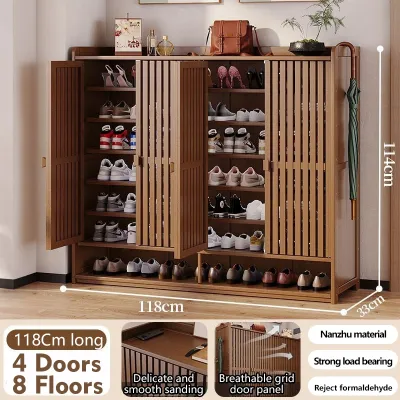
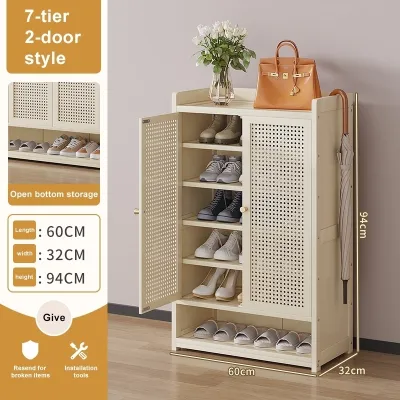
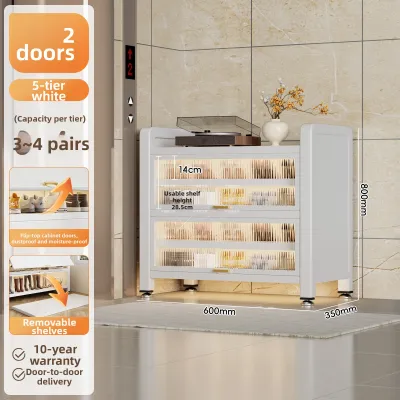
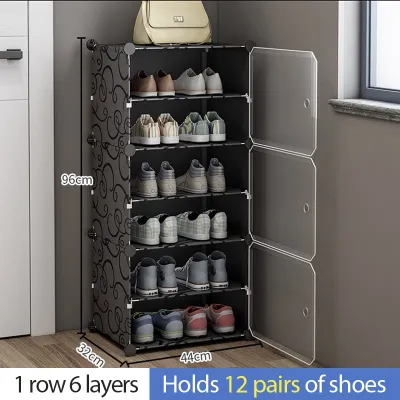
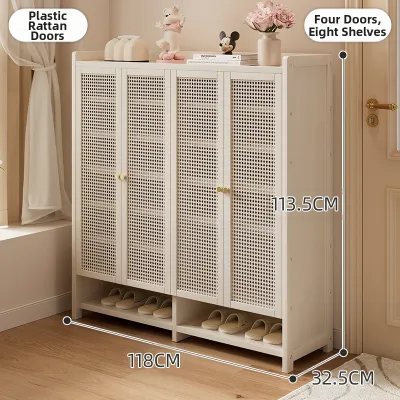
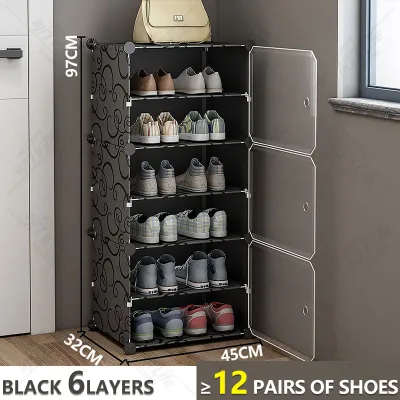
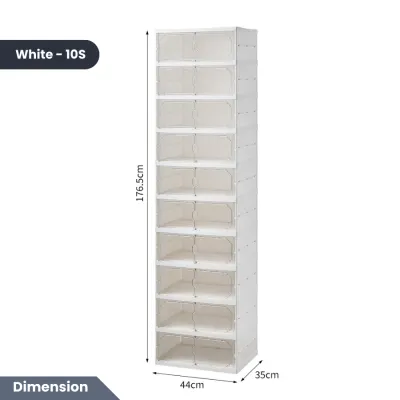
Prices are valid at publication and may change. Please refer to the product page for the latest price.
Anticipate household changes over the next three to five years. If you have young children, their shoe sizes will increase rapidly, requiring wider and taller shelf allocations. Similarly, planning for a new family member or accommodating regular long-term guests means your storage needs will inevitably expand.
Consider the local climate and lifestyle factors when auditing your collection. In tropical environments like Singapore, sudden downpours are common, meaning you will frequently have damp or wet footwear. Allocating a specific, well-ventilated lower shelf or an open bottom rack for drying wet shoes prevents moisture from damaging the main cabinet structure and other dry pairs.
Measure Your Available Space and Clearance Limits
Before browsing cabinet designs, measure the exact physical boundaries of your designated entryway zone. Use a metal measuring tape to record the maximum width, depth, and height available. Remember to account for the thickness of skirting boards along the floor, as these can prevent a flat-backed cabinet from sitting flush against the wall unless the unit features a bottom cutout.

Evaluate the clearance required for daily movement and cabinet operation. In typical apartment layouts, such as Singapore HDB flats or condominiums, entryways can be narrow corridors. Ensure that when the cabinet doors are fully open, there is still comfortable clearance for family members to walk past. Measure the door swing radius of hinged doors, or consider sliding doors and open-front racks if space is exceptionally tight.
Identify structural obstacles that cannot be moved. Look for low-mounted electrical outlets, light switches, fiber interface points, intercom units, or distribution board (DB) boxes. A tall cabinet must not block access to these utilities, and you must ensure there is sufficient clearance to plug in appliances or open utility doors without moving the entire furniture piece.
Do not forget to verify delivery and installation logistics. Measure your home’s doorway width, hallway turns, and lift cabin dimensions to ensure the finished cabinet can be safely transported into your home. If you live in a high-rise building, a fully assembled, extra-large cabinet might not fit in the elevator, requiring you to opt for flat-packed furniture that is assembled directly inside your entryway.
Convert Your Shoe Count into Tiers and Shelf Dimensions
To translate your target shoe count into physical cabinet tiers, you must understand average shoe dimensions. A standard pair of men’s shoes typically requires about 22 to 25 centimeters of horizontal shelf width, while women’s shoes require approximately 18 to 22 centimeters. Divide the internal width of a prospective cabinet shelf by these averages to estimate how many pairs will fit on a single tier.
Standard flat shelves require a cabinet depth of at least 30 to 35 centimeters to accommodate average adult shoe lengths comfortably. If your household has larger shoe sizes, verify the internal depth rather than the external depth, as cabinet back panels and doors consume usable space. For exceptionally tight entryways, slanted shelves can reduce the required cabinet depth to 20 centimeters or less, though this design reduces the vertical clearance available for taller footwear.
Varying shoe heights require flexible vertical spacing. Standard sneakers and flats fit comfortably on shelves spaced 15 centimeters apart. However, high-top sneakers, ankle boots, and high heels require 20 to 30 centimeters of vertical clearance. Look for cabinets with pre-drilled peg holes that allow you to adjust individual shelf heights to prevent crushing delicate shoe collars or bending boot shafts.
Pay close attention to the load capacity and stability of the shelves. Long, unsupported shelves can sag over time under the weight of multiple heavy leather shoes or boots. Check the manufacturer’s specifications for maximum weight limits per shelf, and look for units with central support brackets or thicker shelf boards if you plan to store heavy footwear.
Evaluate Design Features That Impact Usable Capacity
Many modern shoe cabinets incorporate multi-functional features that can significantly alter their actual storage capacity. Built-in seating benches, top drawers for keys, or integrated umbrella stands are highly convenient but directly reduce the volume available for shoe shelves. If you opt for a hybrid unit, subtract the space allocated to these features from your total capacity calculations.
The mechanism of the cabinet doors also dictates both internal capacity and external usability. Hinged doors offer full, unobstructed access to all shelves simultaneously but require clear floor space in front of the unit. Sliding doors or pull-down tipping buckets save external floor space but can limit internal visibility or restrict the maximum height of the shoes you can store inside each compartment.
Prioritize structural stability and safety features, especially for tall or narrow cabinets. High-capacity units with a shallow depth are prone to tipping over when multiple heavy pairs are stored on the upper shelves or when doors are pulled open quickly. Ensure the cabinet includes wall-anchoring hardware, and verify that your entryway wall material can securely support these anchors.
Evaluate the ventilation design of the cabinet to protect your footwear. Closed cabinets in humid climates can trap moisture and stagnant air, creating an environment prone to mold, mildew, and unpleasant odors. Look for cabinets with louvred doors, open mesh panels, or back ventilation cutouts that promote continuous airflow while keeping your shoes out of sight.
Frequently Asked Questions (FAQ)
How much extra capacity should I plan for?
It is highly recommended to plan for a twenty percent capacity buffer beyond your current active shoe count. This extra space easily accommodates new footwear purchases, seasonal rotations, and temporary storage for guests’ shoes when hosting gatherings. If you frequently host visitors, dedicating a specific lower tier or an adjacent small rack for guest slippers keeps the entryway organized and prevents shoes from piling up near the front door.
Can I mix different shoe types on the same shelf?
Yes, you can mix different shoe types on the same shelf, but doing so requires strategic organization to maximize space and protect your footwear. Group shoes of similar heights together to avoid wasting vertical space, and place heavier, sturdier shoes like boots or sneakers on the outer edges of the shelf where support is strongest. Keep delicate materials, such as suede or fine leather heels, separated from dirty sports shoes or heavy work boots to prevent scuffs, scratches, and transfer of dirt.
Community discussion
Share your experience or ask a question. Comments are reviewed before publication.