
Selecting a children’s tatami bed in Singapore requires a careful balance of space-saving functionality and rigorous safety verification. While tatami beds are highly popular in Singaporean homes for their low profile and integrated storage, parents must look beyond aesthetic appeal to ensure the frame meets essential safety benchmarks. Because Singapore does not enforce a single, mandatory local certification specifically for domestic children’s furniture, safety verification relies on checking compliance with recognized international standards and evaluating the physical construction of the bed. A safe children’s tatami bed must feature robust structural stability, non-toxic materials, secure storage mechanisms, and dimensions that prevent accidental entrapment.
Core Safety Dimensions for Children's Beds
Every children’s bed, regardless of its style, must adhere to fundamental structural safety principles to protect young sleepers. The first critical dimension to evaluate is the spacing of slats, guardrails, and any gaps between the mattress and the frame. Gaps that are too wide can lead to head, neck, or limb entrapment. When inspecting a tatami bed, ensure that any open spaces or gaps between safety rails are either small enough to prevent a child’s limb from slipping through, or wide enough that a child cannot become wedged. Generally, gaps should be strictly controlled according to standard children’s furniture guidelines, which recommend keeping openings minimal to eliminate entrapment hazards.
Edge protection and surface finish are equally vital for preventing minor injuries during active play or sleep. Children’s furniture should feature rounded corners and smooth, splinter-free surfaces. Run your hands along the edges of the tatami platform, headboard, and storage compartments to check for sharp corners, rough wood grain, or exposed hardware. Screws, bolts, and brackets must be countersunk or covered with secure safety caps so they do not snag clothing or scratch sensitive skin.
Products mentioned in this guide


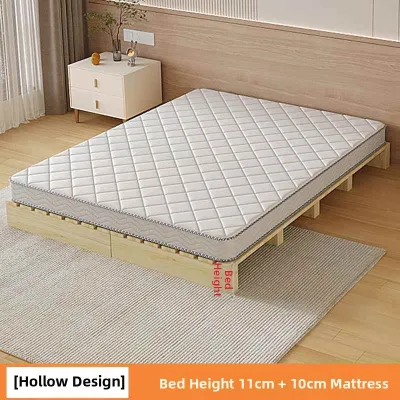
Prices are valid at publication and may change. Please refer to the product page for the latest price.
Finally, always verify the manufacturer’s specified weight capacity and structural limits. Children do not simply lie still on their beds; they jump, play, and grow rapidly. The bed frame must be robust enough to withstand dynamic impacts and support the combined weight of the child, the mattress, and an adult who may sit on the edge during bedtime routines. Request clear documentation on the maximum load capacity of both the overall frame and the individual support slats before making a purchase.
Unique Safety Considerations for Tatami Bed Designs
The low-profile nature of a tatami bed offers distinct safety advantages, particularly for younger children transitioning from a crib. Because the sleeping surface is closer to the floor, the risk of severe injury from accidental falls is significantly lower than with traditional high-frame beds or bunk beds. However, this low-profile design introduces other spatial considerations. The extended wooden platforms typical of tatami frames can create a tripping hazard in smaller bedrooms, such as those found in Singapore’s HDB flats and condominiums. When planning the room layout, ensure there is a clear, unobstructed walking path around the perimeter of the bed frame.

Singapore’s tropical, high-humidity climate presents a unique environmental challenge for low-profile furniture. Moisture can easily accumulate beneath a bed frame that sits directly on the floor, leading to mold, mildew, and dust mite proliferation, which can trigger allergies or respiratory issues in children. To mitigate this risk, choose a tatami bed designed with built-in ventilation channels, elevated slatted bases, or breathable materials. Avoid placing the bed frame directly on damp flooring, and ensure the room receives adequate airflow to keep the mattress and under-bed structure dry.
Integrated storage is a hallmark of tatami beds, often featuring hydraulic lift-up platforms or deep under-bed drawers. While these features maximize space, they pose serious physical risks to children, such as finger pinching or entrapment. Hydraulic lift mechanisms must be equipped with heavy-duty safety struts, locking pins, or soft-close dampers that prevent the heavy platform from slamming down unexpectedly. If the bed includes drawers, look for safety stops that prevent the drawers from being pulled completely out of their tracks onto a child’s feet.
Verifying Material Safety and Certifications
Because children spend a significant portion of their day in close contact with their beds, verifying chemical safety is just as important as checking structural integrity. Many tatami beds are constructed from engineered wood products, such as medium-density fibreboard (MDF) or plywood, which can emit volatile organic compounds (VOCs) like formaldehyde. To protect your child’s indoor air quality, look for materials certified to meet low-emission standards. Recognized certifications include the California Air Resources Board (CARB) Phase 2 compliance, EPA TSCA Title VI, or the European E1 or E0 standards.
The finishes, paints, and adhesives used on the bed frame must also be non-toxic and lead-free. Children, especially toddlers, may chew on bed frames or touch the surfaces frequently. Look for products that comply with international toy safety standards, such as the European Standard EN 71-3, which restricts the migration of harmful chemical elements in materials intended for children. In Singapore, look for furniture brands that voluntarily carry reputable eco-labels or provide transparent material sourcing details.
Do not rely solely on vague marketing terms like “eco-friendly” or “child-safe.” Ask the retailer or manufacturer directly for verifiable test reports or certificates of compliance from accredited third-party testing laboratories. A reputable brand should be able to provide documentation confirming that their products meet recognized safety standards for structural strength and chemical emissions. If a retailer cannot or will not provide these documents, it is best to consider other options.
Safe Installation and Room Placement
Proper installation is critical to maintaining the safety of a children’s tatami bed over its lifespan. If the bed design includes a tall headboard, integrated shelving, or an attached wardrobe unit, it must be securely anchored to the wall. Heavy, upright furniture components pose a severe tip-over risk if a child attempts to climb them. Use high-quality wall anchors and brackets suitable for your specific wall type, whether concrete, brick, or drywall, to ensure the entire assembly remains completely stable.
Room placement requires careful planning to avoid environmental hazards. Position the tatami bed well away from windows, curtain cords, and window blind chains, which present severe strangulation risks. Additionally, keep the bed clear of electrical outlets, wall-mounted heaters, and cords. In Singapore homes where ceiling fans are widely used for cooling, pay close attention to the vertical clearance. Ensure that even if your child stands upright on the mattress, they remain a safe distance away from the sweep path of the ceiling fan blades.
Finally, ensure the bed frame is assembled on a completely level floor surface. An uneven floor can cause the frame to warp, put undue stress on joints and fasteners, and lead to instability or persistent squeaking. If your bedroom floor has slight irregularities, use adjustable leveling feet or shims recommended by the manufacturer to ensure the bed sits perfectly flat and distributes weight evenly.
Routine Maintenance and When to Stop Use
A safe sleeping environment requires ongoing vigilance and regular maintenance. Establish a routine inspection schedule to check the bed’s hardware and structural integrity every three to six months. Over time, the natural movement of the bed and the active play of a child can cause screws, bolts, and brackets to loosen. Tighten all fasteners securely, but avoid overtightening, which can strip the wood or damage the hardware.
During your routine checks, inspect the wooden components for any signs of wear or damage. Look for hairline cracks in the frame, splintering along the edges, or warping of the support slats. If the bed features hydraulic lift mechanisms, test them to ensure they still operate smoothly and hold the platform open securely without slipping. Check the under-bed area for any signs of moisture accumulation, mold growth, or musty odors, and address ventilation issues immediately if found.
There are certain conditions under which you must stop using the bed immediately to prevent accidents. If you discover deep structural cracks in load-bearing beams, broken or missing support slats, or a malfunctioning hydraulic lift that cannot be locked safely, restrict access to the bed. Do not attempt temporary or makeshift repairs on critical structural components. Instead, contact the manufacturer or a qualified professional furniture repair service to assess the damage and perform authorized repairs before allowing your child to use the bed again.
Frequently Asked Questions (FAQ)
Do low-profile beds require bed rails for toddlers?
While the low height of a tatami bed minimizes the risk of injury from a fall, toddlers transitioning from a crib may still benefit from bed rails. Active sleepers can easily roll off the mattress onto the hard floor, which can cause distress or minor bumps. If your child is a restless sleeper, consider installing a removable, securely fitted guardrail designed specifically for low-profile beds. Ensure the guardrail is installed tightly against the mattress with no gaps where a child could become trapped.
How often should I check the bed's hardware and joints?
You should perform a thorough inspection of the bed’s hardware and joints at least once every three to six months. However, you should conduct an immediate check if you notice any unusual squeaking, wobbling, or shifting when your child gets into or out of the bed. Additionally, inspect the hardware immediately after moving the bed to a new location in the room or after any period of unusually active play or heavy impact.

Community discussion
Share your experience or ask a question. Comments are reviewed before publication.