
When shopping for a single storage bed for your child, safety must be your primary filter. A children’s bed with integrated storage presents unique physical and structural challenges compared to standard frames. To ensure a safe sleeping and playing environment, a high-quality kids’ single storage bed should meet rigorous structural, mechanical, and chemical safety standards certified by recognized testing bodies.
Verifying these certifications protects your child from hazards like entrapment, tip-overs, and exposure to harmful volatile organic compounds. By focusing on verified compliance labels rather than marketing claims, you can select a bed frame that is both highly functional and structurally secure.
Identifying Key Safety Risks in Kids' Single Storage Beds
Children’s storage beds are highly functional, but their multi-functional design introduces specific physical hazards that require careful evaluation. Unlike standard single beds, storage beds combine heavy moving parts, hollow cavities, and elevated frames, which can pose risks if the design is flawed.
Products mentioned in this guide
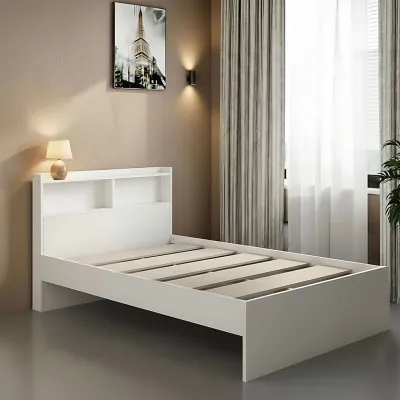
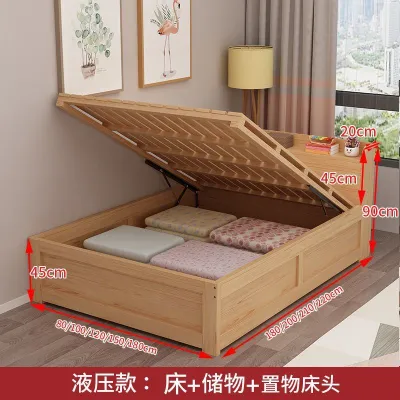
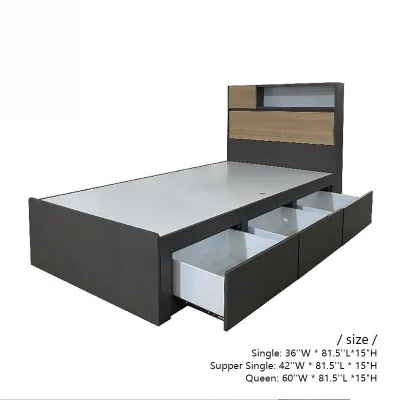

![[CozyNest ]Drawerssinglesuper Singlequeenking Bed Frame With Storage Organiser](https://img.lazcdn.com/g/p/2bc3233d4f10965e9e14703b798c4854.jpg_400x400q80.jpg_.webp)
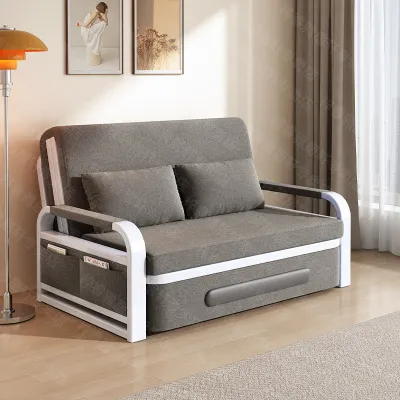
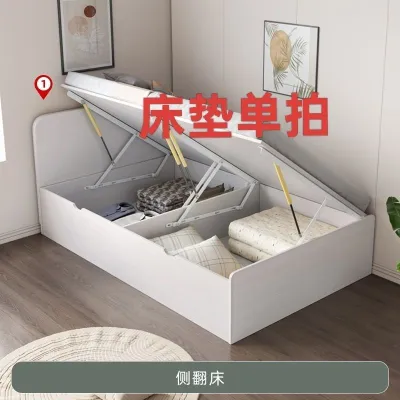
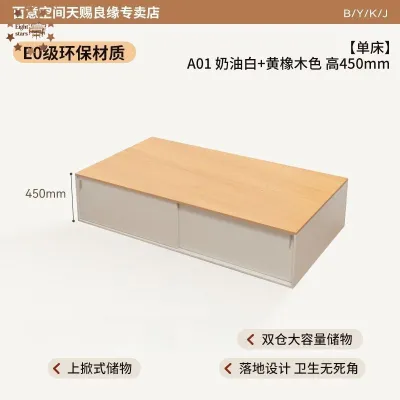
Prices are valid at publication and may change. Please refer to the product page for the latest price.
Entrapment and strangulation represent some of the most critical hazards in children’s furniture. Gaps in guardrails, headboards, footboards, or between the mattress and the frame can become dangerous traps if they are wide enough to admit a child’s body but too narrow for their head. Similarly, gaps around drawer mechanisms or pull-out compartments can pinch fingers or trap limbs during active play.
Tip-over hazards are another major concern, particularly when heavy storage drawers are fully extended. When a child pulls out multiple drawers at once or attempts to climb on them, the center of gravity shifts forward rapidly. If the bed frame is not sufficiently weighted, balanced, or anchored, this shift can cause the entire structure to tip over onto the child.
Structural failure risks are often linked to dynamic weight limits and the integrity of the slat support system. Children do not simply lie still on their beds; they jump, bounce, and play, exerting sudden dynamic forces that exceed static weight ratings. A weak slat system or poorly constructed joints can collapse under these dynamic loads, leading to sudden structural failure and potential injury.
Finally, large storage compartments, such as deep under-bed drawers or lift-up ottoman bases, present suffocation and ventilation risks. If a compartment is large enough for a young child to crawl inside, there is a risk of them becoming trapped in an airtight space. Ensuring these compartments have adequate ventilation or safety release mechanisms is essential for preventing tragic accidents.
How to Verify Safety Certifications and Compliance Labels
Navigating safety claims requires looking past promotional descriptions on ecommerce platforms and focusing on verifiable certifications. Manufacturers often use vague terms like “child-safe” or “eco-friendly” without independent verification, making it essential to know how to locate and read official compliance labels.

Legitimate safety compliance marks are typically affixed directly to the physical product, printed on the packaging, or detailed in the manufacturer’s official specification sheet. When purchasing a single storage bed, look for physical stickers or stamped markings on the inside of the headboard, the underside of the slats, or the interior panels of the drawers. These permanent labels indicate that the specific production batch has undergone rigorous testing.
When reviewing these labels, look for standards that specifically address children’s furniture rather than general adult standards. For instance, European standards like EN 747 (for bunk beds and high beds) or regional equivalents test specifically for entrapment hazards, guardrail strength, and structural stability under child-specific use cases. General adult furniture standards do not account for the dynamic forces and climbing behaviors typical of young children.
Chemical safety is another critical dimension that requires independent certification. Engineered wood materials, paints, and finishes used in bed frames can emit formaldehyde and other volatile organic compounds (VOCs). To verify chemical safety, look for certifications such as Greenguard Gold or compliance with low-formaldehyde standards like CARB Phase 2 or EN 717-1, which confirm that the materials meet strict emission limits for indoor environments.
In Singapore, consumer safety is overseen by the Consumer Product Safety Office (CPSO). While shopping, you can consult the CPSO’s guidelines and registry to check for safety alerts, product recalls, or specific regulatory requirements applicable to children’s home furniture. Verifying that a product complies with local safety regulations ensures that the bed meets the baseline safety thresholds required for sale in the market.
Physical Safety Checks for Bed Frames and Storage Drawers
While certifications provide peace of mind, conducting a physical inspection of the single storage bed before or immediately after assembly is a practical way to verify its safety. A hands-on check allows you to evaluate the build quality, mechanical safety, and structural stability in your specific home environment.
Begin by checking the dimensions of all gaps and openings around the bed frame, guardrails, and headboard. To prevent head and neck entrapment, gaps should generally be either small enough to prevent a child’s foot or hand from slipping through, or wide enough to ensure their head cannot get stuck. As a general rule of thumb derived from international safety standards, gaps should not fall within the dangerous range of 60mm to 95mm.
Next, closely inspect the drawer mechanisms and hardware. High-quality storage beds feature drawers equipped with built-in stoppers that prevent them from being pulled completely out of their tracks and falling onto a child’s feet. Additionally, look for soft-close hinges or drawer glides that slow down the closing action, which significantly reduces the risk of painful finger-crushing injuries.
Evaluate the overall stability of the bed frame by applying firm pressure to the headboard and sides. If the bed wobbles, sways, or creaks excessively, the joints may be weak or the frame may lack the necessary structural reinforcement. For taller storage beds or those with heavy pull-out components, determine whether the manufacturer provides or recommends wall-anchoring hardware to secure the frame to the wall.
Finally, run your hands along all accessible surfaces of the bed frame and drawers to check for physical hazards. Ensure that all edges are smoothly rounded rather than sharp, and verify that there are no exposed splinters, rough wood grain, or protruding bolts. All assembly hardware should be fully recessed or covered with secure plastic caps to prevent scratches or snagged clothing.
Safe Installation and Ongoing Maintenance Practices
The safety of a single storage bed depends heavily on proper assembly and consistent long-term maintenance. Even the most highly certified bed frame can become hazardous if it is put together incorrectly or if its structural joints are allowed to loosen over time.
Always follow the manufacturer’s exact assembly instructions step-by-step, ensuring that every screw, dowel, and bracket is installed in its designated location. Pay close attention to the specified weight limits for both the main sleeping surface and the individual storage drawers. Overloading the drawers can warp the tracks, compromise the drawer stoppers, and destabilize the entire bed frame.
If the product manual recommends or requires securing the bed to the wall, use the provided anti-tip kits to anchor the frame directly to wall studs. This is especially critical for storage beds with high profiles or heavy drawer configurations. Standard drywall anchors may not provide sufficient holding power, so ensure you use the correct hardware suitable for your specific wall type.
Establish a routine maintenance schedule to inspect the bed frame periodically, such as every six months. As children use the bed, the dynamic loads from sleeping, sitting, and playing will naturally cause screws and bolts to settle and loosen. Tightening these connections regularly prevents joint wobble, maintains structural integrity, and extends the lifespan of the furniture.
Finally, set clear and consistent household rules regarding how your children interact with the storage bed. Teach them that the bed is meant for sleeping and quiet activities, and prohibit jumping on the mattress or using open storage drawers as stepping stools to climb onto the bed. Preventing these high-impact behaviors is one of the most effective ways to avoid accidental tip-overs and structural damage.
Frequently Asked Questions (FAQ)
Do all single storage beds require wall anchoring?
Not all single storage beds strictly require wall anchoring, but the necessity depends on the bed’s height, design, and center of gravity. Low-profile platform beds with shallow under-bed drawers generally have a very low center of gravity and are highly stable on their own. However, taller storage beds, cabin beds, or those with heavy, high-tier drawer configurations are much more susceptible to tipping when drawers are extended or climbed upon. You should always consult the manufacturer’s assembly manual to determine if wall-anchoring hardware is required, and utilize the provided anti-tip kits whenever recommended to ensure maximum safety.
What should I do if the bed's safety certification label is missing?
If you cannot find a safety certification label on the physical bed frame, its packaging, or the product documentation, you should contact the manufacturer or authorized retailer directly. Request that they provide official test reports or compliance documentation demonstrating that the bed meets recognized children’s furniture safety standards. If the seller or manufacturer is unable or unwilling to provide verifiable proof of safety testing, it is highly recommended to halt the purchase or return the product. Using uncertified children’s furniture introduces unnecessary risks regarding structural stability and chemical emissions.

Community discussion
Share your experience or ask a question. Comments are reviewed before publication.