
When shopping for a double decker bed kids will use, safety must be the primary filter for your decision. A safe bunk bed must comply with recognized international safety standards (such as the European EN 747 or American ASTM F1427), feature continuous guardrails on the upper bunk, possess a highly stable and securely attached ladder, and be constructed from non-toxic materials. While these beds are excellent space-saving solutions for compact bedrooms, structural integrity and proper room planning are essential to prevent falls, entrapment, and structural failures.
To ensure your child’s safety, you must look past aesthetic appeal and marketing buzzwords. This guide details the precise safety certifications, structural design criteria, material standards, and installation practices you must verify before making a purchase.
Quick Safety Checklist for Evaluating Bunk Beds
Before purchasing or assembling any double decker bed, use this rapid-reference checklist to evaluate its safety credentials:
Products mentioned in this guide
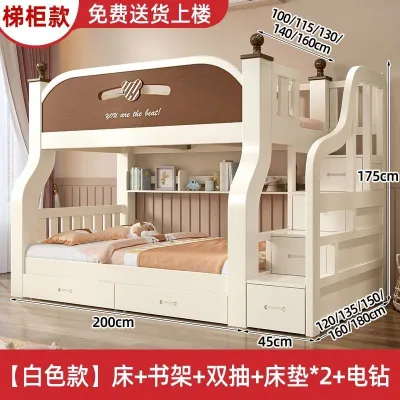
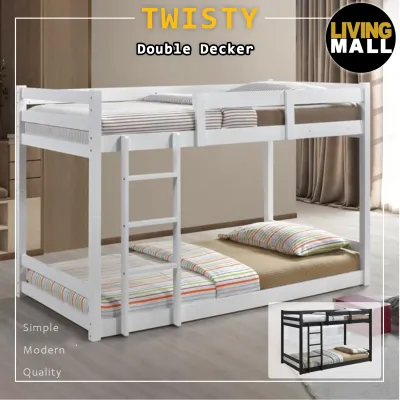
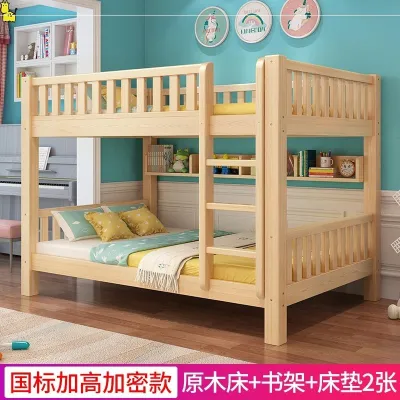
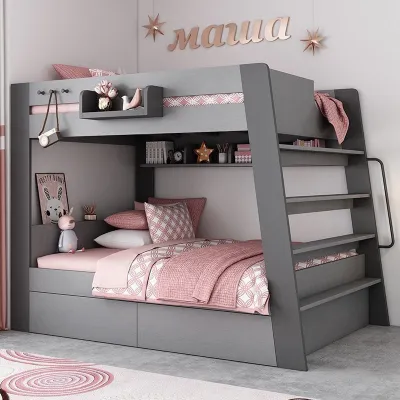
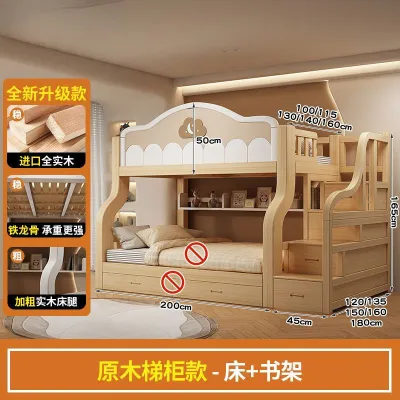
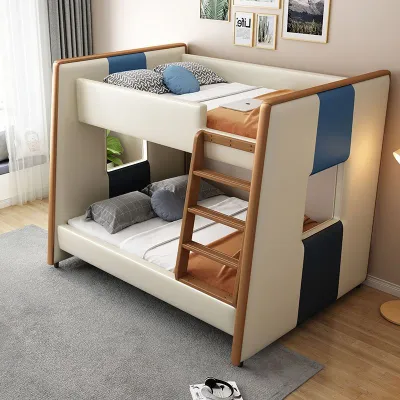

Prices are valid at publication and may change. Please refer to the product page for the latest price.
- Certification Labels: Verify that the bed frame has a physical label or manufacturer documentation indicating compliance with EN 747 or ASTM F1427 standards.
- Guardrail Height: Ensure the top of the guardrails sits at least 160 mm above the top surface of the mattress.
- Continuous Barriers: Confirm guardrails are present on all four sides of the top bunk, with the only permitted opening being for the ladder access (which should be between 300 mm and 400 mm wide).
- Entrapment Gaps: Check that all gaps in the headboard, footboard, and guardrails are either smaller than 75 mm or larger than 230 mm.
- Ladder Security: Ensure the ladder is bolted directly to the frame, does not wobble, and features flat, slip-resistant steps at least 30 mm wide.
- Weight Limits: Confirm the manufacturer's stated load capacity for both the top and bottom bunks matches or exceeds your requirements.
- Mattress Compatibility: Verify that the mattress dimensions match the frame precisely, leaving no gaps wider than 30 mm along the sides.
How to Verify Safety Certifications and Compliance Labels
Do not rely on generic marketing phrases such as “child-safe,” “ultra-sturdy,” or “premium quality.” Instead, demand objective, third-party proof of structural testing. Legitimate manufacturers subject their products to rigorous mechanical testing to ensure they can withstand years of active use without collapsing or tipping.

Look for Recognized International Standards
In Singapore, bunk beds are widely imported from global markets, meaning you will primarily encounter European or American safety certifications. The two most reliable baselines for structural quality are:
- EN 747-1 & -2 (European Standard): This standard specifies stringent safety, strength, and durability requirements for bunk beds and high beds. It involves testing the frame for impact resistance, rail strength, and the security of all fastening joints.
- ASTM F1427 (American Standard): This standard establishes consumer safety specifications for bunk beds, focusing heavily on preventing entrapment hazards, structural failures, and falls.
Inspect the Physical Product and Documentation
When visiting a showroom or browsing a retailer’s digital catalog, ask to see the physical compliance labels. On a certified double decker bed, you will typically find a permanent label affixed to the inside of the bed frame or headboard. This label should state the manufacturer’s name, the specific safety standard met, and warnings regarding mattress thickness and age limits.
If no label is visible, request the official product manual or a copy of the manufacturer’s compliance declaration. If a retailer cannot provide documentation verifying that the bed has passed independent laboratory testing for stability and load-bearing capacity, you should look for alternative options.
Structural Design Checks to Prevent Falls and Entrapment
Structural failures and falls represent the most common hazards associated with bunk beds. Evaluating the physical design of the frame is critical to minimizing these risks.
Guardrail Integrity and Height
Guardrails are the primary defense against accidental roll-outs during sleep. The top bunk must have guardrails on all four sides, even if you plan to place the bed flush against a wall. Beds can shift during use, creating a hidden gap between the frame and the wall where a child can slip and suffocate.
The top of the guardrail must extend at least 160 mm above the upper surface of the mattress. To maintain this safety margin, you must strictly follow the manufacturer’s maximum mattress thickness guidelines. If you install a mattress that is too thick, you will compromise the guardrail’s effective height, rendering it useless.
Gap and Entrapment Hazards
Children can easily get their limbs, torso, or head trapped in poorly designed gaps. To prevent dangerous head and neck entrapment, check all openings in the guardrails, headboard, and footboard. Gaps must be strictly controlled:
- Small Gaps (Under 75 mm): Gaps must be narrow enough that a child's head, limbs, or torso cannot slip through.
- Large Gaps (Over 230 mm): If there is an opening, it must be wide enough that a child's entire body and head can pass through freely without getting caught.
- The Danger Zone: Any gap between 75 mm and 230 mm is highly hazardous. A child's body could slip through such a gap, leaving them suspended by their head or neck.
Ladders and Stairs
The ladder must be an integral, immovable part of the bed structure. Avoid models with ladders that simply hook over the side rail without screws, as these can easily shift, lift, or detach when a child is climbing. Look for ladders that bolt directly to both the top and bottom frames.
Evaluate the steps themselves. Round rungs are difficult to grip and can be painful on small feet, increasing the risk of slipping. Opt for flat, wide steps (at least 30 mm in depth) with a slip-resistant texture or tread tape. The vertical distance between steps should be uniform, ideally between 250 mm and 300 mm, to prevent missteps.
Load Capacity and Joint Construction
Never assume a bed’s material name guarantees strength. While solid hardwood (such as oak, birch, or beech) and heavy-gauge steel are excellent base materials, their performance depends entirely on joint construction. Look for deep mortise-and-tenon joints, heavy-duty steel brackets, or through-bolts rather than simple wood screws.
Verify the manufacturer’s stated maximum weight capacity for both the top and bottom bunks. This capacity must account for the weight of the mattress, the child, bedding, and the potential for rapid growth. If you plan to sit on the bottom bunk with your child for bedtime reading, ensure the lower bunk’s weight rating safely accommodates the combined weight of an adult and child.
Material Safety and Surface Finish Checks
Beyond structural stability, the chemical composition of the bed’s finishes and the physical detailing of its surfaces directly impact your child’s health and safety.
Non-Toxic Paints and Finishes
Children frequently touch, lean against, and occasionally chew on their bed frames. Standard industrial paints and varnishes can release volatile organic compounds (VOCs) or contain traces of heavy metals like lead.
Before purchasing, check the product specifications for certifications such as Greenguard Gold or compliance with EN 71-3 (the European safety standard for toy finishes). These certifications guarantee that the varnishes, lacquers, or paints used on the wood or metal are water-based, low-VOC, and free from harmful chemical emissions, ensuring safe indoor air quality in your child’s bedroom.
Smooth Edges and Recessed Hardware
Carefully inspect the entire frame for physical hazards. All wooden edges should be rounded or chamfered to prevent cuts and bruises during play. Run your hand along the undersides of the rails and slats to check for splinters or rough patches.
Examine the assembly hardware. All screws, bolts, and nuts must be recessed below the wood’s surface or covered with secure, flush-fitting plastic caps. Protruding hardware can snag clothing, pajamas, or bedding cords, creating a severe entanglement or strangulation risk.
Precise Mattress Fit
A loose mattress creates a dangerous entrapment zone. Measure the internal dimensions of the bed base and compare them to your mattress. The gap between the mattress and the sides of the bed frame should not exceed 30 mm at any point. If the mattress is too small, a child’s foot or leg can easily slip into the gap, leading to injury.
Room Planning, Installation, and Ongoing Maintenance
Even the safest certified double decker bed can become hazardous if it is poorly placed, incorrectly assembled, or neglected over time.
Measuring Ceiling Height and Space Clearance
In Singapore, standard residential ceiling heights in HDB flats and condominiums typically range from 2.6 to 2.8 metres. Before purchasing a bed, you must measure your room’s vertical clearance.
Subtract the height of the bed frame and the thickness of the top mattress from your total ceiling height. There must be at least 75 cm (ideally 90 cm) of clear headroom between the top of the upper mattress and the ceiling. This ensures your child can sit up straight in bed without hitting their head. Additionally, measure your home’s lift doors, stairwells, and bedroom doorways to guarantee the delivery team can safely transport the frame components into the room.
Safe Placement and Wall Anchoring
Position the bed far away from potential hazards. Never place a double decker bed directly beneath or adjacent to:
- Ceiling fans or hanging light fixtures
- Windows or glass sliding doors
- Curtain cords, blind chains, or electrical wiring
If the manufacturer’s instructions recommend anchoring the bed to the wall, you must do so. For concrete walls common in Singapore HDB flats, use heavy-duty masonry wall plugs and brackets to secure the frame. This prevents the bed from rocking, shifting, or tipping over if children climb on the outer structure.
Assembly and Routine Inspections
If you choose to assemble the bed yourself, follow the manufacturer’s manual step-by-step. Never substitute missing parts with random hardware from a local store; contact the retailer or manufacturer for original replacements. Ensure every wooden dowel, locking nut, and support slat is installed precisely as directed.
Wood naturally expands and contracts with changes in humidity, and regular movement can loosen joints over time. Conduct a thorough safety inspection every three to six months:
- Tighten Hardware: Check and tighten all bolts, screws, and connectors.
- Inspect Slats: Verify that the mattress support slats remain securely anchored and have not cracked or shifted.
- Check the Ladder: Ensure the ladder remains tightly bolted to the frame and does not wobble.
- Test Guardrails: Shake the guardrails to confirm they remain rigid and secure.
Establishing Household Safety Rules
No safety feature can completely replace parental supervision and clear behavioral guidelines. Sit down with your children and establish non-negotiable safety rules:
- No Roughhousing: The top bunk is strictly for sleeping, not for jumping, wrestling, or playing.
- Ladder Only: Children must always use the ladder to climb up and down. Jumping off the top bunk is strictly prohibited.
- One Person Limit: Only one child is allowed on the top bunk at any given time.
- Keep It Clear: Keep the ladder and the floor space surrounding the bed free of toys, clothes, and clutter to prevent tripping hazards.
Frequently Asked Questions (FAQ)
What is the recommended minimum age for a child to sleep on the top bunk?
Children must be at least six years old before they are allowed to sleep on the top bunk. Younger children generally lack the physical coordination, balance, and spatial awareness required to climb the ladder safely at night or avoid rolling out of bed. Always check the manufacturer’s specific age, weight, and maturity guidelines for your selected model.
Can I use a thicker mattress on the top bunk for more comfort?
No, you must never use a mattress that exceeds the maximum thickness specified by the manufacturer. Doing so raises the sleeping surface and reduces the effective height of the guardrails. To maintain the necessary safety margin, the top of the guardrail must remain at least 160 mm higher than the top of the mattress.
Community discussion
Share your experience or ask a question. Comments are reviewed before publication.