
Selecting a kids’ bed frame requires a careful balance of aesthetics, space planning, and, most importantly, safety. Unlike adult furniture, children’s beds must withstand active play, frequent movement, and unique physical risks such as falls or entrapment. To ensure a kids’ bed frame is safe, you must verify its structural stability, guardrail dimensions, material safety certifications, and compliance with recognized international safety standards. Checking these elements prevents common hazards such as falls, entrapment, and exposure to harmful chemicals. Before making a purchase, look for specific manufacturer declarations, physical safety labels, and clear assembly guidelines that match your child’s developmental stage and your home’s spatial constraints.
Evaluating Structural Stability and Guardrail Dimensions
Guardrails are critical for preventing falls, which are among the most common accidents associated with children’s beds. When evaluating a bed frame, check the manufacturer’s specifications for the recommended mattress thickness. The top of the guardrail must extend significantly above the mattress surface to provide an effective barrier. If the mattress is too thick, it reduces the effective height of the guardrail, increasing the risk of a fall. Always measure the distance from the top of the mattress to the top of the guardrail to ensure it meets the safety margins specified in the product manual.
Entrapment hazards occur when gaps within the bed structure are poorly designed. Inspect the spacing between the slats, the guardrails, and the main frame. Standard safety principles suggest these gaps should be narrow enough to prevent a child’s head, torso, or limbs from getting stuck, yet wide enough to avoid pinching fingers. Check the product manual or specifications for precise gap measurements before buying. Pay close attention to the space between the bottom of the guardrail and the top of the bed base, as well as the gaps between individual slats, to ensure they do not pose a hazard.
Products mentioned in this guide
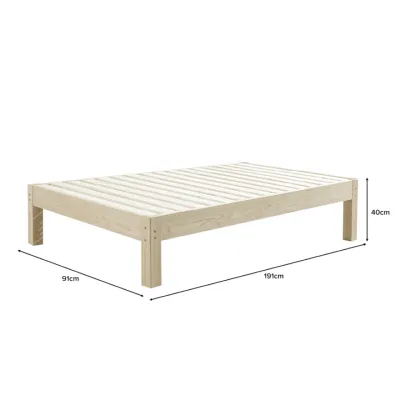
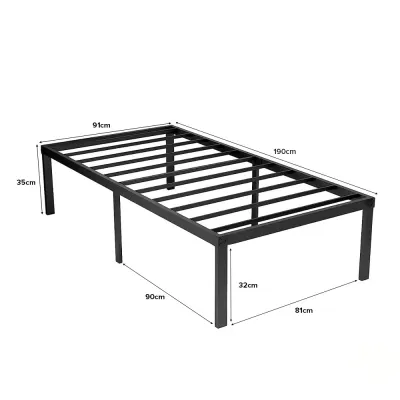




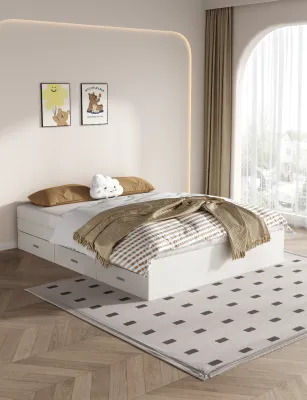
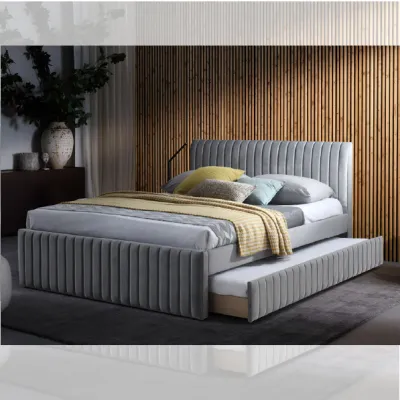
Prices are valid at publication and may change. Please refer to the product page for the latest price.
Structural stability is the foundation of bed safety, especially for active children who may jump or climb on their furniture. Examine the joints, brackets, and overall construction of the frame. A sturdy bed frame should not wobble, creak, or sway when gentle pressure is applied. Verify the manufacturer’s stated weight capacity limits to ensure the frame can safely support your child, the mattress, and any additional weight during storytime. Look for robust fastening systems, such as metal-on-metal connections, which tend to remain secure over time compared to simple wood screws.
Additionally, consider the physical dimensions of the bed frame in relation to your child’s room. Ensure there is adequate space for safe movement around the bed, and verify that the frame can easily fit through your doorways, hallways, and lift access during delivery. A bed frame that is too large for the room can create tight pathways, increasing the risk of accidental bumps and injuries during daily play.
Verifying Safety Certifications and Product Labels
Legitimate manufacturers display safety certifications clearly to reassure buyers of their compliance with rigorous testing. Look for physical labels permanently affixed to the bed frame itself, often on the inside of the headboard, footboard, or side rails. These labels, along with markings on the packaging and assembly manual, indicate compliance with recognized regional or international safety benchmarks, such as European (EN) or American (ASTM) standards. These standards govern everything from structural strength to chemical safety.

Do not rely solely on marketing descriptions on online marketplaces or retail websites. Cross-reference any safety claims made by the seller with the official product manual or the certification body’s database. Reputable brands provide clear registration numbers, testing laboratory reports, or standard codes that you can verify independently to ensure the certification is active and genuine. If a seller claims compliance but cannot provide a certificate or standard number, treat the claim with caution.
Be cautious of red flags during your search. Missing labels, vague claims of being “child-safe” or “eco-friendly” without referencing specific testing standards, or altered tags are warning signs. If a retailer cannot provide documentation or a clear standard reference for their bed frame, it is safer to choose an alternative product that offers transparent compliance records. A lack of clear labeling often indicates that the product has not undergone independent safety testing.
Checking Materials, Finishes, and Surface Safety
The chemical composition of the bed frame’s finish is just as important as its physical structure. Children often touch, lean on, or even bite bed frames, making non-toxic finishes essential. Check the product labels and manuals for explicit manufacturer declarations confirming the use of lead-free, phthalate-free, and low-volatile organic compound (VOC) paints or sealants. Certifications such as Greenguard Gold or equivalent low-emission standards provide assurance that the bed frame will not release harmful gasses into your child’s bedroom.
Physical inspection of the surface is a practical step to prevent minor injuries. Run your hands along the frame to check for splinters, sharp edges, rough joints, or peeling paint. Solid wood and metal frames should have smooth, rounded corners and secure hardware that does not protrude or catch on clothing. If you are purchasing online, check customer reviews for mentions of surface quality, or inspect the display model in-store to verify the quality of the finish and joints.
Review the manufacturer’s care and safety instructions for specific material limitations. Some finishes require specific cleaning methods to avoid degrading the protective coating, while certain materials may have environmental warnings regarding humidity or direct sunlight exposure. Following these guidelines helps maintain both the safety and appearance of the bed frame over time, preventing the degradation of materials that could lead to structural weakness or peeling finishes.
Ensuring Safe Assembly, Room Placement, and Maintenance
Safe use begins with correct assembly. Always follow the manufacturer’s step-by-step instructions precisely, ensuring every screw, bolt, and bracket is installed in its designated place. Use only the hardware provided or specified by the manufacturer, as substituting parts can compromise the structural integrity of the bed frame and void its warranty. If the assembly instructions are unclear, contact the manufacturer or hire a professional assembly service to ensure the frame is put together correctly.
Room placement plays a critical role in preventing accidents. Position the bed frame away from windows, dangling blind cords, electrical outlets, and ceiling fans to eliminate strangulation and impact hazards. Additionally, ensure the bed is not placed directly next to heavy, unanchored furniture that could tip over if a child attempts to climb. Allow sufficient clearance around the bed so your child can get in and out safely without bumping into other objects.
Regular maintenance is necessary to keep the bed frame secure as your child grows. Establish a routine to periodically inspect the frame, tightening any loose screws or bolts that may have worked their way loose from daily movement. Check the guardrails and slats regularly for signs of wear, cracks, or damage, and address any issues immediately to maintain a safe sleeping environment. Regular checks ensure that minor wear does not escalate into a structural failure.
Frequently Asked Questions (FAQ)
At what age is it safe to transition a child to a standard bed frame without guardrails?
Transitioning a child to a standard bed frame without guardrails depends more on developmental milestones and physical coordination than a strict age limit. Look for signs of readiness, such as the child’s ability to sleep without rolling close to the edge, their coordination in climbing in and out of bed safely, and their understanding of bedtime boundaries. If your child frequently moves around during sleep or is a restless sleeper, keeping guardrails in place longer is a practical safety measure.
Should a kids' bed frame be anchored to the wall?
Whether a bed frame needs to be anchored to the wall depends on its height and design. Tall structures, such as bunk beds, loft beds, or frames with integrated high shelving, carry a higher risk of tipping over and should be securely anchored to the wall. Standard low-profile bed frames typically do not require anchoring, but you should always consult the manufacturer’s installation manual to verify specific safety recommendations and anchoring requirements for your specific model.

Community discussion
Share your experience or ask a question. Comments are reviewed before publication.