
When space is at a premium in Singapore homes, a children’s trundle bed offers an elegant, space-saving sleeping solution. By tucking a secondary bed neatly beneath the main frame, you can easily accommodate siblings sharing a room or host overnight guests without permanently sacrificing valuable floor space. However, because these beds feature moving parts, multi-tiered structures, and variable weight distributions, prioritizing safety during your purchase is absolutely essential.
Evaluating a trundle bed goes far beyond choosing an appealing design or color. You must carefully assess how the bed is manufactured, the certifications it carries, and how its physical dimensions fit into your child’s bedroom. This guide outlines the critical safety standards, structural checks, and room-planning considerations you need to verify to ensure a secure and comfortable sleeping environment for your children.
Verifying Safety Certifications and Compliance Labels
Before finalizing any furniture purchase, verify the manufacturer’s safety claims and compliance documentation. Reputable retailers should provide official test reports or certificates of conformity upon request. Look for testing conducted by recognized, independent third-party laboratories such as TÜV, SGS, or Intertek, which verify that the furniture has undergone rigorous mechanical and chemical testing.
Products mentioned in this guide
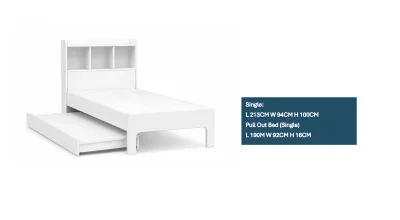
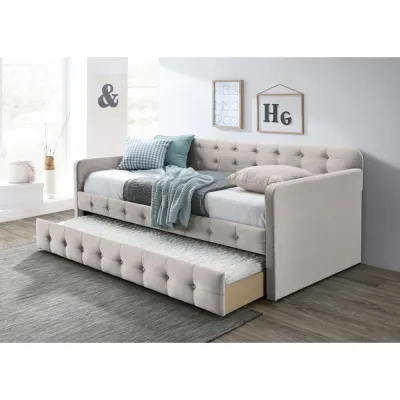
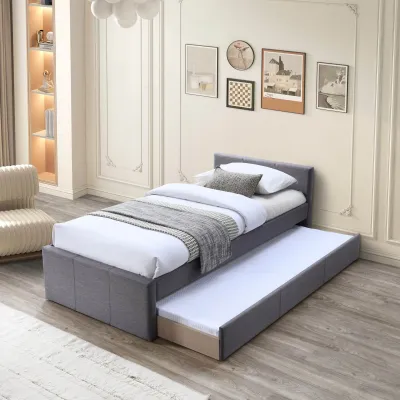
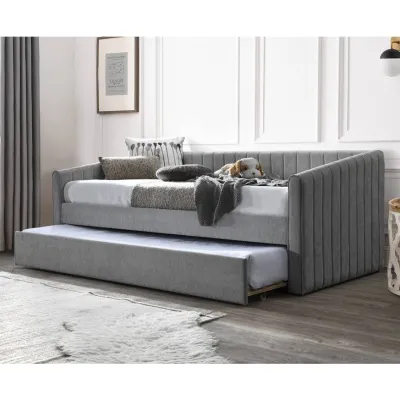




Prices are valid at publication and may change. Please refer to the product page for the latest price.
While Singapore does not mandate a specific local safety mark for general household furniture, all consumer goods sold locally must comply with the Consumer Protection (Safety Requirements) Regulations. To gain extra peace of mind, look for international safety standards on the product labels. For children’s beds, the European standards EN 747 (covering bunk and high beds) and EN 1725 (specifying mechanical safety for domestic beds) are highly regarded benchmarks. In the United States, ASTM F1427 is the equivalent standard addressing structural integrity and entrapment hazards.
Understanding the distinction between voluntary safety testing and mandatory regulatory compliance is key. Voluntary testing indicates that a manufacturer has gone further to prove their product’s durability under simulated wear. If a retailer cannot provide clear safety documentation or details about the standards their products meet, it is best to look elsewhere. Investing in uncertified children’s furniture carries a higher risk of structural failure or poor material quality.
Critical Physical Safety Features to Inspect
A thorough physical inspection of the bed frame is your best defense against physical injuries, entrapment, and falls. When visiting a showroom or inspecting a delivered bed, start by examining the guardrails on the main bed frame. If the main bed is elevated to accommodate the trundle underneath, robust guardrails are necessary to prevent accidental falls. The top of the guardrail must sit at least 160 mm above the top of the mattress to provide an effective barrier.

Next, pay close attention to the spacing of the slats and guardrail bars. To prevent dangerous head, limb, or finger entrapment, the gaps between vertical slats or guardrail spindles should be less than 75 mm. Any gap that allows a child’s limb to pass through but catches their head or torso poses a severe safety hazard. Ensure that the support slats under both the main mattress and the trundle mattress are securely fastened and spaced closely enough to prevent the mattress from sagging.
Frame sturdiness and weight capacity are equally critical. Ask the retailer for the certified weight limits of both the upper frame and the lower trundle unit. Look for frames constructed from solid hardwoods, such as rubberwood, beech, or birch, which offer superior stability compared to lightweight particle board. Examine the joints to ensure they are secured with heavy-duty steel bolts rather than simple wood screws.
Finally, run your hands along all accessible surfaces of the bed frame. The edges and corners must be smoothly rounded to minimize the risk of injury during bumps or falls. Inspect the hardware to ensure that all bolts, screws, and brackets are countersunk or completely flush with the wood. Protruding hardware can easily snag loose clothing, bedding, or hair, creating a potential scratching hazard.
Assessing the Trundle Mechanism and Mattress Compatibility
The pull-out trundle mechanism introduces unique mechanical considerations. The lower bed must glide smoothly on high-quality caster wheels or rollers. For Singapore homes, which frequently feature flooring materials like vinyl, laminate, or polished parquet, choose non-marking polyurethane or rubber casters. These wheels prevent floor damage and roll quietly. Crucially, look for a trundle mechanism that includes locking casters or a built-in braking system to prevent the lower bed from rolling unexpectedly when your child steps in or out.
Mattress compatibility is another area where safety and functionality intersect. Measure the internal dimensions of the trundle drawer carefully before purchasing a mattress. In Singapore, standard single mattresses typically measure 190 cm by 91 cm, but imported trundle frames may follow slightly different European or American sizing. A mattress that is too small for the trundle frame will leave hazardous gaps along the sides, creating a severe foot-trapping hazard.
To maintain safe clearance, adhere strictly to the manufacturer’s maximum allowable mattress thickness for both tiers. For the main bed, an overly thick mattress reduces the effective height of the guardrails. For the trundle bed, the mattress must be thin enough to slide smoothly beneath the main bed frame without scraping. Typically, trundle mattresses are limited to a thickness of 10 cm to 15 cm. Measure the vertical clearance between the floor and the bottom of the main bed’s support slats to verify this before buying.
Lastly, check for structural stops or anti-tip features. The trundle drawer should have built-in physical stoppers that prevent it from being pulled entirely out of its tracks unless intentionally disengaged. This safety feature prevents the heavy trundle frame from accidentally detaching and falling onto a child’s feet.
Safe Room Placement and Ongoing Maintenance
Proper room placement is vital to maximizing the safety of a trundle bed, especially within the compact layouts of modern Singapore apartments. Before purchasing, map out your bedroom floor plan to ensure you have adequate clearance space. You will need at least 100 cm of open space adjacent to the main bed to fully extend the trundle. Ensure that when the trundle is open, it does not block primary walkways, entry doors, wardrobe doors, or study desk drawers, which could create tripping hazards or trap occupants during an emergency.
When positioning the bed, keep it well away from windows, even if you have window grilles installed. Children are natural climbers, and a bed placed against a window provides easy access to window sills. Additionally, ensure the bed is situated far from curtain or blind cords, which present a severe strangulation risk. In Singapore’s tropical climate, ceiling fans are a common fixture in children’s bedrooms. You must verify that the height of the main bed leaves a safe, generous clearance from the sweep path of the ceiling fan blades to prevent catastrophic head injuries.
Maintaining the structural integrity of the bed requires a consistent, proactive routine. Singapore’s high relative humidity can cause solid wood to expand and contract slightly, which may loosen hardware over time. Establish a quarterly schedule to inspect the bed thoroughly. Use the appropriate tools to tighten all structural bolts and screws, but avoid overtightening, which can strip the wood. Check the caster wheels for accumulated dust, hair, or lint, and ensure they still roll and lock smoothly.
During your routine inspections, learn to recognize the early signs of structural fatigue. Look for hairline cracks in the wooden frame, bowing in the support slats, or wobbling in the joints that persists even after tightening the hardware. If you notice any compromised components, discontinue using that section of the bed immediately and source official replacement parts.
Frequently Asked Questions (FAQ)
Do all children's beds sold in Singapore require a specific safety mark?
No, general children’s furniture and beds sold in Singapore do not carry a mandatory local safety mark like electrical appliances do. However, they are strictly regulated under the Consumer Protection (Safety Requirements) Regulations, which require all consumer goods to be safe for public use. When shopping, you should look for voluntary compliance with recognized international standards, such as the European EN 747 or EN 1725, or the American ASTM F1427. These certifications serve as reliable proof that the bed has undergone rigorous safety and durability testing.
What is the maximum recommended mattress thickness for a trundle bed?
The maximum recommended mattress thickness for a trundle bed typically ranges between 10 cm and 15 cm. To determine the exact limit for your specific bed, measure the vertical clearance between the floor and the lowest point of the main bed’s support slats, then subtract at least 2 cm to 3 cm to allow for smooth operation. Exceeding the manufacturer’s specified mattress thickness can cause the mattress to scrape against the upper frame, damaging both the fabric and the bed’s structural components.
At what age is it safe for a child to sleep on the lower trundle bed?
While the lower trundle bed sits very close to the floor—minimizing the risk of injury from falls—it is generally recommended for children aged 2 to 3 years and older. At this stage of development, children have transitioned out of a baby cot, possess the physical coordination to get in and out of bed independently, and are less susceptible to accidental entrapment in the small gaps between the trundle and the main frame. Always supervise younger children and consult the manufacturer’s specific age and weight guidelines before use.

Community discussion
Share your experience or ask a question. Comments are reviewed before publication.