
When selecting a murphy wall bed for a child’s bedroom in Singapore, safety must be the primary consideration. Because these space-saving beds rely on heavy mechanical lifting systems, counterweights, and secure wall anchoring, they present unique structural risks that standard stationary beds do not. To ensure a murphy wall bed is safe for children, it must comply with recognized international safety standards, feature robust anti-tip mechanisms, incorporate child-safe hinges to prevent finger pinching, and be anchored securely to a wall capable of supporting its dynamic load. Understanding these certifications and structural requirements allows parents to maximize floor space in compact HDB flats or condominiums without compromising their child’s physical safety.
Identifying Safety Certifications and Product Labels
To verify the safety of a murphy wall bed intended for children, parents should look beyond aesthetic appeal and focus on official product certifications. High-quality folding beds are typically tested against rigorous international standards, such as the European standard EN 1129 (which specifies safety requirements and test methods for foldaway beds) or equivalent ASTM international standards. These certifications ensure that the bed has undergone mechanical endurance tests, load-bearing assessments, and stability evaluations specifically designed to simulate years of daily use. When browsing options, ask the retailer or manufacturer for official test reports or certificates of compliance rather than relying solely on marketing claims.
Product manuals and labels must be scrutinized for clear declarations of safety compliance. A certified child-safe murphy wall bed will explicitly state its intended age, weight, and height limits. Because children grow rapidly, selecting a bed with a conservative weight limit that accommodates both the child and the mattress is essential. Additionally, look for prominent, permanent warning labels affixed to the bed frame. These labels should clearly outline tipping hazards, operational warnings, and the necessity of professional installation. If a product lacks clear documentation, assembly instructions, or safety warnings in English, it may not meet the safety benchmarks required for a child’s environment.
Products mentioned in this guide
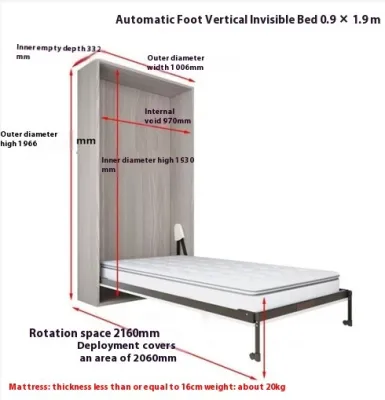
![[Showroom] Halfday - Rollover Folding Wall Bed | Invisible Murphy Bed Hidden Rollaway Bed](https://img.lazcdn.com/g/p/860b7d71ff1392db6313dbcf69fa37cf.png_400x400q80.png_.webp)

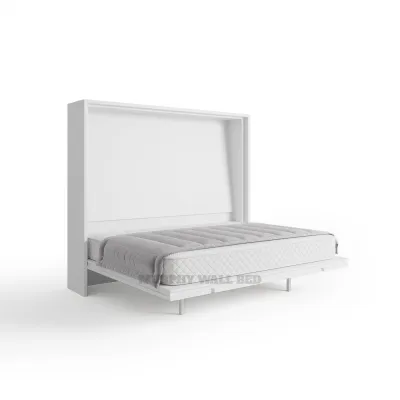


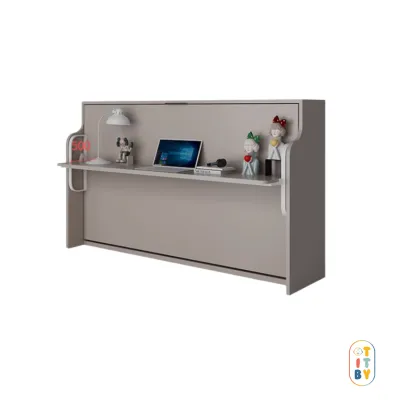
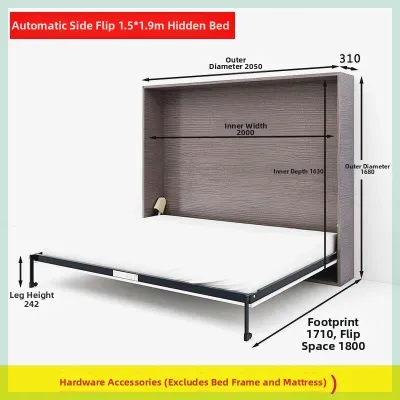
Prices are valid at publication and may change. Please refer to the product page for the latest price.
Anti-Tip and Mechanical Structure Checks
The most critical safety aspect of any murphy wall bed is its anchoring system. In Singapore, residential wall construction varies significantly; older HDB flats often feature solid concrete walls, while newer developments or renovated rooms may utilize hollow brick, lightweight concrete blocks, or drywall partitions. A murphy wall bed must never be anchored to standard drywall without professional reinforcement or direct attachment to structural studs. Before purchasing, verify that the manufacturer provides heavy-duty anchoring hardware suitable for your specific wall type. The anchoring system must be capable of resisting the pulling forces exerted when the bed is lowered and raised, preventing the entire unit from pulling away from the wall and tipping over.

The lifting mechanism—typically powered by gas pistons or heavy-duty springs—must operate smoothly and require a controlled amount of force to lower. For a child’s room, a soft-close or counterbalanced mechanism is highly recommended, as it prevents the bed from dropping suddenly if released. Furthermore, the bed must feature a secure locking mechanism that keeps it firmly in place when fully closed, preventing curious children from pulling it down. It should also lock securely when fully open to prevent accidental folding while the child is sleeping or playing on the bed.
Before finalizing the purchase, compare the manufacturer’s stated load capacity against your child’s current and projected weight, factoring in the weight of the mattress itself. Keep in mind that children often jump or play on beds, which subjects the frame to dynamic loads far exceeding their static body weight. Ensure the bed frame, slats, and joints are constructed from robust materials, and check the manufacturer’s care instructions to verify how the frame handles humidity, as Singapore’s tropical climate can affect certain wood composites and metal finishes over time. Additionally, measure your room’s finished dimensions, doorway clearances, and lift access to ensure the heavy, flat-packed components can be safely transported and assembled in your home.
Pinch Points, Gaps, and Guardrail Safety
Children’s fingers are highly vulnerable to entrapment in the moving parts of folding furniture. When evaluating a murphy wall bed, closely inspect the folding joints, hinges, and piston attachments. Safe designs feature shielded mechanisms or protective covers that prevent fingers from reaching the pinch points during operation. The gap between the moving bed frame and the outer cabinet must also be minimized or designed with safety clearances that prevent limbs from getting caught as the bed is lowered or raised.
Another critical area to examine is the gap between the mattress and the bed frame. If the mattress is too small for the frame, gaps can form along the sides or at the head of the bed, posing a serious entrapment hazard for younger children. Always use a mattress that matches the exact dimensions specified by the bed manufacturer. The mattress must also fit snugly within the recessed frame without sliding or shifting when the bed is rotated into its vertical storage position.
For younger children, guardrails are essential to prevent accidental falls during the night. If the murphy wall bed does not come with integrated guardrails, check if the manufacturer offers compatible, certified add-on rails. These guardrails must be structurally rigid, securely attached to the bed frame, and high enough to extend well above the top of the mattress. Avoid flimsy, universal clamp-on rails that might slip or detach under pressure, and ensure that the guardrails do not interfere with the folding mechanism when the bed is closed.
Safe Usage Boundaries and Maintenance Rules
Establishing strict usage boundaries is vital to maintaining a safe environment. Children should never be allowed to operate a murphy wall bed independently. The physical strength, coordination, and judgment required to safely lower and raise a heavy wall bed are generally beyond the capabilities of young children. Parents should establish a strict rule that only adults or older, responsible teenagers are permitted to fold or unfold the bed. When the bed is in its closed position, ensure the safety lock is engaged and, if possible, kept out of reach of younger children to prevent unauthorized attempts to open it.
Regular maintenance is necessary to ensure the ongoing structural integrity of the bed. Create a routine inspection schedule—ideally every six months—to check the tightness of all screws, bolts, hinges, and wall anchors. Singapore’s high humidity can sometimes cause wood to expand or contract slightly, which may loosen fasteners over time. Inspect the wall connection points closely to ensure there is no separation between the bed cabinet and the wall. If you notice any play or movement in the frame when operating the bed, tighten the hardware immediately according to the manufacturer’s instructions.
Parents must also be vigilant in identifying stop-use conditions. If the bed begins to make unusual squeaking or grinding noises, if the lifting mechanism becomes difficult to operate, or if you observe any visible cracks in the frame or wall anchors, stop using the bed immediately. Do not attempt to force the mechanism or perform DIY repairs on critical load-bearing components. Instead, contact a qualified professional or the manufacturer’s authorized service center in Singapore to inspect and repair the unit before allowing your child to use it again.
Frequently Asked Questions (FAQ)
Can a toddler safely sleep in a murphy wall bed?
No, toddlers should not sleep in a murphy wall bed. These beds are designed for older children who have the physical coordination to navigate the elevated frame and follow safety rules. Toddlers face a higher risk of entrapment in the gaps between the mattress and the frame, as well as accidental injury from the folding mechanisms. It is best to transition a child to a murphy bed only when they are older and can safely sleep in a standard twin bed without risk of rolling into structural gaps.
How often should the wall anchors and hinges be inspected?
You should inspect the wall anchors, hinges, and mounting hardware at least once every six months. Look for any signs of loosening screws, structural shifting, or gaps forming between the bed cabinet and the wall. Regular checks are especially important in Singapore’s humid climate, which can affect wood-based frames and wall plugs over time. If the bed is used daily, a quick visual check during folding and unfolding can help catch potential issues early.
Is it safe to install a murphy bed on a drywall partition?
Installing a murphy bed directly onto a standard drywall partition without proper reinforcement is highly unsafe. The pulling force exerted by the lifting mechanism can easily tear anchors out of hollow drywall, leading to a catastrophic collapse. If you must install the bed on a partition wall, you must ensure it is securely anchored to the internal metal or timber studs, or have a professional installer reinforce the wall structure beforehand. For maximum safety, anchoring to a solid concrete wall is highly recommended.

Community discussion
Share your experience or ask a question. Comments are reviewed before publication.