
When traveling, visiting relatives, or managing limited space in a Singapore apartment, choosing a safe portable bed is paramount for your child’s well-being. Unlike permanent wooden cots, a portable bed or travel cot relies on lightweight, folding mechanisms and fabric walls to provide a flexible sleep space. While these design features offer excellent convenience, they also introduce unique structural dynamics that require strict adherence to safety standards.
To ensure your child is sleeping in a secure environment, you must understand how these products are regulated locally and which international benchmarks to look for. By verifying specific safety certifications and performing regular physical inspections, you can prevent common hazards such as structural collapse, entrapment, and suffocation.
Navigating Children's Furniture Safety Regulations in Singapore
When shopping for children’s furniture in Singapore, parents often look for a local safety certification mark. However, while household electrical appliances must carry the mandatory red-and-blue Safety Mark, non-electrical children’s furniture—including portable beds and travel cots—does not fall under this specific mandatory registration scheme. Instead, these products are regulated under the Consumer Protection (Consumer Goods Safety Requirements) Regulations (CGSR) administered by Enterprise Singapore.
Products mentioned in this guide
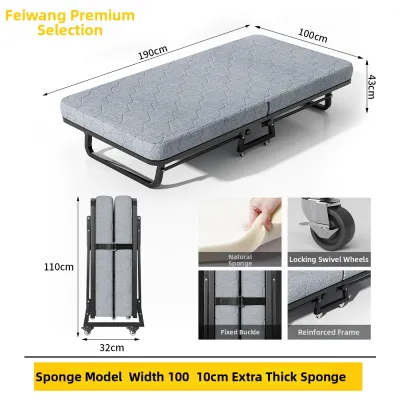
![[SG SELLER] PORTABLE LIGHTWEIGHT HEAVY DUTY 3D AND 4D FOLDING BED CAN PURCHASE WITH OR WITHOUT 4D MATTRESS PERFECT FOR OUTDOORS AND INDOORS](https://img.lazcdn.com/g/p/e7c2dfaaf06d0b68cf7cd8f28f6d88b0.png_400x400q80.png_.webp)
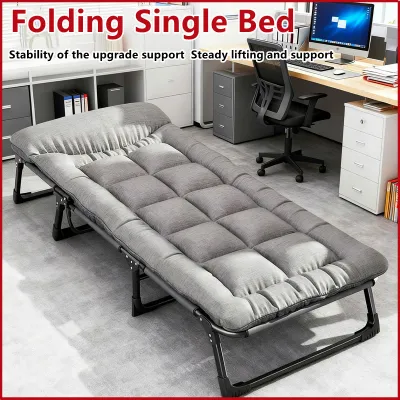
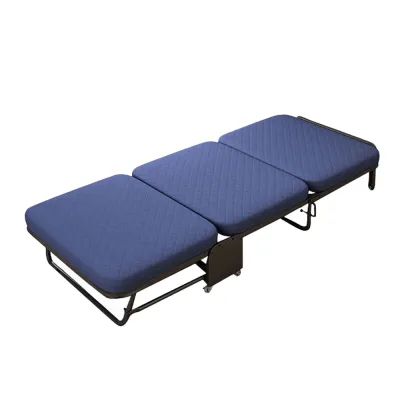
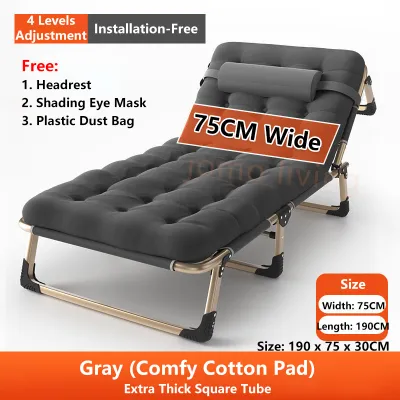
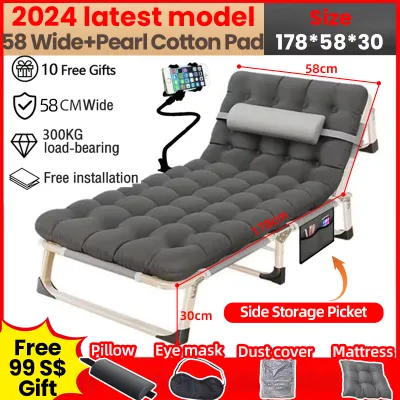
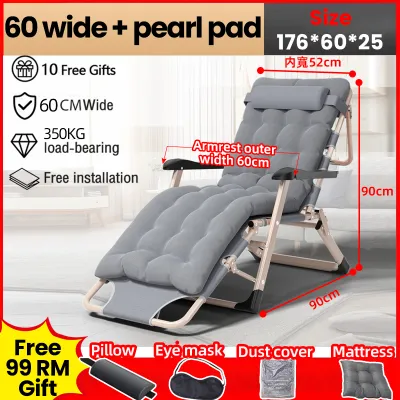
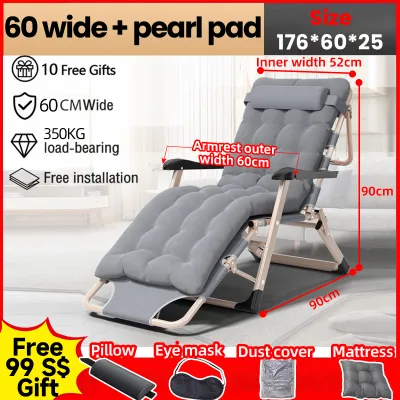
Prices are valid at publication and may change. Please refer to the product page for the latest price.
Under the CGSR, any general consumer product sold in Singapore must conform to safety standards set by key regional or international standardisation bodies. This means local retailers, brand official stores, and online marketplaces are legally obligated to sell products that are safe, but they do not carry a single, unified Singapore-specific safety label. Compliance is instead demonstrated through manufacturer declarations of conformity to recognized international standards.
To verify that a portable bed is authentic and compliant, you should look for clear labeling on the product packaging or the frame itself indicating which international standards it meets. When purchasing from local boutiques or online platforms, do not hesitate to contact the seller or manufacturer to request a copy of their independent test reports or certificates of conformity. Reputable brands will readily provide documentation from accredited testing laboratories such as TÜV SÜD, SGS, or Intertek.
Recognised International Safety Standards for Portable Beds
Because Singapore’s regulatory framework relies on international benchmarks, understanding the specific safety standards of other major jurisdictions is the most reliable way to assess a product’s structural integrity. Reputable portable beds sold locally are typically tested against European, North American, or Australian standards.

European Standards (EN)
In Europe, folding cots and travel cots must comply with the EN 716 standard series, specifically EN 716-1 (safety requirements) and EN 716-2 (test methods). This standard is highly comprehensive and focuses on preventing the most common physical hazards associated with folding sleep environments.
Key requirements under EN 716 include:
- Entrapment Prevention: Strict limits on the spacing of mesh holes and frame gaps to ensure a child's fingers, toes, or clothing buttons cannot become caught.
- Folding Mechanisms: A mandatory requirement for at least two separate, consecutive manual actions to fold the bed, ensuring it cannot collapse accidentally if a child bumps or plays near the joints.
- Structural Height: The distance between the top of the mattress and the top of the cot sides must be at least 500 mm in the lowest position to prevent older infants from climbing out.
North American Standards (ASTM)
In the United States, portable beds and play yards are governed by the ASTM F406 standard (Standard Consumer Safety Specification for Non-Full-Size Baby Cribs/Play Yards). This standard is legally enforced by the Consumer Product Safety Commission (CPSC) and features rigorous physical testing protocols.
Key requirements under ASTM F406 include:
- Dynamic Load Testing: The mattress base and frame must withstand repeated vertical impacts to simulate a child jumping up and down without structural failure.
- Latch and Lock Integrity: Locking systems must remain securely engaged even when subjected to significant lateral forces and vibrations.
- Side Height and Stability: Strict dimensional limits to prevent tipping and ensure the fabric walls remain taut and upright under pressure.
Australian and New Zealand Standards (AS/NZS)
Australia and New Zealand maintain some of the strictest nursery furniture standards in the world, codified under AS/NZS 2195 (Folding cots – safety requirements). This standard is highly regarded for its focus on preventing sudden infant death syndrome (SIDS) and other sleep-related accidents.
Key requirements under AS/NZS 2195 include:
- Mattress Firmness: A specialized test method using a weighted disc to ensure the mattress is sufficiently firm and does not pose a suffocation risk if a baby rolls onto their stomach.
- Breathability: Mandatory requirements for breathable mesh panels on all sides of the cot to ensure adequate airflow, which is particularly critical in Singapore's warm, humid climate.
- Dynamic Strength: Rigorous testing of the frame's joints under simulated long-term wear to ensure the bed remains stable over its entire usable lifespan.
Critical Safety Risks and Pre-Purchase Inspection Checklist
Before finalizing your purchase or placing your child in a portable bed, you should conduct a thorough physical inspection. Use this checklist to identify potential design flaws or physical hazards:
- Entrapment and Strangulation Gaps: Ensure there are no gaps wider than 3 cm between the mattress edge and the fabric walls. Mesh panels should have a tight, fine weave; if a standard ball-point pen can easily pass through the mesh holes, the weave is too loose and poses a finger-trapping hazard. Check for protruding hardware, loose fabric strings, or accessible zippers that could snag clothing or scratch sensitive skin.
- Locking Mechanism Security: Locate the folding joints on the top rails and the central hub. When assembled, these locks must engage with a distinct, audible click. Verify that all locking pins are fully seated and cannot be disengaged by simply pushing upward on the bottom of the rail; a compliant design always requires a dual-action release mechanism.
- Material Safety and Chemical Off-gassing: Children frequently press their faces against the fabric walls or bite the top rails of a portable bed. Check that the textiles are certified under OEKO-TEX Standard 100 or a similar independent textile certification, which guarantees the fabric is free from harmful levels of formaldehyde, heavy metals, and flame retardants. Any plastic or painted components must be certified lead-free and BPA-free.
- Mattress Thickness and Firmness: The mattress provided with a portable bed is deliberately thin and hard. Press your hand firmly onto the surface; it should feel rigid and spring back immediately without leaving a deep impression. Soft mattresses or added padding can allow a baby's face to sink in, obstructing their airway.
Safe Setup, Usage Limits, and Sleep Environment Guidelines
Even the most highly certified portable bed can become hazardous if it is assembled incorrectly or used beyond its intended limits. Following proper operational guidelines is essential to maintaining a safe sleep environment.
- Assembly and Verification: Always follow the manufacturer's step-by-step instruction manual during setup. For most models, the golden rule is to lock the four top rails into place before pushing down the central floor hub; reversing this order often prevents the safety locks from engaging fully. Once assembled, perform a physical "shake test" by firmly grasping the top rails and shaking the frame to verify that no joints slip or unlock under pressure.
- Weight, Height, and Developmental Limits: Every portable bed has strict manufacturer-defined limits. Generally, travel cots are rated for children up to 13 kg to 15 kg, or a maximum height of 85 cm. However, developmental milestones are often more critical than age or weight; you must discontinue using the portable bed immediately once your child is able to sit up, kneel, or show signs of attempting to climb out, as the risk of a tip-over accident increases dramatically.
- Safe Sleep Practices: Keep the interior of the portable bed completely bare. In Singapore's warm climate, a fitted sheet made of breathable natural cotton is all that is necessary. Do not add pillows, bolsters, heavy blankets, or soft toys to the bed, as these are primary suffocation hazards. Position the bed on a flat, level floor away from high-traffic areas, window grilles, curtain cords, electrical outlets, and direct drafts from air conditioning units.
- Maintenance and Wear in Humid Climates: Singapore's high relative humidity can accelerate the degradation of fabrics and promote mold growth. Regularly inspect the underside of the mattress and the lower fabric seams for dark spots or musty odors. Check the folding hinges for signs of rust or plastic fatigue. If you discover any torn mesh, failing locks, or cracked plastic joints, stop using the bed immediately and contact the manufacturer for approved replacement parts; never attempt to repair structural components with DIY solutions.
Frequently Asked Questions (FAQ)
Do I need to buy a specific mattress for a portable travel cot?
Yes, you must only use the mattress that was supplied by the manufacturer specifically for that model of portable bed. Standard cot mattresses or aftermarket foam inserts should never be added to a travel cot. Portable beds are designed to function as a unified system where the mattress acts as a structural base to keep the fabric walls taut. Adding a thicker or softer mattress creates deep, compressible gaps along the perimeter where a baby’s head can easily become trapped, leading to a high risk of positional asphyxiation.
Are second-hand portable beds safe to use?
Second-hand portable beds carry inherent risks and are generally not recommended unless you can fully verify their history. Over time, the internal locking springs can weaken, plastic joints can become brittle from UV exposure or heat, and older models may not comply with the latest safety standards. If you do choose to use a pre-loved bed, ensure it includes the original instruction manual, verify that all structural parts and the original mattress are present, and thoroughly test the safety locks and frame stability before allowing your child to sleep in it.
Can a portable bed replace a standard cot for everyday use?
No, portable beds are designed for temporary travel or occasional use and should not replace a standard wooden cot for daily, long-term sleep. Standard cots provide superior structural durability, optimal ventilation, and are designed to accommodate thicker, highly supportive mattresses that promote healthy spinal development in growing infants. Furthermore, the constant wear and tear of daily folding and unfolding can accelerate the degradation of a portable bed’s safety mechanisms, reducing its overall lifespan and safety margin.
Community discussion
Share your experience or ask a question. Comments are reviewed before publication.