
Selecting a wooden platform bed for your child in Singapore requires balancing aesthetics, space-saving functionality, and strict safety standards. Because children spend up to half their day in bed, their sleeping environment must be free from physical hazards and toxic chemical exposure. In Singapore’s warm, humid climate, material stability and finish quality are particularly critical to prevent warping, joint loosening, and mold growth.
While furniture is not subject to mandatory pre-market registration under local consumer product safety schemes, it is protected under general consumer safety laws. Parents must take an active role in evaluating international safety benchmarks and physical construction details to ensure a bed frame is truly safe for a growing child.
Navigating Safety Requirements for Kids' Beds
In Singapore, the Consumer Product Safety Office (CPSO), under Enterprise Singapore, monitors the safety of consumer goods. While certain household items like electrical appliances require mandatory safety marks, children’s furniture generally falls under the Consumer Protection (Fair Trading) Act (CPFTA). This means there is no mandatory pre-market registration or specific local safety standard exclusively for domestic kids’ platform beds.
Products mentioned in this guide
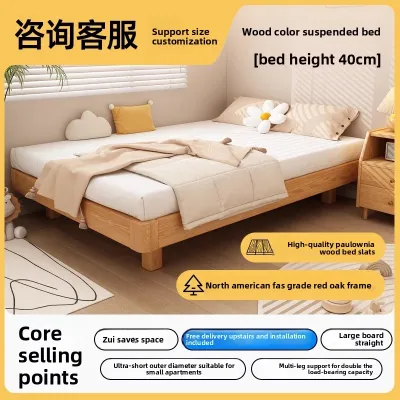
![[Cozy ]Solid Wood Floor Bed Simplicity Tatami Bed Frame No Headboard Platform Bed Tatami Bed](https://img.lazcdn.com/g/p/86f80d46c3dbf770cde76ea61d18ef47.jpg_400x400q80.jpg_.webp)
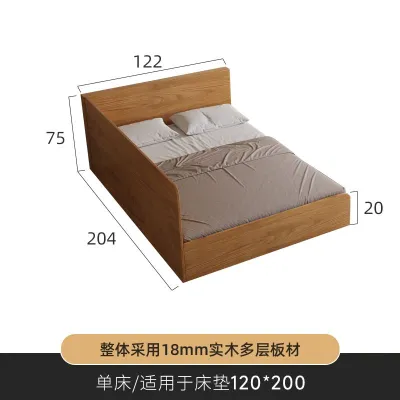
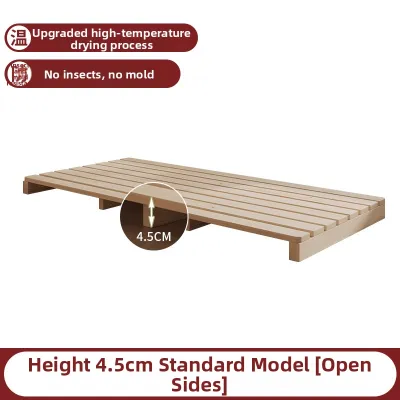
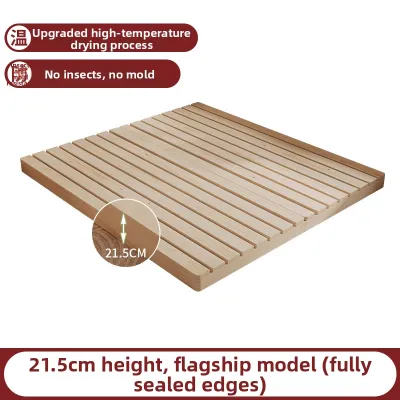

Prices are valid at publication and may change. Please refer to the product page for the latest price.
Instead, the responsibility falls on manufacturers to ensure safety, and on parents to verify it using recognized global benchmarks. Relying solely on generic marketing claims such as “compliant,” “safe,” or “certified” on ecommerce platforms is a common pitfall. These labels are often self-declared by sellers without independent verification.
To ensure a wooden platform bed is safe, look for compliance with established international standards. For example, European standards like EN 1725 (for domestic adult and children’s beds) and American standards like ASTM F1821 (for toddler beds) provide rigorous frameworks for structural strength, stability, and entrapment prevention.
When shopping, ask the retailer to provide the specific standard to which the bed was tested. A reputable manufacturer will readily share this information, allowing you to verify that the bed has undergone independent mechanical testing. Using these global benchmarks as your baseline ensures that the bed frame can withstand the typical wear and tear of a child’s active daily use.
Physical Safety Checks for Wooden Platform Beds
A physical inspection is the most reliable way to assess the structural safety of a wooden platform bed. Entrapment is one of the most significant risks for young children, particularly around the head, neck, and limbs. When evaluating a bed frame, pay close attention to the spacing of all components.

If the platform bed features integrated guardrails or headboards, measure the gaps between the vertical slats. These gaps should be narrow enough to prevent a child’s head or torso from slipping through. A standard safety guideline is to ensure that any gaps are either less than 60 mm or greater than 230 mm. Gaps between 60 mm and 230 mm present a severe risk of head entrapment, where a child’s body can pass through but their head remains trapped.
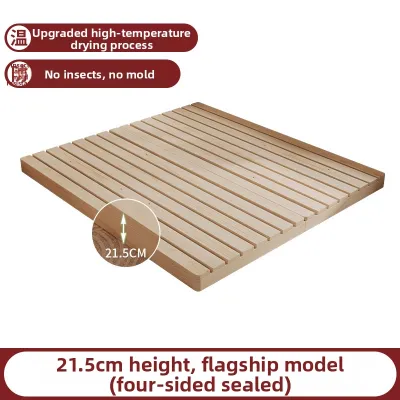
The support slats beneath the mattress also require careful inspection. Ensure the distance between individual slats is narrow—ideally less than 60 mm. This tight spacing prevents the mattress from sagging or shifting, which could create dangerous gaps along the sides of the bed frame. It also ensures that if a child lifts the mattress, their limbs cannot easily slip between the slats and become wedged.
Next, examine the exterior of the bed frame for physical hazards. Run your hands along all edges and corners; they should be smoothly rounded with no sharp points. Corner posts should not protrude more than 1.5 mm above the side rails or end panels, as protruding posts can snag a child’s clothing, posing a strangulation hazard.
All assembly hardware, such as bolts, screws, and brackets, must be countersunk or completely flush with the wood surface. Exposed threads or protruding bolt heads can cause painful scratches or bruises during play. Ensure that no hardware is loose or missing from the package before beginning assembly.
Finally, verify the manufacturer’s stated weight capacity. A child’s bed must support more than just the child’s weight; it must accommodate the mattress, bedding, and the occasional weight of a parent sitting or lying down for bedtime reading. Ensure the frame’s load capacity is clearly documented and matches your family’s needs, keeping in mind your child’s projected growth over the lifespan of the bed.
Evaluating Wood Materials and Non-Toxic Finishes
The choice of wood and the finishes applied to it directly impact both the durability of the bed and the air quality of your child’s bedroom. In Singapore’s high-humidity environment, solid wood can expand and contract significantly. If the wood is not properly seasoned or finished, this movement can cause joints to loosen, compromising the bed’s structural integrity.
A material name alone does not guarantee durability; instead, parents must check the quality of the finish, the strength of the joints, and the manufacturer’s care instructions. High-quality joinery, such as mortise-and-tenon or sturdy dowel connections, is far more resilient to humidity-induced shifting than simple butt joints held together by screws.
If the bed is made from engineered wood, such as plywood or medium-density fibreboard (MDF), it is essential to check the adhesive standards. Engineered woods often use glues that can emit formaldehyde, a volatile organic compound (VOC) that can irritate a child’s respiratory system. Look for products certified to low-emission standards, such as GREENGUARD Gold or European E1/E0 formaldehyde classes.
Finishes, including paints, varnishes, and oils, must be entirely non-toxic. Children, especially toddlers, may chew on bed rails or touch the frame and then put their hands in their mouths. Verify that the finishes used are lead-free and comply with safety standards such as EN 71-3 (the European standard for toy safety, which restricts the migration of heavy metals). Water-based finishes are generally preferred over solvent-based ones, as they emit significantly fewer VOCs and do not leave a lingering chemical odor in the room.
Perform a physical touch test on the showroom model or upon delivery. The wood should feel perfectly smooth to the touch, with no rough patches, raised grain, or splinters. A poorly sanded frame not only poses an immediate splinter risk but also indicates a lack of quality control in the manufacturing process.
Verifying Manufacturer Claims and Certifications
To ensure the safety claims made by a retailer are genuine, you must know how to validate their documentation. Do not accept verbal assurances or vague marketing materials. Instead, request a copy of the third-party test reports issued by accredited, independent laboratories such as TÜV SÜD, SGS, or Intertek.
When reviewing a test report, check several key details. First, verify that the report is recent and clearly identifies the exact model name and material composition of the bed you are purchasing. A test report for a different model or a different material (such as metal instead of wood) does not prove the safety of the platform bed you are considering.
Second, check the scope of the testing. The report should explicitly state that the bed was tested for structural stability, load capacity, and chemical safety (such as lead and formaldehyde content). Ensure the testing laboratory is accredited by a recognized body, which guarantees the validity of their testing procedures.
Be alert to common red flags. If a seller claims their products are “certified” but refuses to share the test report, or claims the documentation is “confidential,” treat this as a warning sign. Reputable manufacturers who invest in rigorous safety testing are proud to share their compliance certificates with concerned parents. Additionally, watch out for certificates that have expired or those issued by unaccredited, in-house testing facilities, as these lack the objectivity of independent third-party validation.
Safe Assembly and Ongoing Maintenance
Even the safest, most certified wooden platform bed can become hazardous if it is assembled incorrectly or neglected over time. Proper installation and routine maintenance are vital to preserving the structural integrity of the bed throughout its lifespan.
When assembling the bed, strictly follow the manufacturer’s step-by-step instructions. Use the exact hardware provided; substituting screws or bolts with different sizes can weaken the joints or damage the wood. Pay close attention to the torque applied to fasteners. While bolts must be tight to prevent wobbling, over-tightening can strip the wooden threads or crack the timber, especially in softer woods like pine.
If the bed frame requires anchoring to a wall—particularly if it features an integrated high headboard or storage units—ensure you use the appropriate wall plugs and brackets suitable for your home’s wall type (such as concrete or drywall). Never skip this step if the manufacturer recommends anchoring, as it prevents accidental tip-overs during active play.
Establish a regular maintenance schedule. Once a month, perform a quick structural check of the bed. Gently shake the frame to test its stability; any wobbling or swaying indicates that the joints have loosened. In Singapore’s humid climate, wood fibers can compress slightly over time, causing bolts to lose their initial tension. Use the appropriate tools to gently retighten any loose hardware.
During your monthly check, inspect the support slats for any signs of bowing, cracking, or shifting. Look closely at the joints for hairline fractures in the wood or separation between the panels. If you notice any structural damage, creaking sounds that persist after tightening, or broken slats, discontinue use immediately and contact the manufacturer for replacement parts. Prompt attention to these warning signs prevents minor wear from turning into a structural failure.
Frequently Asked Questions (FAQ)
At what age is a wooden platform bed safe for a child?
A wooden platform bed is generally safe for children who have outgrown their crib, typically around two to three years of age. The transition depends heavily on your child’s physical development and sleep habits. For younger toddlers, choose a low-profile platform bed that sits close to the floor to minimize the risk of injury from accidental falls. Additionally, ensure the bed is fitted with secure, sturdy guardrails on both sides until your child is older and accustomed to sleeping in an open bed.
Do bunk beds and platform beds share the same safety standards?
No, bunk beds and platform beds do not share the same safety standards, as they present different levels of risk. Bunk beds are elevated structures subject to much stricter safety regulations, such as EN 747, which mandate specific guardrail heights, ladder safety, and rigorous fall-prevention tests. Platform beds, being closer to the ground, focus primarily on general structural integrity, non-toxic materials, and preventing entrapment within the headboard, footboard, or support slats. While both require safe materials, bunk beds demand far more stringent physical safety measures.
Community discussion
Share your experience or ask a question. Comments are reviewed before publication.