
Quick Answer: Navigating Kids' Bed Safety in Singapore
Finding a safe sleeping bed for your child in Singapore involves a dual approach: verifying official safety certifications and conducting a rigorous physical inspection. While specific regulatory marks vary depending on whether the furniture is imported from Europe, the United States, or other regions, you must look for verified compliance labels rather than relying on vague marketing claims.
A truly safe sleeping bed requires a stable frame, secure guardrails with precise spacing, and a mattress that fits without leaving dangerous gaps. Always consult the manufacturer’s manual to verify the exact weight and age limits before introducing any new bed to your child’s room.
How to Verify Safety Certifications and Compliance Labels
When shopping for a children’s sleeping bed, safety claims on retail tags can sometimes be misleading. Terms like “child-friendly” or “baby-proof” are marketing descriptors rather than certified safety guarantees. To ensure a bed is genuinely safe, you must look for official compliance marks, test reports, or manufacturer declarations of conformity.
Products mentioned in this guide
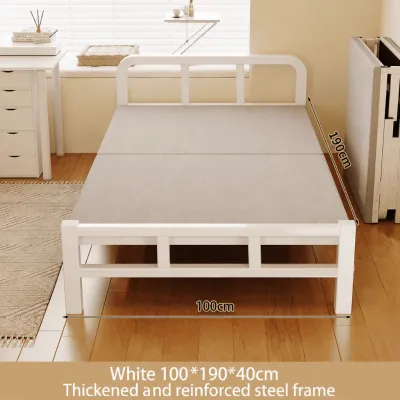
Prices are valid at publication and may change. Please refer to the product page for the latest price.

These safety credentials are typically printed on the product packaging, stamped onto the frame itself (often on the underside of the headboard or slats), or detailed in the official product manual. Legitimate manufacturers subject their products to rigorous testing by recognized international or regional testing laboratories.
Look for references to established safety standards, such as European (EN) standards, British (BS) standards, or American (ASTM) standards, which govern children’s furniture safety. These standards dictate everything from structural load capacities to chemical limits in paints and finishes.
Before making a purchase, always review the product manual or specification sheet. A compliant manual will explicitly state the safety standards the bed meets, along with clear age and weight recommendations.
If you are shopping online or in a showroom and cannot find these certification details, do not hesitate to request the official test reports or compliance documentation from the retailer. If a retailer cannot or will not provide proof of testing, it is safer to choose a different sleeping bed that offers transparent safety credentials.
Essential Physical Safety Features to Inspect Before Purchase
Even with the correct certifications, a physical inspection is crucial to verify that the specific unit you are buying is structurally sound and free from manufacturing defects. You can use the following physical safety checklist when evaluating a sleeping bed in a showroom or assembling it at home.
Guardrails and Openings Guardrails are essential for preventing falls, especially for younger children who move frequently during sleep. Check that the guardrails are securely attached to the bed frame and do not wobble when pressure is applied. The gaps between individual slats or rails must be narrow enough to prevent a child’s head, limbs, or torso from becoming trapped. As a general rule, ensure that the spacing between slats is small enough that a standard soda can or a small child’s fist cannot pass through easily.
Surface and Edges Run your hands along every accessible surface of the bed frame to check for potential hazards. There should be no sharp corners, rough edges, or exposed splinters, particularly on wooden frames. Metal frames should have smooth, rounded welds and no peeling paint. Ensure that all hardware, such as screws, bolts, and brackets, is either completely recessed into the frame or covered with secure, flush-fitting plastic caps to prevent scratches or snagged clothing.
Mattress Fit A poorly fitting mattress creates a severe entrapment hazard. When the mattress is placed inside the bed frame, there should be virtually no gap between the edge of the mattress and the inner sides of the frame. If you can easily slide more than two fingers into the gap between the mattress and the bed frame, the mattress is too small for that specific sleeping bed. A snug fit ensures that limbs cannot slip down and become wedged during the night.
Stability and Hardware Test the overall stability of the bed frame by gently shaking it from side to side and end to end. A safe sleeping bed should feel solid and rigid, with no swaying, creaking, or loose joints. Inspect the quality of the hardware; heavy-duty steel bolts and barrel nuts are generally more reliable than simple wood screws, which can strip and loosen over time. Ensure the slats supporting the mattress are robust, evenly spaced, and securely fastened to the side rails so they cannot slide or collapse under sudden impact.
Safe Setup, Placement, and Daily Maintenance
Bringing a safe sleeping bed into your home is only the first step; proper assembly, strategic room placement, and ongoing maintenance are equally vital to long-term safety.
Assembly When assembling the bed, follow the manufacturer’s instruction manual step by step without skipping any parts or structural supports. Use only the hardware provided in the packaging, as substituting screws or brackets can compromise the structural integrity of the frame. If any parts are missing, damaged, or do not align correctly, stop assembly immediately and contact the manufacturer or retailer for official replacement parts rather than attempting a temporary DIY fix.
Room Placement The position of the sleeping bed within the bedroom significantly impacts safety. Position the bed well away from windows, where a child could climb out or fall through a screen. Ensure the bed is far from window blind cords, curtains, electrical cords, and wall-mounted decorations, as these present serious strangulation and choking hazards. Additionally, keep the bed clear of tall, heavy furniture like wardrobes or bookshelves that could be pulled down or tipped over.
Anchoring For elevated sleeping arrangements, such as bunk beds, loft beds, or beds with integrated storage towers, anchoring the furniture to the wall is highly recommended. Use heavy-duty wall anchors and safety straps designed for furniture to secure the frame directly to the wall studs. This prevents the bed from tipping over if a child attempts to climb the outer frame or if multiple children play on the structure.
Routine Checks Children’s beds endure significant wear and tear from daily use, jumping, and play. Establish a regular schedule—such as once every few months—to inspect the bed frame thoroughly. Check all bolts and screws, tightening any that have vibrated loose over time. Inspect wooden frames for new splinters, cracks, or warping, and check metal frames for bent components or failing welds. If you notice any structural weakening, address it immediately before allowing your child to sleep in the bed again.
When to Transition or Replace the Sleeping Bed
As children grow, their sleeping needs and physical capabilities change, meaning a bed that was once perfectly safe may eventually become a hazard. Knowing when to transition to a new sleeping bed or replace an existing one is key to maintaining a safe sleep environment.
The most definitive boundary for using any children’s bed is the manufacturer’s stated maximum weight and height limits. Once your child approaches or exceeds these limits, the frame and slats may no longer safely support their weight, increasing the risk of a structural collapse. Keep a record of these limits and monitor your child’s growth milestones accordingly.
Pay close attention to behavioral and physical signs that indicate a transition is necessary. If your child is constantly bumping against the headboard and footboard, or if their feet are nearing the end of the mattress, they have outgrown the bed’s physical dimensions. For toddler beds with guardrails, if your child begins attempting to climb over the rails, the risk of a fall increases dramatically, signaling that it is time to transition to a standard single bed or a low-to-the-ground floor bed.
Finally, any sign of irreparable structural damage requires immediate action. Broken slats, cracked side rails, stripped screw holes, or compromised joints cannot be safely patched with tape or glue. If the structural integrity of the sleeping bed is compromised and cannot be restored using official manufacturer replacement parts, the bed must be decommissioned and replaced immediately to prevent accidents.
Frequently Asked Questions (FAQ)
Are second-hand children's beds safe to use?
Using a second-hand sleeping bed can be a practical option, but it requires extreme caution. Older beds may have hidden structural fatigue, hairline cracks in the wood, or worn-out hardware that is not immediately visible. They may also lack modern safety features or fail to meet current safety standards.
Before accepting or purchasing a used bed, ensure that the seller provides the original assembly manual and all original hardware. Check online recall databases to confirm the model has not been recalled for safety defects. Avoid any second-hand bed that has been modified, painted with unknown finishes that might contain lead, or is missing structural components like support slats or guardrails.
Do bunk beds require different safety checks than standard single beds?
Yes, bunk beds introduce unique safety challenges due to their height and elevated design. The top bunk must have continuous guardrails on all four sides, even if the bed is placed directly against a wall, to prevent a child from rolling out through the gap. The gap between the bottom of the guardrail and the top of the mattress must be strictly controlled to prevent entrapment.
Additionally, pay close attention to the ladder, ensuring it is securely fastened to the bed frame, has non-slip steps, and does not wobble. Strict age limits must be enforced; the top bunk is generally not suitable for children under six years of age. Regularly inspect the upper bunk’s support system to ensure the mattress foundation is locked securely in place and cannot be dislodged from below.

Community discussion
Share your experience or ask a question. Comments are reviewed before publication.