
When shopping for a kids’ pull-out bed frame in Singapore, safety must be your absolute priority. These space-saving furniture pieces are highly popular in compact HDB flats and condominiums, but their moving parts, dual-level structures, and variable heights introduce unique safety considerations. To ensure a secure sleeping environment, a children’s pull-out bed frame should comply with recognized international safety standards, feature robust mechanical stoppers, maintain safe gap tolerances to prevent entrapment, and offer reliable structural stability. Verifying these elements before purchase protects your children from pinch points, falls, and structural failures.
Verifying Safety Certifications and Regulatory Compliance
In Singapore, consumer products are overseen by the Consumer Product Safety Office (CPSO), which ensures that goods sold to the public meet stringent safety requirements. While general household furniture does not always require pre-market registration, children’s furniture must adhere to general safety guidelines to prevent injury. When evaluating a pull-out bed frame, you should actively check for compliance with recognized international standards. Look for certifications such as the European Standard (EN 747 for bunk beds and high beds, or EN 1725 for general bed safety) and the American Society for Testing and Materials (ASTM F1821 for toddler beds). These standards govern structural integrity, material toxicity, and mechanical safety.
When browsing online marketplaces or visiting physical showrooms, ask the retailer for official compliance certificates or test reports. A reputable manufacturer will readily provide documentation showing that their products have undergone independent laboratory testing. Be wary of vague marketing terms like “child-friendly” or “non-toxic” if they are not backed by verifiable certifications.
Products mentioned in this guide


![[FREE INSTALLATION] KENZZO: Wooden single bed frame with headboard/ super single bed frame/Pull out bed/storage bed](https://img.lazcdn.com/g/p/6b17ef488a1c7170cd309d76ce51fe13.jpg_400x400q80.jpg_.webp)
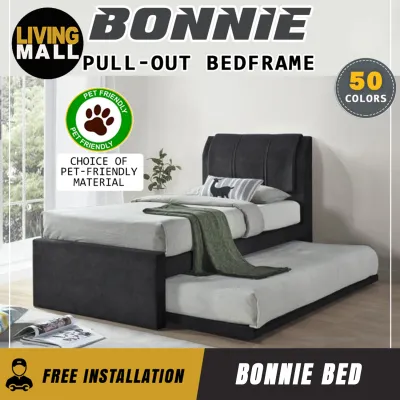
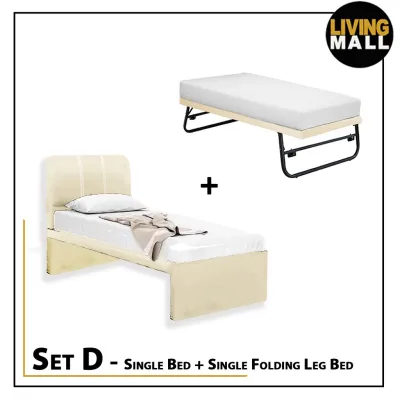
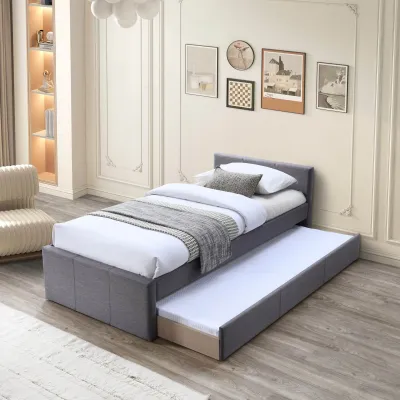
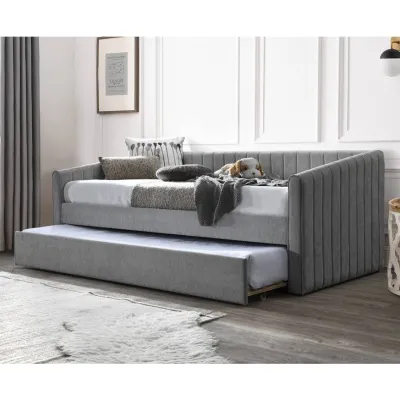
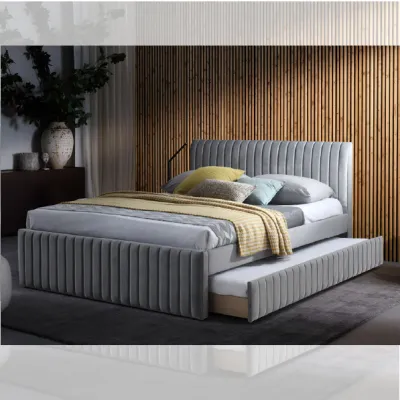
Prices are valid at publication and may change. Please refer to the product page for the latest price.
Red flags in product listings include a complete lack of safety documentation, missing manufacturer contact details, and the absence of clear age or weight recommendations. If a retailer cannot specify the maximum weight capacity for both the main bed and the pull-out trundle, or if they fail to provide clear assembly instructions, it is best to look elsewhere. Additionally, check local consumer protection portals for any recent product recalls or safety alerts related to the brand or model you are considering.
Evaluating Mechanical Safety and Entrapment Risks
The defining feature of a pull-out bed frame is its sliding mechanism, which allows the lower trundle bed to tuck neatly beneath the main frame. However, this moving part introduces significant risks of pinching, shearing, and entrapment if not properly designed. You must carefully inspect the sliding tracks and rollers. The mechanism should operate smoothly without requiring excessive force, which could cause a child to pull the bed too quickly and lose control.

A critical safety feature to look for is a physical stopper. Stoppers prevent the lower trundle bed from being pulled completely out of its tracks unexpectedly. Without these, the lower bed could detach entirely, potentially falling onto a child’s feet or causing the main frame to lose balance. Furthermore, the pull-out section must feature a reliable locking mechanism or locking casters. Once the trundle is extended, the wheels should lock securely in place to prevent the bed from rolling back under the main frame while the child is sleeping or moving around.
Entrapment is another major hazard associated with pull-out beds. Gaps between the main bed frame and the pull-out section, as well as the spacing between individual mattress support slats, must be carefully evaluated. According to international safety guidelines, gaps should either be smaller than 25 mm to prevent fingers and limbs from getting caught, or larger than 230 mm to ensure a child’s head cannot become trapped. Avoid frames with gaps in the dangerous zone of 60 mm to 230 mm, where a child’s body could slide through but leave their head caught, posing a severe strangulation risk.
Inspect the edges and corners of both the main frame and the pull-out section. All edges should be rounded or chamfered to minimize the impact of accidental bumps. Metal brackets, hinges, and sliding hardware must be recessed or covered with protective caps to prevent scratches or deep cuts during play or sleep.
Ensuring Structural Stability and Fall Prevention
Structural stability is paramount for any children’s bed, but it is especially critical for a pull-out bed frame that supports multiple sleepers. Start by assessing the guardrails on the main bed. If the main bed is elevated to accommodate the trundle underneath, it must have sturdy guardrails on all open sides. Check the manufacturer’s specifications for the recommended mattress thickness. If you use a mattress that is too thick, it will reduce the effective height of the guardrail, making it easy for a child to roll over the top. The guardrail should always extend at least 160 mm above the top surface of the mattress.
Next, evaluate the overall weight capacity of the entire unit. Children do not just sleep on their beds; they also sit, play, and jump on them. The main frame and the pull-out trundle must have clearly defined weight limits that accommodate these dynamic forces. Look for frames constructed from solid hardwoods or high-grade metal, and inspect the joint connections. Sturdy mortise-and-tenon joints or heavy-duty steel bolts are far more reliable than simple wood screws or plastic brackets, which can loosen and strip over time.
Tipping resistance is another crucial factor. When the lower trundle bed is fully extended, the center of gravity of the entire furniture piece shifts. Test the stability of the bed by applying downward pressure to the outer edge of the extended trundle. The main bed frame should remain firmly planted on the floor without lifting or wobbling. A wide, low-profile base design generally offers superior stability compared to tall, narrow frames.
Verifying Room Space and Assembly Requirements
Before finalizing your purchase, you must ensure that the pull-out bed frame fits safely within your child’s bedroom and can be delivered without issue. Measure the total footprint of the bed when the trundle is fully extended. In typical Singapore bedrooms, space can be tight, so you must guarantee there is still adequate clearance for walking and that the extended bed does not block emergency exit paths, wardrobe doors, or study desks. There should be at least 60 cm of open space around the extended bed to allow for safe movement.
Do not overlook the delivery route. Measure the dimensions of your apartment’s entry doors, internal hallways, and the lift or elevator cabin. Many sturdy bed frames are delivered in large, heavy packages that require significant clearance to maneuver around tight corners. If the packaged frame cannot fit into the lift, you may face delivery delays or additional handling fees.
Finally, carefully review the assembly instructions. Some pull-out bed frames require wall anchoring to prevent tipping, especially if they feature integrated shelving or a daybed backrest. Ensure your bedroom walls are suitable for anchoring and that you have the correct hardware. If the assembly process seems complex or requires specialized tools, it is highly recommended to hire professional installation services. Professional installers can ensure that all joints are tightened correctly, tracks are perfectly aligned, and safety features are fully functional, giving you peace of mind.
Frequently Asked Questions (FAQ)
Is a pull-out bed safe for a toddler transitioning from a cot?
A pull-out bed is generally not recommended for very young toddlers transitioning from a cot. Toddlers (typically under the age of three) lack the coordination and spatial awareness to safely navigate the heights and gaps associated with a pull-out bed system. While the lower trundle bed sits close to the floor, the risk of the bed rolling unexpectedly or the child getting limbs caught in the gaps between the two frames remains high. For a safer transition, consider a dedicated toddler bed with low-profile sides or a simple floor mattress. Once your child is older, typically around four to five years of age, they will be better equipped to use a pull-out bed safely.
How often should I inspect the sliding mechanism and hardware?
You should perform a thorough visual and physical inspection of the pull-out bed frame every three to six months. During this check, tighten any loose screws, bolts, or brackets, as regular use can cause hardware to back out over time. Inspect the sliding tracks for dust, hair, or debris that could obstruct the rollers, and clean them as needed. Check that the physical stoppers and locking casters are fully intact and functioning correctly. If you notice that the sliding mechanism has become stiff, noisy, or fails to lock securely, stop using the pull-out function immediately. Contact the manufacturer or retailer to source authorized replacement parts rather than attempting temporary DIY fixes.

Community discussion
Share your experience or ask a question. Comments are reviewed before publication.