
When selecting a loft bed with stairs for a child’s bedroom, safety must be your primary consideration. Loft bed stairs must meet rigorous safety standards that govern structural integrity, material safety, and physical dimensions to minimize the risk of falls, slips, and entrapment. Unlike standard ladders, stairs offer a more stable and generous foot placement, but they also introduce unique design variables that require careful inspection before purchase and assembly.
In space-constrained urban environments, such as high-rise apartments and HDB flats in Singapore, loft beds are an excellent way to maximize floor space for study desks or play areas. However, the compact layout of these rooms means you must carefully plan the placement of the stairs. They should not obstruct pathways, wardrobe doors, or air conditioning airflow. Furthermore, the local tropical climate, characterized by high humidity, can affect wood and metal components over time, making structural vigilance even more critical.
Key Safety Certifications to Look For
When shopping for a loft bed, your first step should be verifying that the product complies with recognized safety standards. In many international markets, manufacturers design children’s furniture to meet specific consumer safety specifications. For example, ASTM F1427 is the standard consumer safety specification for bunk beds in the United States, while EN 747 is the European standard for bunk beds and high beds. These standards are not just arbitrary guidelines; they dictate rigorous testing protocols for load-bearing capacity, structural stability, and material safety.
Products mentioned in this guide
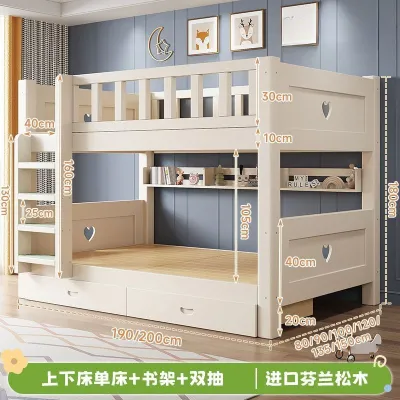
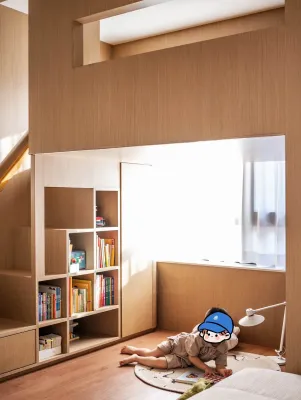



Prices are valid at publication and may change. Please refer to the product page for the latest price.
When reviewing a product, look for physical labels, stamps, or tags on the bed frame itself, or check the user manual for explicit mentions of these certifications. A compliant product will also use non-toxic, lead-free finishes and paints, which is vital for children’s health. If you are purchasing from an online marketplace or a local furniture retailer and cannot find any certification details, do not hesitate to request a third-party test report from the manufacturer. If the seller cannot provide proof of compliance with established safety standards, it is highly recommended to look for an alternative product that prioritizes safety verification.
Essential Physical Design Requirements for Stairs
The physical dimensions of the stairs play a direct role in preventing slips and falls. Each step should have a generous depth and width to allow your child to place their entire foot securely on the surface. Narrow, shallow steps force children to balance on their toes or arches, increasing the risk of losing footing. Additionally, the step surfaces must feature slip-resistant elements. Look for stairs with grooved wooden treads, textured finishes, or integrated high-grip materials. If the stairs have a smooth, glossy finish, you may need to apply aftermarket non-slip grip tape to ensure traction, especially if your child wears socks indoors.

Handrails are another critical safety feature that must not be overlooked. A safe loft bed stair design includes a continuous, sturdy handrail that runs the entire length of the staircase. The handrail should be positioned at an appropriate height for a child to reach comfortably without stretching or bending. It must be slim enough for small hands to grip securely, yet robust enough to support their weight if they stumble. Inspect the handrail for any sharp edges, splinters, or rough joints that could cause injury during daily use.
Entrapment prevention is one of the most critical aspects of children’s furniture safety. Children are naturally curious and may attempt to slide through gaps in the stairs or handrails. To prevent head or limb entrapment, safety standards specify strict limits on the size of open spaces. As a general rule, gaps should either be smaller than 9 centimeters to prevent a child’s body from slipping through, or larger than 23 centimeters to ensure that if their body does pass through, their head can clear the opening safely. Use a measuring tape to check the spaces between the steps, the handrail balusters, and the gap between the staircase and the bed frame or wall. Any gap falling between 9 and 23 centimeters poses a serious hazard and should be avoided or blocked.
Structural Stability and Installation Checks
A loft bed with stairs is only as safe as its connection points. The staircase must be securely fastened to the main bed frame to prevent any shifting, wobbling, or detachment during use. When inspecting the bed, look for heavy-duty connection mechanisms such as steel bolts, interlocking metal brackets, or dedicated mounting plates. Avoid designs that rely solely on simple wood screws driven directly into the timber, as these can loosen and strip the wood fibers over time, especially with the repetitive stress of a child climbing up and down.
Always check the manufacturer’s specified weight capacity for both the loft bed and the individual stairs. Keep in mind that this limit must accommodate not only your child’s current weight but also their projected growth and the occasional weight of an adult who may need to climb up to change the bedding. In high-rise apartments, where floors may not be perfectly level and walls are typically solid concrete, anchoring the loft bed to the wall is an essential safety measure. Use high-quality wall plugs and heavy-duty brackets to anchor the frame securely, eliminating any risk of the bed tipping forward when a child climbs the stairs.
Proper assembly is non-negotiable. When setting up the bed, strictly follow the manufacturer’s step-by-step instructions. Do not skip any hardware, such as washers, locknuts, or cross-braces, even if they seem redundant. Ensure you have adequate space in the bedroom to assemble the unit comfortably, allowing you to tighten all fasteners to the correct torque. If you are unsure of your assembly skills, consider hiring a professional installation service provided by the furniture retailer to ensure the structural integrity of the bed is compromised in no way.
Age Appropriateness and Usage Boundaries
While loft beds are exciting for children, they are not suitable for all ages. Most international safety standards and manufacturers explicitly state that the elevated sleeping platform of a loft bed is not recommended for children under the age of six. This age limit is based on the development of motor skills, balance, and spatial awareness required to safely navigate heights and stairs, particularly when waking up half-awake in the middle of the night.
Beyond chronological age, you must assess your child’s individual physical development and behavior. Consider their coordination, balance, and sleep habits. If your child is a restless sleeper, prone to sleepwalking, or frequently disoriented upon waking, an elevated bed may pose an unacceptable risk even with the safest stair design. Observe how they interact with furniture; if they tend to treat their bedroom as an indoor playground, a standard low bed might be a safer option until they develop better impulse control.
Establishing clear household rules is essential for maintaining a safe environment. Teach your child that the stairs are strictly for climbing up and down, not for jumping, playing, or sliding. Prohibit them from hanging items such as bags, belts, jump ropes, or clothes on the handrails or steps, as these can easily become tripping hazards or, worse, strangulation risks. Consistently reinforce these rules to ensure your child understands that the loft bed is a place for sleep and quiet study, not rough play.
Routine Maintenance and Safety Inspections
Safety does not end once the loft bed is assembled; it requires ongoing vigilance. Establish a routine to inspect the bed and stairs at least once a month. Check all bolts, screws, and brackets to ensure they remain tight and secure. In humid climates, wood can naturally expand and contract, which can gradually loosen fasteners over time. Inspect the wooden components for any signs of cracking, splitting, or warping, and check metal parts for rust or bending.
The area surrounding the loft bed stairs must be kept meticulously clean and well-managed. Ensure the stairs and the landing zone at the bottom are completely free of clutter, toys, shoes, and clothing. Additionally, adequate lighting is crucial for nighttime safety. Install a motion-activated nightlight near the base of the stairs or along the hallway. This ensures that if your child needs to get up during the night to use the bathroom, they can clearly see each step without having to fumble for a light switch in the dark.
You must define clear conditions under which the use of the loft bed and stairs must be suspended immediately. If you detect a significant wobble that cannot be resolved by tightening the bolts, if a step cracks, or if the handrail becomes loose and cannot be secured, stop your child from using the bed immediately. Restrict access to the stairs until you can obtain official replacement parts from the manufacturer or have the unit inspected and repaired by a qualified professional. Never attempt temporary, makeshift repairs on critical structural components.
Frequently Asked Questions (FAQ)
Are built-in stairs safer than ladders for kids' loft beds?
Built-in stairs are generally considered safer than traditional ladders for children’s loft beds due to their physical design. Stairs provide a much larger surface area for foot placement, allowing the child to step with their entire foot rather than balancing on narrow rungs. They also typically feature integrated handrails on one or both sides, offering continuous physical support during ascent and descent. This makes stairs much easier to navigate, especially when a child is sleepy or carrying an item. However, stairs do occupy a significantly larger footprint in the room compared to a vertical ladder. Ultimately, while stairs offer superior physical stability and ease of use, the safety of either option depends on the product’s compliance with safety standards and the child’s individual motor skills and coordination.
What should I do if the loft bed stairs feel wobbly after assembly?
If the loft bed stairs feel unstable or wobbly immediately after assembly, you must address the issue before allowing your child to use them. First, verify that the floor surface is completely level; an uneven floor can cause the entire structure to rock. Use a spirit level to check this, and consider using furniture pads or shims if necessary. Next, refer back to the assembly manual and systematically re-check every connection point. Ensure that all bolts, screws, and brackets are tightened to the manufacturer’s specifications, but be careful not to over-tighten and strip the threads. Confirm that all stabilizing cross-braces and wall anchors are installed correctly. If the wobble persists despite these checks, stop using the stairs immediately and contact the manufacturer’s customer support for guidance or replacement parts.
Community discussion
Share your experience or ask a question. Comments are reviewed before publication.