
When shopping for a children’s metal double decker bed in Singapore, ensuring structural safety is the top priority. Because specific mandatory local certification marks may not universally apply to all furniture categories, parents must rely on a combination of international standard declarations, rigorous physical inspections, and thorough documentation checks. This guide provides a practical framework to verify safety claims, measure critical dimensions, and maintain the structural integrity of metal bunk beds. By understanding what to look for, you can confidently select a secure, durable sleeping arrangement that fits your home and protects your children.
Understanding Safety Regulations for Kids' Beds in Singapore
In Singapore, consumer product safety is overseen by Enterprise Singapore under the Consumer Protection (Consumer Goods Safety Requirements) Regulations (CGSR). Unlike household appliances or electrical goods, which require a mandatory safety mark before they can be sold, general furniture items—including children’s bunk beds—do not fall under a pre-market registration scheme. Instead, they are regulated under a post-market safety framework. This means that while there is no mandatory local safety label stamped on every bed frame, all products sold must still be safe for consumer use and comply with recognized international safety standards.
Because there is no single mandatory local certification mark for domestic furniture, the responsibility of verifying safety often falls on the buyer. When browsing local furniture showrooms or online marketplaces, you should look for manufacturers that voluntarily test their products against established global benchmarks. A reputable retailer should be able to provide clear documentation showing that their metal double decker beds meet these rigorous safety guidelines.
Products mentioned in this guide
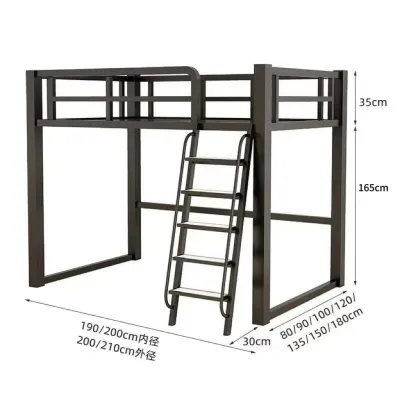
![[CozyNest ]Loft Bed Double Layered Iron Loft Bed Iron Art Elevated Multifunctional Bunk Bed Space Saving Small Apartment Children Bed](https://img.lazcdn.com/g/p/384c6178443d2212fe306824577f4e06.jpg_400x400q80.jpg_.webp)
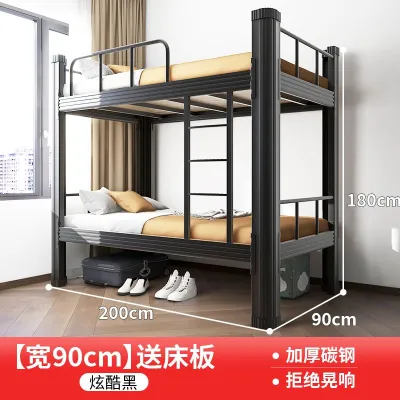
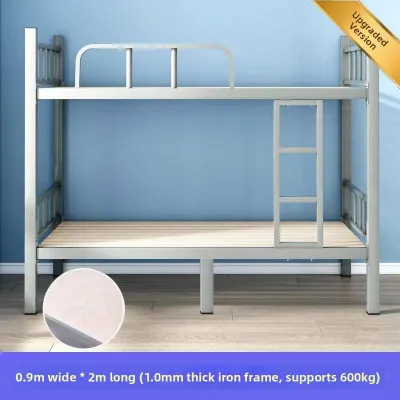
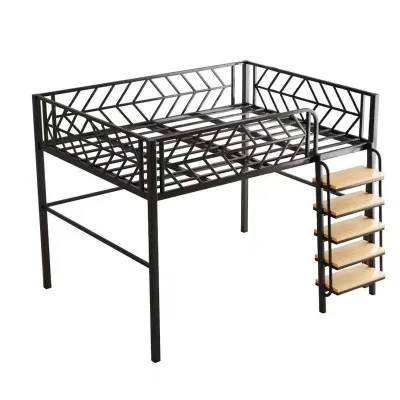
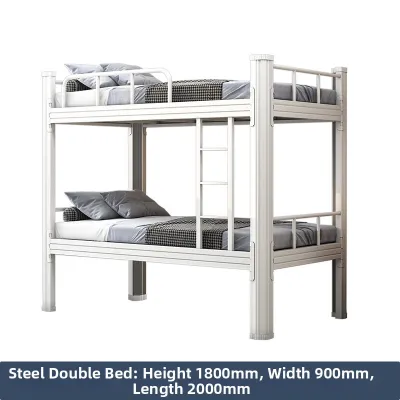
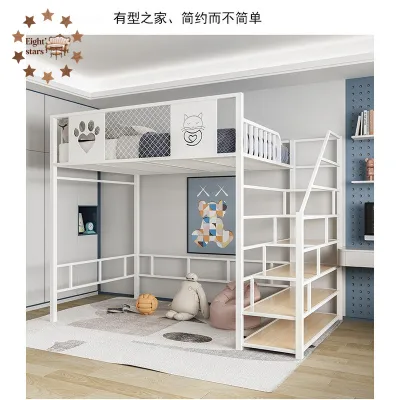
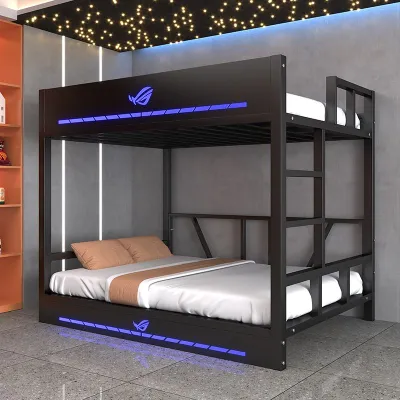
Prices are valid at publication and may change. Please refer to the product page for the latest price.
When purchasing from online marketplaces or local showrooms, verifying business legitimacy and product traceability is essential. Check if the retailer has a physical presence or a clear, accessible customer service channel in Singapore. Review their return policies, exchange terms, and product liability coverage. A transparent seller will readily share details about where the bed was manufactured, the materials used, and how to obtain replacement parts if a joint or fastener becomes damaged over time.
Identifying Reliable International Safety Standard Labels
When evaluating a metal double decker bed, look for compliance with widely recognized voluntary international standards. The two most common benchmarks for bunk bed safety are the European standard EN 747 (specifically EN 747-1 and EN 747-2, which cover safety, strength, and durability requirements) and the American standard ASTM F1427 (Standard Consumer Safety Specification for Bunk Beds). Another highly regarded global benchmark is ISO 9098. These standards dictate everything from the height of the guardrails to the spacing of the ladder rungs, ensuring the bed can withstand dynamic loads and active use.

To verify these claims, do not rely solely on digital marketing text or product descriptions on ecommerce platforms. Instead, inspect the physical product tags, user manuals, or packaging. Authentic compliance is often indicated by a permanent label printed directly on the bed frame or a dedicated section in the assembly manual referencing the specific standard. If a retailer claims their product is certified, ask to see the physical label or the corresponding documentation before finalizing your purchase.
Keep in mind that a manufacturer’s claim of standard compliance is not an automatic guarantee of safety. To ensure the claim is valid, look for references to independent, third-party testing laboratories on the provided documentation. Renowned testing bodies conduct rigorous physical tests on furniture to verify structural integrity, load capacity, and material safety. A genuine certificate of conformity or test report from one of these laboratories provides the highest level of assurance that the metal bunk bed has been thoroughly vetted.
Essential Physical Safety Checks for Metal Bunk Beds
Before assembling or using a metal double decker bed, performing a physical inspection of its dimensions and structural features is crucial. Start with the guardrails on the top bunk. To prevent a child from rolling out of bed, the guardrails must extend continuously around all four sides, with the exception of the ladder opening. Measure the distance from the top of the guardrail to the top of the mattress. This distance should be at least 160 mm. Keep in mind that a mattress that is too thick will reduce this safety margin, so always check the manufacturer’s maximum recommended mattress thickness.
Entrapment hazards are another critical area to inspect. Children can easily get their heads, limbs, or torsos caught in poorly designed gaps. Use a measuring tape to check the spaces between the guardrail slats, the ladder rungs, and the bed frame. To prevent entrapment, these gaps should either be smaller than 75 mm (to prevent a child’s foot or leg from slipping through) or larger than 230 mm (to ensure their head does not get trapped). Avoid any bed design with mid-sized gaps that fall between these two measurements.
Metal-specific inspections require close attention to the quality of the manufacturing. Run your hands carefully along the metal frame, joints, and ladder rungs to check for smooth welds and the complete absence of sharp edges, burrs, or exposed metal shards. Ensure that all hardware, bolts, and fastening points meet the frame flush without protruding, as these can snag clothing or cause scratches. Given Singapore’s humid tropical climate, inspect the metal finish to ensure it has a complete, even powder coating or anti-rust treatment. Any exposed, untreated metal at the joints can quickly corrode, weakening the structure over time.
Finally, consider the physical logistics of your home. Before purchasing, measure your available floor space and ceiling height. In Singapore’s HDB flats, standard ceiling heights typically range from 2.6 to 2.8 meters. Ensure there is at least 75 cm to 1 meter of clearance between the top bunk mattress and the ceiling so your child can sit up comfortably without bumping their head. Additionally, verify the finished dimensions of the bed frame to ensure it can fit through your doorways and inside the residential lift during delivery. If the bed is not fully flat-packed, transport through tight corridors and lift doors can become a major obstacle.
Evaluating Retailer Claims and Product Documentation
A responsible retailer should provide comprehensive documentation to support their safety claims. Always request the original assembly manual before or during delivery. This manual should not only contain step-by-step setup instructions but also explicit safety warnings, weight limits for both the top and bottom bunks, and clear guidelines on the maximum allowable mattress thickness. If the manual is missing, poorly translated, or lacks clear safety warnings, it may indicate a lack of quality control.
If a retailer explicitly advertises that their metal double decker bed has undergone laboratory testing or holds specific safety certifications, ask to see the actual test reports or certificates of conformity. These documents should clearly state the name of the testing laboratory, the date of the test, the specific product model evaluated, and the standards applied. Be cautious of sellers who make vague safety claims but refuse to share supporting documentation or claim that such reports are confidential proprietary information.
Warranty terms are another vital indicator of a product’s long-term safety and durability. Review the warranty policy to understand exactly what is covered. A robust warranty should cover structural frame failures, weld joint cracking, and metal fatigue under normal domestic use. Pay attention to the duration of the warranty and the process for filing a claim. A manufacturer that stands behind the structural integrity of their metal frames will typically offer a clear, multi-year warranty, giving you recourse if a structural defect emerges.
Safe Assembly and Ongoing Maintenance for Metal Frames
Proper assembly is foundational to the safety of any metal double decker bed. When putting the bed together, strictly follow the manufacturer’s instructions and torque specifications. Use only the exact hardware, bolts, and washers provided in the packaging. Avoid using power tools to tighten bolts unless specifically recommended by the manufacturer, as excessive force can easily strip the threads of metal joints or deform the hollow metal tubing, permanently compromising the bed’s structural stability.
Unlike wooden beds, which tend to absorb vibrations, metal frames are highly efficient at transferring energy. This means that the dynamic movement of children climbing, rolling, and playing can cause bolts to gradually loosen over time. Establish a routine maintenance schedule—such as once every three to six months—to physically inspect the bed. Use the appropriate hand tools to check and gently tighten all connection points, ensuring the frame remains rigid and wobble-free.
During your routine checks, actively look for warning signs of structural fatigue. These include unusual or persistent creaking sounds when weight is applied, visible bending or bowing of the metal slats, and any signs of rust or corrosion at the welded joints. If you notice any of these warning signs, or if the frame develops a noticeable sway or wobble that cannot be resolved by tightening the bolts, stop using the bed immediately. Do not attempt temporary DIY fixes; instead, contact the manufacturer or a qualified professional to assess whether the bed can be safely repaired or needs to be replaced.
Frequently Asked Questions (FAQ)
Is a metal bunk bed safer than a wooden one for kids?
Neither material is universally safer than the other; rather, safety depends on the specific design, manufacturing quality, and maintenance of the bed. Metal bunk beds are often highly durable and resistant to warping from Singapore’s high humidity, but their bolted joints are more prone to loosening over time due to dynamic movement, requiring regular tightening. Wooden beds, while often heavier and more rigid, can be susceptible to moisture absorption if not properly sealed. Ultimately, a well-constructed metal bed that meets international safety standards and is regularly maintained is just as safe as a high-quality wooden counterpart.
What is the maximum weight limit for the top bunk of a metal bed?
There is no universal weight limit for the top bunk of a metal double decker bed, as the capacity is determined entirely by the manufacturer’s specific design, tube thickness, and joint engineering. To find this information, you must consult the product label permanently attached to the bed frame or refer to the official user manual. When calculating the load on the top bunk, always remember to subtract the weight of the mattress itself from the manufacturer’s stated weight limit to determine the safe maximum weight of the child.

Community discussion
Share your experience or ask a question. Comments are reviewed before publication.